
Introduction
Your dog deserves more than just any food from a shelf. Fresh food is changing the way thousands of dog owners think about nutrition and vets are noticing the difference too.
More veterinarians are now recommending vet-recommended fresh dog food as part of a complete, healthy diet. However, with so many options available, knowing where to start can feel overwhelming. That’s completely understandable.
In my experience helping dog owners find the right food, fresh food questions come up more than almost any other topic. People want real answers, not just marketing promises. So this guide gives you exactly that.
Here, you’ll find out what fresh dog food really means, which brands vets actually trust, and how to start feeding your dog better today. Let’s get into it.
What Is Vet-Recommended Fresh Dog Food?
Understanding Fresh Food for Dogs
Fresh dog food is made from whole, minimally processed ingredients. Think real chicken, beef, sweet potato, peas, and carrots cooked gently at low temperatures. Therefore, more nutrients stay intact compared to heavily processed kibble.
Traditional dry kibble goes through a process called extrusion. This uses extreme heat and pressure to form those familiar small pellets. As a result, some vitamins and minerals break down during production, which is why synthetic nutrients are added back afterward.
Fresh food, however, is different. It uses:
- Real, named protein sources like chicken, turkey, or salmon
- Whole vegetables like carrots, peas, and spinach
- Healthy carbohydrates like brown rice or sweet potato
- No artificial preservatives or synthetic colors
Why Vets Are Recommending Fresh Food
Have you noticed more vets talking about fresh food lately? There’s a real reason for that shift.
A study published in the Journal of Animal Science found that dogs fed minimally processed fresh food showed improved digestibility. Better digestibility means your dog absorbs more nutrition from every single meal.
Also, vets frequently observe real-world benefits in dogs eating fresh food. These include shinier coats, better digestion, more energy, and healthier body weight. However, not every dog needs a full fresh food diet and that’s okay too.
How to Choose the Best Vet-Recommended Fresh Dog Food

Step-by-Step Selection Guide
Choosing the right fresh food for your dog doesn’t have to be complicated. Follow these steps and you’ll make a confident, informed decision.
- Check for AAFCO compliance first. Look for the statement “complete and balanced” on the packaging. This confirms the food meets minimum nutritional standards. Without this statement, the food may be a topper or treat not a complete diet.
- Look for a named protein as the first ingredient. Words like “chicken,” “beef,” or “salmon” should lead the list. Vague terms like “poultry” or “meat” are red flags. Named ingredients show accountability.
- Verify the brand’s veterinary backing. The best vet-recommended fresh dog food brands work directly with board-certified veterinary nutritionists. Therefore, their formulas are nutritionally precise, not just marketing-friendly.
- Choose the right life stage formula. Fresh food brands offer puppy, adult, and senior options. Puppies need DHA for brain development. Senior dogs often need fewer calories and more joint support. Always match the formula to your dog’s current life stage.
- Consider your dog’s health conditions. Does your dog have a sensitive stomach? Skin allergies? Weight issues? Many fresh food brands offer targeted recipes for these concerns. However, always consult your vet before switching if your dog has a diagnosed condition.
- Calculate the daily cost not the bag price. Fresh food subscriptions range from $2 to $10 per day depending on your dog’s size and the brand. For example, a small 10-pound dog costs significantly less than a large 80-pound breed. Work out your daily cost before committing.
- Plan a proper transition period. Switch gradually over 7 to 10 days. Start with 25% fresh food mixed with 75% current food. Then shift the ratio slowly every few days. This prevents digestive upset during the change.
Pro Tip: Take a photo of your dog’s current food label before you switch. That way, you can compare ingredients side by side at any time with no guessing involved.
[Wet Dog Food Fresh: Best Guide for a Healthy Dog 2026]
Top Vet-Recommended Fresh Dog Food Brands in 2026
How the Best Brands Compare
Here’s an honest comparison of the most trusted fresh dog food brands that vets recommend most often:
| Brand | Food Type | First Ingredient | Subscription | Vet Nutritionist Involved | Price Range |
| The Farmer’s Dog | Gently cooked | Beef / Turkey / Pork | Yes | Yes | $$$ |
| Nom Nom (Purina) | Gently cooked | Chicken / Beef / Fish | Yes | Yes | $$$ |
| Ollie | Gently cooked | Chicken / Beef / Lamb | Yes | Yes | $$$ |
| Just Food For Dogs | Gently cooked / raw | Chicken / Fish / Beef | Yes + retail | Yes | $$$ |
| Open Farm Gently Cooked | Gently cooked | Chicken / Turkey | Yes | Yes | $$ – $$$ |
My Honest Top Picks
Best Overall: The Farmer’s Dog
This brand consistently earns top marks from both vets and dog owners. Meals are pre-portioned based on your dog’s weight, age, and activity level. Real beef, turkey, or pork leads every recipe. Also, the brand works with board-certified veterinary nutritionists so every formula is clinically sound.
In my experience, dogs with picky appetites respond really well to The Farmer’s Dog. The smell is strong (in a good way!) and most dogs eat every bite.
Best for Retail Access: Just Food For Dogs
Not everyone wants a subscription. Just Food For Dogs sells directly through many Petco locations. Therefore, you can pick up a meal without waiting for delivery. Their recipes are developed with veterinary nutritionists and include a full range of proteins. It’s a great option for fresh feeding without full commitment to a subscription model.
Best Budget-Friendly Fresh Option: Open Farm Gently Cooked
Open Farm offers real-food ingredients at a slightly lower price point than the big subscription services. Their gently cooked line uses humanely raised proteins and clearly sourced ingredients. As a result, it’s an excellent starting point for owners new to fresh feeding.
Common Mistakes to Avoid With Fresh Dog Food
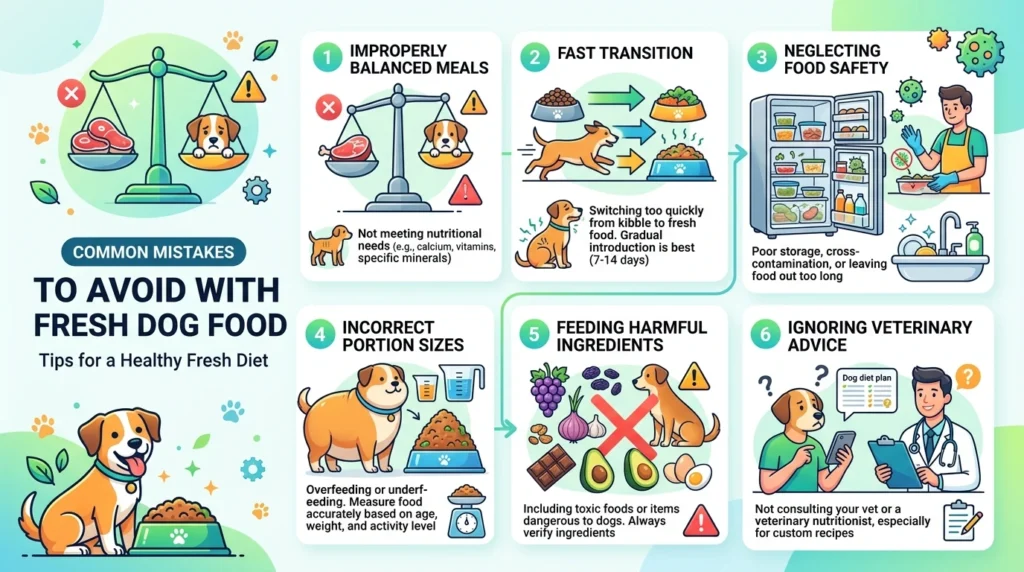
Mistake 1: Assuming All Fresh Food Is Complete
Not every fresh food product is nutritionally complete. Some are labeled as “complementary” meaning they supplement a diet rather than replace it. Therefore, always check the AAFCO statement before choosing a product as your dog’s main meal.
Mistake 2: Skipping the Transition Period
Switching food too fast is one of the most common errors. Even when switching to excellent fresh food, abrupt changes cause loose stools, gas, and upset stomachs. Always transition slowly over 7 to 10 days. Your dog’s digestive system will thank you.
Mistake 3: Overfeeding Because It Looks Like “Real Food”
Fresh food is more nutrient-dense than most people realize. However, because it looks like actual food, owners often serve too much. Always follow the brand’s portion guidelines based on your dog’s weight. Also, adjust portions if your dog starts gaining weight unexpectedly.
Mistake 4: Leaving Fresh Food Out Too Long
Unlike dry kibble, fresh food spoils quickly. Never leave it in the bowl for more than two hours at room temperature. Refrigerate portions opened immediately. Use within 3 to 4 days or freeze extra portions for up to three months.
Mistake 5: Choosing Based on Price Alone
The cheapest fresh food option isn’t always the safest or most nutritious. Some budget fresh food products cut corners on ingredient quality or skip veterinary nutritionist involvement entirely. As a result, your dog may miss key nutrients over time. Always check for AAFCO compliance and vet nutritionist backing regardless of price.
Pro Tip: Keep a simple two-week feeding journal when you switch to fresh food. Note your dog’s energy level, stool quality, coat shine, and appetite every few days. This makes it easy to spot improvements and catch any concerns early.
FAQ: Vet-Recommended Fresh Dog Food Questions Answered
1. What makes a fresh dog food vet-recommended?
A fresh dog food earns veterinary recommendation when it meets several key standards. First, it should carry an AAFCO “complete and balanced” statement confirmed through feeding trials, not just formulation. Second, the brand should work with board-certified veterinary nutritionists during recipe development. Third, the food should use names, whole protein sources and real vegetables without artificial additives. Finally, the brand should have transparent manufacturing practices and a clean safety record. Brands like The Farmer’s Dog, Nom Nom, and Just Food For Dogs consistently meet all of these criteria which is why vets recommend them.
For many dogs, yes but it depends on the individual dog. Fresh food is generally more digestible, uses higher-quality whole ingredients, and contains no artificial preservatives or fillers. However, a high-quality kibble like Purina Pro Plan or Hill’s Science Diet still provides excellent nutrition for most healthy dogs. Fresh food tends to show the most noticeable benefits in dogs with digestive sensitivity, dull coats, low energy, or picky appetites. In my experience, the difference becomes most obvious within six to eight weeks of switching. Always consult your vet to determine what’s best for your specific dog.
3. How much does vet-recommended fresh dog food cost per month?
The cost depends on your dog’s size and the brand you choose. For a small dog under 20 pounds, expect to pay around $40 to $80 per month. Medium dogs (40 to 60 pounds) typically cost $100 to $150 monthly. Large breeds over 80 pounds can reach $200 to $300 or more per month. However, many owners find the daily cost per pound more manageable than the monthly total looks at first glance. Also, some brands offer discounts for first-time subscribers often 20 to 40% off the first box.
4. Can I mix vet-recommended fresh food with dry kibble?
Yes and many vets actually support this hybrid approach. Adding fresh food as a topper to dry kibble improves palatability, boosts moisture intake, and adds real whole-food nutrition without the full cost of an all-fresh diet. Start by replacing 20 to 25% of your dog’s kibble with fresh food. Then adjust based on your dog’s response and your budget. However, make sure to reduce the total kibble portion when adding fresh food. Otherwise, your dog will consume too many calories and gradually gain weight.
5. Is fresh dog food safe for puppies and senior dogs?
Yes when formulated specifically for those life stages. The Farmer’s Dog, Nom Nom, and Ollie all offer puppy-specific fresh food recipes with the right DHA levels and caloric density for growing dogs. Senior-specific formulas adjust calories downward and often include joint-supporting ingredients. However, never feed an adult fresh food formula to a puppy as their primary diet the nutritional ratios are genuinely different. Also, senior dogs with kidney disease, diabetes, or heart conditions need vet-guided dietary decisions before any food change. Always consult your vet first.
6. How do I store vet-recommended fresh dog food properly?
Fresh dog food requires refrigeration once opened. Most brands ship frozen and provide clear thawing instructions. Thawed food stays fresh in the refrigerator for 3 to 4 days. Freeze any portions you won’t use within that window. Most fresh food freezes well for up to three months. Never leave fresh food at room temperature for more than two hours. Also, wash your dog’s bowl after every fresh food meal to prevent bacterial buildup. Proper storage is a simple habit that protects your dog’s health every day.
7. Do vets really recommend fresh dog food over traditional kibble?
Veterinary opinions on this topic are evolving. Many vets now support high-quality commercial fresh food subscriptions particularly when they carry AAFCO feeding trial validation and are developed with veterinary nutritionist input. However, vets are more cautious about homemade fresh diets without proper nutritional balance. The general veterinary consensus is that fresh food can be an excellent option for healthy dogs but quality and nutritional completeness matter enormously. Your vet’s personalized recommendation for your specific dog is always the most valuable guidance you can get.
Start Feeding Your Dog Better Today
Vet-recommended fresh dog food is one of the most impactful changes you can make for your dog’s long-term health. Better digestion, a shinier coat, more energy, and a dog who genuinely looks forward to mealtime these are real, observable outcomes that fresh feeding delivers.
You don’t have to switch everything overnight. Start with a topper. Try one fresh food subscription for a single month. Even small steps toward fresher, more whole-food nutrition move your dog in the right direction.
However, always transition gradually, verify nutritional completeness, and loop in your vet whenever you have questions about your dog’s specific needs. They’re your most trusted resource.