Introduction
There’s something undeniably magnetic about a wolf dog. That wild, piercing gaze. The thick, powerful build. The way they move with quiet confidence that no ordinary domestic dog quite matches. If you’ve ever seen one in person, you understand the fascination immediately.
However, owning a wolf dog is nothing like owning a typical family pet. These animals carry real wolf genetics and that changes everything about how you care for them, train them, and live with them. Many people fall in love with the idea without fully understanding the reality.
In my experience, the owners who thrive with wolf dogs are the ones who go in with honest, clear information. The ones who struggle are those who expected a big, beautiful dog and got something far more complex instead.
This guide covers everything you genuinely need to know what wolf dogs are, how to care for them properly, what the legal situation looks like, and whether one is truly the right fit for your life. Let’s get into it honestly and thoroughly.
What Is a Wolf Dog? Understanding the Basics
The Definition You Actually Need
A wolf dog also called a wolfdog or wolf hybrid is the offspring of a domestic dog and a wolf. However, the term also applies to later generations where wolf genetics remain present in the bloodline. Therefore, a wolf dog isn’t always a 50/50 split between wolf and dog.
Breeders and owners often describe wolf dogs by percentage:
- Low content roughly 1% to 49% wolf genetics
- Mid content roughly 50% to 74% wolf genetics
- High content roughly 75% to 99% wolf genetics
The higher the wolf content, the more wild, unpredictable, and challenging the animal becomes. Also, high-content wolf dogs are often indistinguishable from pure wolves in both appearance and behavior. As a result, they require significantly more specialized care and experience.
How Wolf Dogs Differ From Dog Breeds That Look Like Wolves
Here’s something important: several dog breeds look remarkably wolf-like but carry zero wolf genetics. Therefore, don’t confuse wolf-looking breeds with actual wolf dogs.
Dog breeds that resemble wolves:
- Siberian Husky athletic, vocal, strikingly wolf-like in appearance
- Alaskan Malamute powerful, independent, heavy-coated
- German Shepherd intelligent, loyal, wolf-like facial structure
- Czechoslovakian Vlcak specifically bred to resemble wolves
- Saarloos Wolfdog contains historical wolf genetics but is now a recognized breed
- Tamaskan selectively bred to look like wolves without wolf content
These breeds offer a wolf-like aesthetic without the complex behavioral challenges of true wolf dogs. In my experience, families attracted to the wolf dog look are often much happier with one of these alternatives.
Wolf Dog Temperament: What to Really Expect
The Honest Truth About Personality
Wolf dogs don’t behave like domestic dogs. That’s the most important thing to understand before anything else. Because wolves are wild animals, their instincts, prey drive, territorial behavior, fear responses, and independence remain present regardless of how domesticated they appear.
Here’s what wolf dog owners consistently report:
- High prey drive small animals, cats, and sometimes small children trigger chase instincts
- Extreme independence they don’t naturally defer to humans the way domestic dogs do
- Fear-based reactions wolf dogs often respond to unfamiliar situations with fear, which can escalate quickly
- Escape behavior they’re incredible escape artists and need extraordinarily secure enclosures
- Deep bonding with one person they often form intense attachments to one owner
- Hypersensitivity loud noises, strangers, and new environments cause significant stress
Are Wolf Dogs Dangerous?
This question deserves a direct, honest answer. Wolf dogs are not inherently vicious. However, they are powerful, instinct-driven animals that don’t always respond predictably. As a result, incidents do occur particularly with high-content animals and inexperienced owners.
The risk isn’t aggression in the traditional sense. Instead, it’s unpredictability combined with physical power. Therefore, wolf dogs require experienced, knowledgeable owners who understand canine body language and wolf behavior deeply.
Pro Tip: If you’re genuinely considering a wolf dog, spend time volunteering at a wolf dog sanctuary first. In my experience, this single step clarifies the reality of daily life with these animals better than any amount of research. Many people discover that admiring them from a distance is far more fulfilling than ownership.
How to Care for a Wolf Dog: Step-by-Step Guide
The Care Requirements Are Unlike Any Domestic Dog
Caring for a wolf dog demands time, space, money, and expertise that goes well beyond typical dog ownership. Therefore, go through each requirement honestly before making any decision.
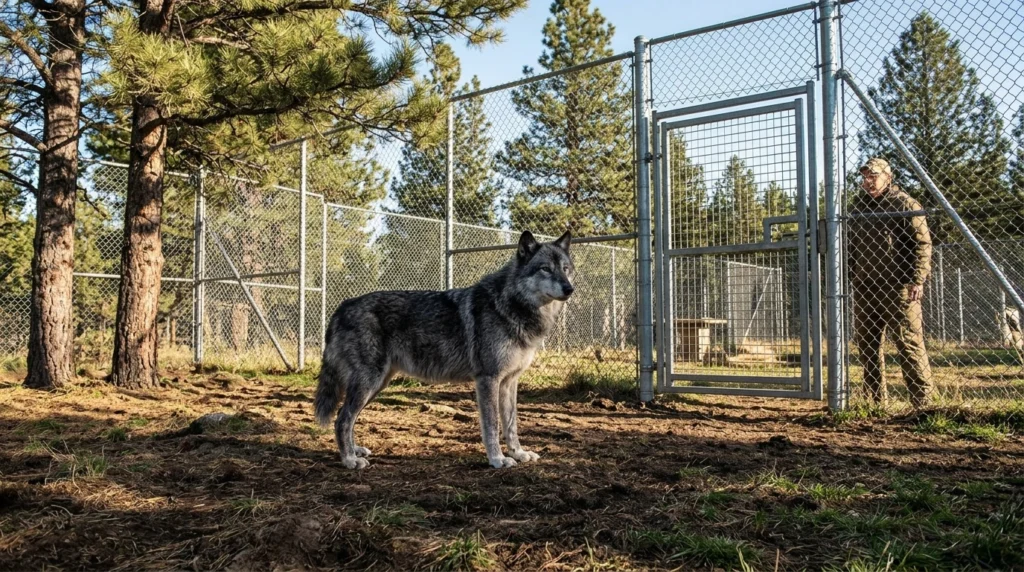
- Secure enclosure this is non-negotiable. Wolf dogs need purpose-built enclosures with walls at least 8 feet high, covered tops to prevent climbing, and reinforced ground protection to prevent digging. Also, double-gating systems prevent accidental escapes during entry and exit. Standard dog fencing simply doesn’t work.
- Large space requirements. A wolf dog needs significant territory to feel secure. Therefore, apartment living or small yards are completely unsuitable. A minimum of half an acre of secure, enriched enclosure space is the general recommendation for a single wolf dog.
- Diet and nutrition. High-content wolf dogs often do best on a raw diet that includes whole prey items. However, always consult your vet preferably one with exotic animal experience before establishing a feeding routine. Commercial kibble alone often doesn’t meet their nutritional needs adequately.
- Socialization from birth. Wolf dogs need intensive socialization from the very first weeks of life. Because their fear response develops earlier and more intensely than domestic dogs, the socialization window is shorter and more critical. Therefore, early exposure to people, sounds, and environments shapes their entire adult temperament.
- Veterinary care from a specialist. Many standard vets have limited experience with wolf dogs. Also, vaccine protocols differ from standard rabies vaccines that aren’t USDA-approved specifically for wolf dogs, which creates legal complications. Therefore, find a vet with exotic or wildlife experience before bringing a wolf dog home.
- Mental stimulation daily. Wolf dogs need complex mental engagement every single day. Puzzle feeders, scent work, exploration time, and varied environments keep them mentally healthy. Without this, they develop destructive and anxious behaviors rapidly.
- Pack companionship. Wolf dogs are deeply social pack animals. Therefore, keeping one in isolation causes serious psychological distress. Ideally, keep wolf dogs with other wolf dogs or compatible large dogs for constant companionship.
Wolf Dog Breeds and Types: A Helpful Comparison
Recognized Wolf Dog Breeds vs. True Hybrids
It’s helpful to distinguish between recognized wolf dog breeds and unregistered wolf hybrids. Therefore, here’s a clear comparison:
| Type | Wolf Content | Recognition | Temperament | Best For |
| Saarloos Wolfdog | Historical | FCI recognized | Reserved, gentle | Experienced dog owners |
| Czechoslovakian Vlcak | Historical | FCI recognized | Active, loyal | Active experienced owners |
| Low-content hybrid | 1%–49% | Not recognized | Dog-like | Dedicated experienced owners |
| Mid-content hybrid | 50%–74% | Not recognized | Unpredictable | Expert handlers only |
| High-content hybrid | 75%–99% | Not recognized | Near-wild | Sanctuary professionals only |
The Saarloos Wolfdog
The Saarloos Wolfdog is a Dutch breed developed in the 1930s. Although it contains historical wolf genetics, it’s now a recognized FCI breed with generations of selective breeding behind it. As a result, it’s more predictable than modern wolf hybrids but still demands an experienced owner.
The Czechoslovakian Vlcak
Developed in the 1950s from German Shepherd and Carpathian wolf crossings, the Czechoslovakian Vlcak is an FCI-recognized working breed. It’s athletic, highly intelligent, and bonds strongly with its owner. However, it requires consistent training, significant exercise, and an experienced handler throughout its life.
Legal Warnings and Ownership Mistakes to Avoid
Is Owning a Wolf Dog Legal?
Wolf dog legality varies dramatically by location. Therefore, research your specific local laws thoroughly before any other step.
Here’s a general overview:
- United States laws vary by state, county, and city. Some states ban wolf dogs entirely (Alaska, Hawaii, Georgia). Others require permits. Many municipalities have their own restrictions regardless of state law.
- United Kingdom the Dangerous Wild Animals Act 1976 requires a license for wolf dogs with significant wolf content.
- Canada varies by province and municipality.
- Australian wolf dogs are generally prohibited as exotic animals.
Always verify your specific local laws with official government sources before pursuing ownership. Breaking these laws results in forced removal of your animal which is devastating for both owner and animal.
Common Mistakes Wolf Dog Owners Make
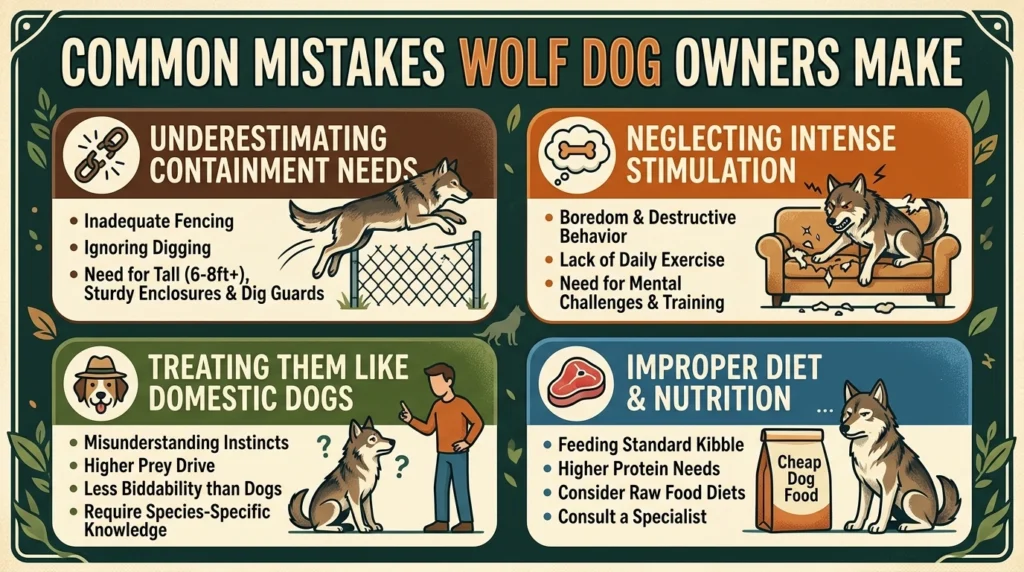
Mistake 1: Treating them like domestic dogs.
Wolf dogs don’t respond to standard dog training methods consistently. Because their instincts differ fundamentally, force-based or dominance-based training causes fear and aggression. Therefore, only use positive, relationship-based training approaches.
Mistake 2: Underestimating containment needs.
Standard fencing fails. Every time. Therefore, invest in purpose-built, professionally installed enclosures before the wolf dog arrives, not after.
Mistake 3: Getting one for the wrong reasons.
“Because they look amazing” is not a sufficient reason to own a wolf dog. Also, the social media imagery around these animals creates unrealistic expectations. Therefore, be brutally honest about your actual daily capacity before committing.
Mistake 4: Ignoring the rehoming crisis.
Wolf dog sanctuaries across the US and UK are overwhelmed with surrendered animals. In my experience, most surrenders happen because owners underestimated the commitment. Therefore, considering adoption from a sanctuary where staff understand the animal’s full history is often a wiser choice than purchasing a puppy.
Mistake 5: Skipping veterinary research.
Not all vets can or will treat wolf dogs. Also, vaccine documentation and legal requirements around rabies vaccination create specific challenges. Therefore, establish a relationship with a qualified exotic animal veterinarian before bringing any wolf dog home.
Pro Tip: Contact a wolf dog rescue or sanctuary in your area and ask if you can volunteer before making any ownership decision. Sanctuaries like the Wolf Sanctuary of PA or the Colorado Wolf and Wildlife Center offer educational visits that give you a genuinely realistic picture of daily life with these extraordinary animals.
Frequently Asked Questions About Wolf Dogs
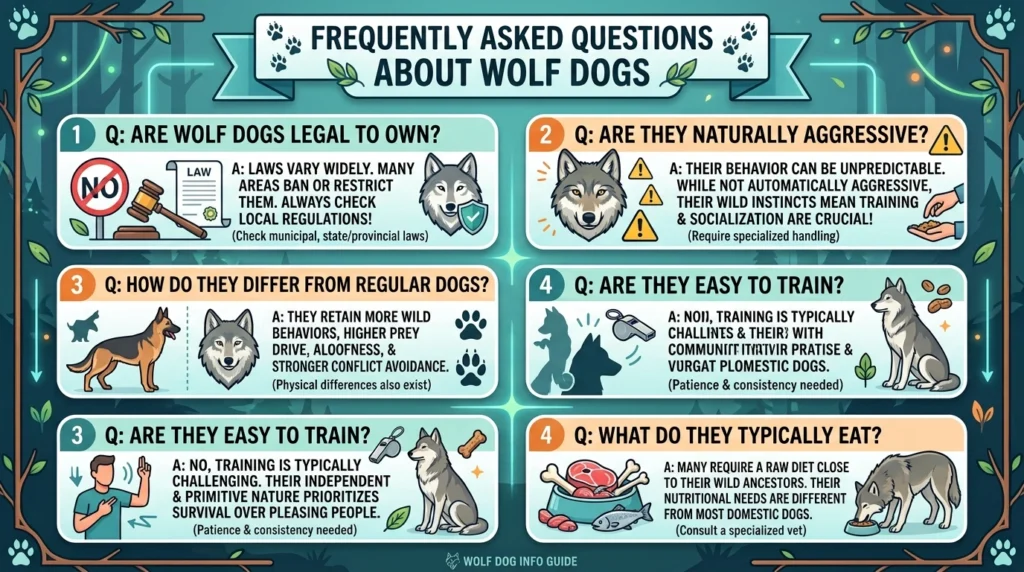
1. Are wolf dogs good family pets?
Honestly wolf dogs are not suitable for most families. They require experienced handlers, specialized housing, and daily intensive care that typical families find unsustainable. Also, their high prey drive makes them potentially unsafe around small children, cats, and small pets. However, low-content wolf dogs with proper socialization and experienced owners can form deep, rewarding bonds with the right family. If you’re drawn to the wolf dog aesthetic, wolf-like breeds such as the Czechoslovakian Vlcak, Saarloos Wolfdog, or Siberian Husky offer a more manageable alternative with similar visual appeal.
2. How long do wolf dogs live?
Wolf dogs generally live 12 to 16 years, similar to large domestic dog breeds. However, their lifespan depends significantly on care quality, diet, veterinary attention, and stress levels. Because stress is a major health factor for these animals, providing adequate space, companionship, and mental enrichment directly impacts longevity. Regular veterinary check-ups with an experienced exotic animal vet help catch health issues early and extend your wolf dog’s quality of life significantly.
3. What do wolf dogs eat?
Wolf dogs, particularly mid and high content animals, often thrive on raw diets that mimic natural prey. This typically includes raw meat, bones, and organ meat. However, dietary needs vary significantly based on wolf content percentage, size, age, and individual health. Therefore, always consult a veterinarian with exotic animal experience before establishing a feeding routine. Some low-content wolf dogs do well on high-quality commercial raw or kibble diets, while high-content animals may require whole prey feeding.
4. Are wolf dogs legal in the UK?
In the UK, wolf dogs with significant wolf content require a license under the Dangerous Wild Animals Act 1976. However, recognized breeds like the Czechoslovakian Vlcak and Saarloos Wolfdog don’t require special licensing because they’re classified as domestic dog breeds by kennel clubs. Therefore, if you’re in the UK and interested in a wolf-like dog, these recognized breeds offer a legal and more manageable path. Always verify current regulations with your local council before purchasing any animal with wolf content.
5. How do you train a wolf dog?
Training a wolf dog requires patience, consistency, and a deep understanding of wolf and canine behavior. Because these animals don’t respond reliably to traditional dog training methods, force-free positive reinforcement approaches work best. Building trust is the foundation without genuine trust, a wolf dog won’t engage with training at all. Also, training sessions should be short, engaging, and built around the animal’s natural behaviors rather than trying to suppress them. Working with a trainer who has specific wolf dog experience is strongly recommended, especially for mid and high content animals.
6. Can wolf dogs be around other pets?
It depends heavily on the wolf content and the individual animal’s socialization history. Low-content wolf dogs that receive socialization from a very young age sometimes coexist peacefully with other large dogs. However, small animals like cats, rabbits, and small dogs are generally at serious risk around wolf dogs due to strong prey drive. Therefore, multi-pet households with small animals are rarely suitable environments for wolf dogs, regardless of content level. Always prioritize the safety of all animals in your household when making this decision.
Is a Wolf Dog Right for You?
The wolf dog is one of the most extraordinary animals you’ll ever encounter. Their intelligence, beauty, and complexity are genuinely breathtaking. However, these qualities come with responsibilities that most owners underestimate significantly.
Therefore, be completely honest with yourself before pursuing ownership. Do you have the space, the time, the financial resources, and the experience? Also, have you checked your local laws thoroughly? Have you spent time with wolf dogs in a sanctuary setting?
If the answer to any of those questions is uncertain, consider a wolf-like domestic breed instead. The Czechoslovakian Vlcak, Siberian Husky, or Saarloos Wolfdog can give you much of the visual and emotional experience without the extraordinary complexity of true wolf genetics