

Introduction
Walk down any pet food aisle and you’ll spot that familiar red and yellow Pedigree packaging almost immediately. It’s one of the most recognizable dog food brands in the world and their wet dog food line is just as popular as their dry kibble. But popular doesn’t always mean perfect for your dog, right?
If you’ve been eyeing Pedigree wet dog food and wondering whether it’s worth adding to your dog’s bowl or whether it should be the main event you’re asking exactly the right questions. Wet food decisions aren’t as simple as “canned = better” or “pouch = easier.” There’s real nutritional nuance here, and your dog deserves more than a guess.
I’ve helped countless dog owners navigate Pedigree’s wet food range figuring out which products work well as toppers, which are appropriate for everyday feeding, and when wet food genuinely benefits a dog versus when it’s just a palatability upgrade. This guide gives you all of it honestly.
You’ll get a complete breakdown of Pedigree’s wet dog food products, what’s actually in them, how to use them smartly, and the real pros and cons you need to know. Let’s dig in.
What Is Pedigree Wet Dog Food and What Makes It Different?
Pedigree wet dog food encompasses a range of canned foods, pouches, and trays that offer a softer, moisture-rich alternative or complement to dry kibble. Pedigree is owned by Mars Petcare, one of the largest pet food manufacturers globally, which means the brand benefits from significant manufacturing infrastructure and consistent quality controls.
The biggest difference between wet and dry Pedigree comes down to one thing: moisture content. Dry kibble typically contains around 10% moisture. Pedigree wet food like all wet dog food contains approximately 75–80% moisture. That high water content has real nutritional and health implications worth understanding.
Why Moisture Content Matters for Dogs
Dogs don’t have a strong thirst drive the way humans do; they often don’t drink enough water to compensate for a dry-food-only diet. Wet food naturally increases hydration through the food itself, which benefits:
- Dogs with urinary tract issues or kidney concerns (hydration is critical for these conditions always consult your vet)
- Senior dogs whose sense of thirst diminishes with age
- Small dogs who are notoriously inconsistent water drinkers
- Dogs in hot climates with elevated hydration needs
- Picky eaters who won’t touch dry kibble but respond enthusiastically to wet food’s stronger aroma
The Pedigree Wet Food Product Range
Pedigree’s wet dog food line includes several distinct formats:
- Canned wet food the classic format, available in larger quantities, typically used as a primary food source or significant topper
- Pouches/sachets single-serve portions in gravy or jelly, popular for their convenience and portion control
- Trays individual meal portions, similar to pouches but in a firmer format
- Multipack varieties assorted flavors in packs, ideal for dogs who enjoy variety
The flavor range typically includes beef, chicken, turkey, lamb, and various combination recipes often in gravy or jelly formats that dogs find highly palatable.
How to Use Pedigree Wet Dog Food Effectively: Step-by-Step Guide
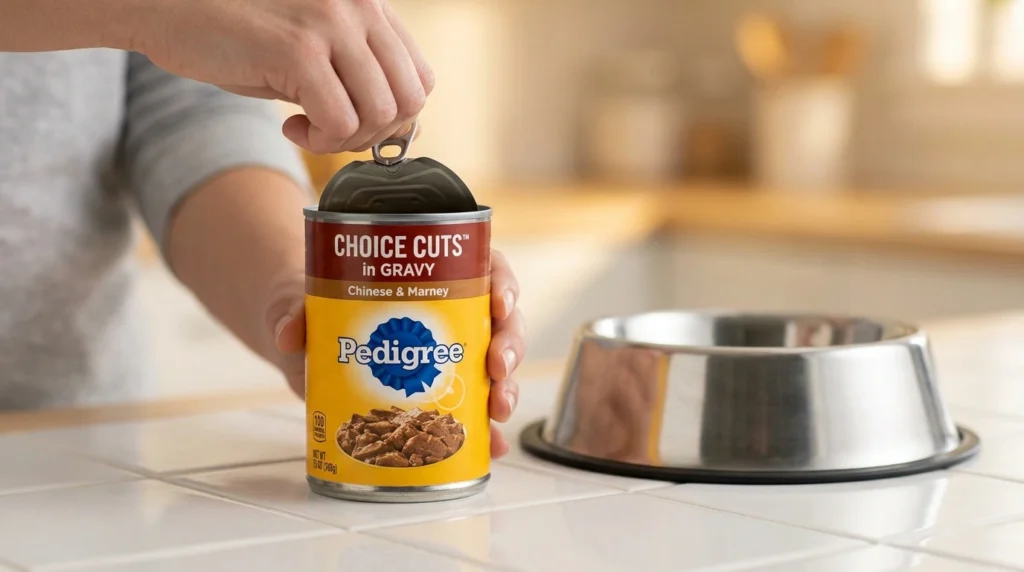
Whether you’re using Pedigree wet food as your dog’s primary diet, as a mixer, or as an occasional topper, here’s how to do it right:
- Decide on your feeding approach first. Pedigree wet dog food can be used three ways: as a complete primary diet (fed alone in appropriate quantities), as a kibble topper (mixed into dry food to improve palatability and add moisture), or as an occasional treat or appetite stimulator. Each approach has different portioning implications, so decide before you buy.
- Check the AAFCO statement on your specific product. Not all Pedigree wet food products are formulated as complete and balanced meals. Some are labeled as “complementary” meaning they’re designed to supplement rather than replace a complete diet. Always read the label and look for the AAFCO nutritional adequacy statement to confirm whether a product is suitable as a sole diet.
- Calculate the right portion size for your dog’s weight. Wet food is more calorie-dense by volume than you might expect but because of the high moisture content, the actual caloric density per cup is lower than dry food. Use the feeding guidelines on the label as your starting point, then adjust based on your dog’s weight and body condition. When mixing with dry food, reduce both quantities proportionally.
- Introduce gradually if switching from dry food. Even if your dog is enthusiastic about wet food, abrupt dietary changes cause digestive upset. Start by mixing a small amount of wet food into your dog’s usual kibble around 25% wet, 75% dry and gradually shift the ratio over 7–10 days if you’re making a full transition.
- Refrigerate opened cans and use within 2–3 days. Unlike dry food, opened wet food spoils quickly at room temperature. Transfer unused portions to a sealed container and refrigerate immediately. Never leave wet food in the bowl for more than two hours bacteria multiply fast in moist food, especially in warm environments.
- Warm it slightly for picky eaters or senior dogs. Wet food straight from the fridge can be unappealing both in temperature and aroma. A brief 10–15 seconds in the microwave (always test the temperature before serving) dramatically enhances the smell and palatability. This is particularly effective for senior dogs with reduced appetite or dogs recovering from illness.
- Monitor your dog’s weight closely when adding wet food. Adding wet food to an existing kibble portion without adjusting quantities leads to gradual weight gain. Wet food adds real calories even with its high moisture content. Weigh your dog monthly when making dietary changes and adjust portions accordingly.
- Consult your vet about wet food for dogs with specific health conditions. Wet food can be particularly beneficial for dogs with kidney issues, urinary concerns, or dental problems but the right type and amount should be guided by your veterinarian rather than general label advice.
Pro Tip: Pedigree wet food pouches and trays are fantastic for travel, camping, or any situation where portioning and convenience matter. They’re pre-measured, don’t require refrigeration until opened, and most dogs find the smell irresistible making them a great emergency appetite stimulator when your dog is off their food during stressful situations like moving or travel.
[Victor Dog Food: America’s Super Premium Dog Food – Complete Review]
Pedigree Wet Dog Food Products: Honest Comparison
Here’s a breakdown of the main Pedigree wet dog food product types to help you pick the right format for your situation:
| Product Format | Portion Size | Best Use | Key Feature | Price Range |
| Pedigree Canned (13.2 oz) | Larger portions | Primary wet diet | Economical for daily feeding | $ |
| Pedigree Pouches (3.5 oz) | Single serve | Topper or small dog meal | Convenient, portion-controlled | $ |
| Pedigree Choice Cuts in Gravy | Varies | Picky eaters, toppers | Chunky texture, high palatability | $ |
| Pedigree Tender Bites | Varies | Mixed feeding | Soft chunks, easy to chew | $ |
| Pedigree Multipacks | Assorted | Variety seekers | Multiple flavors in one pack | $ |
The Honest Ingredient Breakdown
Pedigree wet dog food uses a mix of ingredients that are worth understanding before you commit. A typical canned Pedigree wet food lists:
Positive ingredients you’ll find:
- Meat and meat by-products (chicken, beef, or turkey though not always named specifically)
- Added vitamins and minerals to meet nutritional requirements
- Natural flavors for palatability
Ingredients worth noting:
- “Meat by-products” these can include organs, which aren’t necessarily harmful and provide some nutrition, but the lack of species-specific naming is a transparency concern
- Guar gum and carrageenan thickening agents commonly used in wet dog food; generally considered safe but worth knowing about
- Artificial colors in some formulas zero nutritional benefit, purely cosmetic
How Pedigree Wet Food Compares to Alternatives
| Brand | Price Range | Protein Source | Artificial Additives | Moisture Content | Best For |
| Pedigree Wet | $ | Meat by-products | Some formulas | ~78% | Budget-conscious owners |
| Purina Beneful Wet | $ | Chicken, beef | Minimal | ~78% | Affordable everyday feeding |
| Hill’s Science Diet Wet | $$$ | Chicken/fish | None | ~75–80% | Health-focused, vet-recommended |
| Purina Pro Plan Wet | $$$ | Real chicken/salmon | None | ~75–80% | Premium daily wet feeding |
| Royal Canin Wet | $$$ | Chicken by-product | None | ~80% | Breed/condition specific needs |
The honest assessment: Pedigree wet food is a solid budget-friendly option that does the job for most healthy adult dogs. If you’re using it as a topper to encourage a picky eater or add moisture to a dry food diet it works well and represents excellent value. As a sole primary diet for dogs with specific health conditions or higher nutritional requirements, premium options with more transparent ingredient sourcing may serve your dog better.
Common Mistakes to Avoid With Pedigree Wet Dog Food
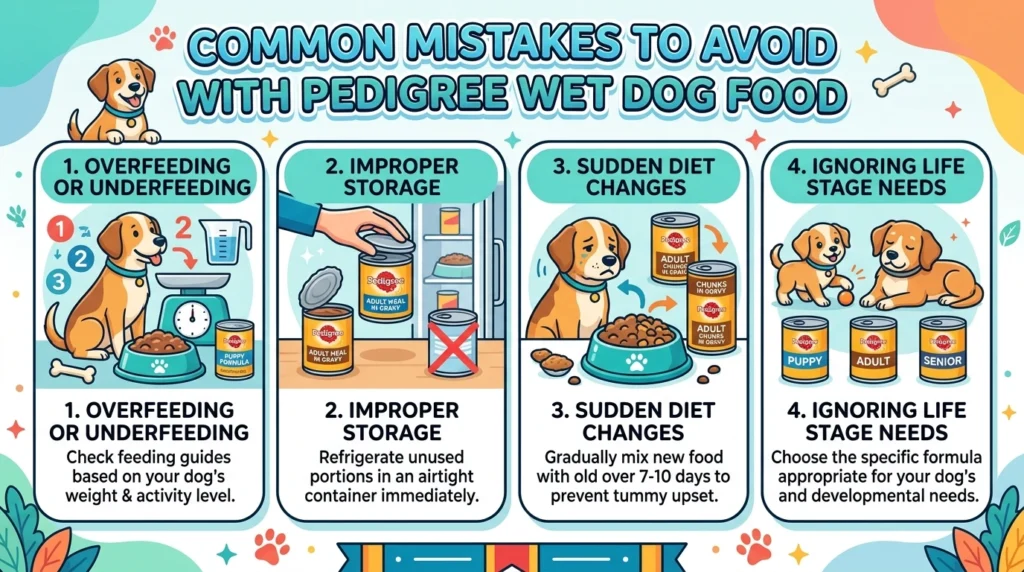
Even with a straightforward product like Pedigree wet food, there are errors worth flagging:
Leaving Wet Food Out Too Long
This is the most common and most consequential mistake. Wet food left in a bowl at room temperature for more than two hours becomes a bacterial breeding ground particularly in warm weather. Always remove uneaten wet food promptly, refrigerate opened cans immediately, and wash the bowl after each wet food meal. Unlike dry food, you can’t leave wet food out for grazing.
Assuming All Pedigree Wet Products Are “Complete and Balanced”
Some Pedigree wet food products are complementary foods designed to be fed alongside a complete diet, not as a standalone meal. Feeding a complementary product as your dog’s sole food source over time creates nutritional gaps. Always check the AAFCO statement on the specific product you’re buying. If it says “complementary” rather than “complete and balanced,” treat it as a topper or mix-in, not a primary diet.
Not Adjusting Dry Food When Adding Wet
The number of dog owners I’ve seen accidentally overfeeding their dogs by adding a full pouch of wet food on top of the usual full dry food portion happens constantly. Wet food adds real calories. When you introduce wet food as a topper or mixer, reduce your dog’s dry food portion proportionally. As a rough guide, if you’re adding a 3.5 oz pouch of wet food (typically around 80–100 calories), reduce dry food by the equivalent caloric amount.
Using Wet Food as a Long-Term Sole Diet Without Vet Input for Dogs With Health Issues
Wet food has genuine advantages for dogs with kidney concerns, urinary issues, or dental problems but “wet food is good for kidney dogs” isn’t specific enough guidance for a dog with an actual diagnosis. The protein level, phosphorus content, and sodium levels in wet food vary significantly between brands and formulas. If your dog has a diagnosed health condition, consult your vet before selecting any wet food as a dietary component, including Pedigree wet food.
Mistaking Palatability for Nutritional Quality
Dogs love wet food, the smell, the texture, the moisture. That enthusiasm is genuine. But a dog eating enthusiastically doesn’t tell you the food is nutritionally optimal. Pedigree wet food is palatable and affordable, but palatability and nutritional excellence aren’t the same thing. If your dog has specific health needs, their enthusiasm for Pedigree wet food doesn’t mean it’s the right dietary choice. Always evaluate nutrition alongside palatability.
Pro Tip: One of the smartest ways to use Pedigree wet food is as a medication vehicle. If your dog needs pills or supplements, hiding them in a small amount of Pedigree wet food is extremely effective. The strong smell and flavor mask the medication completely, and most dogs take it without any fuss. It’s a simple, practical trick that makes everyone’s life easier.
Frequently Asked Questions About Pedigree Wet Dog Food
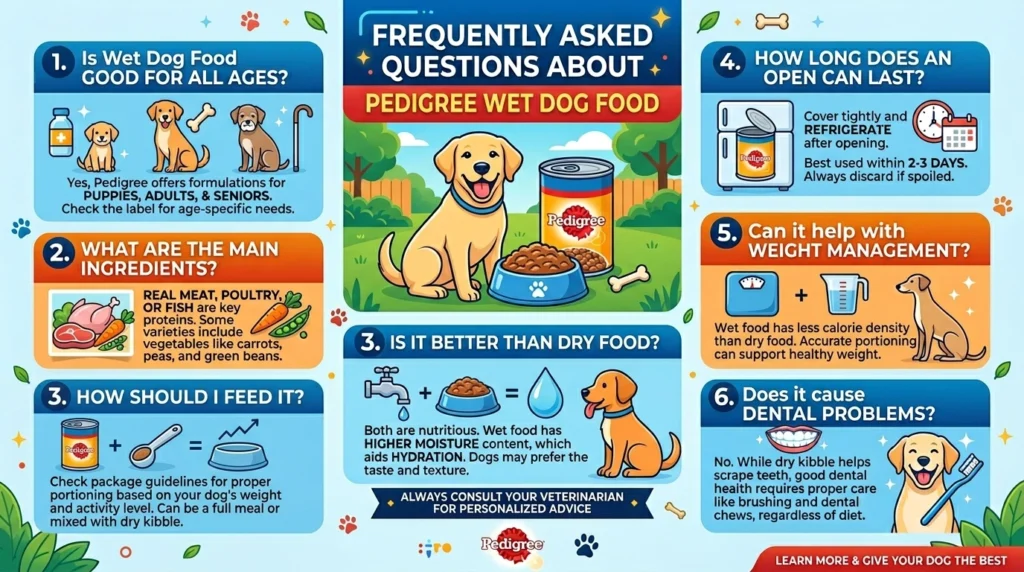
1. Is Pedigree wet dog food good for dogs as a daily diet?
Pedigree wet dog food marked as “complete and balanced” with an AAFCO nutritional adequacy statement can be fed as a daily diet for healthy adult dogs. It meets minimum nutritional standards and provides significantly more moisture than dry food, which benefits hydration. However, it uses lower-quality protein sources (meat by-products rather than named whole meats) compared to premium brands, and some formulas contain artificial additives. For most healthy adult dogs on a budget, it’s a serviceable daily diet. For dogs with health conditions, senior dogs, or those with higher nutritional needs, discussing options with your vet is worthwhile before committing to Pedigree wet food as a sole diet.
2. Can I mix Pedigree wet food with dry dog food?
Absolutely and this is actually one of the best ways to use Pedigree wet food. Mixing wet food into dry kibble improves palatability (great for picky eaters), adds moisture to the diet, and can make mealtime more interesting for food-bored dogs. The key is adjusting total portions so you’re not overfeeding. If you add a 3.5 oz pouch of wet food to your dog’s kibble, reduce the dry food portion by the caloric equivalent. Your dog gets the best of both worlds: the dental benefits and convenience of kibble with the hydration and palatability of wet food.
3. How long does opened Pedigree wet dog food last in the fridge?
Opened canned Pedigree wet dog food lasts 2–3 days in the refrigerator when stored in a sealed container. Never leave the food in the open. You can transfer it to a covered container immediately after opening. Pouches and trays are single-serve, so any uneaten portion should be refrigerated and used within 24 hours. Always check for off smells before serving refrigerated wet food, and when in doubt, throw it out. Never freeze wet dog food in the can transfer to a freezer-safe container if you want to freeze portions.
4. Is Pedigree wet dog food good for senior dogs?
Pedigree wet food can be beneficial for senior dogs for several reasons: the high moisture content supports hydration (senior dogs often drink less water), the softer texture is easier for dogs with dental issues or missing teeth, and the enhanced aroma appeals to senior dogs whose sense of smell and appetite may have diminished. However, Pedigree doesn’t have a senior-specific wet food formula with targeted joint support or adjusted caloric profiles. For senior dogs with specific health conditions, a vet-recommended senior formula from brands like Hill’s Science Diet or Purina Pro Plan may provide more targeted nutrition. Consult your vet about the best wet food approach for your aging dog.
5. Does Pedigree wet dog food have grain?
Most Pedigree wet dog food products do contain grains, typically ingredients like corn starch, rice, or wheat derivatives as thickeners or carbohydrate sources. This is actually a positive note given ongoing FDA research into potential links between grain-free diets and dilated cardiomyopathy (DCM) in dogs. Unless your vet has specifically recommended grain-free for a diagnosed sensitivity, grain-inclusive wet food is the safer mainstream choice. If your dog has a confirmed grain allergy or sensitivity, consult your vet before selecting any Pedigree product, as ingredient profiles vary across their range.
6. Is Pedigree wet dog food safe? Has it been recalled?
Pedigree has had a small number of product recalls over the years including a notable 2014 recall for potential metal contamination in some dry food products. However, the brand’s wet food line has had a relatively clean safety record. As with any brand, it’s a good practice to periodically check the FDA’s pet food recall database for any active notices. For current and comprehensive recall information, the FDA official database at fda.gov is your most reliable source. No brand is immune to quality control issues, but Pedigree’s recall frequency relative to its production volume is not alarming.
7. Can puppies eat Pedigree wet dog food?
Pedigree makes wet food products specifically formulated for puppies look for products labeled “Puppy” on the packaging. These formulas are designed with the higher caloric density and DHA content that growing puppies need. Never feed an adult-formula Pedigree wet food to puppies as their primary diet the nutritional profiles are different. Always use a puppy-specific formula during the growth phase, and consult your vet about appropriate quantities based on your puppy’s breed, expected adult weight, and growth rate.
Pedigree Wet Dog Food The Smart Way to Use It
Pedigree wet dog food is a genuinely useful, budget-friendly product when used correctly. As a moisture-boosting topper for picky eaters, a palatability enhancer mixed into dry food, a convenient single-serve option for travel, or an affordable primary diet for healthy adult dogs it delivers solid value without pretending to be something it’s not.
The key is using it intentionally. Check whether your specific product is “complete and balanced” or “complementary.” The store opened portions correctly. Adjust dry food portions when adding wet food. And for dogs with specific health conditions kidney issues, urinary concerns, dental disease, or weight problems bring your vet into the conversation before deciding how wet food fits into your dog’s diet.
Used smartly, Pedigree wet food can meaningfully improve your dog’s hydration, mealtime enjoyment, and overall dietary satisfaction all without breaking your budget.