
Introduction
Bringing a new puppy home is one of the most exciting things in the world. However, figuring out what to feed them can feel overwhelming fast. There are dozens of brands, hundreds of formulas, and every single one promises to be the best. So where do you even start?
Pedigree puppy food is one of the most recognizable options on the market. It’s affordable, widely available, and has been around for decades. But is it actually good for your puppy? That’s the real question and this guide answers it honestly.
In my experience helping dog owners choose the right food, I’ve seen Pedigree come up constantly. Therefore, I decided to dig deep into what’s actually in it, how to use it correctly, and what to watch out for. By the end of this guide, you’ll know exactly whether Pedigree puppy food is the right choice for your little one.
What Is Pedigree Puppy Food and What’s Inside It?
Pedigree is a brand owned by Mars Petcare, one of the largest pet food companies in the world. Their puppy food line is specifically designed for dogs in their first year of life. Because puppies have very different nutritional needs than adult dogs, using a puppy-specific formula really matters.
Key Ingredients You’ll Find
Pedigree puppy food typically contains:
- Chicken or beef as the primary protein source
- Whole grains like corn and soy for energy
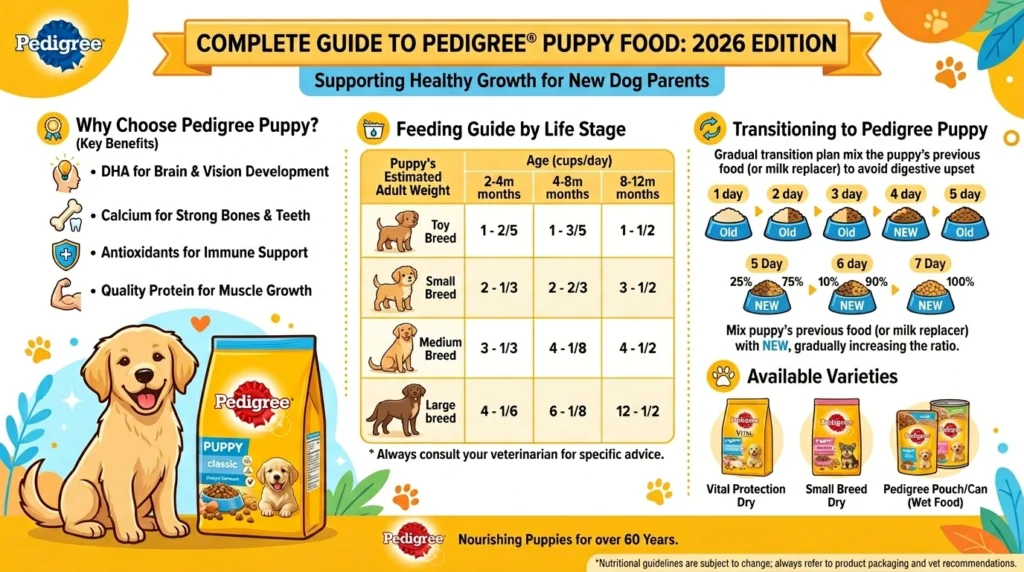
- DHA from fish oil to support brain and vision development
- Calcium and phosphorus for strong bone growth
- Added vitamins and minerals to meet AAFCO puppy standards
What the AAFCO Statement Tells You
Always check the back of the bag for the AAFCO nutritional adequacy statement. Pedigree puppy formulas carry the statement confirming the food is “complete and balanced” for growth which is the life stage covering puppies. This means it meets the minimum nutritional standards set for growing dogs.
However, it’s worth knowing that some Pedigree formulas use “formulated to meet” rather than “feeding trial substantiated.” Feeding trials provide stronger evidence that the food actually works in real dogs. Therefore, if clinical validation is important to you, this distinction matters.
How to Feed Pedigree Puppy Food the Right Way
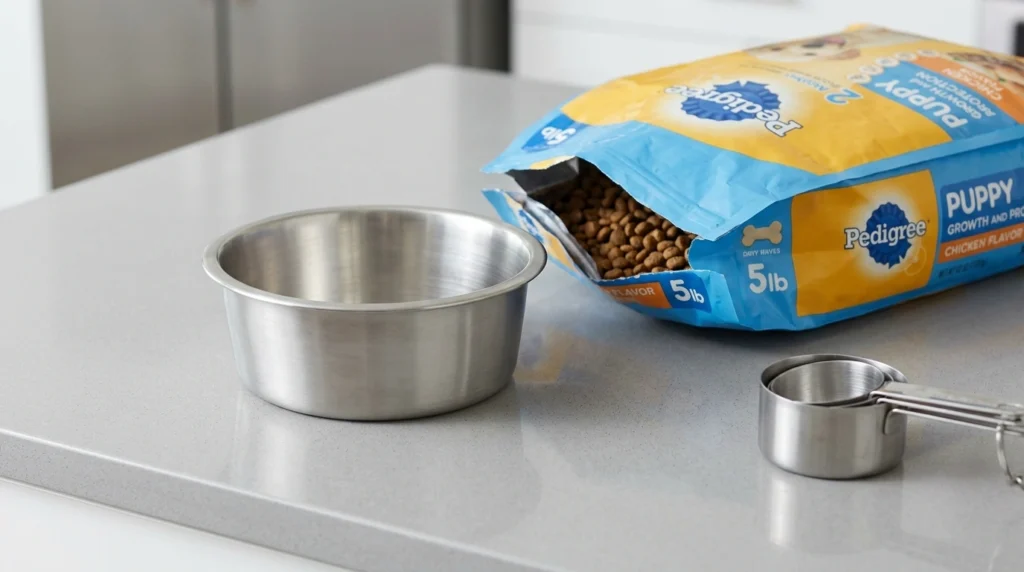
Feeding your puppy correctly is just as important as choosing the right food. Even the best food won’t help if you’re feeding the wrong amounts or at the wrong times. Here’s a simple step-by-step guide to get it right.
Step-by-Step Feeding Guide
- Check your puppy’s current age and weight. Pedigree provides feeding charts on their packaging. First, find your puppy’s weight range. Then match it to the recommended daily portion.
- Divide meals into smaller portions. Puppies need to eat more frequently than adult dogs. Therefore, split the daily amount into three or four small meals for puppies under six months old.
- Transition gradually when switching foods. If your puppy was eating something else before, don’t switch cold turkey. Instead, mix 25% Pedigree puppy food with 75% old food for the first three days. Then slowly increase the Pedigree portion over seven to ten days.
- Always provide fresh water. Dry kibble has very low moisture content around 10%. As a result, your puppy needs access to fresh, clean water at all times alongside their meals.
- Adjust portions as your puppy grows. Puppies grow fast, especially in the first six months. Check the feeding guidelines monthly and increase portions as needed to match their growing weight.
- Reduce to two meals per day after six months. Most puppies can move to a twice-daily feeding schedule after six months of age. However, always consult your vet before making any major changes to your puppy’s routine.
- Monitor body condition regularly. You should be able to feel your puppy’s ribs without pressing hard. If you can’t feel them at all, they may be gaining too much weight. In that case, reduce portions slightly and check with your vet.
Pro Tip: Use a kitchen scale instead of a measuring cup to portion your puppy’s food accurately. Cup measurements can vary significantly based on kibble size and shape, so weighing in grams gives you a much more consistent result.
[Dog Joint Health: Causes, Symptoms and Complete Care]
Pedigree Puppy Food Product Range: Which One Should You Choose?
Pedigree offers several different puppy food formats. Each one suits different situations, budgets, and puppy preferences. Here’s a clear comparison to help you decide.
Pedigree Puppy Product Comparison Table
| Product | Format | Best For | Key Feature | Price Range |
| Pedigree Puppy Dry Food | Dry kibble | Everyday feeding | Dental benefits, affordable | $ |
| Pedigree Puppy Wet Food (cans) | Wet/canned | Picky eaters, added moisture | High palatability | $ |
| Pedigree Puppy Pouches | Wet pouches | Single-serve convenience | Portion-controlled | $ |
| Pedigree Large Breed Puppy | Dry kibble | Large breed puppies | Controlled calcium levels | $ |
| Pedigree Small Breed Puppy | Dry kibble | Small breed puppies | Higher calorie density | $ |
Which Format Works Best?
Dry kibble is the most popular choice and for good reason. First, it’s the most affordable format. Additionally, the crunching action helps reduce plaque buildup on your puppy’s tiny teeth. For most healthy puppies, dry Pedigree puppy food is the easiest and most practical daily option.
Wet food works well as a topper mixed into dry kibble. However, it shouldn’t replace dry food entirely because it doesn’t provide the same dental benefits. Also, wet food left in the bowl for more than two hours can spoil quickly, so always remove uneaten portions promptly.
Large breed puppy formula is especially important if your dog will grow to 50 pounds or more. Because large breed puppies have different calcium needs, using the wrong formula can actually affect bone development. Therefore, always choose the size-appropriate formula for your puppy’s expected adult weight.
Common Mistakes to Avoid With Pedigree Puppy Food
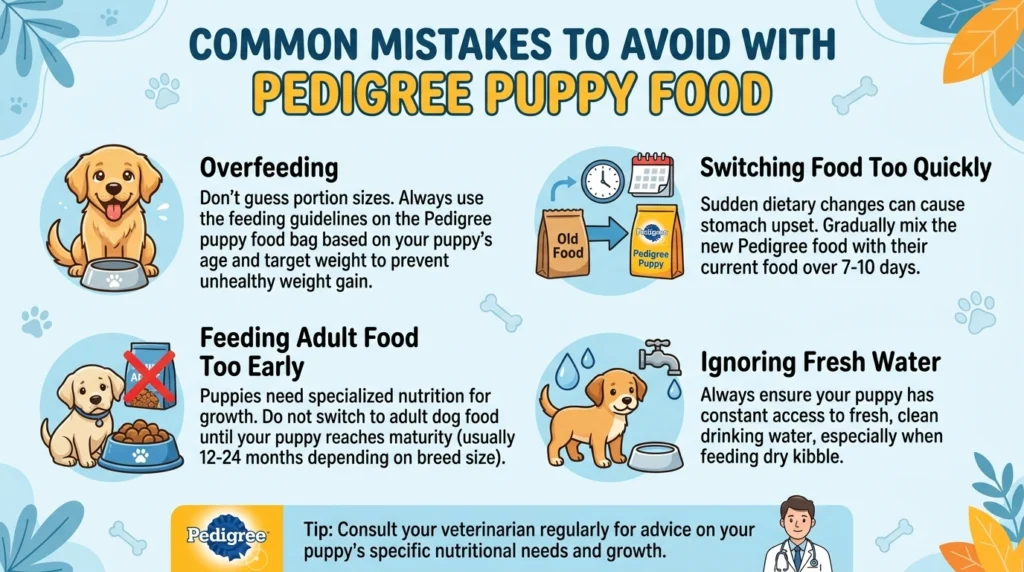
Even with a straightforward brand like Pedigree, dog owners make avoidable errors. Here are the most common ones and how to avoid them.
Mistake 1: Feeding Adult Food to a Puppy
This happens more often than you’d think. Adult dog food doesn’t contain the right levels of DHA, protein, or calcium that growing puppies need. As a result, feeding adult food long-term can create nutritional gaps during a critical growth window. Always use a formula clearly labeled for puppies.
Mistake 2: Overfeeding Because “They’re Always Hungry”
Puppies always seem hungry. However, overfeeding leads to unhealthy weight gain and can put stress on developing joints especially in large breeds. Therefore, stick to the recommended portions on the packaging and resist those big puppy eyes at mealtime.
Mistake 3: Switching Foods Too Quickly
Changing food abruptly causes digestive upset, loose stools, gas, and sometimes vomiting. Many owners then blame the new food unfairly. Instead, always transition gradually over seven to ten days to give your puppy’s gut time to adjust properly.
Mistake 4: Ignoring Life Stage Changes
Puppies don’t stay puppies forever. Most dogs should transition from puppy to adult food somewhere between 12 and 24 months depending on their breed size. Large breeds often need to stay on puppy food longer because they take more time to reach physical maturity. Therefore, ask your vet when the right time to switch is for your specific breed.
Mistake 5: Not Checking the Expiry Date
Dry dog food goes stale after the bag is opened typically within six weeks. Also, always check the “best by” date before buying, especially in stores with slower inventory turnover. Stale food loses nutritional value and can go rancid, which harms rather than helps your growing puppy.
Pro Tip: Store Pedigree puppy food in its original bag the inner lining preserves freshness. Then place the sealed bag inside an airtight container. Keep it in a cool, dry place away from direct sunlight to maximize shelf life.
Frequently Asked Questions About Pedigree Puppy Food
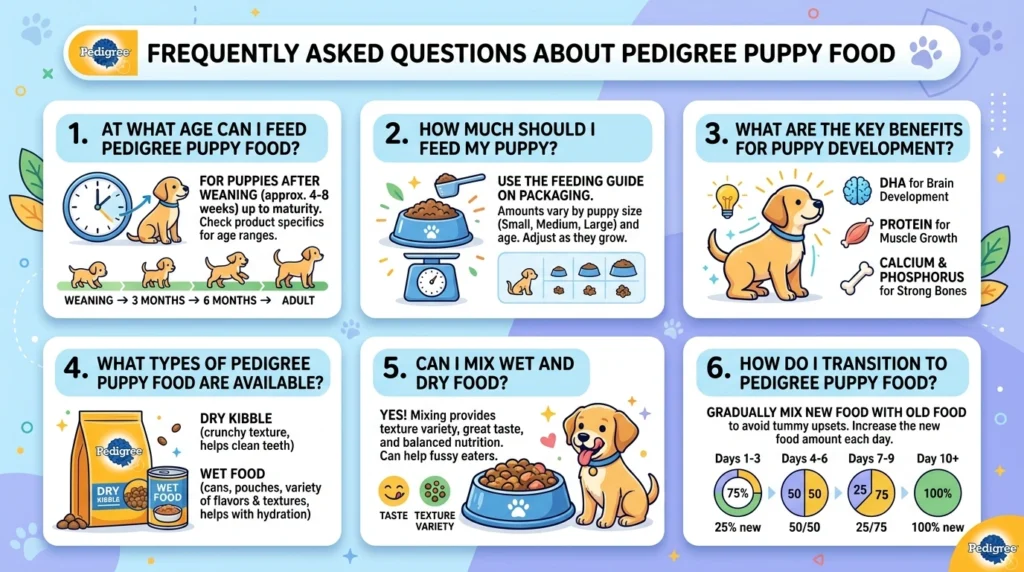
1. Is Pedigree puppy food good for my dog?
Pedigree puppy food meets AAFCO nutritional standards for growth, which means it provides the minimum nutrition a growing puppy needs. For healthy puppies without specific dietary requirements, it’s a reliable and affordable option. However, it uses lower-quality protein sources like meat by-products rather than named whole meats in some formulas. Therefore, if your puppy has food sensitivities or you prefer higher-quality ingredients, premium brands like Purina Pro Plan Puppy may better suit your needs. Always consult your vet if you’re unsure which food is right for your individual puppy.
2. At what age should I stop feeding Pedigree puppy food?
Most small and medium breed dogs should transition to adult food around 12 months of age. Large breed dogs, however, often continue on puppy food until 18 to 24 months because they take longer to reach full skeletal maturity. The timing also depends on your individual dog’s growth rate. Therefore, the best approach is to ask your vet at your puppy’s annual check-up when the right time to switch is for your specific breed and size.
3. Can I mix Pedigree dry puppy food with wet food?
Yes and many owners find this works really well. Mixing a small amount of wet Pedigree puppy food into dry kibble adds moisture, improves palatability for picky eaters, and makes mealtime more interesting. However, adjust total portions when mixing to avoid overfeeding. If you add a full pouch of wet food, reduce the dry food quantity proportionally to keep overall calories balanced.
4. Is Pedigree puppy food safe? Has it been recalled?
Pedigree has had some recalls over the years including a notable 2014 recall related to potential metal contamination in certain dry food products. However, their overall safety record is considered acceptable for a brand of their production volume. As a best practice, always check the FDA’s pet food recall database at fda.gov before buying any brand, including Pedigree. Signing up for FDA recall alerts means you’ll be notified immediately if anything changes.
5. Does Pedigree puppy food contain grain?
Yes most Pedigree puppy food formulas contain grains, primarily corn and soy. This is actually a positive point for most puppies. Grain-free diets have been linked to potential cardiac concerns (DCM) in ongoing FDA research since 2018. Because grains are not harmful to the vast majority of dogs, grain-inclusive formulas like Pedigree remain the safer mainstream recommendation for most healthy puppies. Only switch to grain-free if your vet specifically recommends it for a diagnosed sensitivity.
6. How much Pedigree puppy food should I feed per day?
Portion sizes vary based on your puppy’s current weight, age, and expected adult size. As a general guideline, Pedigree’s packaging provides a feeding chart covering different weight ranges. For a 10-pound puppy, you’ll typically feed around 1 to 1.5 cups of dry food per day, split across multiple meals. However, always use these charts as a starting point and adjust based on your puppy’s body condition. Your vet can give you the most accurate portion recommendation for your specific puppy.
7. Can I give Pedigree puppy food to a large breed puppy?
For large breed puppies those expected to weigh 50 pounds or more at adult weight always use Pedigree’s Large Breed Puppy formula specifically. Regular puppy formulas have different calcium-to-phosphorus ratios than large breed puppies need. Feeding the wrong formula to a large breed puppy can affect proper bone development during a critical growth window. Therefore, always match the formula to your puppy’s expected adult size, not just their current weight.
Is Pedigree Puppy Food the Right Choice for Your Pup?
Pedigree puppy food is a solid, budget-friendly option for healthy puppies without specific dietary needs. It meets AAFCO standards, comes in a variety of formats, and is available virtually everywhere. For families on a tight budget who want reliable daily nutrition for a growing puppy, it genuinely does the job.
However, if your puppy has food sensitivities, specific health conditions, or you want a higher-quality protein source, premium brands with feeding-trial validation may serve them better. The most important thing is choosing a formula specifically designed for puppies, not just any dog food and matching it to your puppy’s size and breed.
Always transition slowly, measure portions carefully, and check in with your vet regularly. Your puppy grows fast, and what they eat in their first year shapes their health for years to come.