
Introduction
Have you ever seen a cat with a coat that looks like a living mosaic of orange, black, and brown? That’s a tortoiseshell cat and once you’ve met one, you never forget them.
Tortoiseshell cats are among the most visually striking cats in the world. However, their beauty is just the beginning. These cats carry enormous personality, fierce loyalty, and a reputation for what owners lovingly call “tortitude” , a bold, sassy attitude that’s entirely their own.
In my experience, tortoiseshell cats are deeply misunderstood. Many people assume they’re a specific breed. Others wonder why they’re almost always female. Some even question whether their fiery reputation is real or just a myth.
This guide answers all of those questions and more. You’ll learn exactly what a tortoiseshell cat is, how to care for one, what health concerns to watch for, and why these cats hold such a special place in folklore and pop culture. Let’s explore everything about this magnificent feline.
What Is a Tortoiseshell Cat? Everything You Need to Know
The Science Behind That Stunning Coat
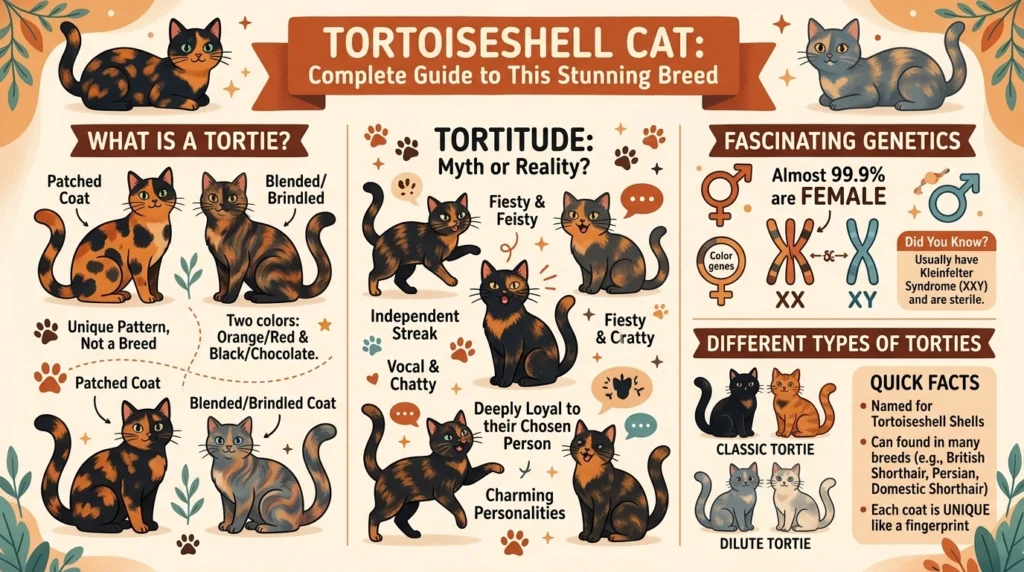
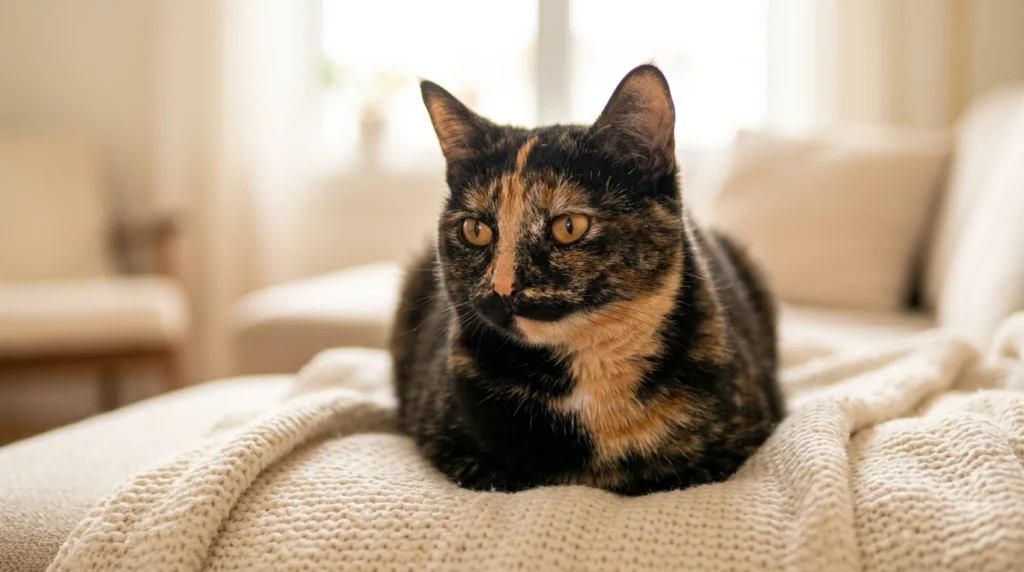
A tortoiseshell cat isn’t a breed, it’s a coat color pattern. The name comes from the resemblance to genuine tortoiseshell material, which displays a rich mix of amber, black, and brown tones.
The pattern occurs because of a fascinating genetic process. Because coat color genes in cats link to the X chromosome, a cat needs two X chromosomes to display both orange and black coloring simultaneously. As a result, nearly all tortoiseshell cats are female.
Male tortoiseshell cats do exist but they’re extremely rare. They occur when a male cat carries an extra X chromosome (XXY), a condition called Klinefelter syndrome. Therefore, a male tortoiseshell is genuinely one of nature’s rarest sights.
What Colors Make Up a Tortoiseshell Pattern?
Tortoiseshell coloring typically combines:
- Black or dark brown patches
- Orange or ginger patches
- Cream or buff tones in some variations
- Red undertones in warmer-colored individuals
Also, the pattern is never striped or tabby; those cats have a different genetic marker. Instead, tortoiseshell patches appear in irregular, swirling shapes that make every single cat completely unique.
Tortoiseshell vs. Calico What’s the Difference?
This question comes up constantly. Here’s a simple breakdown:
| Feature | Tortoiseshell Cat | Calico Cat |
| Colors | Black, orange, brown | Black, orange, AND white |
| White patches | None or minimal | Significant white areas |
| Pattern type | Blended, mosaic | Distinct color blocks |
| Rarity | Common | Common |
| Male occurrence | Very rare | Extremely rare |
Therefore, if you see white patches, that’s a calico. No white? That’s your tortoiseshell.
Tortoiseshell Cat Personality: Is “Tortitude” Real?
The Famous Tortoiseshell Attitude
Ask any tortoiseshell cat owner and they’ll tell you these cats have opinions. Strong ones. The term “tortitude” describes the feisty, independent, and sometimes demanding personality that many tortoiseshell owners observe in their cats.
However, it’s worth understanding what this actually means in daily life. Tortoiseshell cats tend to be:
- Fiercely loyal to their chosen person
- Vocal and communicative they’ll tell you exactly what they want
- Independent thinkers who don’t always follow instructions
- Affectionate on their own terms cuddles happen when they decide
- Highly intelligent with strong problem-solving abilities
- Territorial about their space and belongings
Is Tortitude Backed by Science?
Interestingly, a study from the University of California, Davis found that tortoiseshell and calico cats showed higher rates of challenging behaviors compared to cats of other colors. Therefore, there’s genuine scientific support for the tortitude reputation though every individual cat varies significantly.
In my experience, tortoiseshell cats are endlessly entertaining. They’re never boring. However, they do require an owner who respects their independence and doesn’t try to force affection on their own schedule.
Pro Tip: If you want to bond quickly with a tortoiseshell cat, let them come to you first. Sit quietly in the same room, avoid direct eye contact initially, and let them investigate on their own terms. As a result, they’ll trust you faster than if you reach out immediately.
How to Care for Your Tortoiseshell Cat: Step-by-Step Guide
Building the Perfect Care Routine
Caring for a tortoiseshell cat follows the same fundamentals as any domestic cat. However, their personality quirks mean a few specific strategies work better than others.
- Establish a consistent routine. Tortoiseshell cats thrive on predictability. Therefore, feed, play, and groom at the same times each day. This reduces stress and prevents behavioral issues.
- Provide mental stimulation daily. Because these cats are intelligent, boredom leads to mischief. Puzzle feeders, interactive toys, and window perches keep their minds engaged. Also, rotating toys every few days prevents boredom.
- Create vertical spaces. Tortoiseshell cats love to observe their territory from above. Cat trees, wall shelves, and window perches give them the vantage points they crave. As a result, they feel more secure and confident in their environment.
- Schedule regular vet check-ups. All cats need annual veterinary care. However, if your tortoiseshell is male, consult your vet about Klinefelter syndrome which can cause specific health complications. Always consult your vet about any behavioral changes, as these sometimes signal underlying health issues.
- Groom based on coat length. Tortoiseshell is a color pattern, not a breed so coat length varies. Short-haired tortoiseshells need weekly brushing. Long-haired varieties need daily brushing to prevent matting. Therefore, establish a grooming routine from kittenhood.
- Respect their boundaries. Unlike some cat breeds that love constant contact, tortoiseshell cats set their own terms for affection. Therefore, never force cuddle time. Instead, create comfortable spaces where they can choose to be near you.
- Provide high-quality nutrition. Feed a balanced diet appropriate for your cat’s age and health status. Also, always provide fresh water daily, especially important for urinary tract health in cats. Consult your vet about the best dietary choices for your individual cat.
Tortoiseshell Cat Health: What You Need to Know
Common Health Considerations
Tortoiseshell cats don’t face unique health problems solely because of their coat color. However, certain considerations deserve attention.
Health Concerns for Male Tortoiseshell Cats
Male tortoiseshell cats carry the XXY chromosome pattern. As a result, they often experience:
- Sterility most male tortoiseshells cannot reproduce
- Increased health complications associated with Klinefelter syndrome
- Shorter lifespan in some cases compared to female tortoiseshells
Therefore, if you own a rare male tortoiseshell, regular veterinary monitoring is especially important.
General Cat Health Checklist
For all tortoiseshell cats male or female maintain these health practices:
- Annual vet visits for vaccinations, parasite control, and overall health assessment
- Dental care brush teeth regularly or use vet-approved dental treats
- Weight management indoor cats can become overweight easily
- Parasite prevention fleas, ticks, and worms need year-round prevention
- Spaying or neutering reduces health risks and behavioral issues significantly
Always consult your veterinarian about the specific health needs of your individual tortoiseshell cat. Never self-diagnose or delay veterinary care if your cat shows signs of illness.
Fascinating Facts About the Tortoiseshell Cat
Tortoiseshell Cats in History and Folklore
Tortoiseshell cats have captured human imagination for centuries. Therefore, they appear in folklore and legends across many cultures.
Here are some fascinating facts you probably didn’t know:
- In Japanese folklore, tortoiseshell cats (called “mike neko”) bring good luck to sailors at sea
- Celtic mythology considered tortoiseshell cats as good omens when they entered a home
- In the American South, tortoiseshell cats were historically called “money cats” believed to bring financial fortune
- In England, a male tortoiseshell cat was considered extraordinarily lucky because of their extreme rarity
- Ancient Khmer folklore believed tortoiseshell cats were born from the blood of a young goddess
Also, these cats appear in some of the oldest cat paintings discovered in European and Asian art history. As a result, their cultural significance spans thousands of years across every continent.
Tortoiseshell Cats in Pop Culture
Several famous tortoiseshell cats have captured public hearts. Marzipan, the resident cat of the Louisville Palace Theatre, became a beloved local celebrity. Also, countless tortoiseshell cats have gone viral on social media largely because their striking coats photograph beautifully in natural light.
Common Mistakes Tortoiseshell Cat Owners Make
Mistake 1: Expecting Constant Affection
Many new cat owners expect their tortoiseshell to behave like a lap cat from day one. However, tortoiseshell cats build trust gradually. Therefore, forcing affection early in the relationship damages trust and makes bonding harder, not easier.
Mistake 2: Ignoring Their Need for Stimulation
Because tortoiseshell cats are highly intelligent, an unstimulated tortoiseshell becomes destructive. Scratching furniture, knocking things off shelves, and excessive vocalization are all signs of boredom. Therefore, daily play sessions of at least 15–20 minutes are genuinely essential, not optional.
Mistake 3: Assuming Personality Comes From Coat Color
While tortitude is a real phenomenon, not every tortoiseshell cat displays it equally. Therefore, never assume your cat will behave a certain way solely because of coat color. Each cat is an individual. Also, environment, socialization, and early experiences shape personality far more than coat genetics.
Mistake 4: Skipping Veterinary Care
Some owners assume their cat is fine because it “looks healthy.” However, cats hide illness instinctively as a survival behavior from their wild ancestors. Therefore, annual vet visits catch problems early, before symptoms become visible. Never skip routine veterinary care for any cat, including your tortoiseshell.
Mistake 5: Not Providing Enough Vertical Space
Tortoiseshell cats love to survey their territory from height. Without cat trees or shelves, they’ll find their own elevated spots, usually your kitchen counters or bookshelves. Therefore, invest in good vertical furniture early. As a result, your cat stays happy and your belongings stay safe.
Pro Tip: A tall, sturdy cat tree placed near a sunny window is the single best investment you can make for a tortoiseshell cat’s wellbeing. It provides climbing, scratching, resting, and bird-watching opportunities all in one piece of furniture and it keeps them entertained for hours daily.
Frequently Asked Questions About the Tortoiseshell Cat
1. Is a tortoiseshell cat a specific breed?
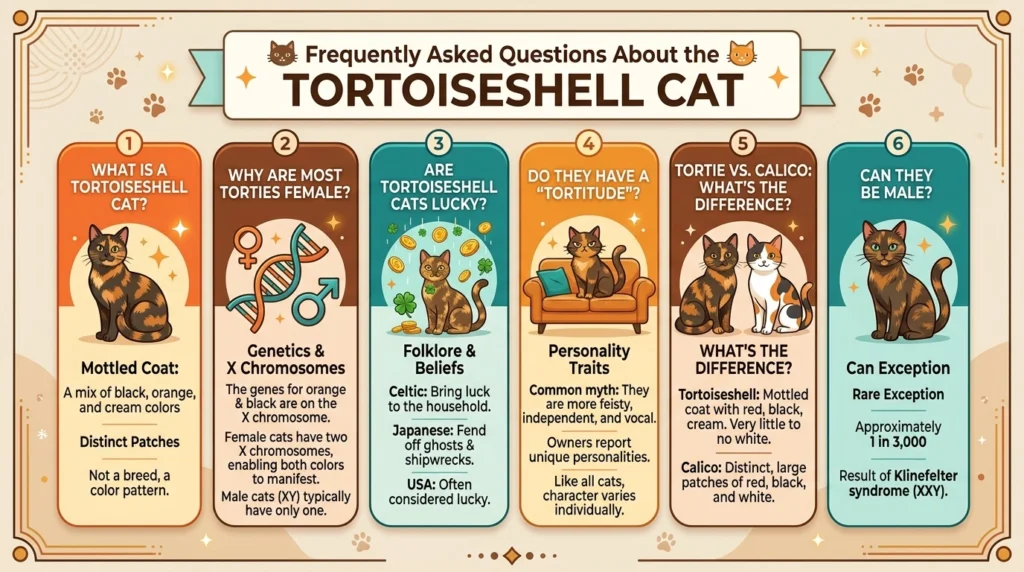
No, a tortoiseshell cat is not a specific breed. Instead, “tortoiseshell” describes a coat color pattern that appears across many different cat breeds. Therefore, you can find tortoiseshell coloring in Domestic Shorthairs, Persians, Maine Coons, British Shorthairs, and many other breeds. The pattern results from specific X-chromosome genetics rather than breed-specific traits.
2. Why are almost all tortoiseshell cats female?
The genes controlling orange and black coat color both link to the X chromosome. Because female cats carry two X chromosomes (XX), they can express both colors simultaneously creating the tortoiseshell pattern. Male cats carry only one X chromosome (XY), so they can normally only express one color. Therefore, male tortoiseshells only occur when a rare genetic anomaly gives them an extra X chromosome (XXY).
3. Do tortoiseshell cats really have “tortitude”?
Many tortoiseshell cat owners and even some researchers say yes. A University of California, Davis study found that tortoiseshell and calico cats displayed more challenging behaviors than other cats. However, every cat is an individual. Therefore, while tortitude is a real pattern, your specific tortoiseshell may be completely gentle and laid-back. Socialization, environment, and early experiences shape personality significantly.
4. How long do tortoiseshell cats live?
Tortoiseshell cats typically live as long as any healthy domestic cat approximately 12 to 16 years with proper care. Some live into their late teens. However, male tortoiseshell cats with Klinefelter syndrome may face additional health challenges that affect lifespan. Therefore, regular veterinary care throughout your cat’s life is the single most important factor in longevity. Always consult your vet about your individual cat’s specific health needs.
5. Are tortoiseshell cats rare?
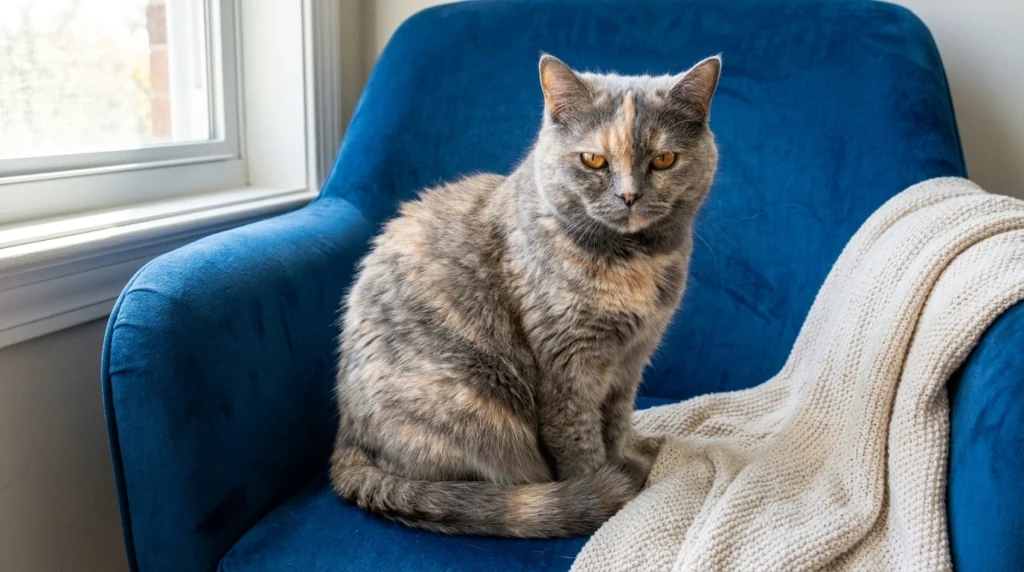
Female tortoiseshell cats are fairly common; the genetics that produce the pattern occur naturally across many cat populations. However, male tortoiseshell cats are genuinely rare. Estimates suggest only about 1 in 3,000 tortoiseshell cats is male. Therefore, if you encounter a male tortoiseshell, you’re looking at one of nature’s most unusual genetic outcomes. In addition, certain tortoiseshell patterns like the dilute tortoiseshell (blue and cream tones) are less commonly seen than the classic orange and black version.
6. Can tortoiseshell cats get along with other pets?
Yes with proper introduction and socialization. However, because tortoiseshell cats tend to be territorial and independent, introductions to other pets should happen gradually. First, keep new pets separated for several days. Then exchange scents using bedding before allowing visual contact. Finally, supervise face-to-face meetings carefully until all animals show calm, relaxed body language. Consult your vet or an animal behaviorist if introductions prove difficult.
7. What should I feed my tortoiseshell cat?
Because tortoiseshell is a color pattern rather than a breed, dietary needs depend on your cat’s age, weight, activity level, and health status, not coat color. Generally, feed a high-quality commercial cat food appropriate for your cat’s life stage (kitten, adult, or senior). Also, ensure fresh water is always available. Always consult your veterinarian for personalized dietary recommendations, especially if your cat has any health conditions.
Your Tortoiseshell Cat Journey Starts Here
The tortoiseshell cat is truly one of nature’s most remarkable creatures, stunning to look at, complex to understand, and deeply rewarding to live with. Their unique coat pattern, fascinating genetics, and bold personalities make them unlike any other cat you’ll ever meet.
However, they’re not for everyone. These cats need patient, respectful owners who appreciate feline independence. Therefore, if you’re considering adopting one, take time to understand their needs before bringing them home.
Also, consider adopting from a rescue organization tortoiseshell cats frequently appear in shelters and deserve loving forever homes. Your local rescue team can match you with a tortoiseshell whose personality fits your household perfectly.