
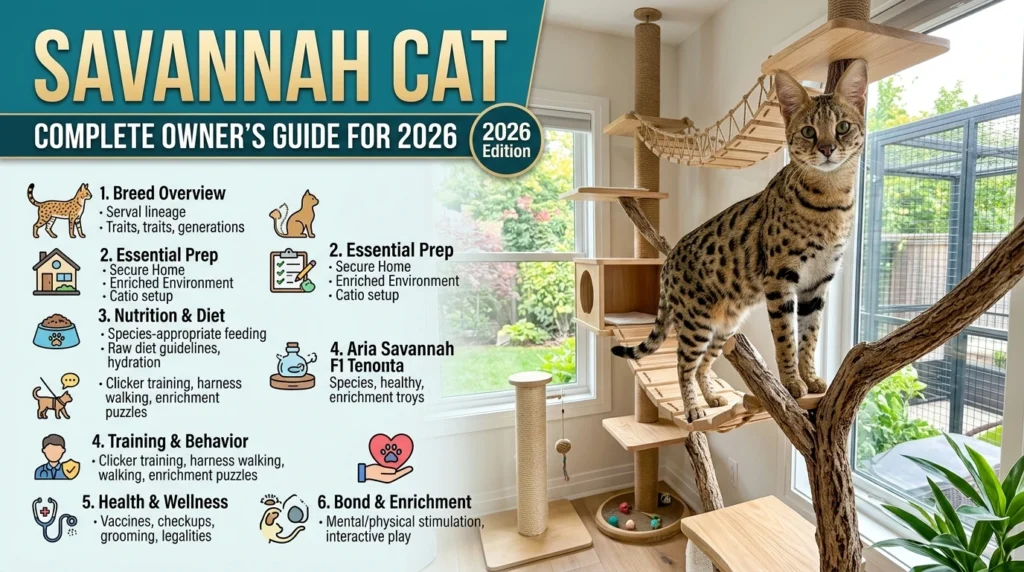
Have you ever seen a cat that looks like a miniature cheetah walking through your living room? That’s the savannah cat and once you’ve met one, you understand immediately why cat lovers worldwide are obsessed with this breed.
Savannah cats are extraordinary animals. They’re tall, athletic, and strikingly beautiful. However, they’re also one of the most demanding cat breeds you can own. Many pet owners don’t realize just how different savannah cats are from typical domestic cats until they’re already living with one.
In my experience, the people who thrive with savannah cats are those who go in fully prepared. They understand the breed’s wild ancestry, respect its intelligence, and commit to meeting its significant needs. Those who don’t do their research often find themselves overwhelmed.
This guide covers everything from what a savannah cat actually is, to how to care for one, to whether this remarkable breed genuinely fits your lifestyle. Let’s find out together.
Quick Answer
A savannah cat is a hybrid domestic cat created by crossing an African Serval with a domestic cat. Known for their tall frames, large ears, and spotted coats, they’re highly intelligent, energetic, and loyal. They require significant space, stimulation, and experienced ownership to thrive happily.
Key Takeaways
- Savannah cats are a hybrid breed part African Serval, part domestic cat
- They’re classified by generation (F1–F5) earlier generations are wilder and larger
- Savannah cats are highly active and need significant daily exercise and stimulation
- They’re loyal like dogs many learn to walk on leashes and play fetch
- Legal restrictions apply in many states and countries always check local laws first
- They’re expensive F1 savannah cats can cost $10,000–$20,000 or more
What Is a Savannah Cat?
A savannah cat is a hybrid domestic cat breed created by crossing an African Serval a wild cat native to sub-Saharan Africa with a domestic cat. The result is a tall, spotted, highly intelligent cat that combines wild appearance with domestic temperament.
The History and Origin of the Savannah Cat
The first documented savannah cat was born in 1986. Breeder Judee Frank crossed a male Serval with a Siamese domestic cat, producing a unique spotted kitten named Miracle. Therefore, the entire savannah cat breed traces back to that single extraordinary birth.
The International Cat Association (TICA) officially recognized the savannah cat as a championship breed in 2012. As a result, the breed gained global recognition and a surge in popularity among exotic cat enthusiasts.
Understanding Savannah Cat Generations
Savannah cats are classified by filial generation how many generations removed they are from the original Serval ancestor:
| Generation | Serval Percentage | Typical Size | Temperament | Price Range |
| F1 | ~50% | 17–25 lbs | Most wild-like | $10,000–$20,000+ |
| F2 | ~25% | 16–20 lbs | Still energetic | $4,000–$9,000 |
| F3 | ~12.5% | 14–18 lbs | More domestic | $2,000–$4,000 |
| F4 | ~6% | 12–16 lbs | Close to domestic | $1,000–$2,500 |
| F5 | ~3% | 11–13 lbs | Most domestic-like | $1,000–$2,000 |
Therefore, if you’re a first-time exotic cat owner, an F4 or F5 savannah cat is typically a much more manageable starting point than an F1 or F2.
What Does a Savannah Cat Look and Act Like?
Savannah cats look and act unlike any other domestic cat breed. They combine striking physical features with a bold, dog-like personality that surprises most first-time owners.
Physical Characteristics
Savannah cats are immediately recognizable because of their distinctive appearance:
- Height: 14–17 inches tall at the shoulder significantly taller than average cats
- Weight: 12–25 pounds depending on generation and sex
- Coat: Short, dense, and covered in bold dark spots on a golden or brown background
- Ears: Large, upright, and set high on the head resembling their Serval ancestry
- Legs: Long and slender, giving them an athletic, cheetah-like stance
- Eyes: Deep-set, hooded eyes in gold, green, or brown tones
- Tail: Medium-length with black rings and a solid black tip
Personality and Temperament
Here’s where savannah cats truly set themselves apart. Many pet owners don’t realize how dog-like their behavior actually is.
Savannah cats typically:
- Follow their owners from room to room constantly
- Play fetch and retrieve toys willingly
- Walk on a leash with proper training and actually enjoy it
- Greet visitors with curiosity rather than hiding
- Learn tricks quickly because of their exceptional intelligence
- Vocalize with a unique chirping sound called a “chitter”
However, savannah cats also demand significant attention. They don’t do well when left alone for long periods. Also, they can be destructive when bored, a behavior that stems directly from their wild ancestry.
Pro Tip: Before getting a savannah cat, honestly ask yourself can you commit to 1–2 hours of active play and interaction daily? Because without that commitment, a savannah cat will find its own entertainment and you won’t enjoy the results.
How to Care for a Savannah Cat: Complete Step-by-Step Guide
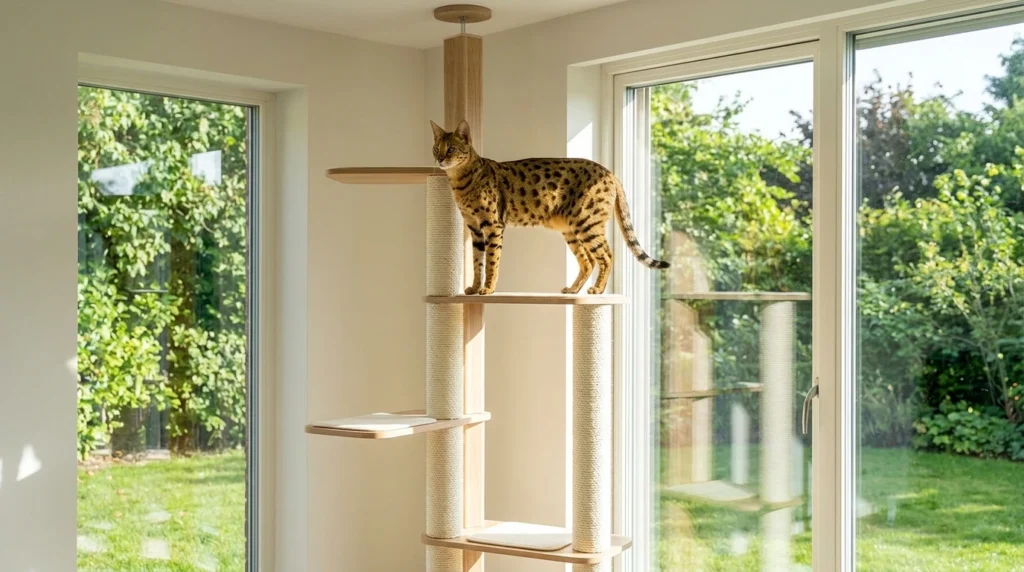
Caring for a savannah cat requires more effort than caring for a typical domestic cat. However, with the right setup and routine, it’s genuinely rewarding.
Step-by-Step Savannah Cat Care Guide
- Check your local laws first. Savannah cats, especially F1 and F2 generations are illegal in several US states including Hawaii, Georgia, and Nebraska. Also, many countries ban or restrict them entirely. Therefore, research your local regulations before purchasing or adopting.
- Find a reputable TICA-registered breeder. Because savannah cats require careful breeding, a reputable breeder matters enormously. Ask for health certificates, Serval lineage documentation, and references from previous buyers. Never purchase from unverified sources.
- Prepare a large, enriched living space. Savannah cats need space to run, climb, and explore. Invest in tall cat trees, wall-mounted shelves, and large scratching posts. Also, childproof your home thoroughly. These cats open cabinets, doors, and containers with ease.
- Establish a daily play routine. Schedule at least two 30-minute interactive play sessions daily. Wand toys, puzzle feeders, and fetch games work best. As a result, a properly stimulated savannah cat is calmer, happier, and far less destructive.
- Feed a high-protein, species-appropriate diet. Savannah cats thrive on high-meat-content food. Many owners feed a raw or freeze-dried raw diet supplemented with quality wet food. Always consult your vet before starting a raw diet especially for younger cats.
- Leash train from kittenhood. Savannah cats adapt to leash walking remarkably well when trained early. Start with a well-fitted harness at 8–12 weeks old. As a result, outdoor exploration becomes a safe, enriching daily activity.
- Schedule regular veterinary check-ups. Find a vet experienced with exotic or hybrid cat breeds. Also, ensure all vaccinations and parasite prevention are current. Male savannah cats should be neutered which reduces territorial behavior significantly.
Grooming Requirements
Fortunately, savannah cats are relatively low-maintenance groomers:
- Coat: Weekly brushing keeps the short coat in excellent condition
- Ears: Clean weekly with a vet-approved ear cleaner large ears accumulate debris faster
- Nails: Trim every 2–3 weeks to protect furniture and prevent injury
- Teeth: Brush 2–3 times weekly using cat-safe toothpaste
Savannah Cat vs. Other Exotic Cat Breeds: Full Comparison
How does the savannah cat compare to other popular exotic breeds? Here’s an honest side-by-side breakdown:
| Feature | Savannah Cat | Bengal Cat | Maine Coon | Siberian Cat |
| Size | Very Large | Medium-Large | Large | Large |
| Wild Ancestry | African Serval | Asian Leopard Cat | None | None |
| Energy Level | Very High | High | Moderate | Moderate |
| Dog-like Behavior | Very Strong | Moderate | Moderate | Low |
| Leash Training | Excellent | Good | Possible | Unlikely |
| Beginner Friendly | No | Sometimes | Yes | Yes |
| Price Range | $1,000–$20,000+ | $1,000–$4,000 | $400–$2,000 | $1,200–$4,000 |
| Legal Restrictions | Yes many areas | Rarely | None | None |
| Lifespan | 12–20 years | 12–16 years | 12–15 years | 12–15 years |
Pros and Cons of Owning a Savannah Cat
Pros:
- Extraordinary intelligence and trainability
- Deeply loyal and bonded to their families
- Stunning appearance unlike any other domestic breed
- Active, playful companions for energetic owners
- Long lifespan often 15–20 years
Cons:
- Extremely high cost especially early generations
- Legal restrictions in many locations
- Requires significant daily time and attention
- Not suitable for apartment living without large vertical spaces
- Can be challenging with small pets like birds or rodents
- Needs experienced cat ownership not ideal for beginners
Common Mistakes Savannah Cat Owners Make
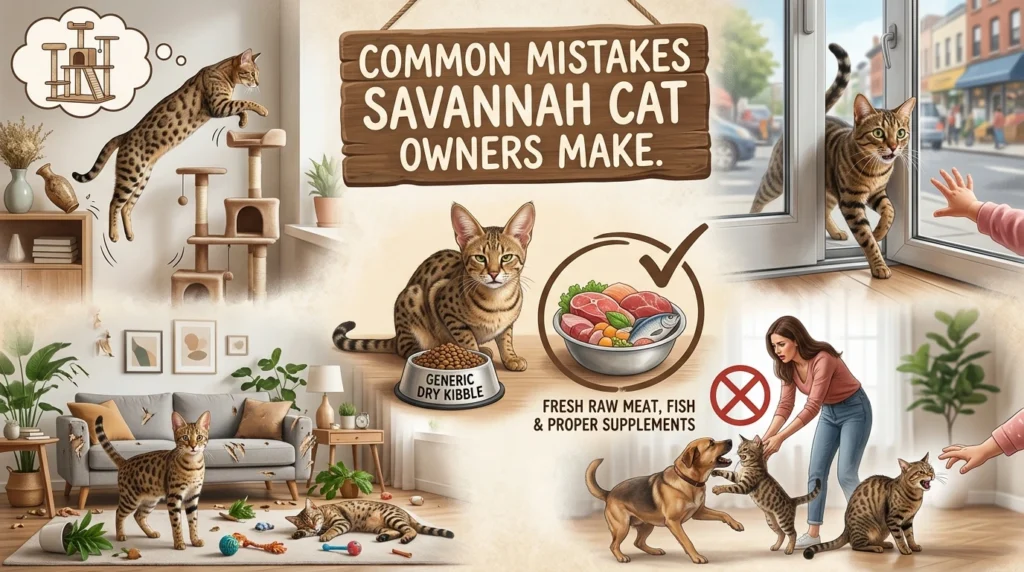
Mistake 1: Underestimating the Time Commitment
This is the most common mistake I see. Many buyers fall in love with photos of savannah cats online. However, they don’t realize these cats need two or more hours of active engagement daily. As a result, under-stimulated savannah cats become destructive, anxious, and difficult to live with.
Mistake 2: Ignoring Legal Requirements
Before purchasing a savannah cat, always research local laws thoroughly. F1 and F2 savannah cats are restricted or banned in many US states, Canadian provinces, and European countries. Therefore, skipping this research can result in costly legal problems or worst of all having your cat confiscated.
Mistake 3: Choosing an Early Generation Without Experience
F1 and F2 savannah cats are extraordinary animals but they’re not beginner pets. Because they carry a higher percentage of wild Serval genetics, they require more specialized handling, larger spaces, and significantly more experience. Therefore, first-time exotic cat owners should start with F4 or F5 generations.
Mistake 4: Feeding Low-Quality Food
Savannah cats need high-protein, meat-rich diets. Feeding standard low-quality dry food doesn’t support their unique nutritional needs. Also, many owners don’t realize that some savannah cats have difficulty digesting high-carbohydrate commercial diets. Always consult your vet about the best dietary approach for your individual cat.
Mistake 5: Skipping Veterinary Care
Some owners assume their savannah cat is healthy because it “looks strong.” However, regular veterinary care is essential especially for hybrid breeds with potential genetic health concerns. Therefore, find an exotic-experienced vet and schedule check-ups at least annually. Never delay care if behavioral or physical changes occur.
Pro Tip: Join a savannah cat owner community before bringing your cat home. Groups on Facebook and forums like TheSavannahCat.com connect you with experienced owners who share real-world advice, breeder recommendations, and practical care tips that no book fully covers.
Frequently Asked Questions About the Savannah Cat
1. Is a savannah cat a good pet for families?
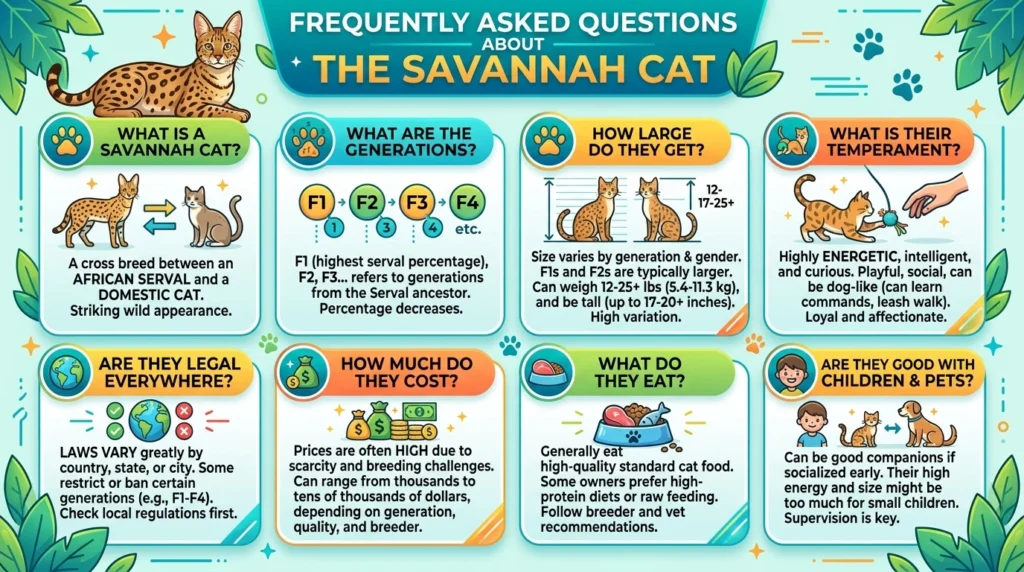
Savannah cats can be wonderful family pets but only for the right family. They bond deeply with their people and often enjoy children who interact gently and playfully. However, their high energy and size make them better suited to families with older children rather than toddlers. Also, they may chase or intimidate smaller pets like hamsters, birds, or rabbits due to their strong prey drive. Therefore, families with young children or small pets should consider F4 or F5 generations, which display more domestic temperament. Always supervise interactions between savannah cats and young children, and consult a vet or breeder about the best generation for your household.
2. Are savannah cats legal in the United States?
Legality varies significantly by state, county, and city. States including Hawaii, Georgia, Nebraska, and Rhode Island ban savannah cats particularly early generations. Other states allow F4 and F5 generations but restrict F1 through F3 cats. Also, some cities have their own municipal restrictions that override state law. Therefore, always check your specific state AND local laws before purchasing a savannah cat. Contact your state wildlife agency or a local exotic animal attorney for the most current legal guidance in your area. Never rely solely on breeder assurances about legality.
3. How much does a savannah cat cost?
Savannah cat prices vary enormously based on generation, gender, and breeder reputation. Here’s a general breakdown: F1 savannah cats cost $10,000–$20,000 or more. F2 cats range from $4,000–$9,000. F3 cats typically cost $2,000–$4,000. F4 and F5 savannah cats, the most domestic-like generally cost $1,000–$2,500. In addition to purchase price, budget for high-quality food, veterinary care, large cat furniture, and enrichment toys. As a result, the true first-year cost of owning a savannah cat frequently exceeds $5,000 even for lower-generation cats.
4. How big do savannah cats get?
Savannah cats are the tallest domestic cat breed in the world. F1 savannah cats can weigh 17–25 pounds and stand 14–17 inches tall at the shoulder. However, size decreases with each generation. F5 savannah cats typically weigh 11–13 pounds closer to a large domestic cat. Males are generally larger than females across all generations. Because of their long legs and slender build, savannah cats appear even larger than their weight suggests. They can jump up to 8 feet vertically so never underestimate their ability to reach high shelves or countertops.
5. What do savannah cats eat?
Savannah cats thrive on high-protein, meat-based diets. Many owners and breeders recommend a raw meat diet either homemade or commercially prepared to mirror their natural ancestral diet. High-quality wet food with a named meat as the first ingredient is also an excellent option. Also, freeze-dried raw food makes a convenient alternative for owners who prefer not to handle raw meat daily. Avoid dry kibble as the primary diet it’s too high in carbohydrates for this breed’s metabolic needs. Always consult your veterinarian before starting any raw feeding program, especially for kittens or cats with existing health conditions.
6. Do savannah cats get along with dogs?
Interestingly yes, in many cases. Savannah cats often get along better with dogs than with other cats. Because of their bold, confident personality, they don’t typically feel threatened by dogs. Also, their dog-like behavior means they sometimes form genuine friendships with canine companions, especially playful, medium-sized dogs. However, proper introduction is essential. Keep the animals separated initially, exchange scents through bedding, and allow visual contact before supervised face-to-face meetings. Never force interaction. As a result, slow, patient introductions typically produce the best long-term relationships between savannah cats and dogs.
7. How long do savannah cats live?
Savannah cats have impressively long lifespans compared to many domestic breeds. With proper care, most savannah cats live 12–20 years. Some reports document savannah cats living beyond 20 years in exceptional circumstances. However, lifespan depends significantly on generation, genetics, diet, veterinary care, and living environment. F1 and F2 savannah cats with higher Serval genetics may face different health considerations than later generations. Therefore, regular annual veterinary check-ups, a species-appropriate diet, and an enriched living environment all contribute meaningfully to your savannah cat’s long-term health and longevity. Always work with an exotic-experienced veterinarian throughout your cat’s life.
Your Savannah Cat Journey Starts Here
The savannah cat is genuinely one of the most remarkable animals you can share your home with. Stunning to look at, deeply loyal, endlessly entertaining, and surprisingly trainable, these cats offer an ownership experience unlike anything else in the feline world.
However, they’re absolutely not the right pet for everyone. They need experienced owners, significant space, daily active engagement, and a genuine commitment to their complex needs. Also, the legal and financial considerations are real and significant.
Therefore, do your research thoroughly before taking the leap. Visit reputable breeders. Connect with savannah cat owner communities. Consult your vet about what ownership genuinely involves. Then if it all lines up, prepare for one of the most extraordinary relationships you’ll ever have with an animal.