Introduction
Your large breed dog depends on you for everything, especially what goes into their bowl every single day. However, not every dog food brand out there deserves that trust. In fact, some brands could be quietly damaging your big dog’s health over time.
Searching for dog food brands to avoid for large breeds is one of the smartest things you can do as a dog owner. Large dogs have very specific nutritional needs. Therefore, feeding them the wrong food can lead to joint problems, heart disease, obesity, and even shorter lifespans.
In my experience, most dog owners don’t realize the problem until their vet raises a red flag. So let’s change that today. This guide gives you clear, honest information about which brands to avoid, why they’re harmful, and what to look for instead. Your big dog deserves better and you’re about to find out exactly how to give it to them.
Why Dog Food Brands to Avoid for Large Breeds Matter So Much
Large Dogs Have Very Different Nutritional Needs
First, let’s understand why large breeds are so different. A Great Dane, Labrador, Rottweiler, or German Shepherd has a body that works very differently from a small Chihuahua. Because of their size, large dogs are more vulnerable to joint disease, bloat, heart problems, and obesity.
Therefore, the food they eat needs to support their bigger bones, heavier joints, and slower metabolism. Large breed dog food should have:
- Controlled calcium and phosphorus levels to protect bone development
- Glucosamine and chondroitin for joint health support
- Moderate fat content to prevent unhealthy weight gain
- High-quality named protein to maintain strong muscle mass
- No excessive fillers like corn, soy, or wheat as primary ingredients
However, many budget brands and even some popular names ignore these requirements completely. As a result, large dogs eating the wrong food often develop health problems that could have been prevented.
What Happens When Large Breeds Eat the Wrong Food?
In my experience working with dog owners, the effects aren’t always immediate. However, over months and years, the wrong food causes real damage. For example, large breed puppies fed high-calcium adult food often develop painful skeletal problems.
Also, foods with low-quality protein force the dog’s body to work harder just to get basic nutrition. As a result, energy drops, muscle mass decreases, and overall health declines. Therefore, knowing which brands to avoid is genuinely life-changing information for large breed owners.
Dog Food Brands to Avoid for Large Breeds The Warning List
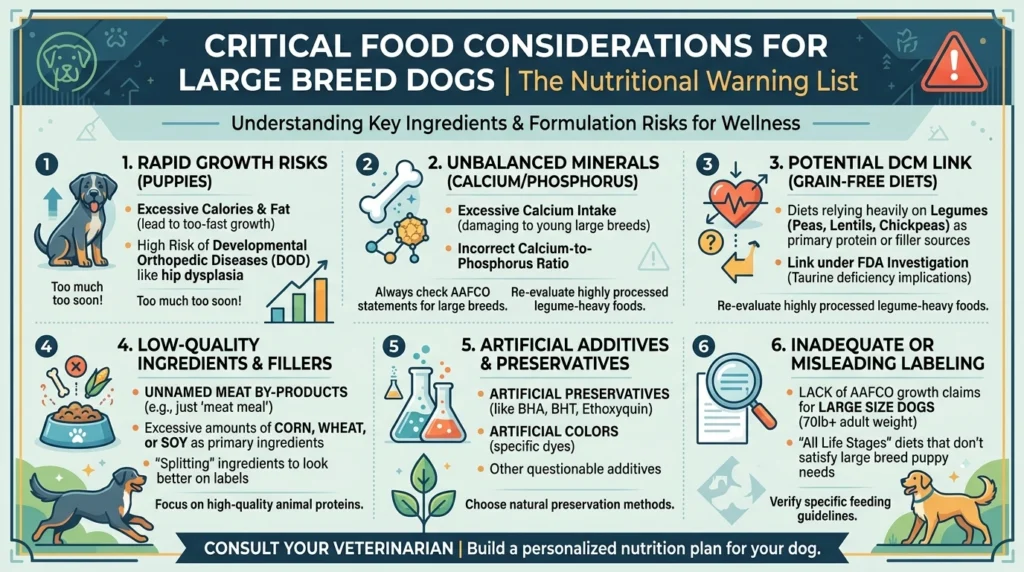
Brands That Consistently Raise Red Flags
Here are the brands that nutrition experts, veterinarians, and independent reviewers most commonly flag as problematic for large breeds. However, remember to always consult your vet before making any dietary changes.
1. Ol’ Roy (Walmart Store Brand)
Ol’ Roy is one of the most widely available budget brands in the US. However, it consistently scores poorly in independent nutritional evaluations. Here’s why it’s particularly bad for large breeds:
- Meat by-products lead the formula instead of named protein
- Corn and soy dominate the ingredient list as cheap fillers
- No glucosamine or chondroitin for joint support
- Artificial preservatives like BHA appear in some formulas
- Multiple FDA recall events are on record
Large dogs eating Ol’ Roy long-term often show dull coats, low energy, and digestive instability. Therefore, this is one brand I strongly suggest avoiding for big breeds.
2. Kibbles ‘n Bits
Kibbles ‘n Bits is a recognizable name but recognition doesn’t equal quality. In fact, this brand uses ingredients that are particularly harmful for large breeds:
- Corn syrup adds unnecessary sugar to the formula
- Artificial colors (Red 40, Yellow 5) serve zero nutritional purpose
- Soy and corn dominate as primary carbohydrate sources
- Generic meat by-products provide low-quality protein
- No large breed specific formula exists within their range
Also, the formula’s calcium and phosphorus ratios aren’t controlled for large breed needs. As a result, large breed puppies on this food face real skeletal development risks.
3. Alpo
Alpo has been around for decades. However, longevity doesn’t mean nutritional excellence especially for large breeds. The main concerns include:
- Animal by-products as the primary protein source
- Artificial flavors used to mask low ingredient quality
- High sodium content in wet food varieties
- No joint support ingredients for large breed needs
- Recall history that raises manufacturing concerns
Therefore, for a German Shepherd or Labrador who needs quality daily nutrition, Alpo simply doesn’t deliver what large bodies require.
4. Gravy Train
Gravy Train received serious national attention in 2018. Testing revealed traces of pentobarbital a euthanasia drug in their wet food products. This finding suggested euthanized animals entered the food supply chain.
For large breeds specifically, the concerns don’t stop there:
- Corn and soy lead most dry formulas
- No calcium control for large breed skeletal health
- Artificial additives throughout the ingredient list
- No glucosamine for joint support
This is one brand where the safety concerns go far beyond ingredient quality. Therefore, I’d recommend avoiding it entirely regardless of your dog’s size.
5. Sportmix
Sportmix made headlines in 2021 when the FDA linked it to aflatoxin poisoning from contaminated corn. Dozens of dogs died. The brand issued a massive recall, but the damage was devastating for affected families.
However, even beyond the safety crisis, Sportmix uses:
- Corn as the dominant ingredient problematic for large breed calcium ratios
- Low-quality protein sources that don’t support large breed muscle needs
- No joint support ingredients for big dogs
As a result, this brand poses both safety and nutritional risks for large breeds.
Pro Tip: Before buying any new dog food brand, spend two minutes searching the brand name plus “recall” on the FDA website at fda.gov. This simple habit could genuinely protect your large dog’s life.
[Dog Food Brands to Avoid in USA: 2026 Warning Guide]
How to Identify Harmful Dog Food for Large Breeds: Step-by-Step
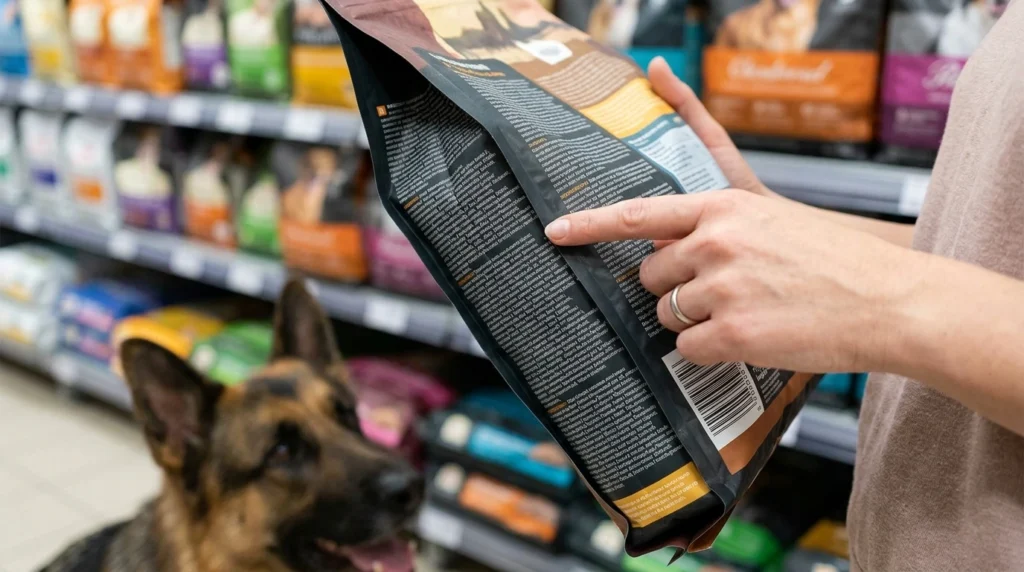
A Simple Label-Reading System
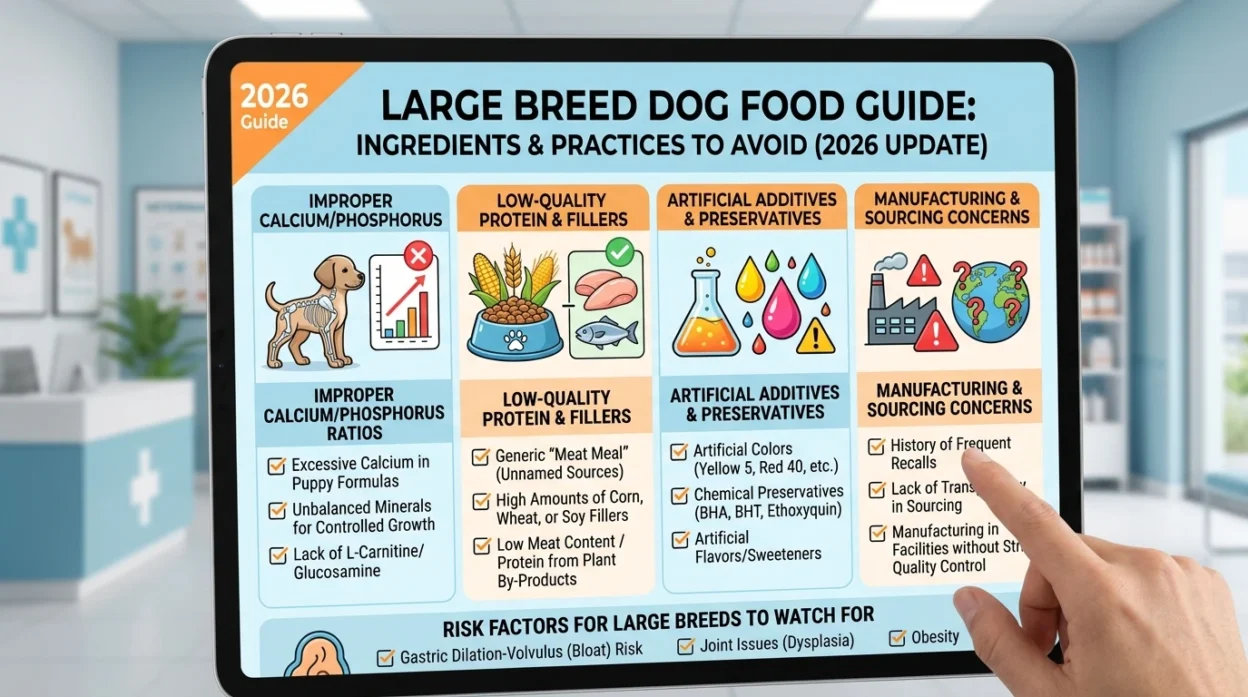
You don’t need a nutrition degree to spot a bad large breed of food. However, you do need to know what to look for. Here’s a clear step-by-step process:
- Flip the bag immediately. Ignore the front entirely. Marketing language like “premium,” “natural,” and “holistic” means nothing legally. The real information is always on the back label.
- Read the first three ingredients carefully. These make up the bulk of the formula. For large breeds, you want a named protein (chicken, beef, salmon) in position one. If corn, soy, or wheat appears first, put the bag down.
- Look for the AAFCO statement. Find the nutritional adequacy statement on the back. Also check whether it says “based on feeding trials” this is stronger validation than just “formulated to meet” standards.
- Check calcium and phosphorus levels. Large breed formulas, especially puppy versions should control these minerals carefully. However, most budget brands don’t list or control these ratios properly.
- Scan for glucosamine and chondroitin. These joint-supporting compounds are essential for large breeds. Therefore, if they’re missing from the label entirely, consider that a red flag.
- Look for artificial preservatives. BHA, BHT, and ethoxyquin should not appear in a quality large breed food. Also watch for artificial colors like Red 40 and Yellow 5 they add nothing nutritionally.
- Check the recall history online. Visit fda.gov and search the brand name. A pattern of recalls especially for contamination tells you something important about manufacturing standards.
What Good Large Breed Dog Food Looks Like
For comparison, here’s what a quality large breed formula includes:
| Feature | What to Look For | Red Flag |
| First Ingredient | Named protein (chicken, beef) | Corn, soy, or meat by-products |
| Joint Support | Glucosamine + chondroitin listed | No mention of joint ingredients |
| Calcium Control | Large breed formula stated | Generic adult formula only |
| Preservatives | Mixed tocopherols (Vitamin E) | BHA, BHT, ethoxyquin |
| AAFCO Statement | Feeding trial validated | Formulation only |
| Recall History | Clean or minimal | Multiple serious events |
Common Mistakes Large Breed Owners Make With Dog Food
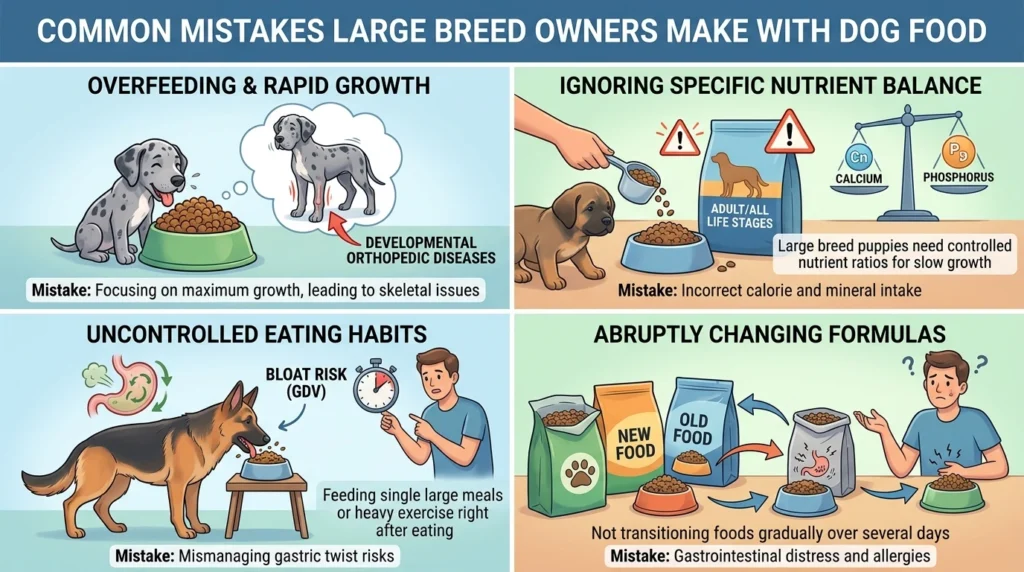
Mistake 1: Feeding Generic Adult Food to Large Breed Puppies
This is the most damaging mistake I see. Generic adult formulas have higher calcium levels than large breed puppies can safely handle. As a result, skeletal development problems including painful joint conditions can develop during the growth phase.
Therefore, always use a formula specifically labeled for large breed puppies until your dog reaches full skeletal maturity. For most large breeds, that’s around 18 to 24 months. For giant breeds like Great Danes, it can be up to 36 months.
Mistake 2: Choosing Based on Price Alone
Budget brands are tempting. However, the true cost of cheap food often shows up later in vet bills. Joint problems, obesity, and digestive disease all cost far more to treat than the savings from buying budget kibble.
Also, higher-quality food is often more digestible meaning your dog needs less of it per meal. As a result, the daily cost difference between budget and quality food is frequently smaller than the bag price suggests.
Mistake 3: Ignoring Caloric Density for Large Breeds
Large breeds gain weight easily. Therefore, feeding a formula designed for active small dogs with high fat and calorie content causes rapid weight gain in bigger, less active large breeds. Also, obesity in large dogs accelerates joint deterioration significantly.
Always check the kcal per cup on the label and calculate your dog’s specific daily needs based on their weight and activity level.
Mistake 4: Skipping the Transition Period
Even switching from a harmful brand to a great one causes digestive upset if done abruptly. However, many owners make this switch overnight and then blame the new food when their dog has loose stools.
Always transition over 7 to 10 days. Start with 25% new food mixed with 75% old food. Then gradually shift the ratio every two to three days until fully transitioned.
Mistake 5: Not Reassessing Food as the Dog Ages
Large breeds age faster than small dogs. Therefore, a food that’s perfect for your healthy three-year-old Labrador may not serve them well at age seven. Senior large breeds need lower calories, more joint support, and sometimes adjusted protein levels.
Also, annual vet visits are the perfect time to reassess your dog’s current food. Make the food conversation part of every wellness check-up.
Pro Tip: Watch your large breed dog’s stool quality as your clearest indicator of food performance. Firm, well-formed stools in appropriate volume signal good digestibility. Loose, excessive, or very smelly stools often indicate low-quality ingredients or poor formula fit.
Frequently Asked Questions: Dog Food Brands to Avoid for Large Breeds
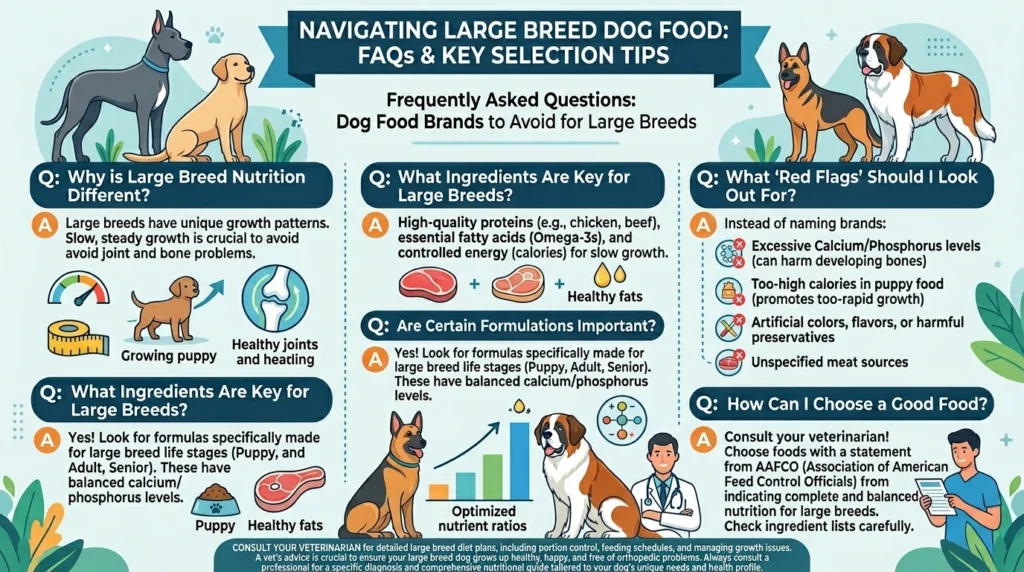
1. Why are some dog food brands specifically harmful for large breeds?
Large breeds have unique nutritional requirements that budget brands frequently ignore. Controlled calcium-to-phosphorus ratios protect skeletal development. Glucosamine and chondroitin support heavier joints under greater daily stress. Also, moderate caloric density prevents obesity, a serious health risk in larger dogs. Brands that use corn and soy as primary ingredients, skip joint support compounds, and fail to control mineral ratios for large body types are genuinely harmful to big dogs over time. Therefore, always look for formulas specifically designed and labeled for large or giant breeds.
2. Is Ol’ Roy safe for large breed dogs in an emergency?
Ol’ Roy meets minimum AAFCO nutritional standards, so it won’t cause immediate harm in a genuine emergency situation. However, it’s not suitable as a long-term diet for large breeds because it lacks joint support, uses low-quality protein sources, and doesn’t control calcium ratios appropriately for bigger dogs. Therefore, use it only as a very short-term bridge if absolutely necessary and switch to a quality large breed formula as soon as possible. Also, consult your vet if your large breed dog has been on Ol’ Roy for an extended period.
3. What are the safest dry dog food brands for large breeds?
Based on nutritional research, veterinary recommendation frequency, and ingredient quality, Purina Pro Plan Large Breed, Hill’s Science Diet Large Breed, and Royal Canin Large Adult consistently earn top marks. All three include glucosamine and chondroitin for joint health, use named protein sources, control calcium levels appropriately, and carry feeding-trial-validated AAFCO compliance. Also, Iams Large Breed Adult offers solid nutrition at a more accessible price point. However, always consult your vet to confirm the best specific formula for your individual dog’s needs.
4. How do I know if my large breed dog’s current food is causing problems?
Watch for these warning signs over a four to eight week period. Excessive or loose stools often indicate poor digestibility. A dull, dry coat with excessive shedding suggests nutritional deficiency. Also, low energy levels inappropriate for your dog’s age and breed, unexplained weight gain, or persistent skin issues all warrant a food review. Furthermore, stiffness after rest or reduced enthusiasm for movement in younger large breeds may indicate inadequate joint nutrition. If you notice any of these signs, consult your vet before switching foods as symptoms can indicate underlying conditions beyond food quality.
5. Are grain-free foods better for large breeds?
For most large breeds no. The FDA has been investigating a potential link between grain-free diets and dilated cardiomyopathy (DCM) , a serious heart condition since 2018. Large and giant breeds already carry elevated cardiac risk compared to smaller dogs. Therefore, unless your vet has specifically recommended grain-free for a diagnosed grain sensitivity, grain-inclusive large breed formulas are the safer, more scientifically supported choice. Also, grains aren’t harmful to most dogs and provide useful energy, B vitamins, and fiber that support healthy digestion in large breeds.
6. Can large breed dogs eat regular adult dog food safely?
Standard adult formulas can be fed to healthy large breed adult dogs in some cases. However, they’re not ideal because they don’t control calcium-to-phosphorus ratios specifically for large body types and often lack the glucosamine and chondroitin that big dogs need for joint protection. Also, many standard adult formulas have higher caloric density than large breeds who are prone to weight gain actually need. Therefore, a formula specifically labeled for large breeds is always the better choice, as it’s designed with their unique body requirements in mind. Consult your vet for personalized guidance.
7. How often should I reassess my large breed of dog’s food?
At minimum, reassess at every annual vet visit. However, also reassess whenever your dog shows health changes, weight gain, digestive issues, coat deterioration, or reduced energy. Also, life stage transitions are important reassessment moments. Large breed puppies should transition to adult food around 18 to 24 months. Adult large breeds should consider senior formulas starting around age six to seven earlier than most owners expect. Therefore, treating your dog’s food as a static decision you make once and never revisit is a common mistake with real long-term health consequences for big dogs.
Protecting Your Large Dog Starts in the Bowl
Knowing which dog food brands to avoid for large breeds is genuinely one of the most protective things you can do for your big dog’s long-term health. Brands like Ol’ Roy, Kibbles ‘n Bits, Alpo, Gravy Train, and Sportmix consistently fall short of what large breed bodies genuinely need and the consequences show up over months and years of daily feeding.
Therefore, flip the bag, read the ingredients, check for glucosamine and joint support, verify the AAFCO feeding trial statement, and research the recall history before committing to any brand. Also, bring your vet into the conversation especially if your dog has existing joint issues, weight problems, or any health conditions.
Your large dog gives you loyalty, love, and companionship every single day. Giving them food that genuinely supports their big body is one of the most meaningful ways to give something equally important back.
dog food brands to avoid for large breeds , dog food brands to avoid for large breeds ,