Introduction
If you’ve ever watched a cattle dog in action, you already know there’s no dog quite like one. These compact, athletic dogs move with a focus and intensity that’s genuinely breathtaking. They seem to think three steps ahead of everyone else, including their owners.
But here’s the thing. A cattle dog isn’t the right fit for every home. They’re incredibly smart, endlessly energetic, and deeply loyal which is wonderful. However, those same qualities can become real challenges without the right training, exercise, and mental stimulation.
In my experience, owners who struggle with cattle dogs almost always underestimate how much this breed needs to do. These dogs were bred to work all day under tough Australian conditions. Therefore, giving one a daily walk and expecting contentment simply doesn’t work.
This guide covers everything you need: breed history, personality traits, training methods, health care, and honest advice about whether a cattle dog truly suits your lifestyle. Let’s get into it.
What Is a Cattle Dog? Breed History and Origins
The Australian Cattle Dog Story
The Australian Cattle Dog also called the Blue Heeler or Queensland Heeler is one of Australia’s most iconic working breeds. Developed in the 19th century, this breed was specifically created to handle the extreme demands of droving cattle across Australia’s vast, rugged terrain.
Australian settlers needed a dog that could endure intense heat, work independently, and control cattle over enormous distances. As a result, they crossed several breeds including the native Australian Dingo, Dalmatians, Kelpies, and Black and Tan Collies to create what became the modern cattle dog.
The result was extraordinary. A medium-sized, incredibly athletic dog with tireless stamina, exceptional intelligence, and a natural instinct to control livestock through calculated nipping at their heels. That heel-nipping behavior gave rise to the nickname “Heeler” , a name that stuck.
Official Recognition
The AKC officially recognized the Australian Cattle Dog in 1980. Today, the breed belongs to the Herding Group and remains one of the most capable working dogs in the world.
Cattle Dog Temperament: What to Really Expect
Intelligence That Surprises Everyone
The cattle dog consistently ranks among the most intelligent dog breeds in the world. Because of this, they learn commands quickly sometimes after just a few repetitions. However, that intelligence cuts both ways. A bored cattle dog doesn’t just sit quietly. Instead, it finds its own entertainment which usually involves chewing, digging, or herding your children.
Therefore, mental stimulation is just as important as physical exercise for this breed. Puzzle toys, agility training, obedience work, and scent games all help channel their sharp minds productively.
Loyalty and Bonding
Cattle dogs bond intensely with their primary person. In my experience, this breed often chooses one family member as their “person” and stays near them almost constantly. That loyalty is deeply endearing but it can tip into protectiveness if not managed through proper socialization from puppyhood.
Key Personality Traits
Here’s an honest snapshot of the cattle dog personality:
- Highly intelligent learns quickly, thinks independently
- Intensely loyal devoted to family, cautious with strangers
- Energetic needs 1–2 hours of vigorous exercise daily
- Herding instinct may nip at heels of children or other pets
- Alert and watchful makes an excellent watchdog
- Stubborn streak needs consistent, confident handling
- Playful loves games, fetch, and interactive activities
Is a Cattle Dog Right for You?
Honestly cattle dogs thrive in specific situations. They do best with:
- Active owners who exercise daily
- Homes with secure outdoor space
- Experienced dog owners who understand firm, consistent training
- Families where someone is home for most of the day
- People who enjoy training, sports, or working with dogs
However, they’re a challenging choice for first-time owners, apartment dwellers, or families who prefer a calm, low-maintenance companion.
How to Train a Cattle Dog: Step-by-Step Guide
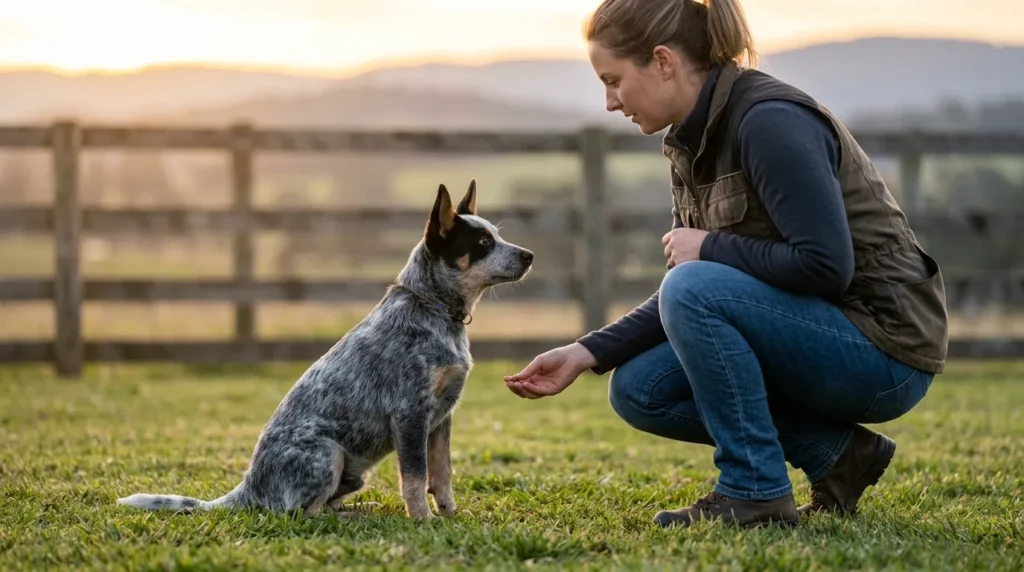
Start Early Always
Training a cattle dog from puppyhood gives you the best results. Because this breed is so intelligent, early habits become deeply ingrained quickly, both good ones and bad ones. Therefore, starting basic obedience training at 8 weeks old isn’t too early. It’s exactly the right time.
Step-by-Step Training Plan
- Week 1–2: Establish basic commands. Teach “sit,” “stay,” “come,” and “leave it” using positive reinforcement. Use small, high-value treats and keep sessions short 5 to 10 minutes maximum. Cattle dogs have excellent focus, but puppies tire quickly.
- Week 3–4: Introduce leash manners. Cattle dogs pull naturally because of their working drive. Therefore, start loose-leash walking early using the stop-and-wait method. Reward every moment of slack in the leash generously.
- Month 2: Begin socialization intensively. Introduce your cattle dog to as many people, sounds, animals, and environments as possible. Because this breed tends toward wariness with strangers, early positive socialization is genuinely critical for long-term friendliness.
- Month 2–3: Add impulse control exercises. “Wait” before meals, “leave it” with tempting objects, and “place” commands all help manage the cattle dog’s intensity. As a result, your dog learns to pause and think before acting, an invaluable skill for this reactive breed.
- Month 3 onward: Introduce a dog sport or working activity. Agility, flyball, herding trials, obedience competitions, and disc dog are all excellent outlets. In addition, regular structured activity gives your cattle dog a sense of purpose which dramatically reduces problem behaviors at home.
- Ongoing: Maintain consistency every single day. Cattle dogs test boundaries regularly. Therefore, every family member must use the same commands and the same rules consistently. Inconsistency confuses this breed and creates behavioral issues quickly.
- Advanced training: Consider professional classes. Even experienced dog owners benefit from professional group classes. Also, the socialization opportunity group classes provide is valuable for this breed specifically.
Pro Tip: Never use punishment-based training with a cattle dog. These dogs are sensitive beneath their tough exterior. Harsh corrections create anxiety and sometimes defensive aggression. Positive reinforcement rewards, play, and praise consistently produces better results with this breed than any other method.
Cattle Dog Care: Health, Grooming, and Feeding
Health Overview
The cattle dog is generally a robust, healthy breed. However, like all breeds, they carry some genetic health predispositions worth knowing about:
| Health Concern | Description | Action |
| Progressive Retinal Atrophy (PRA) | Gradual vision loss | Annual eye checks |
| Hip Dysplasia | Joint development issue | Regular vet screening |
| Deafness | Linked to merle/white coloring | Hearing test as puppy |
| Osteochondrosis | Cartilage development issue | Monitor during growth |
Always consult your vet about breed-specific health screening. In addition, purchasing from a reputable breeder who conducts health testing on breeding pairs significantly reduces risk.
Grooming Needs
Cattle dogs are refreshingly low-maintenance in the grooming department. Their short, dense double coat needs:
- Weekly brushing removes loose hair and keeps the coat healthy
- Bathing every 6 to 8 weeks, or when dirty
- Nail trimming every 3 to 4 weeks
- Ear cleaning check weekly for debris or redness
- Teeth brushing 2 to 3 times per week minimum
Also, expect increased shedding twice yearly during seasonal coat changes. Therefore, brushing more frequently during these periods prevents excess hair around your home.
Feeding Your Cattle Dog
Because cattle dogs are highly active, they need a diet that supports their energy output. Here’s a basic feeding guideline:
- Adult (under 40 lbs): 1.5 to 2.5 cups of quality dry food daily
- Active working dogs: May need up to 3 cups depending on activity level
- Puppies: Follow breed-specific puppy feeding guidelines consult your vet
Always choose a dry dog food with named protein as the first ingredient, chicken, beef, or fish. Also, avoid foods heavy in corn, wheat, or artificial preservatives. Your vet can recommend the most suitable formula for your dog’s specific age, weight, and activity level.
Common Mistakes Cattle Dog Owners Make
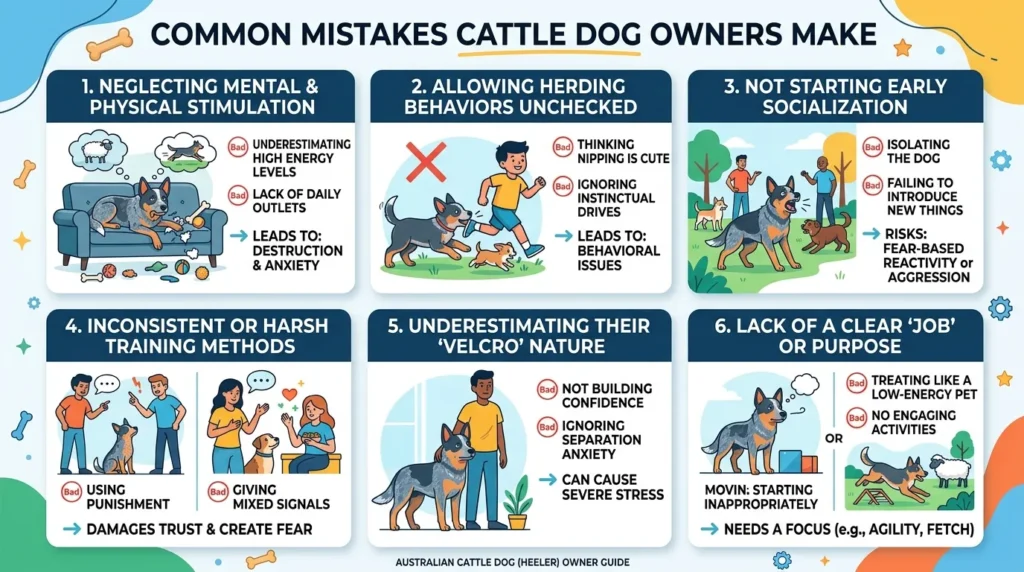
Mistake 1: Underestimating Exercise Needs
This is the most common and most damaging mistake. Many owners believe a daily 30-minute walk satisfies a cattle dog. However, this breed needs 1 to 2 hours of vigorous, varied activity every day. Therefore, running, fetch, agility work, hiking, and off-leash play should all feature regularly in your routine.
Mistake 2: Leaving Them Alone Too Long
Cattle dogs develop serious separation anxiety when left alone for extended periods. Because they bond so intensely with their people, prolonged isolation causes genuine distress. As a result, destructive behavior, excessive barking, and escape attempts become common. Therefore, if you work long hours, a cattle dog may not be the right breed for your current lifestyle.
A cattle dog without proper early socialization becomes suspicious of strangers and potentially reactive toward other dogs. Therefore, consistent positive socialization from 8 weeks through 16 weeks and beyond is genuinely non-negotiable for this breed.
Mistake 4: Allowing Herding Behavior Unchecked
Cattle dogs will naturally try to herd children, other pets, and even adults by nipping at heels. However, allowing this behavior even playfully reinforces it and can escalate. Therefore, redirect herding instincts immediately toward appropriate outlets like fetch or herding balls. Never allow heel nipping, even in puppies.
Mistake 5: Inconsistent Rules
Cattle dogs are intelligent enough to exploit inconsistency immediately. If jumping on the sofa is allowed sometimes but not others, they’ll test that boundary constantly. Therefore, establish clear household rules from day one and make sure every family member enforces them identically.
Pro Tip: Give your cattle dog a job to do at home, even a simple one. Carrying the newspaper, fetching specific items by name, or practicing obedience routines gives their working brain a daily sense of purpose. In my experience, dogs with a “job” are noticeably calmer and more settled at home than those without structured daily tasks.
Frequently Asked Questions About the Cattle Dog
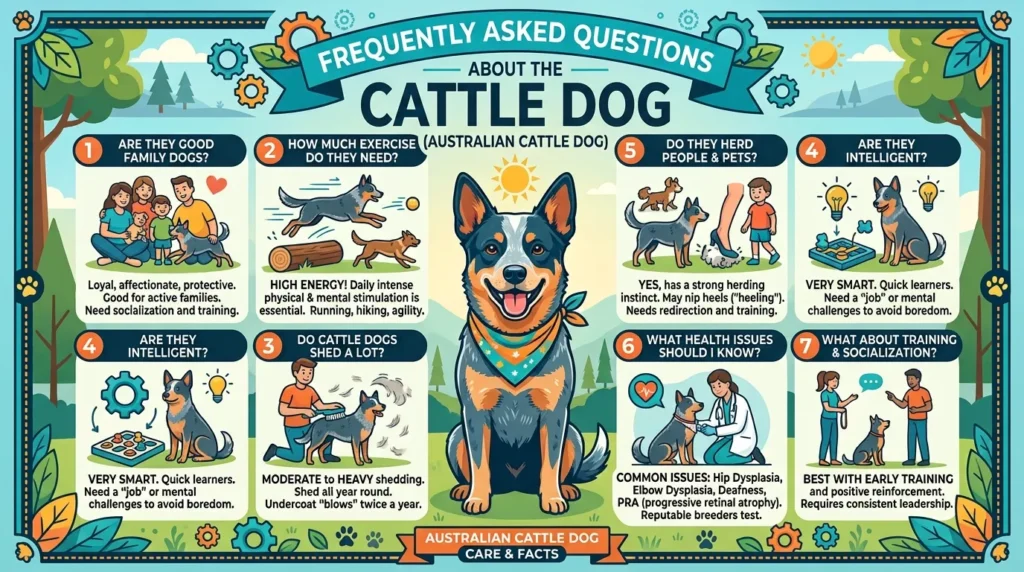
1. Is a cattle dog a good family pet?
A cattle dog can be an excellent family pet but only in the right family. They’re loyal, protective, and playful with children they’ve grown up with. However, their herding instinct means they may nip at small children’s heels during play. Therefore, supervision around young children is essential, and early socialization with kids is important. Active families who enjoy outdoor activities and structured dog training tend to do best with this breed.
2. How much exercise does a cattle dog need daily?
A cattle dog needs a minimum of 1 to 2 hours of vigorous exercise every day not just casual walking. Running, fetch, agility training, hiking, and swimming all count. In addition, mental exercise through training sessions and puzzle toys is equally important. Without adequate daily activity, cattle dogs develop anxiety, destructive behavior, and excessive barking relatively quickly.
3. Are cattle dogs easy to train?
Cattle dogs are highly intelligent which makes them fast learners. However, their independence and stubbornness mean they need a confident, consistent handler. They respond exceptionally well to positive reinforcement training. Also, they genuinely enjoy learning new skills and thrive in structured training environments like agility or obedience classes. For first-time dog owners, however, the cattle dog’s intensity can be genuinely challenging without professional guidance.
4. Do cattle dogs bark a lot?
Cattle dogs are alert and watchful, so they bark to signal strangers or unusual activity. However, they’re not typically excessive barkers compared to some other breeds. Because boredom is a major trigger for nuisance barking in this breed, ensuring adequate daily exercise and mental stimulation is the most effective solution. Therefore, a well-exercised, mentally satisfied cattle dog is generally a quieter one.
5. What’s the difference between a Blue Heeler and a Red Heeler?
Blue Heelers and Red Heelers are both Australian Cattle Dogs the difference is purely coat color. Blue Heelers have a blue-grey speckled coat, sometimes with black or blue patches. Red Heelers have a red speckled coat instead. Both colors appear in the same litters and share identical temperament, health profiles, and care requirements. Therefore, choosing between them comes down entirely to personal color preference.
6. How long do cattle dogs live?
The Australian Cattle Dog is one of the longest-living dog breeds. Their average lifespan ranges from 12 to 16 years. In fact, a cattle dog named “Bluey” holds the Guinness World Record as the oldest dog ever recorded living to an extraordinary 29 years and 5 months. With proper nutrition, regular veterinary care, and adequate exercise, your cattle dog can enjoy a long and healthy life well into their teens.
7. Do cattle dogs shed a lot?
Cattle dogs shed moderately throughout the year and more heavily twice yearly during seasonal coat changes. Because their double coat releases dead hair regularly, weekly brushing keeps shedding manageable in normal periods. However, during heavy shedding seasons, daily brushing helps significantly. Also, a healthy diet rich in omega-3 fatty acids supports coat health and reduces excessive shedding over time.
Is the Cattle Dog Your Perfect Match?
The cattle dog is one of the most remarkable breeds in the world, intelligent, loyal, athletic, and endlessly devoted to their people. However, they’re also one of the most demanding breeds for owners who aren’t prepared for their intensity.
If you lead an active lifestyle, enjoy training, and have space for a high-energy dog to thrive, a cattle dog will reward you with a level of loyalty and partnership that few other breeds can match. Also, their longevity means you’re potentially committing to 15+ years of an incredible canine companion.
However, be honest with yourself about your lifestyle before deciding. Therefore, research thoroughly, meet the breed in person, and consult your vet about whether a cattle dog fits your specific home situation.