
Introduction
If you’ve ever locked eyes with a Russian Blue cat, you already know that feeling. Those brilliant green eyes. That stunning silver-blue coat. That quiet, intelligent expression that makes you feel like they’re studying you just as carefully as you’re studying them.
Russian Blue cats are genuinely one of the most captivating breeds in the world. However, they’re also one of the most misunderstood. Many people assume they’re distant or cold because of their reserved nature. In reality, they’re deeply loyal, affectionate, and wonderfully gentle just on their own terms.
In my experience, Russian Blues form some of the deepest bonds of any cat breed. They simply take their time choosing who deserves that bond. Therefore, if you’re considering bringing one home or you already have one and want to understand them better this guide covers everything you need.
You’ll learn about their personality, care needs, health, feeding, and the common mistakes new owners make. Let’s get to know this extraordinary breed properly.
What Is the Russian Blue Cat? Origins and Personality
A Breed With a Fascinating History
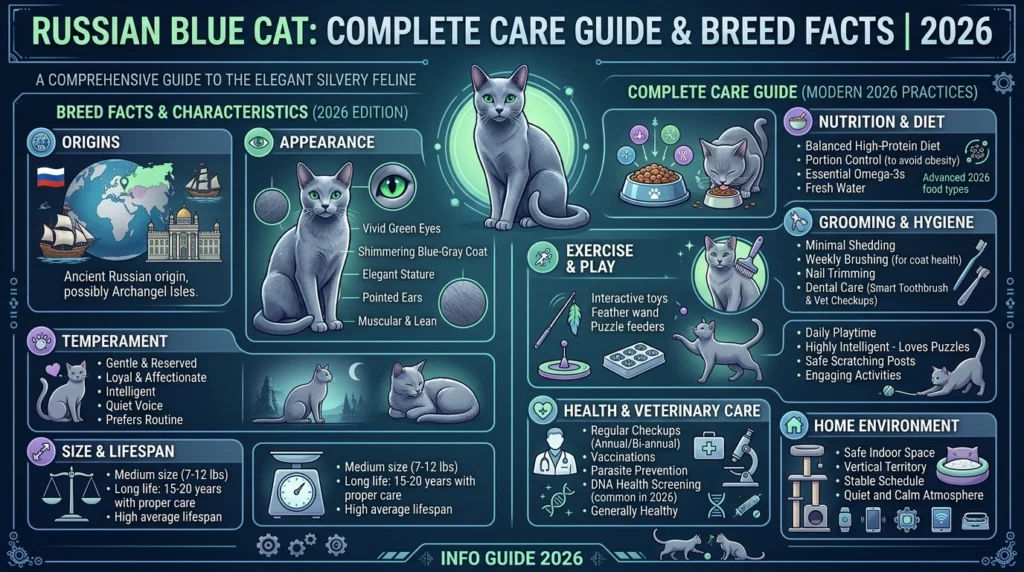
The Russian Blue cat has a rich and somewhat mysterious history. Most experts believe the breed originated in the port city of Arkhangelsk in northern Russia also known as the Archangel Isles. Therefore, the breed is sometimes called the Archangel Cat in older literature.
Sailors likely brought Russian Blues to Europe in the 1860s. However, the breed nearly disappeared during World War II because of food shortages and breeding disruptions. As a result, breeders in Scandinavia and the UK worked to restore the population after the war which is why today’s Russian Blues carry genetic traces from British Shorthairs and Scandinavian cats.
The Russian Blue Personality Gentle, Loyal, and Quietly Devoted
Here’s what makes Russian Blues truly special. They’re not lap cats in the traditional sense. However, they choose one or two people and bond with them deeply and permanently.
Key personality traits include:
- Quiet and gentle they rarely vocalize loudly
- Intelligent and curious they observe everything around them
- Loyal to their family they follow their favorite person from room to room
- Reserved with strangers they need time to warm up to new people
- Playful but not demanding they enjoy interactive play without being high-maintenance
- Sensitive to emotions many owners report their Russian Blue seems to sense when they’re upset
Also, Russian Blues are creatures of habit. They prefer consistent routines, familiar faces, and calm environments. Therefore, busy or chaotic households can stress them out, something worth considering before adopting.
Russian Blue Cat Care: Everything You Need to Know
Daily Care Basics for a Happy Russian Blue
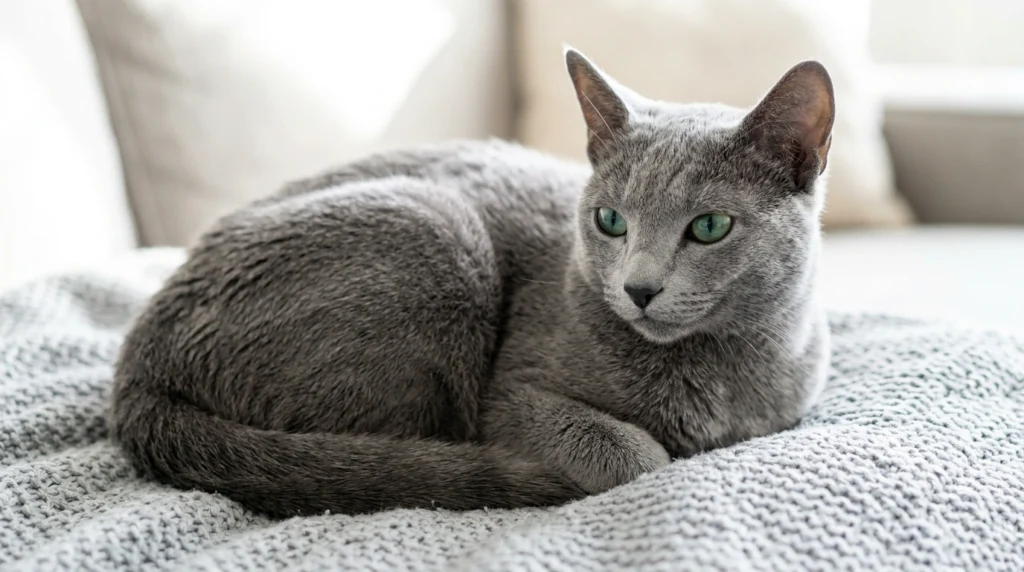
Caring for a Russian Blue is genuinely rewarding. Because they’re clean, quiet, and relatively low-maintenance, they suit a wide range of owners from busy professionals to quieter households. However, they do have specific needs worth understanding.
Step-by-Step Russian Blue Care Guide
- Grooming is easier than you’d think. The Russian Blue’s double coat is dense and plush but it doesn’t mat easily. Therefore, weekly brushing is sufficient for most of the year. During seasonal shedding periods in spring and autumn, brush two to three times weekly. Also, use a soft bristle brush or a rubber grooming glove to remove loose hair effectively.
- Diet quality matters enormously. Russian Blues have healthy appetites. However, they’re prone to overeating if food is left out continuously. Therefore, feed measured meals twice daily rather than free-feeding. High-quality wet food forms the backbone of a healthy Russian Blue diet because cats need moisture from their food. In addition, supplement with a premium dry food for dental health benefits.
- Exercise and play stimulate that clever mind. Russian Blues are moderately active. They love interactive toys, especially feather wands, puzzle feeders, and laser pointers. Therefore, dedicate at least 15 to 20 minutes of active play daily. Also, rotating toys keeps them mentally stimulated and prevents boredom.
- Litter box hygiene is non-negotiable for this breed. Russian Blues are fastidiously clean cats. A dirty litter box genuinely distresses them and can cause litter box avoidance. Therefore, scoop daily and deep-clean weekly. Also, provide one litter box per cat plus one extra as a general rule.
- Veterinary care annual check-ups are essential. Russian Blues are generally healthy cats. However, they can be prone to bladder stones and obesity-related issues if their diet isn’t managed well. Therefore, schedule annual vet check-ups, keep vaccinations current, and discuss spaying or neutering with your vet. Always consult your veterinarian before making any significant changes to your cat’s diet or health routine.
- Environmental enrichment gives them safe spaces. Russian Blues feel most secure when they have elevated perches and quiet retreat spots. Therefore, provide a cat tree, window perches, and cozy hideaways throughout your home. Also, keeping their environment calm, loud parties or constant disruption genuinely stress this sensitive breed.
- Socialization introduces new people slowly. Because Russian Blues are naturally reserved, forcing interaction with strangers causes anxiety. Instead, let visitors ignore the cat initially and allow your Russian Blue to approach on their own terms. As a result, they warm up far faster when given this control.
Pro Tip: Russian Blues respond beautifully to positive reinforcement training. Because they’re highly intelligent, they learn commands, tricks, and even leash walking with surprising ease. Start training from kittenhood using small treat rewards it strengthens your bond and keeps their clever minds engaged.
Russian Blue Cat Appearance and Key Characteristics
What Makes the Russian Blue Instantly Recognizable
The Russian Blue is one of the most visually distinctive cat breeds in existence. However, their appearance goes beyond just color; every physical feature contributes to their unique elegance.
| Feature | Description |
| Coat color | Blue-grey with silver tipping on each hair |
| Coat texture | Short, dense double coat plush and silky |
| Eye color | Vivid emerald green in adults |
| Body type | Medium-sized, lean, and muscular |
| Head shape | Broad, wedge-shaped with high cheekbones |
| Ears | Large, wide-set, pointed |
| Nose | Slate grey |
| Paws | Small, rounded, with lavender-pink paw pads |
| Weight | 7–12 pounds (males larger than females) |
The Signature “Mona Lisa Smile”
One of the most charming features of the Russian Blue is what breeders call the “Mona Lisa smile.” The natural upward curve of their mouth gives them a permanently gentle, content expression. In my experience, this feature alone captivates people who encounter the breed for the first time.
Also, Russian Blue kittens are born with faint tabby markings that disappear as they mature. As a result, adult Russian Blues display a pure, even blue-grey coat with beautiful silver shimmer unlike any other breed.
Common Mistakes Russian Blue Cat Owners Make
Mistake 1: Forcing Affection Too Early
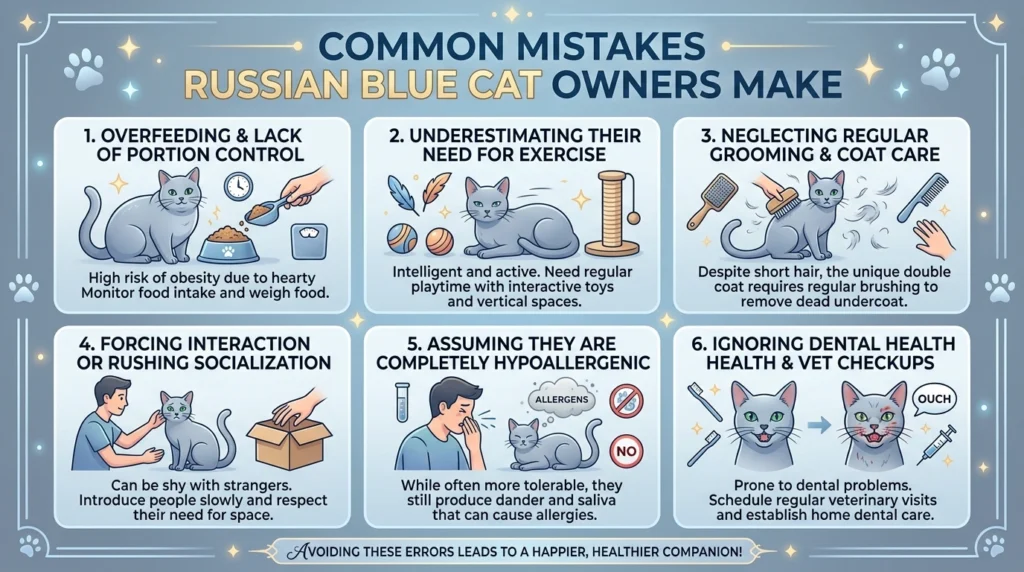
This is the most common mistake new Russian Blue owners make. Because the breed is known for being loving, new owners sometimes push for cuddles before the cat is ready. However, this approach backfires badly. Russian Blues build trust slowly and on their own schedule. Therefore, give your new cat space especially in the first two to four weeks and let them come to you.
Mistake 2: Free-Feeding Without Portion Control
Russian Blues have a genuine love of food. Also, they’re expert at convincing their owners they’re still hungry. As a result, free-feeding quickly leads to obesity which creates serious health problems including joint pain and bladder issues. Therefore, measure every meal and resist those pleading green eyes at snack time.
Mistake 3: Neglecting Mental Stimulation
Because Russian Blues are highly intelligent, a boring environment creates real problems. Understimulated Russian Blues develop destructive habits scratching furniture, knocking objects off shelves, or becoming withdrawn and anxious. Therefore, invest in puzzle feeders, interactive toys, and regular play sessions to keep their minds engaged.
Mistake 4: Using Harsh Training Methods
Russian Blues are emotionally sensitive cats. Loud voices, spray bottles, or physical correction genuinely traumatize them. As a result, they may become fearful or withdrawn if correction is harsh. Therefore, always use gentle, positive reinforcement methods exclusively. Reward good behavior and redirect bad behavior calmly.
Mistake 5: Ignoring Dental Health
Russian Blues, like all cats, are susceptible to dental disease. However, many owners overlook this completely. Therefore, introduce tooth brushing early ideally from kittenhood using cat-specific toothpaste. Also, dental treats and water additives help reduce tartar buildup between brushings. Always consult your vet about professional dental cleanings when needed.
Pro Tip: If your Russian Blue refuses tooth brushing, try dental wipes or a finger brush first. Also, dental-formula dry food creates a mild abrasive cleaning effect during chewing. Building a dental routine early saves you significant vet bills and genuinely extends your cat’s healthy life.
Frequently Asked Questions About the Russian Blue Cat
1. Are Russian Blue cats good for first-time cat owners?
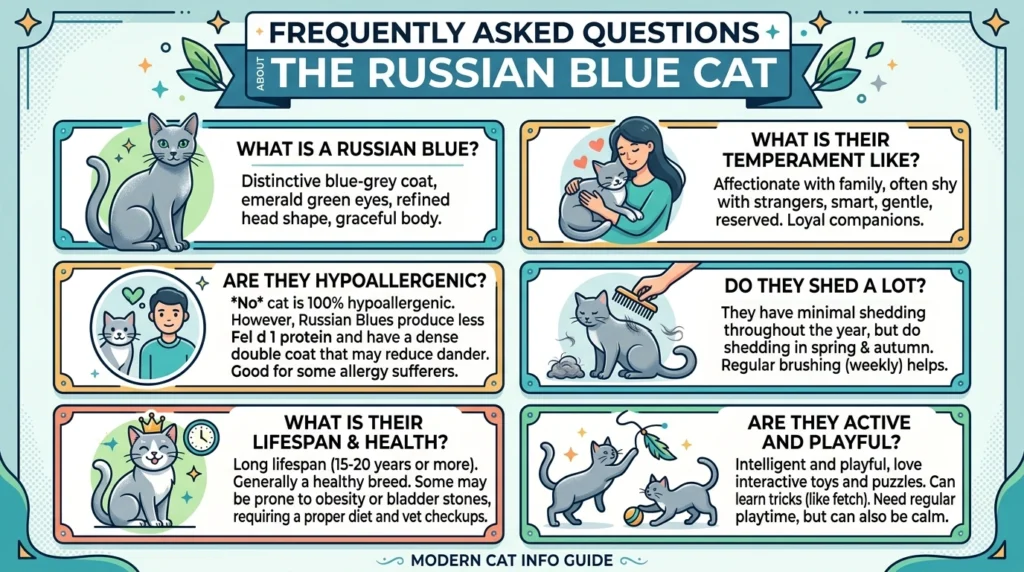
Yes Russian Blues can be wonderful for first-time owners, with one important caveat. Because they’re sensitive and reserved, they suit patient owners who respect feline boundaries. If you’re looking for an instantly cuddly lap cat, the Russian Blue may initially disappoint you. However, once you earn their trust which typically takes weeks to months the bond you build is deeply rewarding and remarkably loyal. Therefore, first-time owners who do their research and approach the breed with patience thrive with Russian Blues.
2. Are Russian Blue cats hypoallergenic?
Russian Blues are often called hypoallergenic however, no cat is truly 100% allergen-free. What makes Russian Blues more tolerable for allergy sufferers is that they produce lower levels of Fel d 1 the primary protein that triggers cat allergies in humans. Also, their dense coat traps dander rather than releasing it into the air freely. As a result, many mild allergy sufferers report significantly fewer reactions around Russian Blues compared to other breeds. However, spending time with the breed before adopting is always the safest approach if allergies are a concern.
3. How long do Russian Blue cats live?
Russian Blues are a naturally healthy and long-lived breed. Most Russian Blues live between 15 and 20 years with proper care which is longer than many other breeds. Because they’re naturally lean and athletic, they avoid many obesity-related health problems when their diet is managed well. However, annual veterinary check-ups, quality nutrition, and regular dental care all play significant roles in achieving that impressive lifespan. Therefore, commit to consistent preventive care from kittenhood onward.
4. Do Russian Blue cats get along with dogs and other pets?
Russian Blues can coexist peacefully with dogs and other cats but introductions must happen slowly and carefully. Because they’re sensitive and initially reserved, being rushed into contact with a boisterous dog causes significant stress. Therefore, use a gradual introduction process over several weeks starting with scent swapping, then visual contact through a baby gate, then supervised face-to-face meetings. Also, choose dog companions with calm temperaments for the best outcome. In my experience, well-introduced Russian Blues eventually form surprisingly close friendships with gentle dogs.
5. How much does a Russian Blue cat cost?
A purebred Russian Blue from a reputable breeder typically costs between $800 and $2,000 in the United States, depending on pedigree, location, and breeder reputation. Show-quality Russian Blues with exceptional lineage can cost significantly more. However, adopting a Russian Blue from a rescue organization or shelter costs considerably less typically $75 to $200 in adoption fees. Therefore, check breed-specific rescues and local shelters before turning to breeders. Also, verify any breeder’s credentials carefully and responsible breeders provide health testing documentation, vet records, and socialization history for every kitten.
6. What do Russian Blue cats eat?
Russian Blues thrive on a balanced diet of high-quality wet food and premium dry food. Because cats are obligate carnivores, protein from named meat sources should always lead the ingredient list. Wet food provides essential moisture which supports urinary and kidney health significantly. Also, avoid foods with excessive fillers like corn, wheat, or artificial additives. Because Russian Blues are prone to weight gain, portion control is essential to feed measured meals twice daily rather than leaving food available continuously. Always consult your vet about the best diet plan for your individual cat’s age and health status.
7. Are Russian Blue cats indoor or outdoor cats?
Russian Blues are best kept as indoor cats and most breed experts strongly recommend this approach. Because they’re gentle, trusting, and somewhat naive around strangers, outdoor Russian Blues face real risks including theft, traffic, and territorial conflicts with other animals. Also, their naturally reserved nature means they don’t develop the street-smart wariness that helps outdoor cats navigate danger. Therefore, create an enriching indoor environment with window perches, cat trees, and regular play sessions. A safely enclosed outdoor catio gives them fresh air and enrichment without the associated risks.
The Russian Blue Cat A Companion Like No Other
The Russian Blue cat isn’t the right choice for every household. However, for the right owner, patient, consistent, and genuinely appreciative of a cat that offers quiet devotion rather than constant noise this breed is simply extraordinary.
Their intelligence, loyalty, and breathtaking beauty make them one of the most rewarding companions you’ll ever share your home with. Also, their long lifespan means you’re potentially making a 15 to 20-year commitment which is a beautiful thing worth doing right.
Therefore, take your time learning about the breed. Meet Russian Blues in person if possible. Also, prepare your home thoughtfully before bringing one home.