
Introduction
Imagine sipping a warm cup of coffee while a fluffy tabby curls up beside you. Sounds like a dream, right? Welcome to the wonderful world of the cat cafe, one of the most unique and genuinely heartwarming experiences you can have as an animal lover.
Cat cafes have taken the world by storm over the past decade. However, many people still aren’t sure what to expect from their first visit. Do you just walk in? Can you pick up the cats? What’s the etiquette? These are all fair questions and this guide answers every single one of them.
In my experience, first-time visitors often arrive a little nervous and leave completely smitten. Whether you’re a lifelong cat lover or someone who simply needs a stress-free afternoon, a cat cafe offers something genuinely special.
This guide covers everything: the history, the benefits, what to expect, how to behave, and how to find the best cat cafe near you. Let’s get started.
What Is a Cat Cafe and How Does It Work?
The Basic Concept
A cat cafe is exactly what it sounds like a coffee shop where cats roam freely alongside customers. You order drinks and snacks just like any regular cafe. However, the big difference is that resident cats live there full-time and interact with guests throughout the day.
Most cat cafes charge an entry fee or time-based rate. This fee covers your time with the cats, separate from your food and drink order. Therefore, the business model supports both the cafe side and the ongoing care of the resident cats.
The History Behind the Concept
The first cat cafe opened in Taipei, Taiwan in 1998. However, the concept truly exploded in popularity when Japan embraced it in the early 2000s. Tokyo alone eventually had dozens of cat cafes running simultaneously. As a result, the trend spread rapidly across Europe, North America, Australia, and beyond.
Today, you’ll find cat cafes in most major cities worldwide. Also, many modern cat cafes partner with local animal shelters making the cats available for adoption. That partnership transforms a pleasant coffee experience into something genuinely meaningful.
How the Business Model Works
Here’s a typical cat cafe structure:
- Entry fee: Usually $10–$25 per hour depending on location
- Drinks and food: Ordered and paid for separately at the counter
- Cat interaction: Included in the entry fee during your visit window
- Adoption partnerships: Many cafes work with local rescues cats can be adopted by visitors
- Reservations: Most popular cat cafes require advance booking online
Top Benefits of Visiting a Cat Cafe
Why People Love Them So Much
Ever wondered why cat cafes have such devoted followings? The answer goes deeper than cute photos and good coffee. Research consistently shows that interacting with cats reduces stress hormones and lowers blood pressure. Therefore, a visit genuinely benefits your mental and physical wellbeing.
Key Benefits Backed by Real Reasons
Here’s what makes the cat cafe experience genuinely worthwhile:
- Stress relief petting cats lowers cortisol levels naturally
- Reduced loneliness animal interaction combats isolation effectively
- Mood boost spending time with cats triggers serotonin release
- Allergy-free option for some some cafes use low-allergen breeds
- Adoption opportunity many visitors find their forever pet here
- Unique social experience a great first date or friend outing idea
- Support for animal welfare entry fees often fund shelter partnerships
The Mental Health Connection
Studies published in journals like Anthrozoös show that human-animal interaction reduces anxiety significantly. Also, cat purring vibrates at a frequency (25–50 Hz) that research suggests may promote healing and calm. Therefore, a cat cafe visit isn’t just a fun outing, it’s genuinely therapeutic.
In my experience, people who visit during stressful periods in their lives describe the experience as unexpectedly powerful. Something about a cat choosing to sit with you feels meaningful in a way that’s hard to explain but easy to feel.
How to Make the Most of Your Cat Cafe Visit
Step-by-Step First Visit Guide
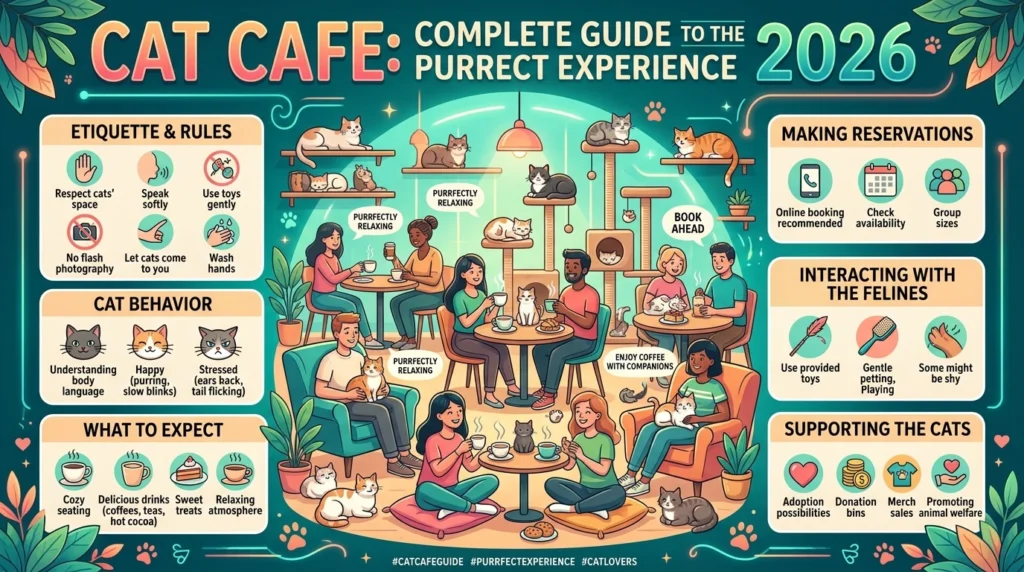
Getting the most from your cat cafe experience requires a little preparation. Therefore, follow this simple guide for a smooth, enjoyable visit:
- Book in advance. Most popular cat cafes fill up quickly, especially on weekends. Therefore, always check the cafe’s website and reserve your spot at least a few days ahead.
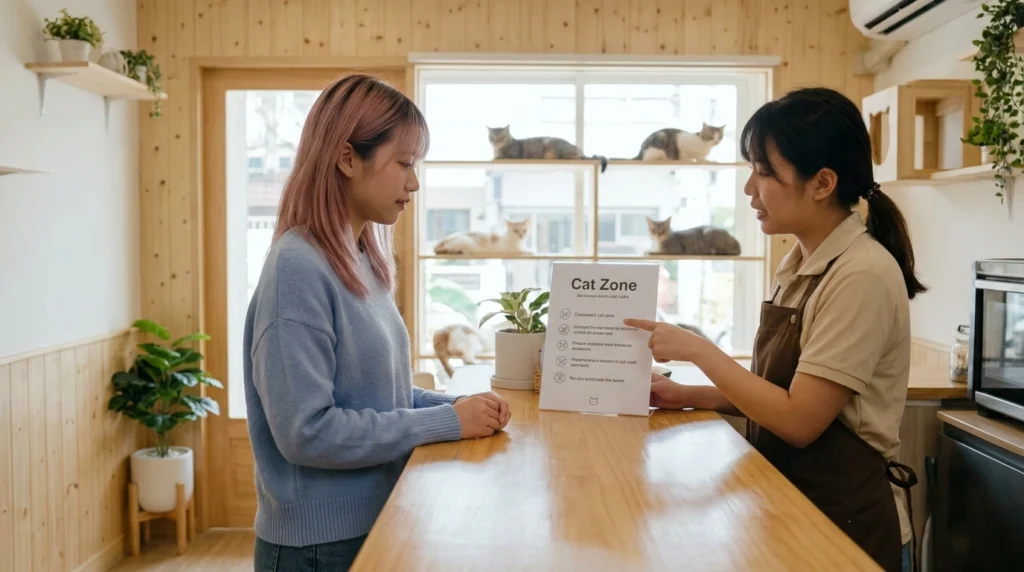
- Check the house rules beforehand. Every cat cafe has specific rules about handling cats. Also, some have age restrictions for younger children. Reading these rules before you arrive avoids disappointment at the door.
- Avoid strong perfumes or colognes. Cats have sensitive noses. Strong scents stress them out and make them avoid you. Therefore, go fragrance-free on the day of your visit for the best chance of cat interaction.
- Let the cats come to you. This is the golden rule of cat cafe etiquette. Don’t chase cats or force interaction. Instead, sit quietly and let them approach on their own terms. You’ll get a far more genuine connection this way.
- Use toys not hands for play. Most cat cafes provide wand toys and other interactive tools. Use these for play sessions rather than dangling your fingers. This keeps both you and the cats safe.
- Wash your hands before entering. Most cafes request hand sanitizing at the entrance. This protects the health of the resident cats especially important in environments with high visitor turnover.
- Respect sleeping cats. If a cat is resting, leave it alone. Waking or disturbing sleeping cats causes stress and leads to grumpy, avoidant behavior for the rest of your visit.
- Order something even if it’s small. The food and drink side of the business keeps the cat care funded. Therefore, ordering even a small coffee or snack supports the cafe’s mission meaningfully.
Pro Tip: Arrive 10 minutes early for your booking. This gives you time to settle in, read the rules, and let the cats get used to your presence before your paid time officially starts. The first few minutes of calm observation make a huge difference in how the cats respond to you throughout the visit.
Comparing Cat Cafes Around the World
How Different Countries Do It Differently
Cat cafes vary enormously by country and culture. Therefore, understanding these differences helps you know what to expect especially if you’re travelling.
| Country | Typical Entry Fee | Adoption Option | Unique Feature |
| Japan | $8–$15/hour | Rare | Theme-based cafes (anime, breeds) |
| United States | $15–$25/hour | Very Common | Strong shelter partnerships |
| United Kingdom | £8–£15/hour | Common | Afternoon tea format available |
| South Korea | $5–$12/hour | Uncommon | Multiple animal types offered |
| Australia | $12–$20/hour | Common | Outdoor garden spaces popular |
| France | €8–€14/hour | Common | Wine and cat evening events |
| Canada | $12–$20/hour | Very Common | Community-focused nonprofits |
Japan vs. USA The Biggest Differences
Japanese cat cafes tend to focus on the relaxation experience. The atmosphere is typically quiet, calm, and structured with rules strictly enforced. Also, the cats are usually well-groomed, specific breeds, and the experience feels almost meditative.
American cat cafes, however, tend to be louder and more social. They emphasize adoption partnerships strongly. As a result, the cats are often rescue animals with visible adoption profiles on their enclosures. The vibe is warmer and more community-focused.
Both approaches work beautifully; they simply serve different visitor expectations.
What to Look for in a Quality Cat Cafe
Not all cat cafes are created equal. Therefore, here’s how to identify a genuinely good one:
- Clean and spacious environment cats need room to retreat and rest
- Happy, socialized cats relaxed body language, no hiding or hissing
- Transparent shelter partnerships ethical sourcing of resident cats
- Clear health protocols regular vet care, vaccination records visible
- Reasonable visitor limits good cafes cap visitor numbers to avoid stressing cats
- Positive reviews check Google and Yelp for consistent visitor feedback
Common Mistakes to Avoid at a Cat Cafe
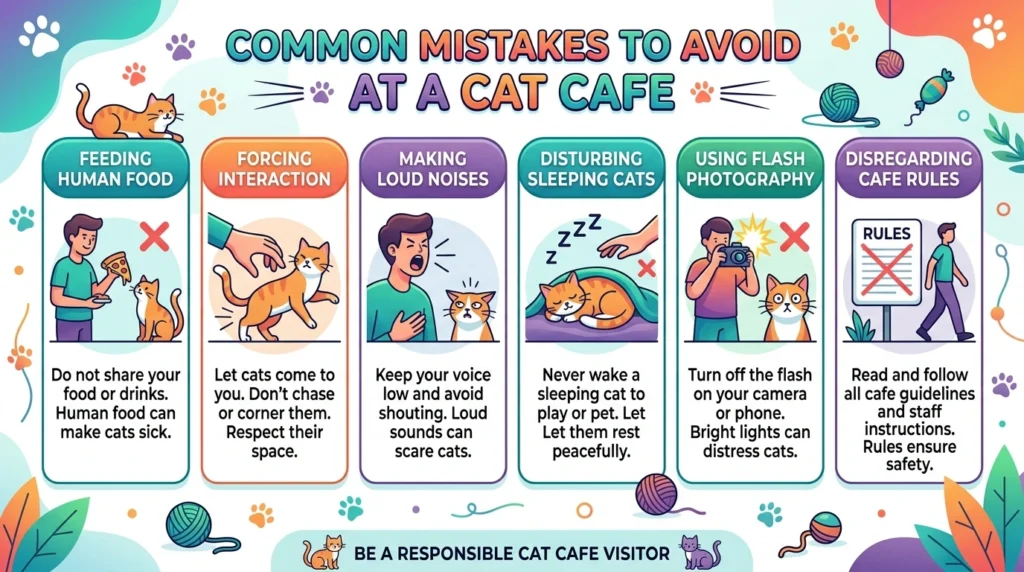
Mistake 1: Forcing Interaction With Reluctant Cats
This is the most common mistake first-time visitors make. Chasing cats, picking them up without invitation, or blocking their escape routes causes visible stress. As a result, the cat retreats and the experience becomes frustrating for everyone. Always wait patiently for the right cat to find you.
Mistake 2: Bringing Strong Food Smells In
Carrying food from outside into the cat area disrupts the cats’ routine and can cause conflict between them. Therefore, eat any outside food before entering the cat zone. Also, strong food smells can trigger begging behavior that staff actively work to prevent.
Mistake 3: Visiting When You’re Unwell
If you have a cold, allergy flare-up, or any contagious illness, postpone your visit. Cat cafes have immunocompromised animals in their care. Therefore, protecting their health matters as much as your own enjoyment. Rescheduling is always the responsible choice.
Mistake 4: Ignoring Age Restrictions
Many cat cafes set a minimum age of 6–8 years for visitors. This protects both young children and the cats. Therefore, always check age policies before booking family visits. Some cafes offer family-friendly time slots with additional supervision which works much better for younger children.
Mistake 5: Forgetting to Check Allergy Sensitivities
If you have cat allergies, a cat cafe can trigger a reaction quickly. However, some cafes specifically keep hypoallergenic breeds like Siberian or Balinese cats. Therefore, contact the cafe in advance to ask about their cat breeds if allergies concern you. Also, always carry antihistamines just in case and consult your doctor beforehand if your allergies are severe.
Pro Tip: Follow your local cat cafe on social media before visiting. Most post daily updates featuring their resident cats including each cat’s name, personality, and current mood. This helps you arrive knowing which cats are most social that day, which ones prefer quiet interaction, and who might be having an off day.
Frequently Asked Questions About Cat Cafes
1. How much does a cat cafe typically cost?
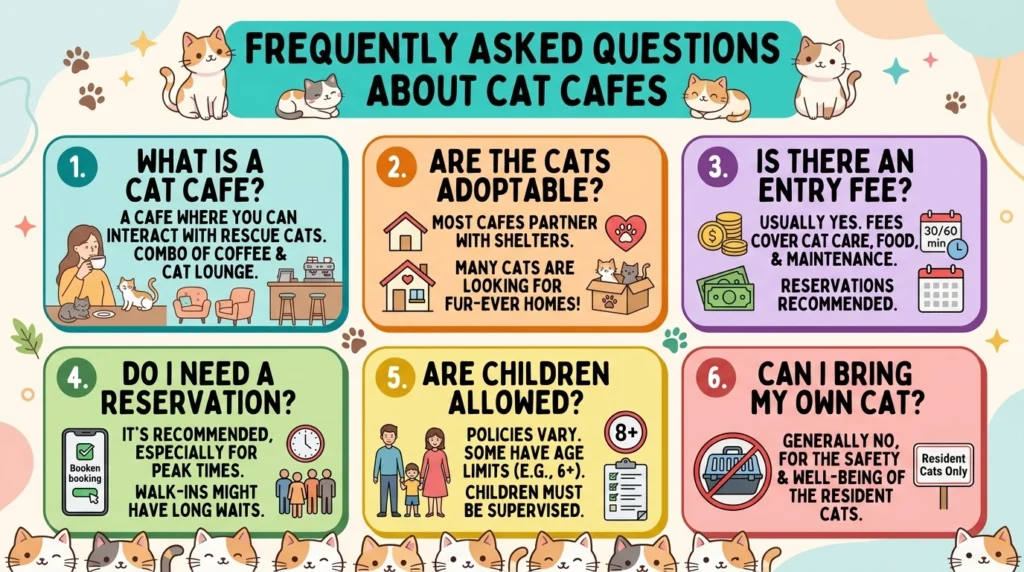
Cat cafe pricing varies by location. In the United States, expect to pay $15–$25 per person per hour for the cat interaction experience. Food and drinks are usually additional costs. In Japan, prices tend to be slightly lower at $8–$15 per hour. Also, many cafes offer membership packages for regular visitors, which significantly reduce the per-visit cost. Therefore, if you plan to visit regularly, always ask about membership options at the front desk.
2. Can you adopt a cat from a cat cafe?
Yes many modern cat cafes actively partner with local animal shelters and rescue organizations. As a result, the resident cats are often available for adoption by visitors who fall in love with them. The adoption process typically follows the same steps as a regular shelter adoption including an application, home check, and adoption fee. Therefore, visiting a cat cafe can genuinely lead to finding your perfect feline companion. Always ask staff about adoption availability during your visit.
3. Are cat cafes safe for the cats living there?
A well-run cat cafe prioritizes cat welfare above everything else. Good cafes provide cats with private rest areas inaccessible to visitors, enforce strict interaction rules, maintain regular veterinary care, and cap daily visitor numbers to prevent stress. However, not all cat cafes meet these standards. Therefore, research reviews and checking for visible signs of good cat welfare before booking happy, relaxed cats who approach visitors willingly are the clearest indicators of a well-managed cafe.
4. What should I wear to a cat cafe?
Wear comfortable, casual clothing that you don’t mind getting cat hair on. Also, avoid wearing black if cat hair bothers you. It shows up dramatically on dark fabric. Skip strong perfumes, colognes, and heavily scented lotions, because cats find strong smells off-putting and may avoid you as a result. Closed-toe shoes are also a good idea, as playful cats sometimes use feet as play targets during more active sessions.
5. Do cat cafes allow children?
Many cat cafes welcome children above a certain age, typically 6 to 8 years old. However, some cafes allow younger children during specific family-friendly time slots with additional supervision. Therefore, always check the specific cafe’s age policy before booking a family visit. Teaching children basic cat interaction etiquette before the visit makes the experience more enjoyable for everyone including the cats. Also, supervise young children closely throughout the visit regardless of age policy.
6. How long should I plan to stay at a cat cafe?
Most visitors book one to two hour sessions. An hour gives you enough time to settle in, let the cats warm up to you, and enjoy genuine interaction. However, two hours feels more relaxed especially if you’re catching up with a friend over drinks at the same time. Therefore, first-time visitors should book at least 90 minutes to get the full experience without feeling rushed. Also, popular cafes often don’t allow extensions if the next session is booked so factor that into your timing.
7. What if I’m allergic to cats but still want to visit?
Mild cat allergy sufferers do visit cat cafes successfully by taking antihistamines beforehand. However, if your allergies are severe, the enclosed environment of a cat cafe could trigger a significant reaction. Therefore, consult your doctor before visiting if you have known cat allergies. Also, look for cafes that specifically house hypoallergenic breeds; some Siberian and Balinese cat cafes cater specifically to allergy-sensitive visitors. Always carry your usual allergy medication as a precaution regardless.
Your Perfect Cat Cafe Experience Awaits
A cat cafe offers something genuinely rare in modern life: a calm, joyful space where stress melts away and connection happens naturally. Whether you’re a lifelong cat devotee or a curious first-timer, the experience delivers warmth, laughter, and the occasional unexpected lap visitor.
Therefore, find a well-reviewed cat cafe near you, book your spot in advance, and go in with an open heart and patient energy. Let the cats come to you. Order something delicious. Stay a little longer than you planned.
Also, don’t be surprised if you leave seriously considering adoption. It happens more often than you’d think and honestly, that might be the best possible outcome.