
Introduction
There are few things more worrying than watching your dog turn away from their food bowl. One minute they’re gobbling everything up. The next day nothing. Your dog not eating food is one of the most common concerns pet owners bring to vets every single year.
The good news? Most cases are temporary and completely fixable. However, sometimes a dog refusing food signals something more serious that needs professional attention. Knowing the difference is everything.
In my experience, the reason a dog stops eating is almost never random. Something changed the food, the environment, their health, or their emotional state. Therefore, finding that trigger is the key to getting your pup back to normal.
This guide covers every major reason your dog might stop eating. Also, you’ll get practical step-by-step solutions, clear warning signs to watch for, and honest answers to the most common questions dog owners ask. Let’s get your dog’s appetite back on track.
Why Is My Dog Not Eating Food? The Main Causes Explained
It’s More Common Than You Think
Almost every dog owner faces this situation at some point. Therefore, you’re definitely not alone. However, understanding why your dog stopped eating is the most important first step.
Dogs stop eating for many different reasons. Some are minor and resolve on their own. Others require veterinary attention quickly. Therefore, let’s break down the most common causes clearly.
Medical Reasons Your Dog Stops Eating
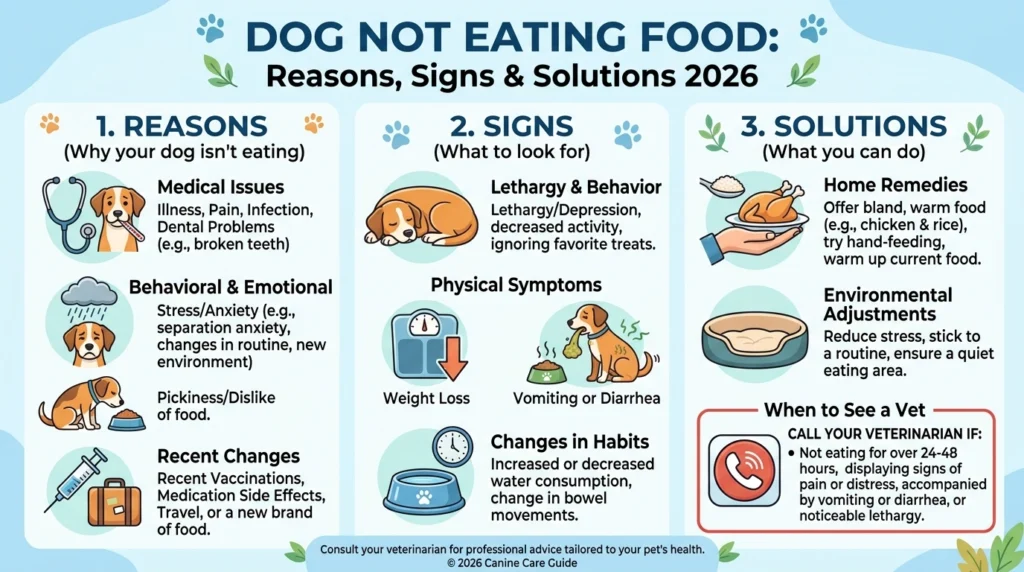
Health problems are often the first thing to consider when a dog suddenly refuses food. Here are the most common medical causes:
- Dental pain sore teeth or gum disease make chewing painful
- Upset stomach nausea from something they ate causes temporary food refusal
- Infections bacterial or viral infections reduce appetite significantly
- Kidney or liver disease these conditions cause nausea and loss of appetite
- Pancreatitis inflammation of the pancreas causes significant discomfort
- Cancer some cancers directly suppress appetite
- Medication side effects certain medications cause nausea or appetite loss
- Intestinal blockage a serious emergency requiring immediate vet care
Because these conditions range from mild to life-threatening, always consult your vet if food refusal lasts more than 24–48 hours.
Behavioral and Emotional Causes
Not every case of a dog not eating food involves a health problem. Sometimes, the cause is entirely emotional or behavioral:
- Stress or anxiety moving house, new pets, or changes in routine affect appetite
- Loneliness some dogs refuse to eat when their owner is away
- Picky eating habits dogs who’ve been given too many treats or table scraps sometimes hold out for “better” food
- Depression dogs grieve losses and experience genuine sadness
- New environment dogs in new homes often take days to settle before eating normally
In my experience, behavioral causes resolve faster than medical ones but they still need addressing thoughtfully.
What to Do When Your Dog Is Not Eating Food: Step-by-Step Guide
A Practical Action Plan
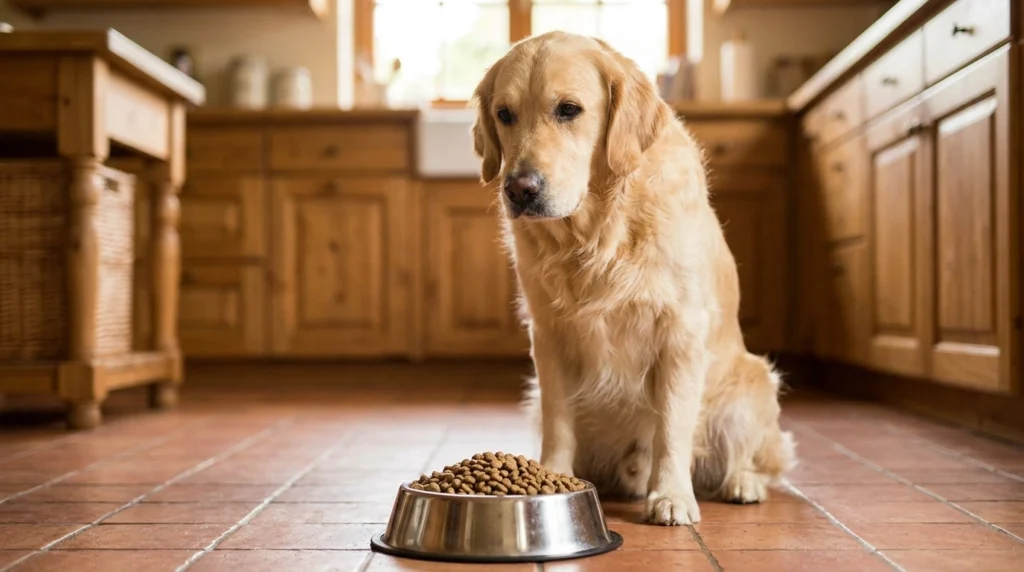
Don’t panic but do act thoughtfully. Here’s a clear, step-by-step approach to help your dog start eating again:
- Remove the food bowl after 20 minutes. Don’t leave food out all day. Dogs who graze often become disinterested. Therefore, set regular meal times and remove the bowl after 20 minutes whether they eat or not.
- Skip one meal intentionally. Sometimes a healthy dog simply isn’t hungry. Therefore, skipping one meal and offering fresh food at the next scheduled time works well for mild cases.
- Check the food itself. Is the bag past its best-by date? Did you switch brands recently? Also, check that the food smells fresh and hasn’t gone stale. Dogs have sensitive noses and reject food that smells off to them.
- Try warming the food slightly. Warming wet food or adding warm water to dry kibble enhances the aroma dramatically. As a result, many picky dogs find it irresistible. Always test the temperature before serving it should feel lukewarm, not hot.
- Add a low-sodium broth topper. A small amount of plain chicken or beef broth (no onion, no garlic, no salt) over kibble often triggers a dog’s appetite effectively. This simple trick works surprisingly well.
- Reduce treat intake. If your dog eats treats but ignores meals, they’re holding out for something tastier. Therefore, eliminate all treats and table scraps until regular meal eating resumes.
- Address environmental stressors. Has something changed at home recently? A new baby, a move, a new pet, or even rearranged furniture can stress dogs. In addition, make mealtimes calm and consistent at the same place, same time, same routine every day.
- Visit your vet if refusal lasts more than 48 hours. This is non-negotiable. A dog not eating food for two or more days needs professional evaluation. Also, puppies and senior dogs should see a vet even sooner within 24 hours.
Pro Tip: Try hand-feeding a few pieces of kibble directly to your dog. This simple act often kickstarts eating again especially for anxious or emotionally withdrawn dogs. It rebuilds the positive connection between food and your presence.
Warning Signs: When a Dog Not Eating Food Becomes an Emergency
Don’t Wait These Signs Need Immediate Vet Attention
Some symptoms alongside food refusal signal a genuine medical emergency. Therefore, if you see any of the following, contact your vet immediately don’t wait to see if things improve:
| Warning Sign | Why It’s Serious |
| Vomiting repeatedly | Signals intestinal blockage or serious infection |
| Bloated or distended stomach | Could indicate GDV a life-threatening condition |
| Extreme lethargy | Sign of serious illness or organ failure |
| Bloody stool or urine | Requires urgent veterinary investigation |
| Difficulty breathing | Sign of systemic illness or toxin ingestion |
| Pale or white gums | Indicates possible internal bleeding |
| Seizures | Neurological emergency |
| Sudden dramatic weight loss | Sign of serious underlying disease |
How Long Can a Dog Go Without Eating?
A healthy adult dog can technically survive without food for three to five days. However, this doesn’t mean you should wait that long before seeking help. Also, going without water is far more dangerous; dehydration becomes critical within 24 hours.
Therefore, use this simple timeline as your guide:
- 12–24 hours without eating monitor closely, try the steps above
- 24–48 hours without eating call your vet for guidance
- 48+ hours without eating visit your vet without delay
- Any duration with other symptoms seek emergency veterinary care immediately
Foods That Can Help a Dog Not Eating Get Back on Track
Gentle Foods to Try at Home
When your dog starts showing interest in food again, offer easily digestible options first. These gentle foods help ease them back into regular eating:
Easy Transition Foods
| Food | Benefit | How to Serve |
| Plain boiled chicken | Highly digestible protein | Small pieces, no seasoning |
| Plain white rice | Gentle on upset stomachs | Mixed with chicken |
| Plain pumpkin puree | Soothes digestive issues | 1–2 tablespoons as topper |
| Low-sodium chicken broth | Encourages appetite | Poured over regular kibble |
| Scrambled egg (plain) | Easy to digest, palatable | No butter, no salt |
| Plain boiled sweet potato | Gentle fiber source | Mashed, served cool |
Important Food Warnings
However, some foods commonly offered with good intentions can actually harm your dog. Therefore, never offer:
- Onions or garlic toxic to dogs even in small amounts
- Grapes or raisins cause kidney failure in dogs
- Chocolate toxic and potentially fatal
- Avocado contains persin, which is harmful to dogs
- Xylitol (artificial sweetener) extremely toxic, found in many human foods
- High-fat foods trigger pancreatitis, especially in sensitive dogs
Always consult your vet before introducing new foods during illness recovery. Also, return to your dog’s regular diet gradually once normal appetite resumes.
Common Mistakes to Avoid When Your Dog Is Not Eating Food
Mistake 1: Offering Table Scraps to Encourage Eating
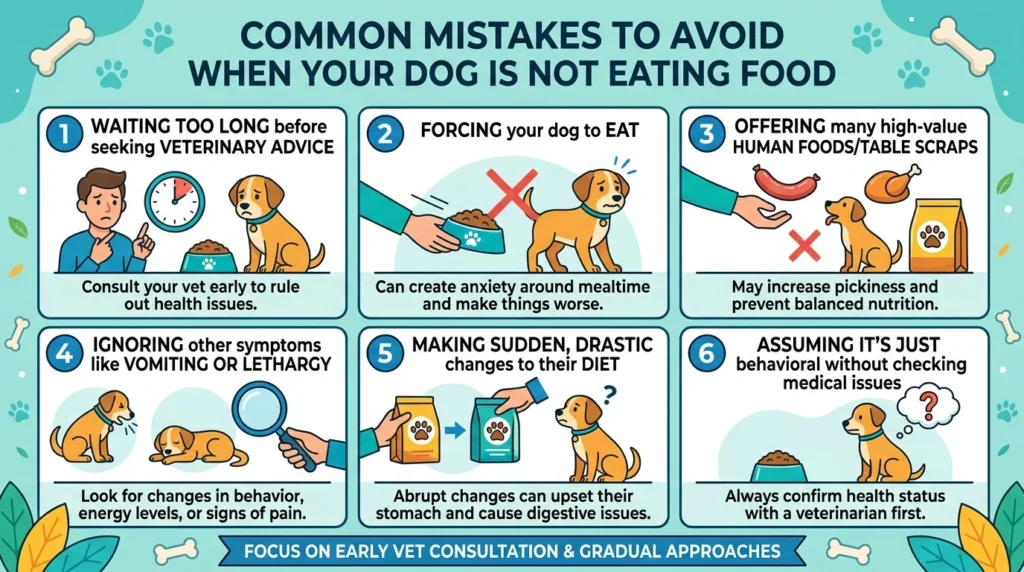
This feels kind but it’s actually counterproductive. When you offer human food to a dog not eating food, you teach them that refusing their regular meal produces something better. Therefore, avoid this completely during appetite recovery. Stick to their regular food or vet-approved alternatives only.
Mistake 2: Constantly Changing the Food
Switching brands every time your dog refuses a meal makes the problem worse. Also, frequent food changes upset the digestive system and create picky eating habits. Therefore, if you need to change food, do it gradually over 7–10 days mixing old and new food slowly.
Mistake 3: Free Feeding Throughout the Day
Leaving food out all day removes the structure dogs need around mealtimes. As a result, dogs lose the natural hunger cycle that drives appetite. Therefore, feed at set times twice daily and remove the bowl after 20 minutes whether your dog eats or not.
Mistake 4: Waiting Too Long to See the Vet
This is the most dangerous mistake. Many dog owners assume temporary food refusal will resolve itself. However, in cases involving illness, waiting too long allows conditions to worsen. Therefore, always err on the side of caution: a vet call costs nothing and could save your dog’s life.
Mistake 5: Ignoring Dental Health
Dogs with painful teeth or gums refuse food because eating hurts. However, many owners overlook dental pain as a cause. Therefore, check your dog’s mouth regularly. Look for red gums, bad breath, broken teeth, or obvious pain when you touch near their mouth. Also, schedule annual dental check-ups with your vet to prevent this issue entirely.
Pro Tip: If your dog normally loves food but suddenly stops eating, dental pain is one of the first things to rule out. Gently lift their lip and look at the gum line. Red, swollen, or bleeding gums signal dental disease that needs veterinary treatment. Never ignore oral health; it affects your dog’s whole body.
Frequently Asked Questions About Dog Not Eating Food
1. How long is it okay for a dog not to eat food?
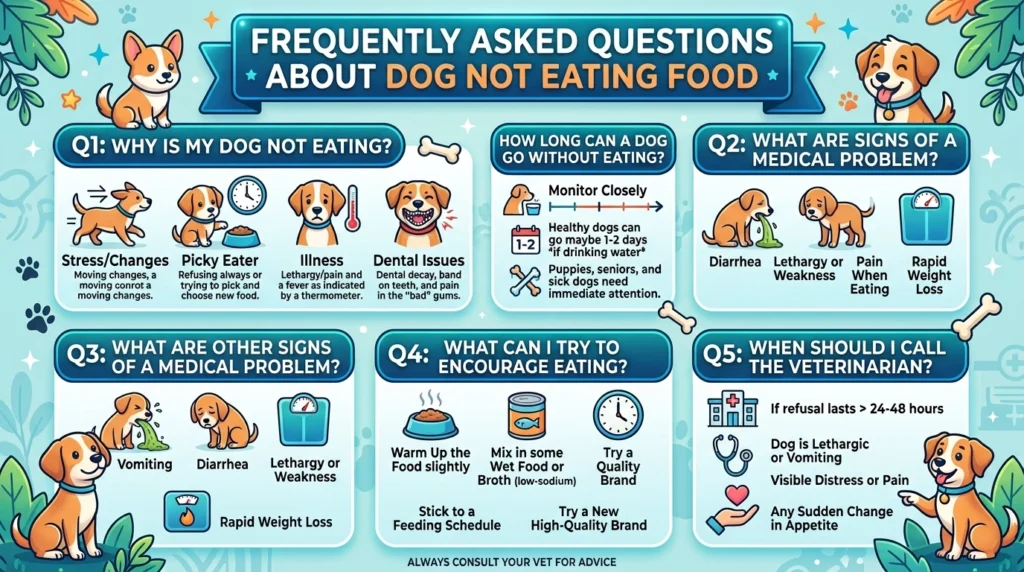
A healthy adult dog can skip food for 24 hours without serious concern in most cases. However, if your dog is still not eating food after 48 hours, contact your vet promptly. Puppies, senior dogs, and dogs with existing health conditions need veterinary attention much sooner within 12 to 24 hours of food refusal. Also, if food refusal accompanies any other symptoms like vomiting, lethargy, or bloating, treat it as an emergency and seek veterinary care immediately.
2. Why is my dog not eating food but still drinking water?
A dog that drinks water but refuses food often has a stomach issue, mild nausea, or an early-stage illness. The fact that they’re still drinking is positive; it suggests they’re not completely shut down. However, this situation still warrants monitoring closely. If the food refusal continues beyond 24 hours or if new symptoms develop, consult your vet. Also, make note of any behavioral changes, recent food changes, or environmental stressors that might explain the appetite loss.
3. Why is my dog not eating their dry food but will eat treats?
This is a classic sign of picky eating, not illness. Your dog has learned that refusing regular food eventually produces something tastier. Therefore, the solution is firm but loving consistency. Remove treats completely. Offer meals at set times. Remove the bowl after 20 minutes. Most healthy dogs return to eating their regular food within one to two days when they realize treats aren’t coming. However, if you’re genuinely concerned about nutritional intake, discuss options with your vet before making food changes.
4. Can stress cause a dog to stop eating food?
Stress is one of the most common reasons dogs stop eating food temporarily. Moving to a new home, welcoming a new baby, introducing another pet, loud noises like fireworks, or even a change in their owner’s schedule can all suppress appetite significantly. In my experience, stress-related food refusal resolves once the stressor reduces and the dog adjusts to the new normal. Therefore, maintaining a calm, consistent routine during stressful periods helps enormously. Also, calming supplements and anxiety wraps can support stressed dogs and ask your vet for recommendations.
5. Should I force-feed my dog if they’re not eating?
No force-feeding is generally not recommended and can create negative associations with food. Also, it can cause aspiration if done incorrectly, which creates additional health risks. Instead, try gentle encouragement, hand-feeding a few pieces, warming the food, or adding broth as a topper. However, if your dog genuinely cannot or will not eat for an extended period, your vet may recommend assisted feeding techniques or appetite stimulants as appropriate medical interventions. Always follow veterinary guidance rather than attempting force-feeding at home.
6. My dog stopped eating after switching food. What should I do?
This is very common. Abrupt food changes upset a dog’s digestive system and can cause nausea, which leads to food refusal. Therefore, always transition between foods gradually over 7 to 10 days. Mix 25% new food with 75% old food for the first few days, then slowly increase the new food ratio. If you’ve already made an abrupt switch, go back to the old food temporarily and restart a slower transition. Also, if your dog develops vomiting or diarrhea alongside food refusal after a food change, consult your vet before continuing.
7. What home remedies help a dog not eating get their appetite back?
Several gentle home remedies help encourage appetite in dogs with mild food refusal. Warming kibble with warm water enhances aroma significantly. Adding a small amount of plain low-sodium chicken broth makes the food more enticing. Offering plain boiled chicken and white rice provides a gentle, appealing meal for dogs with sensitive stomachs. Also, a teaspoon or two of plain canned pumpkin puree soothes digestive upset and often stimulates appetite. However, always use these remedies as short-term solutions, not permanent dietary changes. And if food refusal continues beyond 48 hours, consult your vet regardless of home remedy results.
Get Your Dog Eating Happily Again
A dog not eating food is stressful but in most cases, it’s a solvable problem with the right approach. Start by identifying whether the cause is behavioral or medical. Then use the step-by-step action plan in this guide to address it systematically.
Remove treats. Set consistent meal times. Try warming the food or adding broth. Reduce environmental stress. Also, make mealtimes calm and positive. Most healthy adult dogs return to normal eating within one to two days with these simple adjustments.
However, never delay veterinary care when symptoms are serious. Your vet is always your most valuable resource when your dog’s health is at stake. Therefore, when in doubt, call them. A quick conversation could make all the difference.