

Introduction
Watching your dog scratch constantly is heartbreaking. Seeing red, irritated skin, chronic ear infections, or runny eyes makes every dog owner feel helpless. However, here’s something many people don’t realize: food is often the hidden cause behind these frustrating symptoms.
Finding the right dog food for allergies can genuinely transform your dog’s quality of life. The constant itching stops. The ear infections clear up. The coat gets shinier. It’s one of the most rewarding changes you can make as a dog owner.
But navigating the world of hypoallergenic dog food is confusing. Limited ingredient diets, novel proteins, hydrolyzed formulas the terminology alone feels overwhelming. In my experience, most dog owners don’t know where to start.
Therefore, this guide breaks everything down simply and clearly. You’ll learn what causes food allergies in dogs, how to identify the right diet, and which specific foods consistently deliver real relief. Let’s get your dog feeling better.
Understanding Dog Food for Allergies: What You Need to Know
What Causes Food Allergies in Dogs?
Food allergies happen when your dog’s immune system overreacts to a specific ingredient. However, many owners confuse food allergies with food intolerances and they’re actually different things.
A food allergy triggers an immune response. A food intolerance causes digestive upset without immune involvement. Both need dietary changes, but true allergies tend to produce more severe and consistent symptoms.
The most common food allergens in dogs include:
- Beef the most frequently reported allergen
- Chicken second most common trigger
- Dairy products affects many dogs with sensitive systems
- Wheat and gluten particularly problematic for some breeds
- Eggs a less common but real trigger for some dogs
- Soy found in many budget foods and often problematic
- Lamb increasingly common as a secondary allergen
How Do You Know It’s a Food Allergy?
Ever wondered whether your dog’s symptoms are truly food-related? Here are the most common signs of a food allergy:
- Chronic itching especially around the face, paws, ears, and belly
- Recurring ear infections often the first visible sign owners notice
- Red, inflamed skin particularly in skin folds and between toes
- Gastrointestinal issues vomiting, diarrhea, or excessive gas
- Scooting caused by anal gland irritation linked to food sensitivity
- Dull, flaky coat nutritional malabsorption from gut inflammation
However, these symptoms also overlap with environmental allergies. Therefore, always consult your vet for a proper diagnosis before switching foods. A correct diagnosis saves you time, money, and your dog a lot of discomfort.
How to Choose the Best Dog Food for Allergies: Step-by-Step

The Elimination Diet Your Most Powerful Tool
The gold standard for diagnosing food allergies is a veterinary-supervised elimination diet. This process takes patience typically 8 to 12 weeks. However, it gives you definitive answers that no allergy test can match.
Here’s exactly how the process works:
- Consult your vet first. Before changing anything, get a professional assessment. Your vet will rule out environmental allergies, parasites, and skin infections that mimic food allergy symptoms.
- Choose a novel protein diet. Select a food containing a protein your dog has never eaten before. Good novel protein options include venison, duck, kangaroo, rabbit, or fish. Because your dog hasn’t been exposed to these proteins, their immune system is less likely to react.
- Feed only that food for 8 to 12 weeks. No treats, no table scraps, no flavored medications during this period. Also, make sure every family member understands the rules. One piece of chicken from the dinner table can reset the entire process.
- Monitor symptoms carefully. Keep a daily log of your dog’s skin condition, digestion, energy, and itching level. As a result, you’ll have clear evidence of improvement or lack of it to share with your vet.
- Reintroduce ingredients one at a time. After symptoms improve, reintroduce previous ingredients one by one waiting two weeks between each addition. Therefore, you can pinpoint the exact trigger causing the reaction.
- Choose a long-term maintenance diet. Once you identify the allergen, select a high-quality food that avoids it permanently. Your vet can help you find a nutritionally complete option that works for your dog’s specific needs.
- Schedule follow-up vet appointments. Ongoing monitoring ensures the chosen diet continues to work well as your dog ages and their nutritional needs evolve.
Pro Tip: During an elimination diet, switch to unflavored or hypoallergenic flea and worming treatments. Many standard pet medications contain meat flavoring that can sabotage the entire elimination process without you realizing it. Ask your vet for suitable allergy-safe alternatives.
Best Dog Food for Allergies: Top Options Compared
Types of Hypoallergenic Dog Food
Not all allergy-friendly dog foods work the same way. Therefore, understanding the different types helps you choose wisely.
| Food Type | How It Works | Best For | Price Range |
| Novel Protein Diet | Uses proteins dog hasn’t eaten before | Most food allergy cases | $$ – $$$ |
| Hydrolyzed Protein Diet | Proteins broken into tiny molecules too small to trigger immune response | Severe or confirmed allergies | $$$ – $$$$ |
| Limited Ingredient Diet (LID) | Fewer ingredients = fewer potential triggers | Mild sensitivities | $$ – $$$ |
| Grain-Free Allergy Diet | Removes common grain allergens | Dogs with grain sensitivity | $$ – $$$ |
| Raw or Fresh Food Diet | Whole, minimally processed ingredients | Dogs needing full ingredient control | $$$ – $$$$ |
Top Recommended Brands for Dog Food Allergies
Here are the brands veterinary nutritionists most commonly recommend for allergic dogs:
1. Purina Pro Plan Veterinary Diets HA Hydrolyzed
This is the gold standard prescription option. Because the proteins are hydrolyzed (broken into tiny fragments), the immune system doesn’t recognize them as allergens. Therefore, it’s the most reliable choice for dogs with confirmed, severe food allergies. Requires a vet prescription.
2. Hill’s Science Diet Sensitive Stomach & Skin
An excellent over-the-counter option for dogs with mild to moderate food sensitivities. Salmon leads the formula, providing omega-3 fatty acids that actively reduce skin inflammation. Also, it contains prebiotic fiber to support gut health during dietary adjustment.
3. Royal Canin Veterinary HP Hydrolyzed Protein
Another premium prescription hydrolyzed option with strong clinical backing. Royal Canin’s formula uses hydrolyzed soy protein making it ideal for dogs with poultry and beef sensitivities specifically.
4. Natural Balance Limited Ingredient Diet
A popular over-the-counter limited ingredient option with a clean, simple formula. Available in several novel protein varieties including duck, bison, and fish. As a result, it gives allergy owners genuine dietary control without prescription costs.
5. Zignature Limited Ingredient Formula
Uses novel proteins like kangaroo, goat, and trout ingredients most allergic dogs have never encountered. Also, the formulas are grain-free and legume-light, making them a strong option for dogs with multiple sensitivities.
Dog Food for Allergies: Ingredients to Seek and Avoid
Ingredients That Help Allergic Dogs
When shopping for dog food for allergies, actively look for these beneficial components:
- Omega-3 fatty acids from fish oil or salmon; reduce skin inflammation naturally
- Novel single proteins duck, venison, rabbit, kangaroo, or wild-caught fish
- Sweet potato or pumpkin gentle, highly digestible carbohydrate sources
- Probiotics support gut microbiome health and reduce immune overreaction
- Vitamin E and zinc key nutrients for skin barrier repair and health
- Limited ingredient lists fewer components means fewer potential triggers
Ingredients to Avoid for Allergic Dogs
In addition, steer clear of these common allergen triggers:
- Beef, chicken, or dairy as primary proteins (until allergens are confirmed)
- Wheat, corn, and soy common fillers that trigger sensitivities
- Artificial colors, flavors, and preservatives can worsen inflammatory responses
- Multiple protein sources in one formula makes allergen identification impossible
- Generic “meat meal” or “poultry” without named species unaccountable sourcing
Common Mistakes to Avoid With Dog Food for Allergies

Mistake 1: Self-Diagnosing Without Vet Guidance
This is the biggest mistake allergy dog owners make. Switching foods randomly without a proper diagnosis wastes months of your time and your dog’s comfort. Therefore, always start with a full veterinary assessment. Environmental allergies, flea allergy dermatitis, and mange all mimic food allergies closely and they need completely different treatments.
Mistake 2: Giving Treats During Elimination Diets
You feel guilty. Your dog gives you the eyes. However, one chicken-flavored treat during an 8-week elimination diet can invalidate the entire process. Therefore, switch to single-ingredient novel protein treats like freeze-dried rabbit or duck that match your dog’s elimination diet protein. Your vet can recommend safe options.
Mistake 3: Switching Foods Too Quickly
Even when moving to a hypoallergenic formula, switching too fast causes digestive upset that mimics allergy symptoms. Therefore, always transition over 10 to 14 days slightly longer than the standard 7-day transition. Start with 20% new food, then gradually increase over two weeks.
Mistake 4: Choosing Grain-Free by Default
Grain-free doesn’t automatically mean hypoallergenic. In fact, many dogs aren’t sensitive to grains at all. Also, the FDA has investigated a potential link between grain-free diets high in legumes and dilated cardiomyopathy (DCM) in dogs. Therefore, don’t choose grain-free unless your dog has a confirmed grain sensitivity confirmed through proper testing or elimination diet.
Mistake 5: Stopping the Diet Too Early
Eight to twelve weeks feels like a long time. However, some allergic dogs take the full 12 weeks to show significant improvement. Therefore, commit fully to the timeline your vet recommends. Stopping early at week five because you’re not seeing dramatic results is one of the most common reasons elimination diets appear to fail.
Pro Tip: Take weekly photos of your dog’s skin, ears, and paws throughout the elimination diet process. Side-by-side comparisons of week one versus week eight are incredibly motivating and give your vet valuable visual data during follow-up appointments. Small improvements often go unnoticed without photographic evidence.
Frequently Asked Questions About Dog Food for Allergies
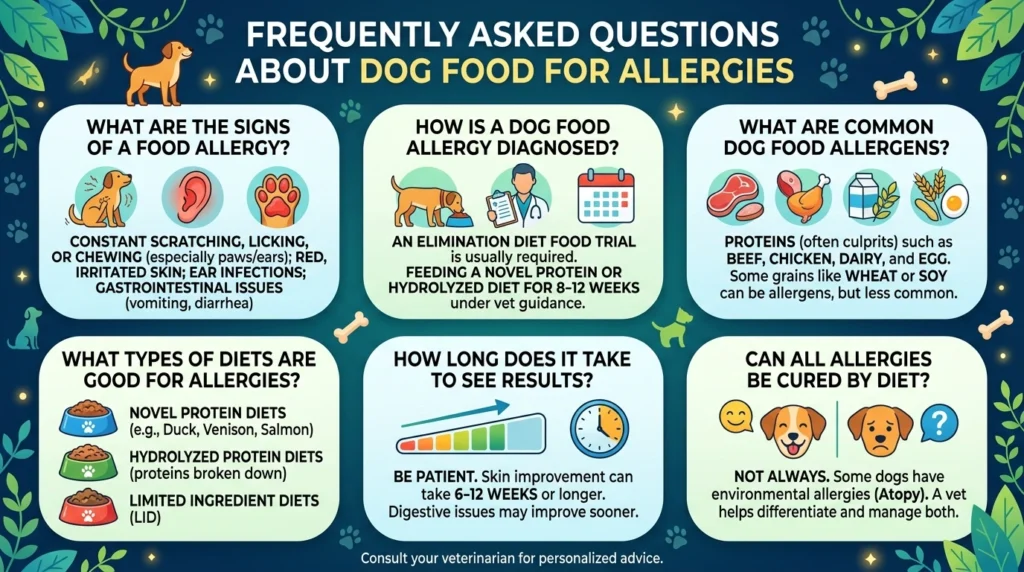
1. What is the best dog food for allergies recommended by vets?
Veterinary nutritionists most commonly recommend Purina Pro Plan Veterinary Diets HA Hydrolyzed and Royal Canin Veterinary HP Hydrolyzed Protein for dogs with confirmed food allergies. Both are prescription-only formulas that use hydrolyzed proteins broken into fragments too small for the immune system to recognize as allergens. For milder sensitivities, Hill’s Science Diet Sensitive Stomach & Skin and Natural Balance Limited Ingredient formulas are strong over-the-counter options. However, always consult your vet before selecting any allergy-specific diet. Proper diagnosis determines which type of food will actually work for your dog.
2. How long does it take for dog food for allergies to work?
Most dogs show noticeable improvement within 4 to 6 weeks of starting a proper hypoallergenic or elimination diet. However, the full diagnostic elimination diet requires 8 to 12 weeks for reliable results. Skin symptoms typically take longer to resolve than digestive symptoms. Therefore, commit to the full recommended timeframe your vet advises before evaluating whether a food is working. Stopping early is the most common reason allergy diets appear unsuccessful.
3. Can I make homemade dog food for allergies?
Yes but only with proper veterinary nutritionist guidance. Homemade diets for allergic dogs carry a real risk of nutritional deficiency if not properly balanced. A board-certified veterinary nutritionist can create a complete, balanced homemade recipe tailored to your dog’s specific allergen profile. Resources like the Balance IT supplement system help home-cookers meet all nutritional requirements. However, never create a homemade allergy diet based purely on internet recipes without professional guidance.
4. What’s the difference between a food allergy and food intolerance in dogs?
A food allergy triggers an immune system response and typically causes both skin and digestive symptoms. A food intolerance causes digestive upset like vomiting or diarrhea without involving the immune system. Both benefit from dietary changes. However, true food allergies tend to produce more severe, consistent symptoms across multiple body systems. Also, food allergies can develop at any age even to proteins your dog has eaten for years without problems. Therefore, new symptoms in an adult dog are worth investigating even if the diet hasn’t changed recently.
5. Are grain-free diets better for dogs with allergies?
Not necessarily. Grains are actually less common allergens than many people assume. Beef, chicken, dairy, and eggs cause far more food allergies in dogs than grains do. Therefore, grain-free diets only benefit dogs with confirmed grain sensitivities which is a smaller percentage of allergic dogs than marketing suggests. Also, the FDA has flagged a potential connection between grain-free diets high in legumes and heart disease (DCM) in some dogs. Always base dietary decisions on your dog’s confirmed allergens rather than general marketing trends.
6. Which dog breeds are most prone to food allergies?
Several breeds show higher rates of food allergies than average. Labrador Retrievers, Golden Retrievers, German Shepherds, Boxers, Cocker Spaniels, Dalmatians, and West Highland White Terriers are all known to have higher allergy incidence. Also, French Bulldogs and Bulldogs frequently struggle with food sensitivities due to their sensitive digestive systems. However, any breed can develop food allergies at any age. Therefore, don’t assume your dog is immune just because their breed isn’t on the high-risk list.
7. Can puppies develop food allergies?
Yes puppies can develop food allergies, though it’s less common than in adult dogs. Most food allergies develop after repeated exposure to a protein over time which is why many dogs develop allergies to ingredients they’ve eaten for years. However, if your puppy shows persistent skin irritation, digestive upset, or ear infections from a young age, consult your vet about a possible food sensitivity evaluation. Early identification and dietary adjustment prevents years of unnecessary discomfort.
Give Your Dog the Relief They Deserve
Living with unmanaged food allergies is genuinely miserable for dogs. The constant itching, recurring infections, and digestive discomfort affect their quality of life every single day. However, the right dog food for allergies changes everything often dramatically and fairly quickly.
Start with your vet. Get a proper diagnosis. Then choose a high-quality limited ingredient, novel protein, or hydrolyzed formula based on your dog’s specific allergen profile. Commit to the full elimination diet timeline. Also, track progress weekly with photos and notes.
Your dog can’t tell you how much better they feel. But a calmer, less itchy, brighter-eyed companion tells you everything. That transformation is absolutely worth the patience and effort the process requires.