
Introduction
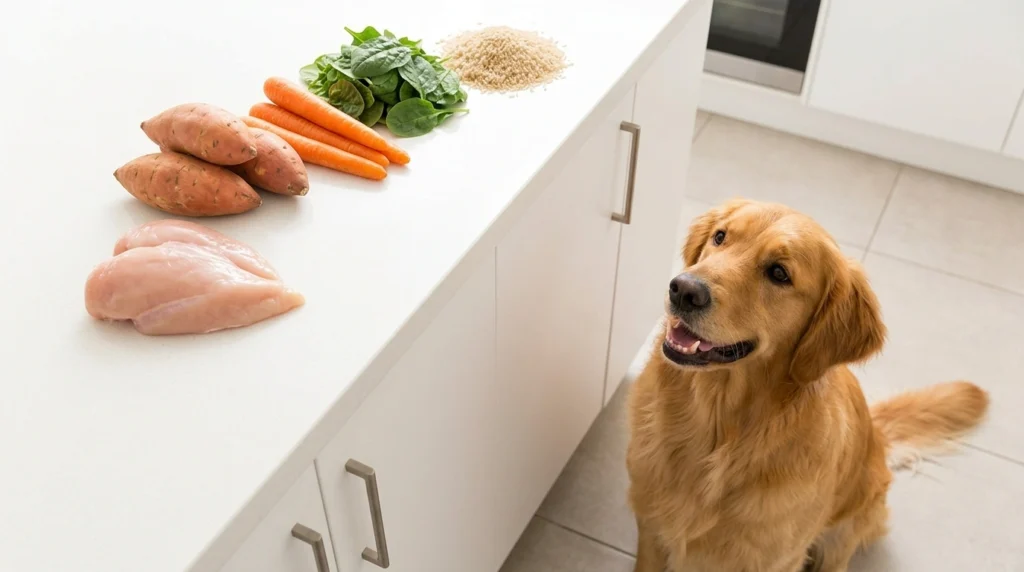
Your dog gives you unconditional love every single day. So it makes sense that you want to give something equally wonderful back starting with what goes in their bowl. Dog food recipes made at home are one of the most loving things you can do for your pet.
However, homemade dog food can feel intimidating at first. Which ingredients are safe? How do you make it nutritionally balanced? Can you really replace commercial kibble with home cooking?
The good news is that making healthy dog food recipes at home is simpler than most people think. You don’t need a culinary degree or fancy equipment. You just need the right ingredients, a basic understanding of canine nutrition, and a dog who’s ready to eat well.
In this guide, you’ll find seven easy, vet-safe dog food recipes plus tips on ingredients, portion sizes, and common mistakes to avoid. Let’s get cooking for your best friend.
Why Dog Food Recipes at Home Are Worth Making
The Real Benefits of Homemade Dog Food
Ever wondered what’s actually inside that bag of commercial kibble? Most dog owners haven’t checked and the answer sometimes surprises them. Homemade dog food recipes give you complete control over every ingredient your dog consumes.
Here’s why more dog owners are switching to home cooking:
- Full ingredient transparency you know exactly what’s in every meal
- No artificial preservatives or colors cleaner nutrition overall
- Fresher ingredients real meat, vegetables, and grains
- Better for picky eaters most dogs go wild for homemade meals
- Customizable for health needs adjust recipes for allergies or sensitivities
- Potentially better digestion whole foods are often easier to process
What Homemade Dog Food Can’t Do Alone
However, homemade dog food recipes aren’t automatically complete. This is the most important thing to understand before you start. Dogs need specific nutrients including calcium, phosphorus, zinc, and vitamins in precise ratios.
Therefore, most homemade diets need a vet-approved nutritional supplement to fill any gaps. Also, consulting your vet or a veterinary nutritionist before switching your dog fully to homemade food is strongly recommended. Think of supplements like a nutritional insurance policy for your dog’s health.
How to Make Dog Food Recipes Safely: Step-by-Step Guide
Before You Start Cooking
Follow these steps every time you prepare homemade dog food recipes:
- Consult your vet first. This step is non-negotiable. Your vet can advise on caloric needs, portion sizes, and any breed-specific nutritional requirements. Also, dogs with health conditions like kidney disease or diabetes need specially tailored recipes.
- Choose a balanced recipe. Look for recipes developed or reviewed by a veterinary nutritionist. Because nutrient deficiencies develop slowly, an unbalanced diet may seem fine for months before problems appear.
- Use only dog-safe ingredients. Some human foods are toxic to dogs. Therefore, always check ingredients carefully before adding anything new to your dog’s meals.
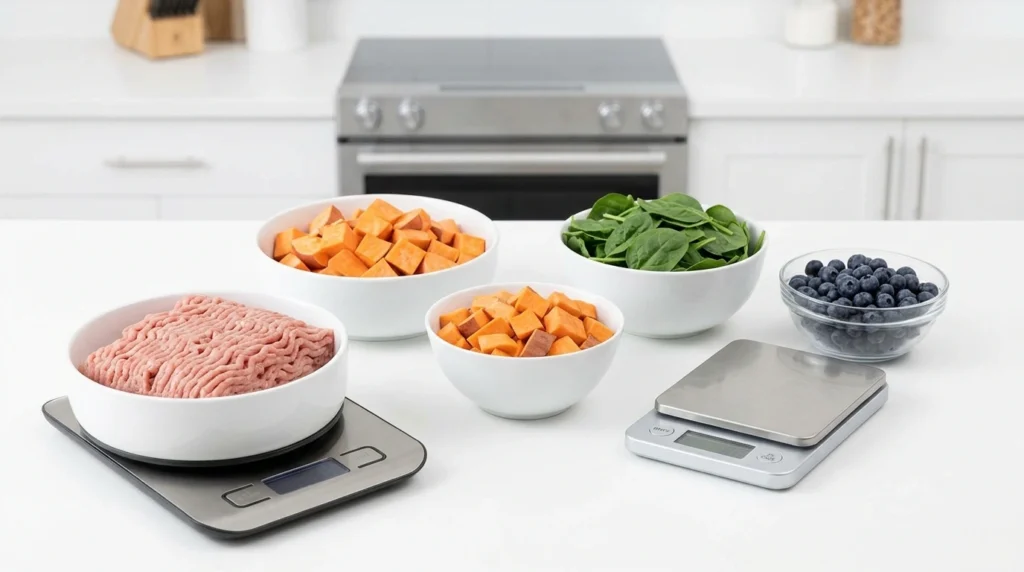
- Invest in a kitchen scale. Accurate portion control matters significantly more for dogs than for humans. A kitchen scale ensures consistency across every meal you prepare.
- Cook proteins thoroughly. Raw meat carries bacterial risks like salmonella. Therefore, always cook chicken, beef, turkey, and pork to safe internal temperatures before serving.
- Add a vet-recommended supplement. Homemade meals alone rarely meet all nutritional needs. Therefore, add a complete canine supplement like BalanceIT or a vet-recommended alternative to every batch.
- Store correctly and safely. Homemade dog food lasts 3–4 days in the refrigerator and up to 3 months in the freezer. Also, always use airtight containers to maintain freshness and prevent contamination.
Pro Tip: Cook in large batches and freeze individual meal portions. This approach saves significant time during the week. Also, it ensures your dog always has fresh, ready-to-serve homemade food even on your busiest days.
7 Easy Dog Food Recipes Your Dog Will Actually Love
Recipe 1: Classic Chicken and Rice
This is the most popular homemade dog food recipe for good reason. It’s gentle, digestible, and works well for dogs with sensitive stomachs. Also, vets often recommend this combination during digestive upsets.
Ingredients:
- 2 cups cooked chicken breast (boneless, skinless)
- 1 cup cooked brown rice
- ½ cup cooked carrots (diced)
- ½ cup peas (cooked)
- 1 tablespoon olive oil
Instructions:
- Cook chicken thoroughly and shred into small pieces
- Cook brown rice according to package directions
- Steam carrots and peas until soft
- Mix all ingredients together
- Add olive oil and stir well
- Cool completely before serving
Serving size: Approximately 1 cup per 20 pounds of body weight daily. Always confirm portions with your vet.
Recipe 2: Beef and Sweet Potato Bowl
This recipe is protein-rich and naturally sweet dogs absolutely love it. Sweet potato provides fiber and beta-carotene, while beef delivers iron and essential amino acids.
Ingredients:
- 2 cups lean ground beef (cooked and drained)
- 1 cup mashed sweet potato
- ½ cup green beans (cooked)
- ¼ cup blueberries
- 1 teaspoon fish oil
Instructions:
- Brown ground beef in a pan and drain excess fat
- Bake or boil sweet potato until soft, then mash
- Steam green beans until tender
- Combine all ingredients in a large bowl
- Add fish oil and mix thoroughly
- Cool before serving
Recipe 3: Turkey and Vegetable Stew
This warming stew is perfect for colder months. Also, it’s an excellent choice for older dogs who need softer food because of dental issues.
Ingredients:
- 2 cups ground turkey (cooked)
- 1 cup cooked brown rice
- ½ cup diced zucchini (cooked)
- ½ cup diced carrots (cooked)
- ½ cup spinach (lightly cooked)
- 2 cups low-sodium chicken broth
Instructions:
- Cook ground turkey thoroughly in a large pot
- Add broth and bring to a gentle simmer
- Add all vegetables and cook until soft
- Stir in cooked rice
- Simmer for 10 minutes, then cool completely
- Serve at room temperature
Recipe 4: Salmon and Oat Meal
This recipe is rich in omega-3 fatty acids. Therefore, it’s especially beneficial for dogs with dry skin, dull coats, or joint inflammation. In addition, oats provide gentle fiber for digestive health.
Ingredients:
- 1½ cups cooked salmon (boneless)
- 1 cup cooked rolled oats
- ½ cup cooked broccoli (finely chopped)
- ½ cup cooked sweet potato
- 1 teaspoon coconut oil
Instructions:
- Cook salmon thoroughly and remove all bones
- Cook oats with water until soft
- Steam broccoli and sweet potato until tender
- Flake salmon into small pieces
- Combine all ingredients and mix well
- Add coconut oil and stir before serving
Recipe 5: Egg and Vegetable Scramble
This quick recipe works perfectly as a meal topper or light standalone meal. Also, eggs are one of the most bioavailable protein sources you can give your dog.
Ingredients:
- 3 large eggs (scrambled, no seasoning)
- ½ cup cooked peas
- ½ cup diced cooked carrots
- ¼ cup plain cooked oats
Instructions:
- Scramble eggs in a non-stick pan with no oil or seasoning
- Cook peas and carrots until tender
- Prepare oats with water only
- Combine all ingredients and cool completely
- Serve as a meal topper or small standalone meal
Quick Comparison: All 5 Dog Food Recipes
| Recipe | Main Protein | Key Benefit | Best For |
| Chicken and Rice | Chicken | Gentle, digestive | Sensitive stomachs |
| Beef and Sweet Potato | Beef | Iron-rich, tasty | Active dogs |
| Turkey Vegetable Stew | Turkey | Soft, warming | Senior dogs |
| Salmon and Oat Meal | Salmon | Omega-3 rich | Skin and coat health |
| Egg and Vegetable Scramble | Eggs | Quick, protein-rich | Meal toppers |
Foods to NEVER Put in Dog Food Recipes
Toxic Ingredients That Can Harm Your Dog
This section could genuinely save your dog’s life. Therefore, memorize this list before cooking any dog food recipes at home.
Never include these ingredients:
- 🚫 Onions and garlic destroy red blood cells, cause anemia
- 🚫 Grapes and raisins cause acute kidney failure, even in small amounts
- 🚫 Chocolate contains theobromine, toxic to dogs
- 🚫 Xylitol artificial sweetener found in peanut butter, causes dangerous blood sugar drops
- 🚫 Macadamia nuts cause weakness, vomiting, and tremors
- 🚫 Avocado contains persin, toxic to dogs
- 🚫 Alcohol even tiny amounts cause serious harm
- 🚫 Nutmeg causes seizures and nervous system problems
- 🚫 Raw yeast dough expands in the stomach, produces toxic alcohol
- 🚫 Cooked bones splinter and cause internal injuries
Common Mistakes in Homemade Dog Food Recipes
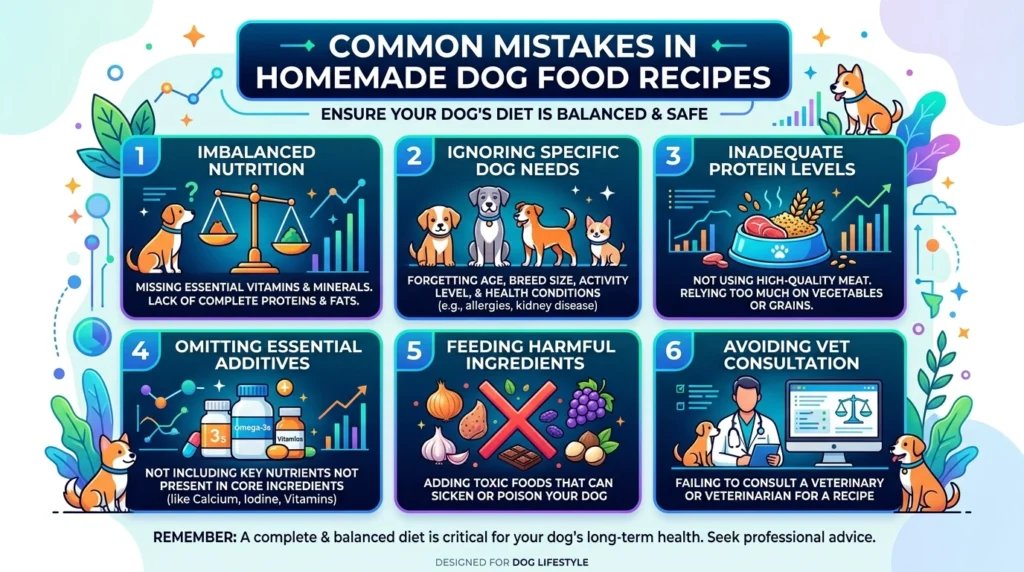
Mistake 1: Skipping the Vet Consultation
Many owners start cooking dog food recipes without veterinary input. However, this approach risks nutritional imbalances that develop slowly and invisibly. Therefore, always get vet approval before fully switching to homemade feeding.
Mistake 2: Not Adding Nutritional Supplements
Whole food ingredients are wonderful. However, they rarely provide complete canine nutrition without supplementation. As a result, dogs fed unbalanced homemade diets long-term develop deficiencies often in calcium, zinc, or vitamin D. Always add a vet-recommended supplement to every batch.
Mistake 3: Using Too Much Salt or Seasoning
Human cooking instincts are hard to shake. However, dogs need zero added salt, herbs, or spices. Even small amounts of onion powder or garlic commonly found in seasoning blends are toxic to dogs. Therefore, always cook dog food completely plain.
Mistake 4: Overfeeding Homemade Food
Homemade dog food is often more calorie-dense than commercial kibble. As a result, owners who estimate portions visually tend to overfeed significantly. Therefore, always weigh your dog’s meals and calculate calories accurately especially during the first month of homemade feeding.
Mistake 5: Ignoring Portion Sizes for the Dog’s Size
A recipe designed for a 50-pound Labrador is not appropriate for a 10-pound Chihuahua in the same quantities. Therefore, always scale recipes based on your dog’s actual weight and consult your vet for a personalized daily calorie target.
Frequently Asked Questions About Dog Food Recipes
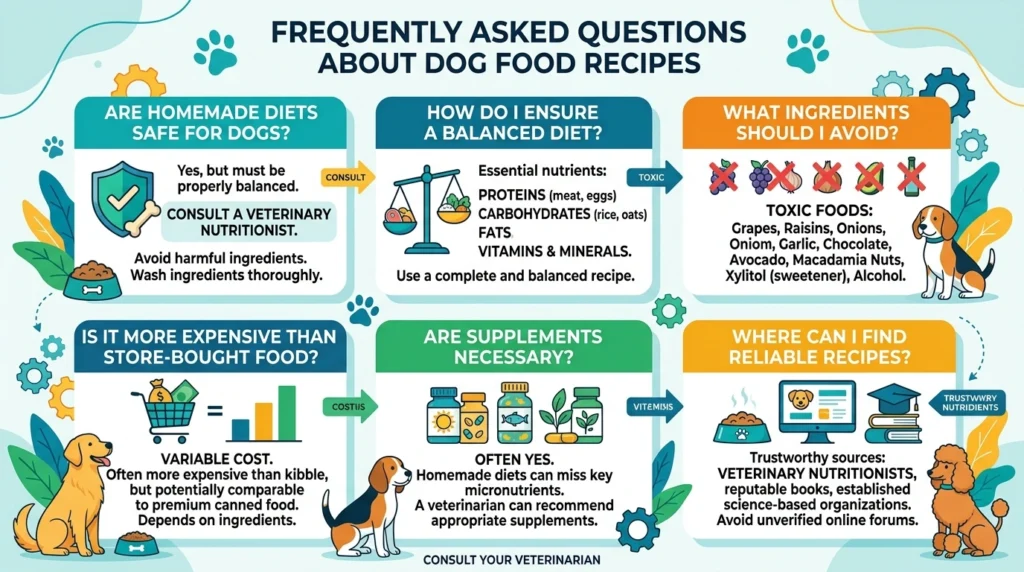
1. Are homemade dog food recipes safe for all dogs?
Homemade dog food recipes are generally safe for healthy adult dogs when properly balanced. However, puppies, senior dogs, pregnant dogs, and dogs with health conditions have very specific nutritional needs. Therefore, always consult your vet before switching any of these dogs to a homemade diet. A veterinary nutritionist can create a recipe specifically tailored to your dog’s individual health profile.
2. How do I make sure my homemade dog food recipes are nutritionally complete?
The most reliable approach combines vet-reviewed recipes with a complete canine nutritional supplement. Supplements like BalanceIT are formulated specifically to complement homemade dog food recipes. Also, having your vet analyze the full recipe ensures nothing critical is missing. Because nutrient deficiencies develop slowly, regular vet check-ups every 6 months are important for dogs on homemade diets.
3. How much homemade food should I feed my dog daily?
A general guideline is approximately 2–3% of your dog’s ideal body weight per day. For example, a 50-pound dog needs roughly 1 to 1.5 pounds of food daily. However, this varies based on age, activity level, and health status. Therefore, always calculate your dog’s specific caloric needs with your vet’s guidance rather than relying solely on general guidelines.
4. Can I mix homemade dog food recipes with commercial kibble?
Yes and this hybrid approach is actually a popular choice. Adding homemade food as a topper to commercial kibble improves palatability, adds moisture, and provides fresher nutrition. However, adjust the kibble portion down proportionally to avoid overfeeding. Also, make sure any homemade additions use only dog-safe ingredients from the list above.
5. How long do homemade dog food recipes last?
Homemade dog food lasts 3–4 days in the refrigerator when stored in an airtight container. Also, it freezes well for up to 3 months. Therefore, batch cooking on weekends and freezing individual portions is the most practical approach for busy owners. Always thaw frozen portions overnight in the refrigerator never on the counter at room temperature.
6. What’s the easiest dog food recipe for beginners?
The Chicken and Rice recipe is widely considered the most beginner-friendly option. Because both ingredients are easy to source, inexpensive, and gentle on digestion, it makes an ideal starting point. Also, it’s the recipe most commonly recommended by vets during digestive upset recovery which gives it additional credibility as a safe, balanced starting recipe.
7. Do dog food recipes need to include grains?
No dogs don’t require grains to be healthy. However, grains like brown rice and oats provide useful fiber and energy. Also, recent FDA research has linked some grain-free commercial diets to heart issues (DCM) in certain dogs. Therefore, including wholesome grains like brown rice or oats in homemade recipes is generally a safe and nutritionally supportive choice for most healthy dogs.
Start Cooking for Your Dog Today
Making homemade dog food recipes is one of the most meaningful ways to invest in your dog’s long-term health and happiness. Real ingredients, real nutrition, and real love all in one bowl.
However, always start with your vet’s guidance. Add a quality nutritional supplement to every batch. Use only the dog-safe ingredients from this guide. Then watch your dog’s coat, energy, and enthusiasm transform over the following weeks.
Your dog deserves the best. And with these recipes, you can deliver exactly that one delicious, nutritious meal at a time.