
Ever opened a can of cat food and thought, “Is this too much, or not enough?” You’re not alone. Many cat owners search how much wet food to feed their cat because feeding labels can feel vague, and every cat seems different. One cat licks the bowl clean. Another walks away after three bites.
The good news is that wet food feeding gets easier once you understand calories, weight, age, and activity. Also, you don’t need to guess every day. You only need a simple starting point, then you can adjust slowly.
In this guide, you’ll learn how to calculate wet cat food portions, how many cans your cat may need, and which mistakes to avoid. You’ll also see real examples, a simple table, and practical tips you can use today. However, always consult your vet if your cat is underweight, overweight, pregnant, sick, or on a prescription diet.
How Much Wet Food to Feed Cats? Start With Calories
The best answer to how much wet food to feed a cat starts with calories, not can size. That’s because one can have 70 calories, while another may have 120 calories. So, two cans from different brands may not feed your cat the same way.
First, look at the label. You’ll usually see “kcal per can,” “kcal per pouch,” or “kcal per tray.” That number tells you how much energy your cat gets from one serving. Then, you can match that number to your cat’s daily calorie needs.
Most healthy indoor adult cats need a moderate number of daily calories. However, the exact amount depends on:
- Your cat’s current weight
- Your cat’s ideal weight
- Activity level
- Age and life stage
- Spay or neuter status
- Health conditions
- Treats and dry food
Here’s a simple formula:
Daily calorie goal ÷ calories per can = cans per day
For example, let’s say your cat needs around 200 calories daily. If one 3-ounce can has 85 calories, your cat may need about 2.3 cans per day. So, you could feed one can in the morning, one can at night, and a small extra portion later.
However, don’t treat this as a strict rule. Instead, use it as a starting point. Then watch your cat’s body shape, energy, hunger, and weight.
Pro Tip: Don’t feed by “one can per meal” unless you check the calories first. Wet food calories can change a lot by brand, recipe, and can size.
How Much Wet Food to Feed Cat by Weight and Life Stage
When people ask how much wet food to feed cat, they usually want a quick answer. That’s fair. So, here’s a helpful starting table.
These are general wet food portions for healthy cats. They assume a 3-ounce can has about 70 to 100 calories. Your cat may need more or less, so check the label first.
| Cat Type | Daily Wet Food Starting Point | Helpful Note |
| Small adult cat, 5–7 lb | 1.5 to 2 small cans | Good for petite indoor cats |
| Average adult cat, 8–10 lb | 2 to 3 small cans | Common range for many house cats |
| Larger adult cat, 11–13 lb | 3 to 4 small cans | Use ideal weight, not extra weight |
| Active outdoor cat | May need more | Activity burns more calories |
| Overweight indoor cat | May need less | Ask your vet before cutting food |
| Kitten | Often needs more meals | Growth needs steady nutrition |
| Senior cat | Depends on health | Weight and muscle matter a lot |
This table helps, but it doesn’t replace calorie counting. For example, three low-calorie cans may equal two richer cans. Therefore, the calorie label matters more than the can count.
Also, don’t use your cat’s current weight if your cat is overweight. Use the ideal weight your vet recommends. Otherwise, you may feed to maintain extra weight.
If your cat is underweight, don’t suddenly double the food. Sudden feeding changes can upset the stomach. Instead, call your vet and increase food with a safe plan.
Step-by-Step Guide: How Much Wet Food to Feed Cat Daily
Now let’s make this easy. Use this step-by-step method to find how much wet food to feed cat without feeling lost.
1. Find Your Cat’s Ideal Weight
First, check your cat’s body shape. You should feel the ribs with light pressure. Also, your cat should have a slight waist when viewed from above.
If your cat looks round, your cat may need fewer calories. However, if the ribs feel sharp, your cat may need more food. A vet can give you the safest target weight.
2. Read the Wet Food Label
Next, find the calorie count on the can, pouch, or box. Look for “kcal/can” or “kcal/serving.”
For example:
- One can = 80 calories
- One pouch = 65 calories
- One tray = 95 calories
Then, write it down. This small step makes feeding much easier.
3. Calculate the Daily Amount
Now use the simple formula:
Daily calories ÷ calories per can = cans per day
Example:
- Your cat needs 200 calories daily.
- One can have 85 calories.
- 200 ÷ 85 = 2.35 cans daily.
So, your cat may need about two full cans and one-third of another can.
4. Split Food Into Meals
Most cats do well with two to four meals per day. Smaller meals can help cats feel satisfied. Also, they may reduce begging and fast eating.
A simple schedule can look like this:
- Morning: 1 can
- Afternoon: ½ can
- Evening: 1 can
If your cat wakes you up at night, save a small portion for bedtime. This may help your cat settle.
5. Count Dry Food and Treats Too
This part matters. If your cat eats dry food, treats, tuna, chicken, or lickable snacks, count those calories too.
For example, if your cat needs 200 calories daily and eats 50 calories of dry food, then only 150 calories should come from wet food. Otherwise, your cat may gain weight slowly.
Also, treats should stay small. A few treats can add up fast.
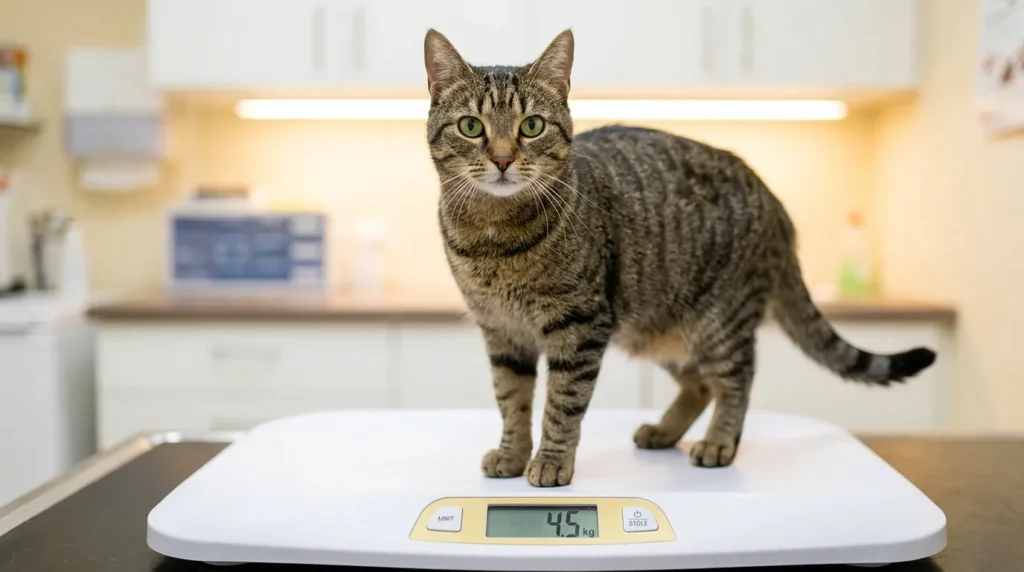
6. Track Weight Every 2 to 4 Weeks
Next, weigh your cat on a regular schedule. You can use a pet scale. Or, weigh yourself holding your cat, then subtract your weight.
If your cat gains weight, lower the daily amount slightly. If your cat loses too much weight, call your vet. Cats should not crash diets.
7. Adjust Slowly
Finally, adjust the amount slowly. Cats often dislike sudden changes. Also, quick diet changes can cause vomiting or loose stool.
If you switch wet food brands, mix the new food with the old food for several days. Then increase the new food bit by bit.
Examples: How Much Wet Food to Feed Cat in Real Life
Real examples make this easier. So, let’s look at a few common cat feeding situations.
| Example Cat | Wet Food Calories | Possible Daily Amount | Why It Works |
| 8 lb indoor adult cat | 80 kcal per can | 2 to 2.5 cans | Good starting range |
| 10 lb adult cat | 90 kcal per can | About 2 to 3 cans | Depends on activity |
| 12 lb active cat | 85 kcal per can | 3 to 3.5 cans | Active cats may need more |
| Overweight 13 lb cat | 95 kcal per can | Ask vet first | Weight loss must be safe |
| Kitten over 12 weeks | Varies by food | Several small meals | Kittens need growth support |
Let’s use another real-life case.
Imagine your cat, Milo, weighs 10 pounds. He eats canned cat food with 82 calories per can. He also gets a few treats worth 20 calories daily.
If Milo’s daily goal is about 200 calories, you subtract the treats first.
200 daily calories – 20 treat calories = 180 calories from wet food
Then divide:
180 ÷ 82 = 2.2 cans per day
So, Milo may eat one can in the morning, half a can after work, and the rest at night. However, you’d still watch his weight and adjust.
This is why how much wet food to feed cat is not one fixed answer. It’s a small calculation plus real-life observation.
Common Mistakes to Avoid With Wet Cat Food
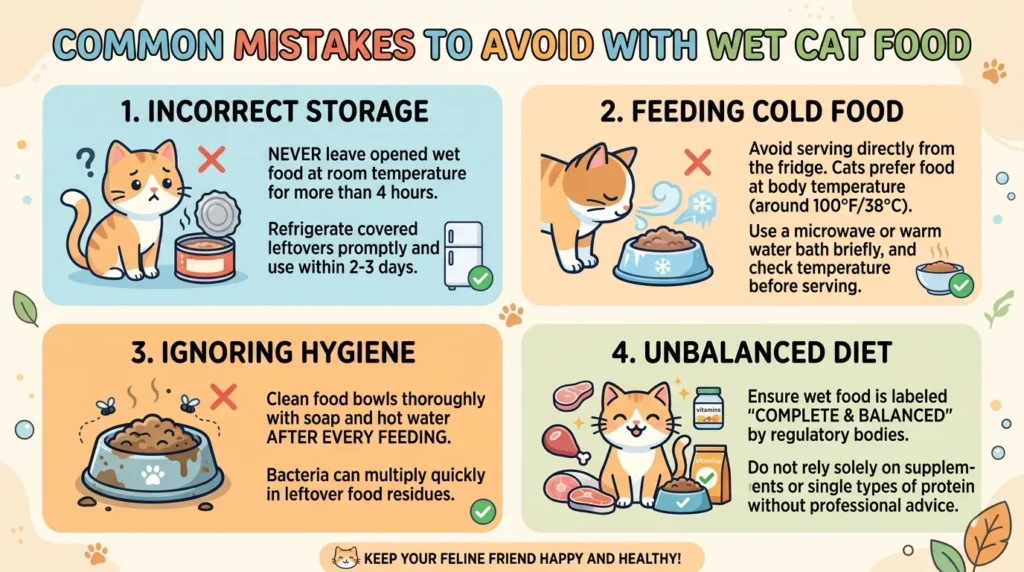
Wet food can be a great choice for many cats. It adds moisture, tastes appealing, and can help with meal control. However, small feeding mistakes can still happen.
Feeding by Can Size Only
The biggest mistake is feeding by can size only. A 3-ounce can and a 5.5-ounce can are not equal. Also, two 3-ounce cans from different brands may have different calories.
So, always check the calories first.
Forgetting Dry Food Calories
Many owners feed wet food in the morning and dry food at night. That can work well. However, you need to count both foods.
Dry food is often calorie dense. Therefore, even a small scoop can add many calories.
Free Feeding Wet Food
Wet food should not sit out all day. It can dry out and spoil. Also, many cats eat more when food stays available.
Instead, offer measured meals. Then refrigerate leftovers quickly.
Ignoring Body Condition
Your cat’s body tells a story. If your cat gains weight, the portion may be too high. If your cat loses muscle or acts weak, the portion may be too low.
Also, fluffy cats can hide weight changes. So, use your hands, not just your eyes.
Changing Food Too Fast
Cats can be picky. They can also get stomach issues from sudden food changes.
So, mix old and new food slowly over several days. This makes the change smoother.
Cutting Food Too Much
Never place your cat on a harsh diet without vet help. Fast weight loss can harm cats. Therefore, overweight cats need a safe feeding plan.
If your cat needs to lose weight, ask your vet for a calorie target.
How Much Wet Food to Feed Cat FAQ
1. How many cans of wet food should a cat eat per day?
Most healthy adult cats eat about two to three small cans daily. However, the better answer depends on calories. If each can has fewer calories, your cat may need more cans. If each can has more calories, your cat may need fewer.
So, check the label first. Then divide your cat’s daily calorie goal by the calories per can. This gives you a much clearer answer.
2. Is one can of wet food enough for a cat?
One small can is usually not enough for a full day. However, it may be enough if your cat also eats dry food. It also depends on the can size and calories.
For example, one large 5.5-ounce can may contain more calories than one small 3-ounce can. Therefore, don’t guess by size alone. Check the calories and total daily food.
3. Can I feed my cat only wet food?
Yes, many cats can eat only wet food if it is complete and balanced. Look for a label that says the food is suitable for your cat’s life stage. For example, kittens need kitten food or food approved for growth.
However, your cat still needs fresh water every day. Also, ask your vet if your cat has kidney issues, urinary problems, diabetes, allergies, or weight concerns.
4. How much wet food should a kitten eat?
Kittens usually need more frequent meals than adult cats. They are growing fast, so they often need more calories per pound of body weight. Many kittens do well with three to four meals daily.
However, kitten food should match the growth stage. Also, very young kittens have special needs. If your kitten is small, weak, or not gaining weight, contact your vet quickly.
5. How much wet food should a senior cat eat?
Senior cats need a feeding plan based on weight, muscle, teeth, and health. Some senior cats gain weight because they move less. Others lose weight because of illness, dental pain, or poor appetite.
So, watch your senior cat closely. If your older cat suddenly eats less, drinks more, loses weight, or vomits often, book a vet visit.
6. How do I feed wet and dry food together?
First, choose your cat’s daily calorie goal. Then split those calories between wet and dry food. For example, you might feed 70% of calories from wet food and 30% from dry food.
After that, measure both foods. Don’t add dry food “just as a snack” without counting it. Otherwise, your cat may eat too much.
7. Why is my cat still hungry after wet food?
Some cats beg from habit, not hunger. Others may need more protein, more meals, or a better feeding schedule. Also, very active cats may need extra calories.
However, sudden hunger can also point to health issues. If your cat seems hungry all the time, loses weight, or drinks more water, consult your vet.
Final Thoughts
Figuring out how much wet food to feed cat becomes simple once you stop guessing by can size. Start with calories, check your cat’s ideal weight, and count every treat or dry food snack. Then, watch your cat’s body shape and adjust slowly.
Wet food can support hydration and meal control, but every cat is different. So, use this guide as a smart starting point, not a strict medical plan. If your cat has weight issues, urinary problems, kidney disease, diabetes, or appetite changes, consult your vet before changing the diet.