Introduction
Your dog eats the same food every single day. That means choosing the right brand is one of the most important decisions you’ll ever make for your pet. But here’s the problem: the pet food aisle is overwhelming. Every bag claims to be “natural,” “premium,” or “vet-approved.” How do you actually know which brands are genuinely good and which ones are just great at marketing?
Knowing the best and worst dog food brands saves you money, protects your dog’s health, and gives you real peace of mind at mealtimes. In this guide, I’ll break everything down honestly. You’ll get the top-performing brands, the ones to avoid, and a clear system for reading any label like a pro.
Let’s make sure your dog gets the nutrition they truly deserve.
What Makes the Best and Worst Dog Food Brands Different?
Not all dog food is created equal. However, many owners don’t realize how drastically quality can vary from one brand to the next. Understanding the difference helps you shop smarter every single time.
The Key Markers of a Great Brand
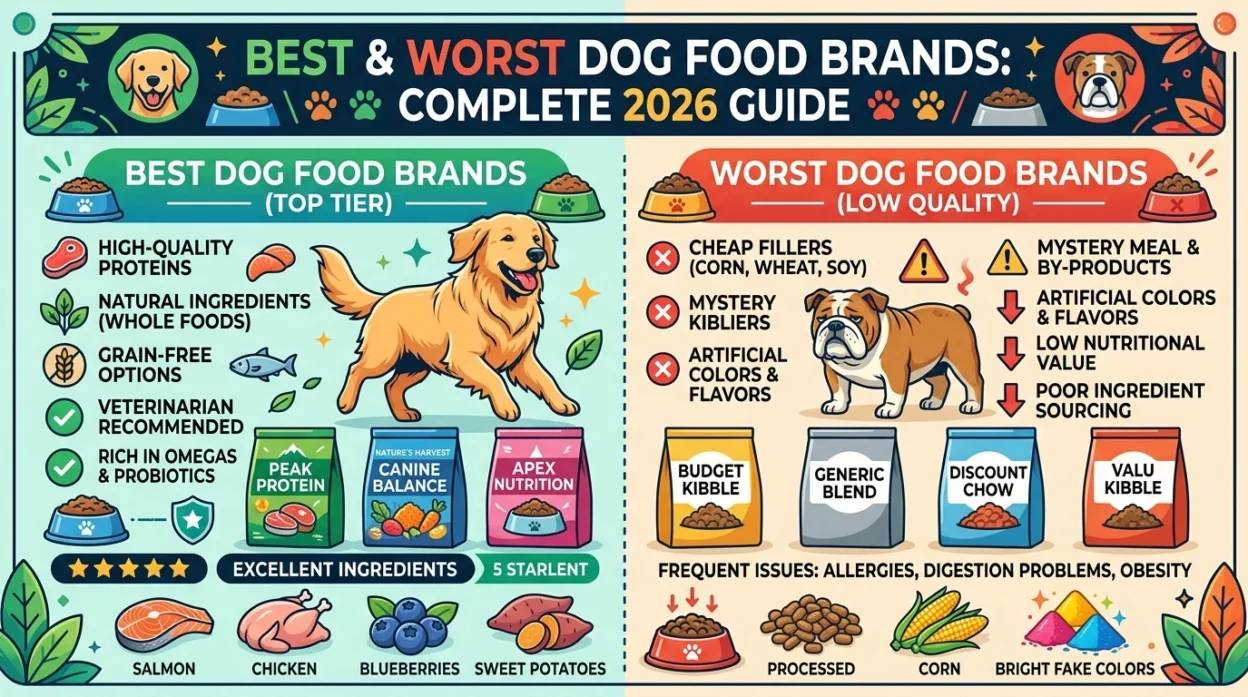
First, look at the ingredient list. The best brands always list a named animal protein like chicken, beef, or salmon as the very first ingredient. That’s a strong signal of quality.
Second, check for the AAFCO nutritional adequacy statement on the back of the bag. This tells you whether the food meets minimum nutritional standards. Even better, look for “complete and balanced based on feeding trials” because that means real dogs actually tested the food.
Third, consider the brand’s research investment. Top brands employ veterinary nutritionists and publish peer-reviewed studies. That kind of commitment to science is hard to fake.
The Red Flags of a Poor Brand
On the other hand, low-quality brands show very different patterns. For example, they often list vague ingredients like “meat by-products” or “animal digest” without naming the species. In addition, artificial colors like Red 40 or Yellow 5 appear frequently and they serve zero nutritional purpose.
Also, watch for ingredient splitting. This is when a brand lists corn, corn gluten meal, and corn syrup separately. As a result, each corn derivative looks minor but combined, they dominate the formula.
Finally, check the FDA recall database. Brands with repeated serious contamination events are a genuine safety concern for your dog.
How to Evaluate Dog Food Brands: Step-by-Step Guide
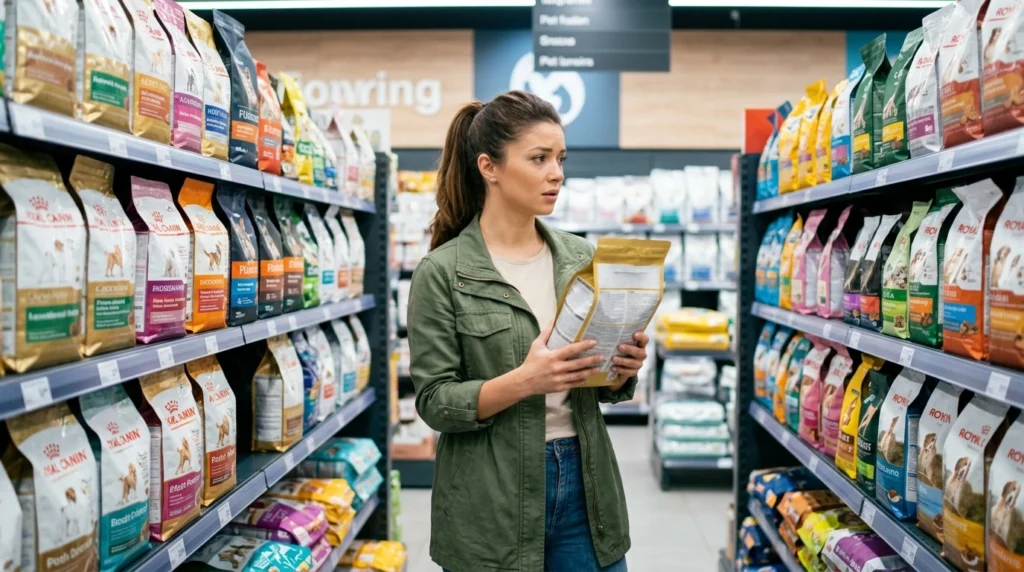
A Simple System Anyone Can Use
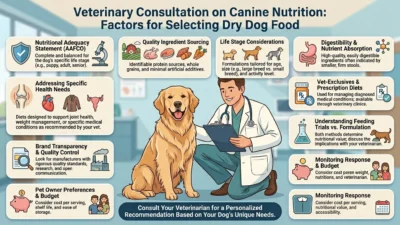
You don’t need a nutrition degree to evaluate dog food brands. However, you do need a consistent checklist. Here’s exactly what to do every time you pick up a new bag:
- Flip the bag immediately. Ignore the front, it’s all marketing. The real information is on the back panel, so go straight there.
- Read the first five ingredients. These make up the bulk of the formula. Therefore, you want at least one or two named animal proteins in the top five positions.
- Find the AAFCO statement. Look for “complete and balanced based on feeding trials” for the strongest validation. “Formulated to meet” standards is acceptable but less rigorous.
- Check the guaranteed analysis. For healthy adult dogs, look for at least 22–26% protein and 10–15% fat. These numbers reflect a solid nutritional foundation.
- Scan for red flag ingredients. BHA, BHT, ethoxyquin, artificial colors, and unnamed protein sources are all warning signs worth noting.
- Research the recall history. Spend two minutes at fda.gov searching the brand name. Look for patterns, not just one isolated incident.
- Calculate the daily feeding cost. Divide the bag price by the number of days it lasts based on feeding guidelines. This reveals the true cost per day, which is often surprising.
- Ask your vet. Your veterinarian knows your dog’s individual health history. Their personalized recommendation always adds an important final layer to your evaluation.
Pro Tip: Take a photo of your dog’s current food label before going to the store. That way, you can compare ingredients side by side on your phone without guessing or relying on memory.
[Dog Food Brands to Avoid Reddit Warns About: 2026 Guide]
Best and Worst Dog Food Brands: Honest Comparison Table
The Best Dog Food Brands in 2026
Here’s how the top-performing brands compare across the most important criteria:
| Brand | First Ingredient | Research Depth | Recall Record | Daily Cost (50lb dog) | Rating |
| Purina Pro Plan | Chicken / Salmon | ⭐⭐⭐⭐⭐ | Excellent | ~$2.50–$3.00 | A+ |
| Hill’s Science Diet | Chicken meal | ⭐⭐⭐⭐⭐ | Excellent | ~$2.75–$3.25 | A+ |
| Royal Canin | Chicken by-product | ⭐⭐⭐⭐ | Excellent | ~$3.00–$3.50 | A |
| Purina ONE | Chicken | ⭐⭐⭐ | Very Good | ~$1.75–$2.25 | A- |
| Iams Adult | Chicken | ⭐⭐⭐ | Very Good | ~$1.50–$2.00 | B+ |
The Worst Dog Food Brands to Avoid
However, not every brand earns high marks. Therefore, here are the brands that consistently raise serious concerns:
| Brand | Main Problem | Recall History | Rating |
| Ol’ Roy (Walmart) | Vague proteins, heavy fillers | Yes multiple | D |
| Gravy Train | Pentobarbital found in 2018 | Yes serious | F |
| Sportmix | Aflatoxin contamination, dog deaths | Yes serious | F |
| Kibbles ‘n Bits | Artificial colors, corn-heavy | Yes | D+ |
| Alpo | By-products dominant, low quality | Yes | D |
Why the Best Brands Pull So Far Ahead
Purina Pro Plan and Hill’s Science Diet lead the pack for a simple reason they invest in real science. Both brands carry feeding-trial-validated AAFCO compliance, meaning actual dogs confirmed their health outcomes. In addition, both brands employ hundreds of veterinary nutrition experts and publish peer-reviewed research regularly.
Royal Canin earns strong marks for its precision nutrition approach. However, it uses chicken by-product meal rather than whole chicken, a transparency gap some owners find concerning.
Purina ONE is a genuinely strong mid-range option. Furthermore, it delivers named protein first and avoids corn and wheat fillers at a more accessible price point.
Common Mistakes to Avoid When Choosing Dog Food Brands
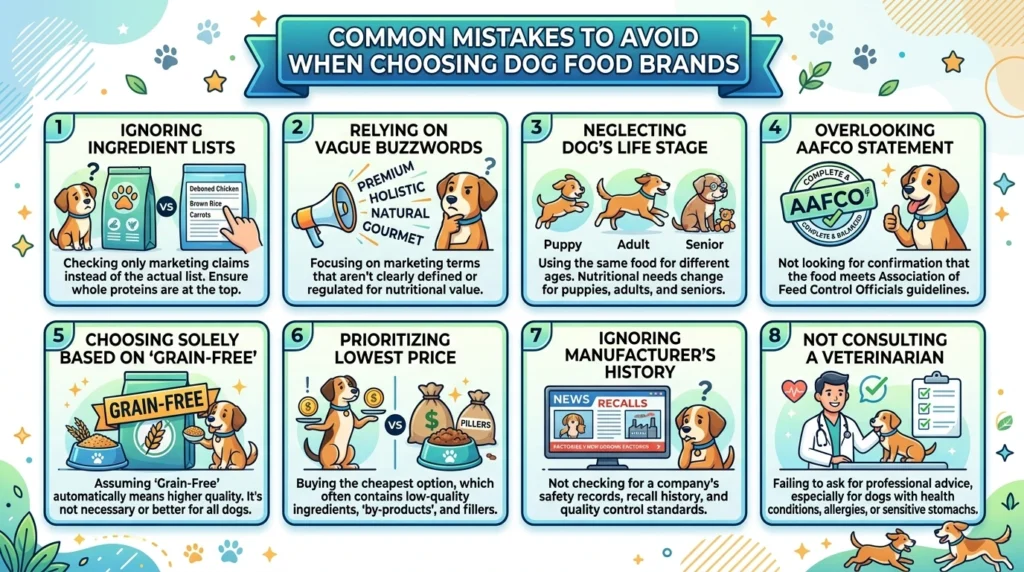
Mistake 1 Trusting the Front of the Bag
Every brand uses words like “natural,” “holistic,” and “premium” on their packaging. However, these terms are almost entirely unregulated in pet food. As a result, they tell you nothing meaningful about nutritional quality. Always go straight to the back panel instead.
Mistake 2 Choosing Grain-Free Without Medical Reason
Grain-free dog food has been aggressively marketed as healthier. But the FDA has been investigating a potential link between grain-free diets and dilated cardiomyopathy (DCM) , a serious heart condition, since 2018. Therefore, unless your vet has specifically recommended grain-free for a diagnosed condition, stick with grain-inclusive formulas.
Breaking Down Brand-Specific Warnings
Mistake 3 Ignoring Recall History
Some review sites dismiss recalls with “all brands have recalls.” That’s partly true but it’s also misleading. A single packaging issue is very different from repeated contamination with salmonella, aflatoxin, or as in Gravy Train’s case pentobarbital. Therefore, always check the FDA database yourself and look for patterns, not just individual incidents.
Mistake 4 Overfeeding Because the Food Seems Healthy
Premium dog food is often more calorie-dense and more digestible than budget options. As a result, your dog actually needs smaller portions. Adding a full portion of premium food to your dog’s existing bowl without adjusting quantities leads to gradual weight gain. Always measure portions carefully based on the bag’s guidelines for your dog’s weight.
Mistake 5 Switching Brands Too Frequently
Reading about dog food can become a rabbit hole. However, constantly switching brands disrupts your dog’s gut microbiome and makes it impossible to assess whether any food is truly working. Therefore, once you find a quality brand your dog thrives on commitment to it. Give any new food at least 8–12 weeks before making a judgment.
Pro Tip: When switching to a better brand, mix 25% new food with 75% old food for the first three days. Then move to 50/50, then 75% new, then 100%. This 10-day transition prevents digestive upset and gives your dog’s gut time to adjust properly.
Frequently Asked Questions About Best and Worst Dog Food Brands
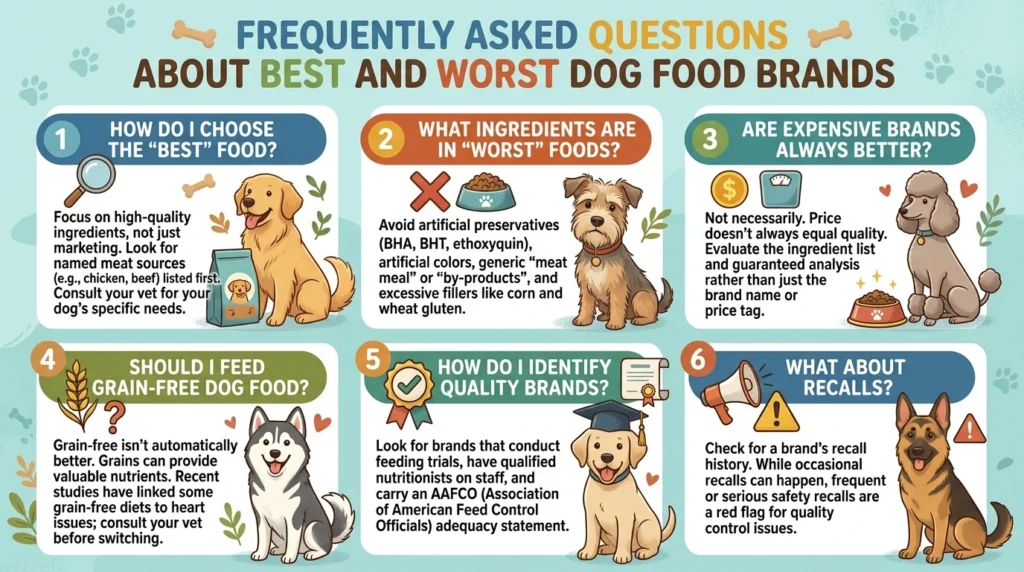
1. Which dog food brand do vets recommend most often?
Purina Pro Plan and Hill’s Science Diet are consistently the most recommended brands by veterinarians across the United States. Both carry feeding-trial-validated AAFCO compliance, invest heavily in peer-reviewed nutritional research, and maintain excellent manufacturing safety records. Furthermore, both offer extensive specialized formula ranges for different life stages, sizes, and health conditions. However, your own vet’s personalized recommendation for your specific dog always carries the most weight so ask at your next appointment.
2. What makes a dog food brand genuinely bad?
Several patterns characterize poor-quality dog food brands. First, they list vague protein sources like “meat by-products” or “animal digest” without naming the species. Second, they use excessive fillers corn, wheat, and soy dominating the top ingredients. Third, they add artificial colors, flavors, and synthetic preservatives like BHA and BHT that offer no nutritional benefit. Finally, brands with serious or repeated FDA recalls especially for contamination events like salmonella or aflatoxin are genuinely dangerous choices for your dog’s health.
3. Is expensive dog food always better than budget options?
Not always but the daily cost calculation often surprises people. For example, a $65 bag of Purina Pro Plan that lasts 45 days for a 50-pound dog costs about $1.44 per day. A $32 budget bag that lasts only 20 days for the same dog costs $1.60 per day. Therefore, premium brands are frequently closer in daily cost to budget options than the bag price suggests. In addition, higher-quality, more digestible food means smaller required portions further narrowing the real cost gap.
4. How do I know if my dog’s current food brand is working?
Watch for these three positive indicators over 8–12 weeks. First, your dog should produce firm, well-formed stools in appropriate volume. Excessive stool suggests poor digestibility. Second, their coat should be genuinely shiny without excessive shedding or flakiness. Third, their energy levels should be vibrant and appropriate for their age and breed. However, if you notice persistent loose stools, dull coat, low energy, or unexplained weight changes after the adjustment period, that’s a clear signal to discuss a food change with your vet.
5. Are store brand dog foods ever a safe choice?
It depends entirely on the specific product. For example, Tractor Supply’s 4Health brand is manufactured by a reputable company and receives generally positive independent evaluations. However, Walmart’s Ol’ Roy, the largest-selling store brand, uses vague protein sources, heavy corn fillers, and has a concerning recall history. Therefore, never assume a store brand is good or bad purely based on price. Apply the same evaluation criteria ingredient list, AAFCO statement, recall history that you’d apply to any name brand.
6. What is the worst dog food brand I should absolutely avoid?
Based on publicly available FDA data and independent nutritional analysis, Gravy Train earned the most serious concerns after pentobarbital, a drug used to euthanize animals, was found in their wet food products in 2018. Sportmix is equally alarming, linked to aflatoxin contamination that caused dozens of documented dog deaths in 2021. Both cases represent fundamental manufacturing failures, not minor quality issues. As a result, these brands should be avoided entirely regardless of price or availability.
7. Can I mix a good brand with a bad brand to save money?
This isn’t a recommended approach. However, if budget is a genuine constraint, a smarter strategy is to use a solid mid-range brand like Purina ONE or Iams as the primary food rather than mixing premium food with poor-quality food. In addition, you could use a premium food as a topper over a decent mid-range kibble in smaller quantities. Mixing a genuinely concerning brand one with vague proteins, artificial additives, and recall issues with premium food doesn’t neutralize the lower-quality ingredients. Always consult your vet before making significant dietary changes for your dog.
Your Dog Deserves Better Start Today
Understanding the best and worst dog food brands is genuinely one of the most practical things you can do for your dog’s long-term health. The difference between a top-rated brand and a concerning one isn’t just marketing, it’s real nutritional science, real safety records, and real outcomes in your dog’s coat, energy, and digestion.
Start by checking your current brand against the criteria in this guide. Look at the ingredient list, find the AAFCO statement, and spend two minutes on the FDA recall database. Then confirm your choice with your vet’s personalized input for your specific dog.