
Introduction
Choosing a dog is one of the most exciting decisions you’ll ever make. But here’s the thing: size matters more than most people realize. Medium dog breeds sit in a sweet spot that works for almost every lifestyle. They’re not too big, not too small, and honestly, they’re often the perfect fit for families, singles, and everyone in between.
Ever wondered why medium-sized dogs are consistently the most popular choice at shelters and breeders alike? Because they adapt well. They fit in apartments without feeling cramped. They’re sturdy enough for outdoor adventures. And they’re gentle enough for kids to play with safely.
In this guide, you’ll discover the most lovable medium dog breeds, what makes each one special, and how to choose the right one for your home. Whether you’re a first-time owner or adding a second dog to your family, let’s find your perfect match together.
What Are Medium Dog Breeds and Why Do They Stand Out?
Defining the Medium Dog Size Range
Medium dog breeds typically weigh between 20 and 60 pounds at full adult size. Their height usually falls between 18 and 24 inches at the shoulder. However, these numbers can vary slightly depending on the breed standard and the organization you reference.
Therefore, when you’re shopping for food, crates, or beds, always check your specific breed’s adult weight range. That way, you’ll avoid buying the wrong size equipment.
Why Medium Breeds Are So Popular
Medium dogs offer a genuinely wonderful balance. First, they’re large enough to feel substantial and sturdy. At the same time, they’re small enough to manage comfortably in everyday life.
Here’s what makes medium breeds stand out:
- Adaptability they adjust to apartments, houses, and rural settings
- Exercise needs moderate activity works for most medium breeds
- Family friendliness most medium breeds are great with children
- Trainability medium breeds tend to be intelligent and eager to please
- Longevity they often live longer than large breeds
In addition, medium dogs are easier to travel with than giant breeds. They fit in car back seats and many pet-friendly hotels without a problem.
Top 10 Most Popular Medium Dog Breeds You’ll Love

1. Labrador Retriever
The Labrador Retriever is America’s most beloved dog and for good reason. Labs are friendly, outgoing, and incredibly loyal. They love water, fetch, and basically any activity you invite them to join.
Labs typically weigh 55–80 pounds, placing them at the upper end of medium. Because they’re so energetic, daily exercise is essential for keeping them happy and healthy.
2. Golden Retriever
Golden Retrievers are gentle, patient, and absolutely wonderful with children. As a result, they’re one of the top choices for family dogs worldwide. They shed quite a bit, however, so regular grooming is necessary.
3. Border Collie
Border Collies are incredibly smart, arguably the most intelligent dog breed in the world. They need a LOT of mental stimulation, though. Therefore, they’re best suited for active owners who can provide both physical exercise and brain games daily.
4. Australian Shepherd
Australian Shepherds are energetic, loyal, and strikingly beautiful with their merle coats. They were originally bred for herding, so they love having a job to do. In my experience, Aussies thrive when they’re involved in agility training or obedience sports.
5. Cocker Spaniel
Cocker Spaniels are sweet, gentle, and absolutely gorgeous. They adapt well to apartment living, which makes them a popular choice for city dwellers. However, their long ears need regular cleaning to prevent infections.
6. Bulldog
Bulldogs are calm, courageous, and surprisingly affectionate. They don’t need intense exercise, making them ideal for less active owners. Also, their wrinkles need regular cleaning to stay healthy and infection-free.
7. Siberian Husky
Siberian Huskies are stunning, energetic, and famously vocal. They were bred to run long distances in cold weather. Therefore, they need significant daily exercise and do best in cooler climates.
8. Boxer
Boxers are playful, loyal, and endlessly entertaining. They’re also excellent guard dogs because they’re naturally alert and protective. First-time owners love Boxers because they’re affectionate and easy to bond with quickly.
9. Shetland Sheepdog (Sheltie)
Shelties are gentle, intelligent, and wonderfully devoted to their families. They’re easier to manage than Border Collies but equally smart. In addition, they excel at obedience competitions and agility courses.
10. Standard Poodle
Standard Poodles are elegant, highly intelligent, and surprisingly athletic. Many people don’t realize they’re also hypoallergenic, a huge benefit for allergy sufferers. As a result, Poodles are one of the most popular choices for families with sensitivities.
Pro Tip: Always meet a dog in person before adopting or purchasing. Temperament varies between individual dogs, even within the same breed. A quick visit tells you more than any breed description ever could.
[Dog Breeds and Price: Complete Buying Guide 2026]
How to Choose the Right Medium Dog Breed for Your Lifestyle
Step-by-Step Guide to Finding Your Perfect Match
Choosing the right breed isn’t just about looks. It’s about finding a dog whose personality and needs genuinely match your daily life. Here’s a simple process to help you decide:
- Assess your activity level honestly. Are you a runner who loves hiking? Or do you prefer quiet evenings at home? High-energy breeds like Border Collies need active owners. Calmer breeds like Bulldogs suit relaxed households perfectly.
- Consider your living space. A house with a yard gives dogs more room to roam freely. Apartment dwellers can still own medium breeds however, daily walks become non-negotiable for the dog’s wellbeing.
- Think about children and other pets. Some medium breeds are naturally gentle with kids. Others have high prey drives that make living with small pets difficult. Therefore, always research breed-specific traits before deciding.
- Factor in grooming time. Long-haired breeds like Golden Retrievers and Shelties need frequent brushing. Short-haired breeds like Boxers and Bulldogs are significantly lower maintenance. So be honest about how much grooming time you can commit to weekly.
- Research health conditions specific to the breed. Some medium breeds are prone to hip dysplasia, eye conditions, or ear infections. Always consult your vet before bringing a new dog home, especially if you have concerns about hereditary conditions.
- Consider adoption first. Many wonderful medium dog breeds are waiting in shelters right now. Adopting gives a dog a second chance and often, shelter dogs make the most devoted companions you’ll ever find.
- Meet the parents if buying from a breeder. The temperament of the parent dogs gives you valuable clues about how your puppy will develop. Reputable breeders always welcome this request without hesitation.
Medium Dog Breeds Compared: Quick Reference Table
Side-by-Side Breed Comparison
| Breed | Weight | Energy Level | Good With Kids | Grooming Needs | Best For |
| Labrador Retriever | 55–80 lbs | High | Yes | Moderate | Active families |
| Golden Retriever | 55–75 lbs | High | Yes | High | Family homes |
| Border Collie | 30–55 lbs | Very High | Yes (older kids) | Moderate | Active owners |
| Australian Shepherd | 40–65 lbs | High | Yes | Moderate | Active families |
| Cocker Spaniel | 20–30 lbs | Moderate | Yes | High | Apartments, families |
| Bulldog | 40–50 lbs | Low | Yes | Low | Relaxed households |
| Siberian Husky | 35–60 lbs | Very High | Yes | Moderate | Cold climates |
| Boxer | 50–70 lbs | High | Yes | Low | Active families |
| Shetland Sheepdog | 15–25 lbs | Moderate | Yes | High | Calm families |
| Standard Poodle | 40–70 lbs | High | Yes | High | Allergy sufferers |
What the Table Tells You
First, notice that most medium breeds are good with children which is one reason they’re so universally popular. However, energy levels vary dramatically across the list. Therefore, matching your activity level to the right breed is truly the most important decision you’ll make.
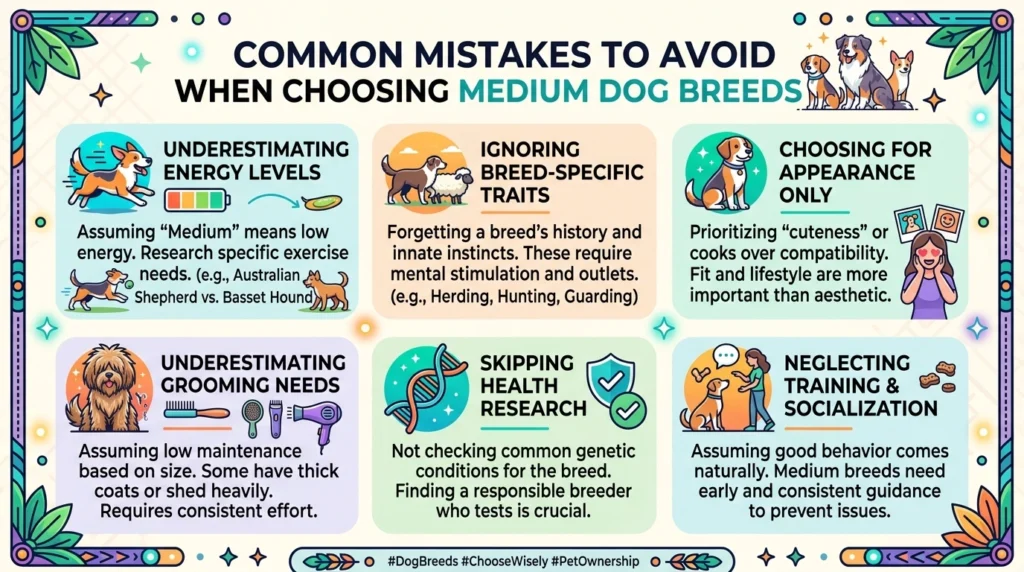
Common Mistakes to Avoid When Choosing Medium Dog Breeds
Don’t Let These Errors Derail Your Decision
Even enthusiastic dog lovers make avoidable mistakes when choosing a breed. Here are the most common ones and how to sidestep them completely.
Choosing Based on Appearance Alone
A dog might look absolutely gorgeous in photos. However, if their energy level or temperament doesn’t match your lifestyle, you’ll both end up frustrated. Therefore, always prioritize personality fit over physical appearance when making your decision.
Underestimating Exercise Requirements
Many medium dog breeds especially herding and sporting breeds need significant daily exercise. Underestimating this is one of the most common reasons dogs end up in shelters. So be realistic about how much time you can genuinely dedicated to walks, play, and outdoor activities every single day.
Skipping Health Research
Every breed has health tendencies worth knowing about. For example, Cocker Spaniels are prone to ear infections. Bulldogs can have breathing difficulties. As a result, skipping health research can lead to unexpected vet bills and heartbreak later on. Always research breed-specific health issues before committing.
Buying From Unreputable Sources
Puppy mills and backyard breeders often produce dogs with behavioral and health problems. Instead, choose a reputable breeder who health-tests their breeding dogs, or adopt from a trusted rescue organization. Also, ask for health clearances on both parent dogs before purchasing any puppy.
Not Considering the Full Lifespan Commitment
Medium dog breeds typically live 10 to 15 years. That’s a long-term commitment that includes vet costs, food, grooming, training, and daily care. Therefore, think carefully about your living situation, financial stability, and lifestyle over the next decade before bringing any dog home.
Pro Tip: Before committing to any breed, spend time volunteering at a local shelter or foster a dog temporarily. You’ll quickly discover which energy level and personality type genuinely fits your daily routine and you might just fall in love with the perfect dog along the way.
Frequently Asked Questions About Medium Dog Breeds

1. What weight is considered a medium dog breed?
Medium dog breeds typically weigh between 20 and 60 pounds at adult size. However, some classification systems place the range at 25 to 50 pounds, so there’s slight variation depending on the source. The American Kennel Club uses breed-specific standards rather than a single universal size category. Therefore, always check your specific breed’s official weight range rather than relying on general size labels alone.
2. Are medium dog breeds good for apartments?
Yes many medium dog breeds adapt very well to apartment living. Breeds like Cocker Spaniels, Bulldogs, and Standard Poodles do especially well in smaller spaces. However, daily walks and mental stimulation become even more important when outdoor space is limited. As a result, apartment owners need to commit to regular exercise routines to keep their medium-sized dogs happy, healthy, and mentally balanced every day.
3. Which medium dog breeds are best for families with young children?
Labrador Retrievers, Golden Retrievers, Boxers, and Cocker Spaniels are among the best medium breeds for families with young children. These breeds are naturally gentle, patient, and playful qualities that make them wonderful companions for kids. However, always supervise interactions between dogs and young children regardless of breed. Teaching children how to interact respectfully with dogs is equally important for a safe and happy household.
4. What medium dog breeds are low maintenance?
Bulldogs, Boxers, and Beagles are among the lowest maintenance medium breeds in terms of grooming and exercise needs. Bulldogs and Boxers have short coats that require minimal brushing. Beagles are sturdy, adaptable, and don’t require excessive grooming. However, “low maintenance” doesn’t mean “no maintenance” ; every dog needs regular vet check-ups, proper nutrition, daily interaction, and basic training to thrive throughout their lives.
5. Are medium dog breeds easier to train than large breeds?
Generally, yes many medium breeds are highly trainable because they’re intelligent and eager to please their owners. Breeds like Border Collies, Standard Poodles, and Australian Shepherds consistently rank among the most trainable dogs in the world. However, trainability varies significantly between individual dogs even within the same breed. Therefore, consistent positive reinforcement training from puppyhood gives every medium breed dog the best possible foundation for good behavior.
6. How much exercise do medium dog breeds need daily?
Most medium dog breeds need between 30 minutes and 2 hours of exercise per day, depending on the specific breed. High-energy breeds like Border Collies and Siberian Huskies need significantly more activity than calmer breeds like Bulldogs. In addition to physical exercise, mental stimulation through training, puzzle toys, and interactive play is equally important for preventing boredom-related behavior problems in medium-sized dogs.
7. What’s the longest-living medium dog breed?
Australian Shepherds, Cocker Spaniels, and Standard Poodles are among the longest-living medium breeds, often reaching 12 to 15 years with proper care. Smaller medium breeds generally live longer than larger ones. However, diet, exercise, regular veterinary care, and genetics all play significant roles in determining any individual dog’s lifespan. Always consult your vet about breed-specific health screenings to give your dog the best possible chance at a long, healthy life.
Conclusion
Medium dog breeds truly offer something special for almost every type of dog lover. Whether you want an energetic adventure companion like a Border Collie or a calm, cuddly housemate like a Bulldog there’s a perfect medium-sized dog waiting for you.
The key is choosing based on your genuine lifestyle, not just appearance or popularity. Consider your activity level, living space, family situation, and commitment to grooming and training. That’s how you find a dog who genuinely thrives in your home for the next decade and beyond.