
Introduction
Your dog deserves the best food possible. But walking into a pet store and staring at dozens of Purina chicken dog food options can feel completely overwhelming. Which formula is actually right for your dog? Is chicken really the best protein choice? And why do so many vets keep recommending it?
Dog food Purina chicken formulas are among the most popular choices for dog owners across the world and for genuinely good reasons. Purina has spent decades researching canine nutrition, and their chicken-based formulas consistently deliver impressive results in coat health, digestion, and energy levels.
In my experience helping dog owners navigate pet food choices, Purina chicken formulas come up more than almost anything else. So let’s break it all down together what’s actually in these foods, which formula fits your dog best, and how to get the most out of every meal you serve.
What Makes Dog Food Purina Chicken So Popular?
The Science Behind Purina’s Chicken Formulas
Purina isn’t just another pet food company slapping “chicken” on a label. They actually employ over 500 scientists, veterinarians, and nutrition experts who work full-time on canine health research. That’s a level of investment most brands simply can’t match.
Chicken is also an excellent primary protein for dogs. It’s highly digestible, rich in essential amino acids, and supports lean muscle maintenance beautifully. Because of this, chicken works well for dogs of almost every breed, age, and size.
Why Vets Recommend Purina Chicken Dog Food
Ever wondered why your vet almost always mentions Purina when you ask about food recommendations? The answer comes down to one key thing feeding trial data. Purina doesn’t just formulate food on paper. They actually test it on real dogs in controlled conditions and measure health outcomes over time.
This feeding-trial-validated approach gives veterinary professionals genuine confidence in recommending these products. As a result, Purina chicken formulas appear on more vet recommendation lists than almost any other brand.
In addition, the AAFCO nutritional adequacy statement on most Purina chicken products reads “complete and balanced based on feeding trials” which is the stronger validation standard in the pet food world.
How to Choose the Right Purina Chicken Dog Food Formula
Step-by-Step Selection Guide
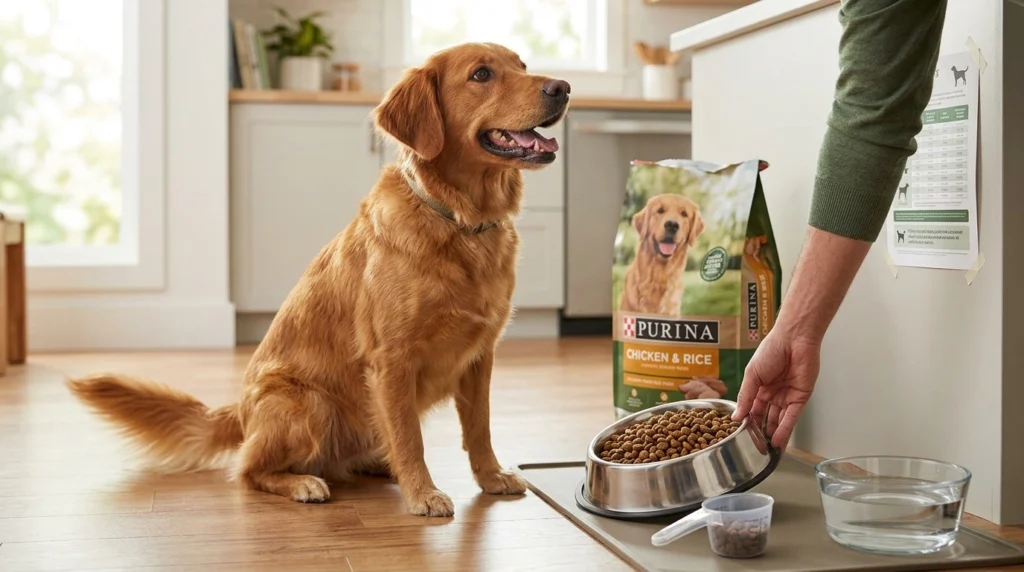
Choosing the right Purina chicken formula doesn’t have to be complicated. Here’s a simple step-by-step approach that works for most dog owners:
- Start with your dog’s life stage. Puppies, adults, and senior dogs all have different nutritional needs. Purina makes chicken formulas specifically designed for each stage. Always match the food to where your dog actually is in life, not just what’s convenient or on sale.
- Consider your dog’s size. Large breed dogs need different calcium and joint support levels than small breeds do. Fortunately, Purina offers chicken-based formulas for small breeds, large breeds, and everything in between.
- Think about any health concerns. Does your dog have a sensitive stomach? Skin issues? Weight problems? Purina’s chicken lineup includes targeted formulas for all of these concerns. However, for any diagnosed health condition, always consult your vet before switching foods.
- Check the ingredient list carefully. The best Purina chicken formulas list real chicken or chicken meal as the very first ingredient. Avoid formulas where corn or grain derivatives appear in the first three spots.
- Look for the AAFCO statement. Find the nutritional adequacy statement on the back panel. “Complete and balanced based on feeding trials” is the gold standard look for those exact words.
- Calculate your daily feeding cost. Don’t just compare bag prices. Divide the total cost by the number of days the bag will last for your dog’s weight. Premium Purina chicken formulas often cost less per day than people expect.
- Plan a proper transition. When switching to any new food, mix 25% new food with 75% old food for the first three days. Then gradually shift the ratio over 7 to 10 days total. This prevents digestive upset and gives your dog’s system time to adjust properly.
Pro Tip: If your dog is a picky eater, Purina chicken formulas are often a great solution. The natural chicken aroma is irresistible to most dogs even the fussiest ones tend to eat enthusiastically right from the first bowl.
[Dry Dog Food Purina: Best Formulas & Complete Guide 2026]
Best Purina Chicken Dog Food Products: Honest Comparison
Top Formulas Side by Side
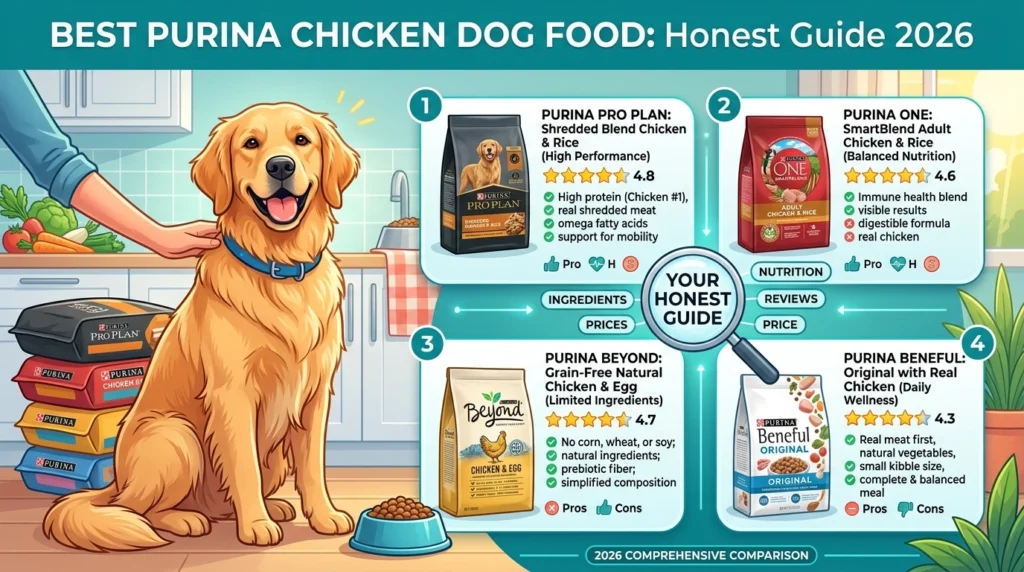
Here’s a clear breakdown of the most popular Purina chicken dog food options so you can compare them easily:
| Product | Life Stage | Key Feature | Price Range | Best For |
| Purina Pro Plan Chicken & Rice | Adult | Research-backed, feeding trials | $$$ | Most healthy adult dogs |
| Purina Pro Plan Puppy Chicken & Rice | Puppy | DHA for brain development | $$$ | Growing puppies |
| Purina ONE Chicken & Rice | Adult | Real chicken first, no fillers | $$ | Budget-conscious owners |
| Purina Pro Plan Sensitive Chicken | Adult | Easy digestion, gentle formula | $$$ | Sensitive stomachs |
| Purina Pro Plan Large Breed Chicken | Adult | Joint support, controlled calcium | $$$ | Large breed dogs |
| Purina Pro Plan Small Breed Chicken | Adult | Small kibble, higher calorie density | $$$ | Small and toy breeds |
| Purina Beneful Chicken | Adult | Variety and palatability | $ | Everyday feeding on a budget |
Which Formula Wins Overall?
Purina Pro Plan Adult Chicken & Rice is the clear winner for most healthy adult dogs. Real chicken leads the ingredient list. Prebiotic fiber supports healthy digestion. Omega-6 fatty acids and fish oil promote coat shine and skin health. Live probiotics in some versions add an extra digestive benefit.
In addition, this formula carries the feeding-trial-validated AAFCO statement that veterinary professionals look for when making recommendations. Therefore, it’s the safest and most research-backed choice for everyday feeding.
For puppies specifically, Purina Pro Plan Puppy Chicken & Rice is outstanding. The added DHA from fish oil supports brain and vision development during those critical early months of growth.
What About Purina ONE Chicken?
Purina ONE is a genuinely solid mid-range option. Real chicken appears as the first ingredient, and there’s no corn or wheat filler in the formula. However, most Purina ONE formulas carry “formulated to meet” AAFCO standards rather than feeding trial validation. This makes it slightly less robust from a clinical standpoint though still an excellent choice for healthy dogs on a budget.
Common Mistakes to Avoid With Purina Chicken Dog Food
Mistake 1: Buying the Wrong Life Stage Formula
This happens more often than you’d think. Many owners pick up an adult formula for their puppy simply because it’s cheaper or because they didn’t notice the life stage label. However, puppies need specific DHA levels and caloric density that adult formulas don’t provide correctly. Always double-check the life stage before you buy.
Mistake 2: Skipping the Transition Period
Switching directly from your dog’s current food to a new Purina chicken formula without a gradual transition causes digestive upset in most dogs. Loose stools and gas are common results when the change happens too fast. Therefore, always follow the 7 to 10 day transition approach described above.
Mistake 3: Overfeeding Because Chicken Smells Amazing
Dogs absolutely love the smell of chicken-based food. As a result, they’ll often act hungry even when they’ve eaten enough. Don’t be tempted to overfill the bowl just because your dog seems enthusiastic. Follow the feeding guidelines on the bag and adjust based on your dog’s actual body condition not their acting skills.
Mistake 4: Assuming All Purina Chicken Products Are Equal
Purina makes chicken-based food across several quality tiers from budget Beneful to premium Pro Plan. Each tier has meaningfully different ingredient quality and nutritional research behind it. Therefore, choosing based on price alone without reading the label can lead to a significant nutrition gap.
Mistake 5: Ignoring Your Dog’s Changing Needs
A formula that worked perfectly for your dog at age three may not be optimal at age nine. Senior dogs typically need fewer calories, more joint support, and adjusted protein levels. Make the food conversation part of every annual vet visit not just a one-time decision you set and forget.
Pro Tip: Keep a simple two-week feeding journal when you switch to a new Purina chicken formula. Note your dog’s stool consistency, energy levels, coat condition, and appetite each day. This gives you clear, objective data about whether the new food is working far better than relying on memory alone.
Frequently Asked Questions About Dog Food Purina Chicken
1. Is Purina chicken dog food safe for daily feeding?
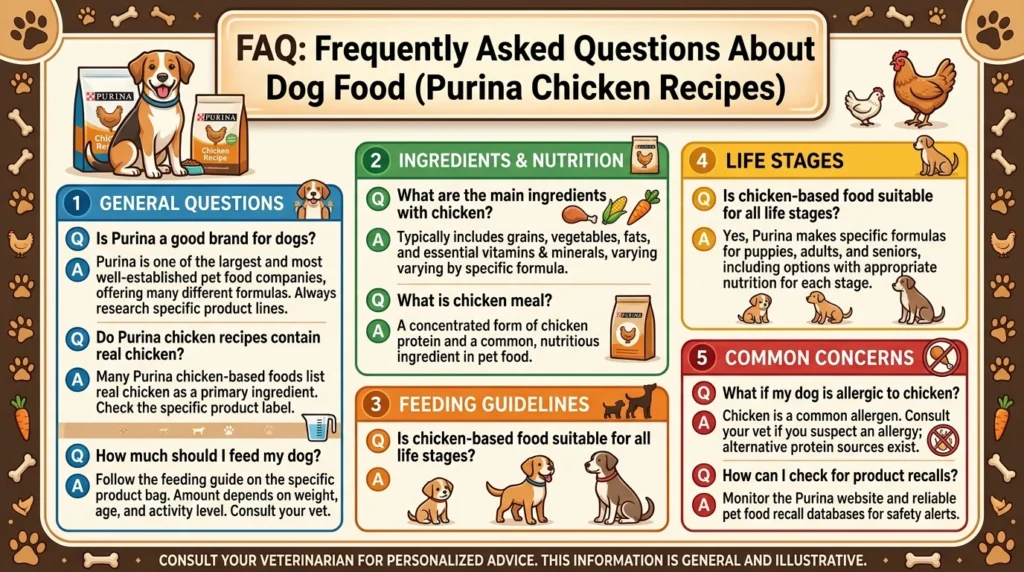
Yes, Purina chicken dog food formulas marked as “complete and balanced” are safe and appropriate for daily feeding. Purina Pro Plan and Purina ONE both carry AAFCO nutritional adequacy statements confirming they meet minimum standards for complete nutrition. Pro Plan additionally carries feeding-trial-validated compliance, which is the stronger standard. For healthy dogs without specific medical conditions, daily feeding of a life-stage-appropriate Purina chicken formula is entirely safe and recommended by veterinary professionals.
2. Is real chicken the first ingredient in Purina chicken formulas?
In Purina Pro Plan and Purina ONE chicken formulas, yes real chicken or chicken meal appears as the first ingredient. However, ingredient quality varies across Purina’s product range. Budget options like Beneful may list chicken lower on the ingredient list. Therefore, always check the specific product’s ingredient panel rather than assuming based on brand name alone.
3. Can puppies eat Purina Pro Plan chicken adult formula?
No puppies should eat a puppy-specific formula, not an adult one. Purina Pro Plan Puppy Chicken & Rice is formulated with DHA for brain development and appropriate calcium levels for growing bones. Adult formulas don’t provide these in the right ratios for puppies. Feeding an adult formula to a puppy long-term can create nutritional gaps during a critical developmental period. Always consult your vet if you’re unsure which formula is appropriate for your puppy’s age and breed.
4. Is Purina chicken dog food grain-free?
Most standard Purina chicken formulas are grain-inclusive; they contain rice or other grains as carbohydrate sources. This is actually a positive point. Since 2018, the FDA has been investigating a potential link between grain-free diets and dilated cardiomyopathy (DCM) in dogs. Therefore, grain-inclusive chicken formulas like most Purina options are considered the safer choice for most dogs. Unless your vet has specifically recommended grain-free, stick with grain-inclusive formulas.
5. How much Purina chicken dog food should I feed my dog per day?
The right amount depends on your dog’s weight, age, and activity level. Start with the feeding guidelines on the bag as a baseline; they’re calculated for the average dog at that weight. Then adjust based on your dog’s body condition. You should be able to feel your dog’s ribs without pressing hard, but they shouldn’t be prominently visible. If your dog is gaining or losing weight unexpectedly, adjust portions by about 10% and reassess after two to three weeks.
6. Does Purina chicken dog food help with coat health?
Yes in my experience, this is one of the most noticeable benefits owners report after switching to Purina Pro Plan chicken formulas. The formula includes omega-6 fatty acids from fish oil, which directly support skin health and coat shine. Most owners notice a meaningful improvement in coat quality within six to ten weeks of switching. However, if coat issues are severe or persistent, always consult your vet to rule out underlying health conditions.
7. Has Purina chicken dog food been recalled?
Purina’s recall history is relatively clean compared to its production volume, one of the largest in the pet food industry. There have been isolated incidents over the years, but no significant pattern of chicken-specific contamination events. As with any brand, checking the FDA’s official pet food recall database periodically is a smart habit for any dog owner. Sign up for FDA recall email alerts so you’re notified directly if anything changes.
Your Dog Deserves the Best Start With Purina Chicken
Dog food Purina chicken formulas represent some of the most thoroughly researched, veterinary-endorsed nutrition available at any price point. Whether you choose the premium research backing of Purina Pro Plan or the solid mid-range value of Purina ONE, you’re feeding your dog a food with real chicken protein, genuine nutritional science behind it, and decades of real-world results to support it.
The key is matching the right formula to your dog’s specific life stage, size, and health needs. Transition gradually, monitor the results over eight to twelve weeks, and loop in your vet for personalized guidance whenever you’re unsure.
Every bowl you fill is a chance to invest in your dog’s health, energy, and happiness. With Purina chicken formulas, that investment is genuinely well-placed.