

Introduction
Your dog can’t tell you when something feels off. That’s exactly why so many dog owners are turning to dog health supplements to fill the nutritional gaps that regular food sometimes misses. And honestly? It’s one of the smartest things you can do for your pup.
However, the supplement market is overwhelming. There are hundreds of products, bold claims on every label, and very little clarity about what actually works. So, where do you even start?
In my experience helping dog owners navigate pet nutrition, the confusion around supplements is real and totally understandable. Therefore, this guide is here to cut through the noise. You’ll learn which supplements dogs actually need, how to choose the right ones, and which mistakes to avoid. Finally, you’ll feel confident making the best choice for your dog’s long-term health.
Why Dogs Health Supplements Matter for Your Pet
The Gap Between Food and Full Nutrition
Most commercial dog foods are designed to meet basic nutritional standards. However, they don’t always cover everything your dog needs especially as they age, grow, or deal with specific health challenges.
Think about it this way. A senior Labrador with stiff joints needs more joint support than a two-year-old Border Collie. Similarly, a dog with a dull coat may be missing omega-3 fatty acids. Regular kibble, no matter how good, can’t address every individual need.
What Research Actually Shows
According to the American Kennel Club (AKC), many dogs benefit significantly from targeted supplementation when used alongside a balanced diet. As a result, supplements have become one of the fastest-growing segments in pet care. However, not all supplements are created equal and that’s exactly why knowing what to look for matters so much.
The Most Common Reasons Owners Add Supplements
- Their dog is aging and slowing down
- Their vet has recommended additional joint or digestive support
- Their dog has a dull coat or dry skin
- Their dog shows signs of anxiety or low energy
- They want to support their dog’s immune system proactively
[Best Dry Dog Food Brands Recommended by Vets: 2026 Guide]
The Most Important Dogs Health Supplements You Should Know
1. Omega-3 Fatty Acids (Fish Oil)
Omega-3s are, without question, one of the most researched and recommended dog health supplements available. They support skin health, reduce inflammation, and promote a shiny coat. In addition, they’ve been shown to support heart health and cognitive function in aging dogs.
Best sources:
- Fish oil (salmon oil is most common)
- Krill oil
- Algae-based omega-3 (great for fish-sensitive dogs)
2. Glucosamine and Chondroitin
These two compounds work together to support joint health. Therefore, they’re especially popular for large breeds and senior dogs. Glucosamine helps rebuild cartilage, while chondroitin helps retain moisture in joint tissue.
In my experience, dogs on glucosamine supplements often show noticeable improvement in mobility within four to six weeks. However, always consult your vet before starting these especially if your dog is already on medication.
3. Probiotics for Gut Health
A healthy gut means a healthier dog overall. Probiotics introduce beneficial bacteria to your dog’s digestive system. As a result, they help with digestion, reduce gas, and support immune function. They’re also helpful during or after antibiotic treatments.
Signs your dog may need probiotics:
- Loose stools or diarrhea
- Excessive gas
- Poor coat condition
- Low energy after illness
4. Multivitamins
Multivitamins fill nutritional gaps in your dog’s diet. However, they’re not always necessary if your dog eats a complete and balanced commercial food. They’re most beneficial for dogs eating homemade meals or those with specific deficiencies identified by a vet.
5. Antioxidants (Vitamins C and E)
Antioxidants protect your dog’s cells from damage caused by free radicals. They also support immune health and can slow some effects of aging. Therefore, many vets recommend antioxidant supplements for senior dogs specifically.
Pro Tip: Always choose supplements that carry the NASC (National Animal Supplement Council) quality seal. This means the product has been tested for safety and label accuracy, a simple check that makes a big difference.
How to Choose the Right Dogs Health Supplements: Step-by-Step
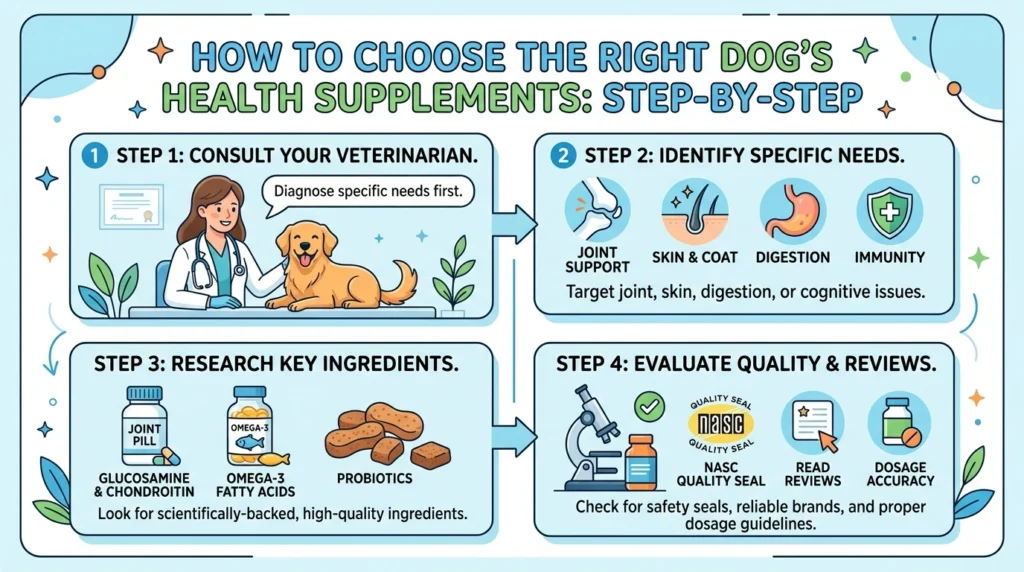
Start With Your Vet Always
Before buying anything, talk to your veterinarian. This is the most important step. Your vet can identify actual deficiencies, recommend appropriate dosages, and flag any potential interactions with medications your dog already takes.
Follow This Simple Selection Process
- Identify your dog’s specific need. Is it joint pain? Digestive issues? Skin and coat problems? Start with one targeted supplement rather than buying five at once.
- Check the ingredient list carefully. Look for supplements with named, specific ingredients. Avoid products with vague terms like “proprietary blend” that don’t disclose amounts.
- Look for third-party testing. Reputable brands get their products independently tested for purity and potency. Therefore, look for certifications or quality seals on the label.
- Choose the right form for your dog. Supplements come as chews, powders, liquids, and capsules. Chews work well for most dogs. However, powders mixed into food are better for picky eaters who won’t take treats.
- Start with the lowest recommended dose. Give your dog’s system time to adjust. Then, monitor for any changes positive or negative over the first two to four weeks.
- Reassess after six to eight weeks. If you don’t see improvement in the targeted area, talk to your vet about adjusting the supplement or dosage.
- Buy from reputable brands. Brands like Nutramax, Zesty Paws, Vetri-Science, and Cosequin have strong track records and transparent ingredient sourcing.
Top Dogs Health Supplements Compared: Quick Reference
Here’s a comparison of the most popular supplement types to help you decide:
| Supplement Type | Best For | Typical Form | Onset Time | Price Range |
| Omega-3 / Fish Oil | Coat, skin, heart, brain | Liquid or capsule | 4–6 weeks | $$ |
| Glucosamine + Chondroitin | Joint support, mobility | Chew or tablet | 4–8 weeks | $$ |
| Probiotics | Digestion, immunity | Powder or chew | 1–2 weeks | $$ |
| Multivitamins | Overall nutrition gaps | Chew or tablet | Ongoing | $ |
| Antioxidants (Vit C & E) | Immune health, aging | Capsule or powder | 4–6 weeks | $ |
| Calming Supplements | Anxiety, stress | Chew or liquid | 1–3 hours | $$ |
| Digestive Enzymes | Poor digestion, bloating | Powder | 1–2 weeks | $$ |
Which Breeds Need Supplements Most?
Some breeds are more prone to specific health issues. Therefore, targeted supplementation makes strong sense for:
- Large breeds (Labradors, German Shepherds) joint and hip support
- Small breeds (Chihuahuas, Yorkies) dental health and digestion
- Senior dogs of any breed antioxidants, omega-3s, joint support
- Working or active dogs protein, electrolytes, joint support
Common Mistakes to Avoid With Dogs Health Supplements
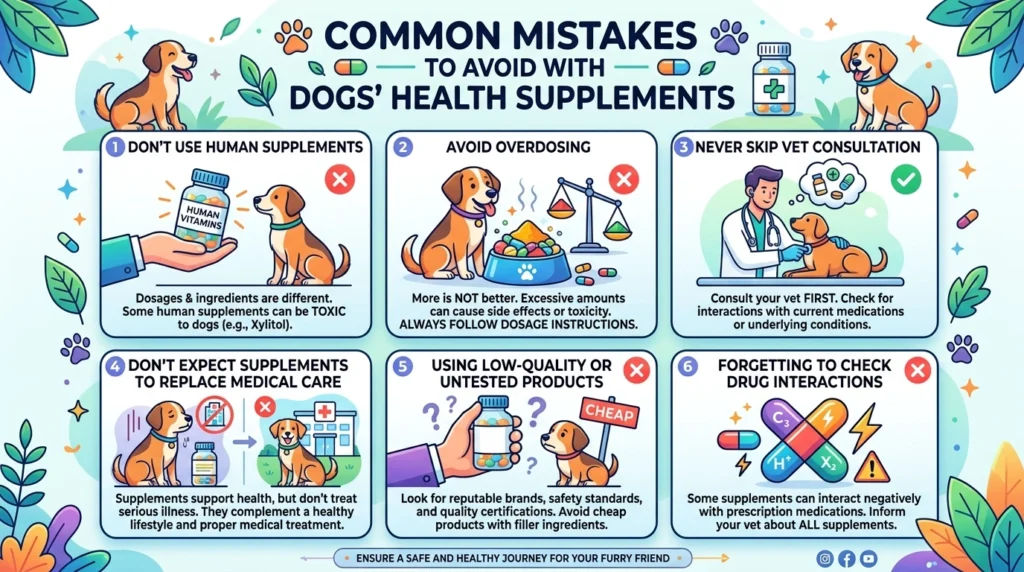
Mistake 1: Over-Supplementing Without Vet Guidance
More isn’t always better. In fact, too much of certain vitamins like Vitamin A or D can actually be toxic to dogs. Therefore, never stack multiple supplements covering the same nutrient without professional guidance.
Mistake 2: Choosing Price Over Quality
Budget supplements may look similar on the label. However, many contain fillers, artificial additives, or inaccurate ingredient amounts. As a result, you may be spending money on something that doesn’t actually help your dog.
Mistake 3: Expecting Immediate Results
Many dog owners give up on supplements after just one or two weeks. However, most supplements, especially joint support and omega-3s need four to eight weeks of consistent use before showing results. Patience is genuinely important here.
Mistake 4: Ignoring Your Dog’s Reaction
Always monitor your dog after starting a new supplement. Watch for:
- Vomiting or nausea
- Changes in stool consistency
- Lethargy or behavior changes
- Skin reactions
If any of these occur, stop the supplement and contact your vet immediately.
Mistake 5: Buying Human Supplements for Dogs
This is a surprisingly common mistake. Human supplements often contain ingredients that are safe for people but harmful to dogs. For example, xylitol found in many human vitamins is extremely toxic to dogs. Always buy supplements formulated specifically for dogs.
Pro Tip: Keep a simple supplement journal for your dog. Note the start date, dosage, and any changes you observe each week. This makes it much easier to spot improvements or problems and gives your vet useful information at check-ups.
Frequently Asked Questions About Dogs Health Supplements
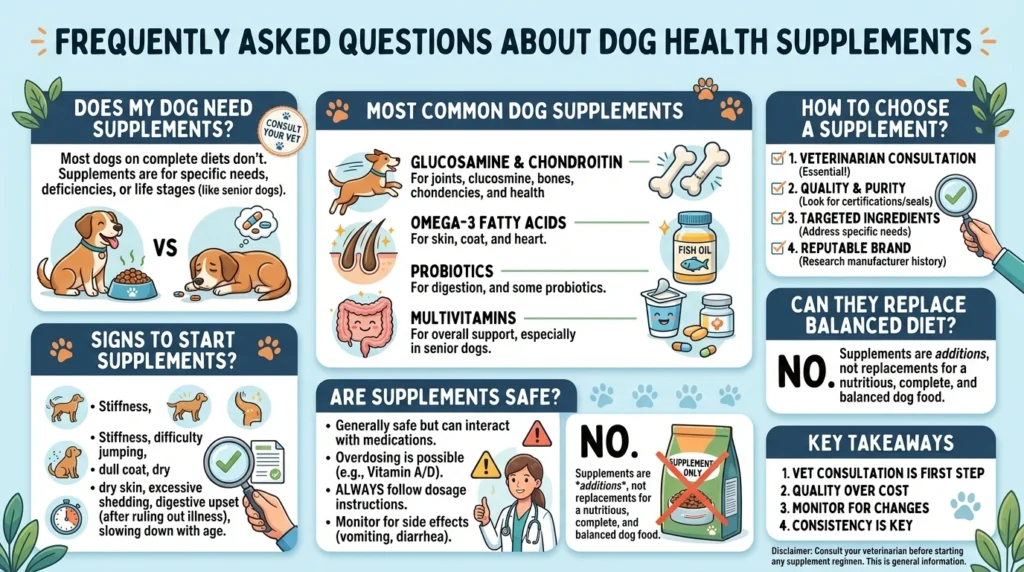
1. Are dog health supplements safe for all dogs?
Most supplements are safe for healthy adult dogs when used as directed. However, puppies, pregnant dogs, and dogs with existing health conditions may need adjusted dosages or specific formulations. Therefore, always consult your vet before starting any supplement especially if your dog is already taking medication. Your vet can also run bloodwork to identify actual deficiencies before you spend money on supplements your dog may not need.
2. How do I know if my dog actually needs supplements?
The most reliable way is through a veterinary assessment. However, some common signs that suggest your dog may benefit from supplements include a dull or flaky coat, stiff movement after rest, frequent digestive upset, low energy, or slow recovery from exercise. In addition, dogs eating homemade or raw diets often have nutritional gaps that targeted supplements can address effectively.
3. What is the most recommended supplement for senior dogs?
For senior dogs, omega-3 fatty acids and glucosamine with chondroitin are the most commonly recommended starting points. Omega-3s reduce inflammation and support brain health, while glucosamine helps maintain joint comfort and mobility. Antioxidants are also beneficial because they support immune function as dogs age. However, the specific needs of your senior dog will vary so a vet conversation is always the best first step.
4. Can I give my dog fish oil every day?
Yes, daily fish oil supplementation is generally safe and beneficial for most dogs. However, the correct dosage depends on your dog’s weight and the specific product’s EPA and DHA concentration. Too much fish oil can cause loose stools or even affect blood clotting over time. Therefore, follow the dosing guidelines on your specific product and confirm the amount with your vet, especially for smaller dogs.
5. How long before I see results from dog health supplements?
This depends on the supplement type and your dog’s individual health. Digestive supplements like probiotics often show results within one to two weeks. Joint supplements typically take four to eight weeks of consistent daily use before noticeable improvement appears. Omega-3 benefits for coat and skin usually become visible after six to ten weeks. Therefore, give any new supplement a genuine trial period before deciding whether it’s working for your dog.
6. Are natural supplements better than synthetic ones for dogs?
Not necessarily the source of a supplement matters less than its quality, bioavailability, and appropriate dosing. Some synthetic vitamins are actually more stable and better absorbed than natural versions. However, supplements derived from whole food sources often come with additional cofactors that support absorption. The most important factor is always third-party testing and quality certification regardless of whether the supplement is natural or synthetic.
7. What dogs health supplements do vets recommend most often?
Based on consistent veterinary guidance, the most commonly recommended supplements are omega-3 fatty acids (fish oil), glucosamine with chondroitin for joint support, and probiotics for digestive health. In addition, antioxidant supplements are frequently recommended for senior dogs. Brands like Nutramax (Cosequin, Welactin), Zesty Paws, and Vetri-Science consistently receive positive mention from veterinary professionals for quality and effectiveness.
Give Your Dog the Support They Deserve
Dogs’ health supplements aren’t a replacement for a quality diet and regular vet care but they can be a powerful addition to your dog’s overall wellness routine. The key is choosing the right supplements for your dog’s specific needs, using quality products, and giving them enough time to work.
Start with a vet conversation. Pick one targeted supplement based on your dog’s biggest need. Monitor the results honestly over six to eight weeks. Then, adjust as needed with your vet’s guidance.
Your dog gives you everything they’ve got every single day. Supporting their health with the right supplements is one of the most meaningful things you can do in return.