

Introduction
Few dogs in the world command attention quite like the mastiff dog. One look at that massive frame, wrinkled forehead, and calm, soulful eyes and you’re immediately curious. Is this gentle giant really as sweet as people say? Or does that impressive size come with an equally impressive challenge?
Here’s the truth: mastiffs are one of the most loving, loyal, and surprisingly gentle breeds you’ll ever meet. However, they’re also one of the most misunderstood. Many people assume their size means aggression. In reality, most mastiffs are calm, patient, and deeply devoted to their families.
In my experience, mastiff owners often say the same thing “I had no idea how affectionate they’d be.” That warmth is genuine. However, owning a mastiff also requires real commitment, proper training, and an understanding of their unique health needs.
This complete guide covers everything you need to know. You’ll learn about the mastiff’s personality, care requirements, health concerns, training tips, and much more. Let’s get into it.
What Is a Mastiff Dog? Breed Overview and History
An Ancient Giant With a Noble History
The mastiff dog is one of the oldest and largest dog breeds in existence. Ancient artwork and historical records place mastiff-type dogs in civilizations dating back over 5,000 years. They appear in Assyrian carvings, Egyptian artwork, and Roman records often depicted as war dogs and guardians.
However, the modern English Mastiff we know today developed primarily in Britain. Over centuries, breeders refined the mastiff from a fierce war dog into a calmer, more family-oriented companion. As a result, today’s mastiff is a very different animal from its ancient ancestors though the impressive size certainly remains.
Key Breed Facts at a Glance
- Official name: English Mastiff (often called simply “Mastiff”)
- Height: 27–30 inches at the shoulder
- Weight: 120–230 pounds sometimes more
- Lifespan: 6–10 years
- Breed group: Working Group (AKC)
- Coat: Short, dense, and easy to maintain
- Colors: Fawn, apricot, or brindle always with a dark mask
What Makes the Mastiff Unique?
The mastiff dog holds the record as the heaviest dog breed in the world. Zorba, an English Mastiff, holds the Guinness World Record at 343 pounds. Also, despite their enormous size, mastiffs are surprisingly gentle and calm indoors.
In addition, their natural protective instinct makes them excellent family guardians without the excessive aggression of some other guard breeds. They’re loyal, observant, and deeply bonded to their owners.
Mastiff Dog Temperament: What to Really Expect
The Gentle Giant Reputation Is Well Earned
The mastiff dog has a personality that surprises almost everyone who meets one for the first time. Despite their intimidating size, mastiffs are calm, affectionate, and genuinely good-natured. They love their families deeply and they show it constantly.
Here’s what mastiff owners most commonly describe:
- Deeply loyal mastiffs bond intensely with their primary family
- Calm indoors they’re surprisingly lazy inside the house
- Patient with children gentle and tolerant with kids they know
- Protective but not aggressive they observe and assess rather than attack
- Sensitive souls harsh training methods upset them significantly
- Stubborn streak they need consistent, patient guidance
How Do Mastiffs Behave With Children and Other Pets?
Mastiffs generally do very well with children especially when raised alongside them. However, their sheer size creates one practical concern. A wagging mastiff tail can easily knock over a small child. Therefore, always supervise interactions between mastiffs and very young children, not because of aggression, but simply because of size.
With other pets, mastiffs tend to be accepting particularly when properly socialized from puppyhood. Also, because mastiffs have a naturally low prey drive compared to many large breeds, they typically coexist peacefully with cats and smaller dogs.
Pro Tip: Start socializing your mastiff puppy as early as eight weeks old. Expose them to different people, sounds, environments, and animals consistently. Because mastiffs are naturally cautious with strangers, early positive socialization builds confident, well-adjusted adult dogs.
How to Care for a Mastiff Dog: Step-by-Step Guide
Daily Care Requirements
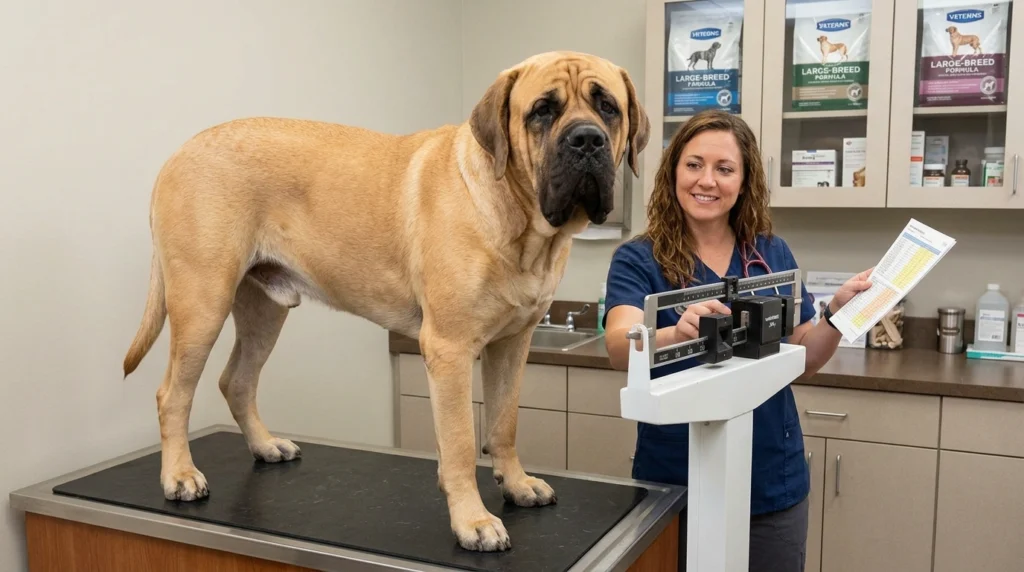
Owning a mastiff dog is a significant commitment. However, their daily care is more manageable than many people expect. Here’s a practical step-by-step routine:
- Feed two measured meals daily. Mastiffs need high-quality food portioned carefully. Overfeeding contributes to joint problems and obesity, both serious concerns for giant breeds. Always consult your vet for specific caloric recommendations based on your dog’s age and weight.
- Provide moderate daily exercise. Mastiffs don’t need intense exercise sessions. However, they do need daily movement to maintain healthy joints and weight. Two 20–30 minute walks per day suits most adult mastiffs well. Therefore, don’t skip daily walks even when your mastiff seems content lounging.
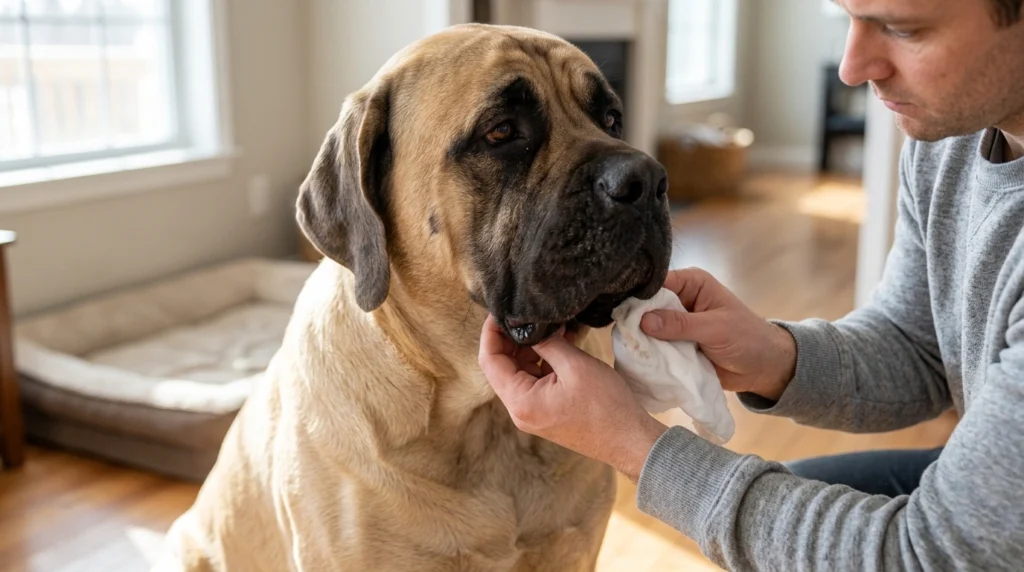
- Brush their coat weekly. The mastiff’s short coat sheds moderately. A weekly brush removes loose hair and keeps the coat healthy. Also, pay special attention to skin folds around the face, clean these gently with a damp cloth to prevent moisture buildup and skin irritation.
- Clean facial wrinkles daily. This step is essential and often overlooked. Mastiff face folds trap moisture, which leads to bacterial infections if not cleaned regularly. Therefore, wipe folds gently every day with a soft, damp cloth.
- Brush teeth three times weekly. Large breed dogs face significant dental health risks. Therefore, establishing a teeth-brushing routine early starting when your mastiff is a puppy makes the process much easier long-term.
- Trim nails monthly. Long nails affect a mastiff’s gait and can cause joint discomfort over time. Monthly nail trims or professional grooming keep your dog comfortable and moving correctly.
- Schedule regular vet check-ups. Giant breeds age faster than small breeds. Therefore, twice-yearly vet visits rather than annual ones help catch health issues early when they’re most treatable.
[Link to related article: Best dry dog food for large dogs complete 2026 guide]
Exercise Needs by Life Stage
| Life Stage | Daily Exercise | Key Consideration |
| Puppy (under 18 months) | Short 10–15 min walks | Avoid hard surfaces protect growing joints |
| Adult (2–6 years) | 30–45 minutes daily | Moderate pace no intense running |
| Senior (7+ years) | 20–30 minutes gentle | Watch for stiffness consult vet regularly |
Mastiff Dog Health: Key Issues Every Owner Should Know
Common Health Concerns in the Mastiff Dog
The mastiff dog’s giant size comes with specific health vulnerabilities. Knowing these upfront helps you provide proactive care which genuinely extends your dog’s life and improves quality of life.
Bloat The Most Serious Concern
Bloat (Gastric Dilatation-Volvulus or GDV) is a life-threatening condition that affects deep-chested giant breeds. The stomach fills with gas and can twist, cutting off blood supply rapidly. Therefore, recognizing early signs is critical:
- Unproductive retching
- Distended abdomen
- Restlessness or inability to settle
- Excessive drooling
If you notice these signs, get to an emergency vet immediately. Also, feeding two smaller meals daily instead of one large meal reduces the risk significantly.
Hip and Elbow Dysplasia
Because mastiffs carry so much weight, joint problems are common. Hip dysplasia and elbow dysplasia cause pain, stiffness, and reduced mobility over time. Therefore, always source your mastiff from a reputable breeder who tests parent dogs for joint issues.
In addition, maintaining a healthy weight throughout your mastiff’s life is the single most impactful thing you can do for joint health. Every extra pound puts additional stress on already-challenged joints.
Other Health Issues to Monitor
- Heart conditions particularly dilated cardiomyopathy
- Eye problems including entropion and ectropion
- Skin fold infections from wrinkles around the face
- Cancer unfortunately common in the breed
- Hypothyroidism affecting energy and weight
Always consult your veterinarian about breed-specific screening tests and preventive care plans. Because mastiffs age faster than small breeds, proactive veterinary care makes a meaningful difference in lifespan and quality of life.
Training a Mastiff Dog: What Actually Works
Start Early Size Becomes a Problem Fast
A mastiff puppy at 12 weeks is already larger than many adult dogs. Therefore, training must begin immediately before size makes things physically challenging. The good news is that mastiffs are intelligent and eager to please their families. However, they also have an independent, sometimes stubborn streak.
Training Methods That Work Best
- Positive reinforcement only mastiffs respond poorly to harsh corrections. Praise, treats, and play motivate them far more effectively.
- Short, consistent sessions 10 to 15 minutes per session, two to three times daily works better than long infrequent training.
- Patient repetition mastiffs learn at their own pace. Therefore, expect slower progress than you might see with Border Collies or Labradors.
- Early leash training teaching loose-leash walking from puppyhood is essential. A 200-pound dog pulling on leash is genuinely unmanageable.
Essential Commands to Prioritize
- Sit foundation of all control
- Stay critical for safety in various situations
- Come reliable recall is non-negotiable for giant breeds
- Leave it prevents dangerous scavenging
- Heel leash manners are essential for this size
Pro Tip: Enroll your mastiff puppy in a group puppy class as soon as vaccinations allow. Socialization in a structured environment builds confidence, manners, and positive associations with other dogs and people simultaneously. In my experience, mastiffs who attend puppy classes early are noticeably calmer and more social as adults.
Common Mastiff Dog Mistakes New Owners Make
Mistake 1: Underestimating Space and Strength
Many new mastiff owners underestimate how much space and how much strength this breed requires. A full-grown mastiff needs room to move, rest comfortably, and turn around freely. Also, their strength means even basic activities like walking require proper training from the start.
Mistake 2: Overexercising Puppies
Giant breed puppies have developing growth plates that close much later than small breeds often not until 18 to 24 months. Therefore, excessive running, jumping, or stair climbing during puppyhood causes permanent joint damage. Keep exercise gentle and age-appropriate throughout the first two years.
Mistake 3: Free Feeding
Leaving food available all day encourages overeating, which accelerates weight gain and joint deterioration. Therefore, always feed measured meals at set times, never free feed a mastiff. Your vet can help you calculate the correct daily caloric intake for your dog’s specific size and activity level.
Mistake 4: Skipping Vet Visits
Because mastiffs age faster than small breeds, skipping annual vet visits can mean missing early warning signs of serious conditions. Therefore, schedule twice-yearly check-ups for adult mastiffs and quarterly visits for puppies during their first year. Preventive care genuinely extends their lives.
A poorly socialized mastiff can become fearful or reactive despite their naturally gentle disposition. Because mastiffs are naturally cautious with unfamiliar people and situations, early positive exposure is essential. Therefore, make socialization a daily priority during the first 16 weeks of your puppy’s life.
Frequently Asked Questions About the Mastiff Dog
1. Is a mastiff dog a good family pet?
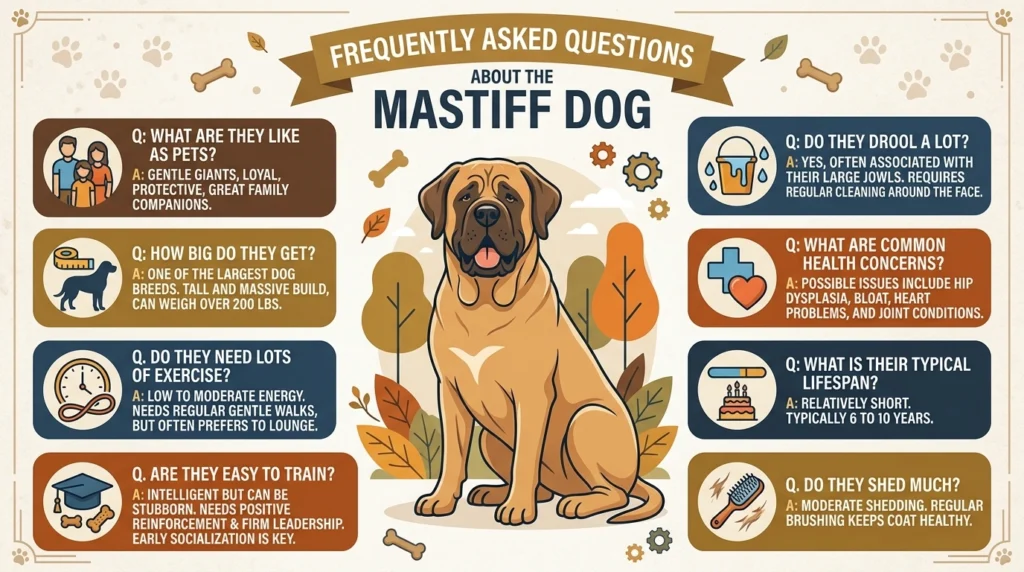
Yes, the mastiff dog makes an excellent family pet in the right household. They’re calm, gentle, and deeply devoted to their families. However, their enormous size requires responsible ownership. Families need enough space, time for training, and a budget that covers giant-breed food portions and veterinary costs. Also, families with very young toddlers should supervise interactions carefully not because of aggression, but because an accidental tail wag from a 180-pound dog can knock a small child over easily.
2. How much does a mastiff dog eat per day?
Adult mastiffs typically eat 6 to 10 cups of high-quality dry food per day split across two meals. However, exact amounts vary significantly based on your dog’s age, weight, activity level, and the specific food’s caloric density. Therefore, always consult your vet for a personalized feeding plan. Overfeeding is one of the most common and most damaging mistakes mastiff owners make, as excess weight severely impacts joint health and overall lifespan.
3. Do mastiff dogs drool a lot?
Yes, mastiffs are champion droolers. That loose, jowly face is adorable, but it produces impressive amounts of drool especially after drinking, eating, or exercising. Many mastiff owners keep small towels around the house and near the water bowl. Also, during warm weather or after excitement, drooling increases significantly. If you’re particular about a tidy home, this is an important lifestyle consideration before choosing a mastiff.
4. How long do mastiff dogs live?
The mastiff dog’s lifespan is unfortunately shorter than most people would like, typically 6 to 10 years. Giant breeds age more rapidly than small breeds, and the mastiff is no exception. However, excellent nutrition, regular veterinary care, appropriate exercise, and maintaining a healthy weight can genuinely maximize your mastiff’s quality and length of life. Some mastiffs with excellent genetics and outstanding care reach 10 to 12 years.
5. Are mastiff dogs easy to train?
Mastiffs are moderately trainable. They’re intelligent and genuinely want to please their families. However, their independent, sometimes stubborn nature means training requires patience and consistency. They respond beautifully to positive reinforcement praise, treats, and play. However, harsh corrections or punishment-based methods backfire badly with this sensitive breed. Therefore, start training from day one, keep sessions short and positive, and consider professional help from a trainer experienced with large breeds if needed.
6. Do mastiff dogs need a lot of exercise?
Contrary to what their athletic build might suggest, mastiffs have moderate exercise needs. Two 20–30 minute walks daily suit most adult mastiffs well. However, puppies need significantly less and lower-impact exercise to protect developing joints. Also, mastiffs overheat easily in warm weather because of their size and short coat. Therefore, exercise early in the morning or evening during summer months, and always provide access to fresh water.
7. Are mastiff dogs aggressive?
No, the mastiff dog is not an aggressive breed. In fact, most mastiffs are remarkably gentle and patient. Their natural instinct is to be protective, observing situations calmly rather than reacting aggressively. However, like any breed, a poorly socialized or mistreated mastiff can develop behavioral problems. Therefore, proper early socialization, consistent positive training, and a loving home environment produce the calm, well-mannered giant this breed is known for.
Is the Mastiff Dog Right for You?
The mastiff dog is truly one of the most rewarding breeds you can share your life with. They bring calm, loyalty, and an enormous amount of gentle affection to every home they join. However, they also bring equally enormous food bills, veterinary costs, drool towels, and a sofa that never quite feels big enough again.
Therefore, be honest with yourself about your lifestyle, living space, and budget before committing. If you have the space, the time, and the love for a giant gentle soul a mastiff will reward you with devotion that few other breeds can match.
Also, consider rescue before purchasing. Mastiff-specific rescue organizations exist across the country and adult mastiffs in rescue often come with known temperaments, basic training, and an extraordinary need for a loving forever home.