Introduction
Leaving your dog behind is never easy. Whether you’re heading off on a work trip or a well-deserved vacation, the worry about your dog’s wellbeing can genuinely overshadow your excitement. That’s where dog sitting comes in and it’s one of the best solutions available for pet owners today.
Dog sitting means hiring someone to care for your dog, either in your home or theirs, while you’re away. Unlike kennels, dog sitting offers a much more personal, home-like experience for your pet. As a result, dogs typically feel calmer, eat better, and stay happier throughout your absence.
However, finding a truly great dog sitter takes more than a quick Google search. You need to know what to look for, what questions to ask, and how to prepare your dog for the experience.
In my experience, the right dog sitter transforms a stressful situation into a smooth, worry-free one. Therefore, this guide covers everything from finding the perfect sitter to preparing your dog and avoiding common mistakes. Let’s get started.
What Is a Dog Sitting and Why Does It Matter?
The Real Difference Between Dog Sitting and Kennels
Dog sitting and kennels serve the same basic purpose of caring for your dog when you can’t. However, the experience for your dog is very different between the two options.
In a kennel, your dog shares space with many other dogs. Also, the routine is fixed and impersonal. Some dogs handle this well. However, anxious dogs, elderly dogs, and puppies often struggle significantly in kennel environments.
Dog sitting, by contrast, provides:
- One-on-one attention from a dedicated caregiver
- A home environment either yours or the sitter’s
- Maintained daily routine same feeding times, same walks
- Reduced stress especially for anxious or elderly dogs
- Personalized care medication management, special diets, individual needs
- Regular updates most sitters send photos and check-ins throughout the day
Types of Dog Sitting Services Available
Not all dogs sitting look the same. Therefore, understanding your options helps you choose the right fit:
1. In-Home Dog Sitting The sitter comes to your house. Your dog stays in their familiar environment. This option minimizes stress the most because your dog’s routine, smells, and surroundings stay completely unchanged.
2. Hosted Dog Sitting Your dog stays at the sitter’s home. This works well for social dogs who enjoy new environments and meeting new people.
3. Dog Boarding Similar to hosted sitting but through a formal facility. Also, some boarding services operate from private homes rather than commercial kennels.
4. Drop-In Dog Sitting The sitter visits your home one to three times daily for feeding, walks, and companionship. This suits independent dogs who don’t need constant company.
How to Find the Best Dog Sitting Service: Step-by-Step

Start With a Clear Plan
Finding the right dog sitter takes a little effort upfront. However, that effort pays off enormously once you’re away and genuinely at peace knowing your dog is in great hands.
Follow these steps for the best results:
- Define your dog’s specific needs first. Does your dog need medication? Are they anxious around strangers? Do they have a specific diet? Therefore, writing these needs down before you start searching becomes your checklist for evaluating every potential sitter.
- Use reputable platforms. Apps and websites like Rover, Wag!, and Care.com connect you with vetted, reviewed dog sitters in your local area. Also, these platforms typically include background checks, insurance options, and verified reviews which adds a meaningful layer of protection.
- Ask for recommendations. Your vet, groomer, or local dog-walking group often knows excellent sitters personally. In my experience, word-of-mouth recommendations lead to the best matches because real dog owners vouch for real results.
- Interview at least two to three candidates. Never hire the first person you find. Ask each candidate about their experience, how they handle emergencies, and what their daily routine looks like. A good sitter welcomes these questions enthusiastically.
- Arrange a meet-and-greet. Before committing, bring your dog to meet the potential sitter. Watch how they interact. Does your dog seem comfortable? Does the sitter get down to the dog’s level, speak calmly, and show genuine interest? These are excellent signs.
- Check reviews carefully. Look for patterns in reviews rather than focusing only on the star rating. Also, prioritize sitters who mention specific dogs by name in their responses; it shows genuine engagement rather than generic customer service.
- Confirm all practical details in writing. Feeding schedules, walk times, emergency vet contact, medication instructions, and daily update preferences should all be confirmed before you leave.
Pro Tip: Book a trial night before your actual trip especially if you’re planning a long vacation. A one-night trial gives both your dog and the sitter a chance to adjust. As a result, you’ll leave for your real trip with much greater confidence.
Dog Sitting Costs: What to Expect in 2026
Average Pricing by Service Type
Dog sitting costs vary based on location, experience level, and service type. However, here’s a general guide to help you budget:
| Service Type | Average Daily Cost | Best For |
| In-Home Dog Sitting (overnight) | $45 – $85 per night | Anxious dogs, elderly dogs |
| Hosted Dog Sitting | $30 – $65 per night | Social, adaptable dogs |
| Drop-In Visits | $15 – $30 per visit | Independent dogs |
| Dog Boarding (facility) | $30 – $75 per night | Dogs comfortable with groups |
| Premium/Luxury Sitting | $85 – $150+ per night | Special needs, multiple dogs |
Factors That Affect Dog Sitting Prices
Several things influence what you’ll pay. Therefore, understanding these factors helps you compare quotes fairly:
- Location urban areas typically cost more than rural ones
- Sitter experience certified sitters with training charge more
- Number of dogs most sitters charge extra for additional pets
- Special needs medication administration or special diets add cost
- Holiday periods expect 20–40% price increases during peak times
- Overnight vs. daytime overnight care costs significantly more than daytime visits
Is Dog Sitting Worth the Cost?
Honestly yes. The peace of mind alone is worth the price for most dog owners. Also, research consistently shows that dogs in home-based care experience less anxiety, maintain better appetites, and recover faster from owner absence compared to kennel stays. Therefore, for most dogs, the investment in quality dog sitting pays off in measurable wellbeing.
Common Dog Sitting Mistakes to Avoid
Mistake 1: Hiring Without a Meet-and-Greet
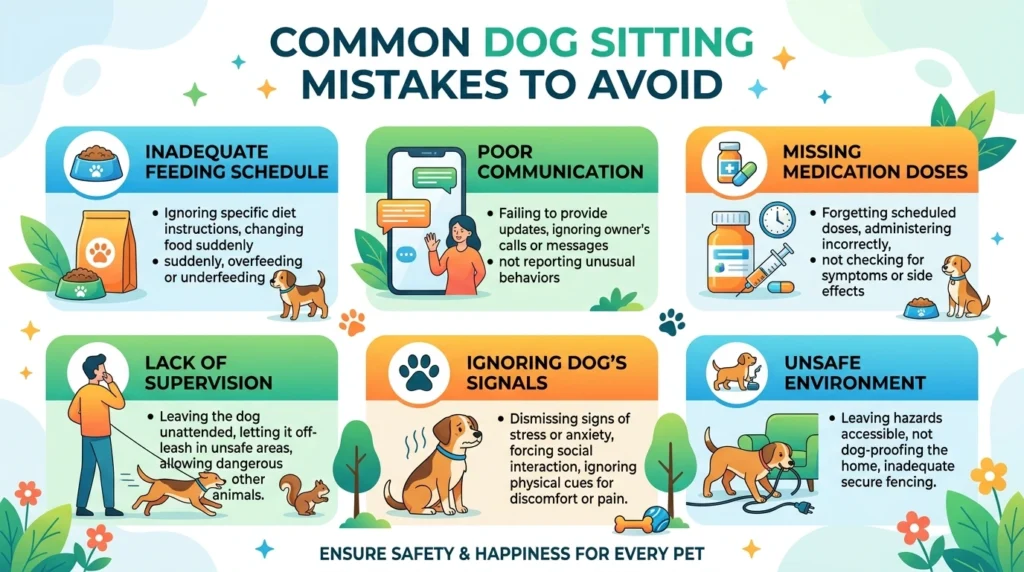
Skipping the meet-and-greet is the most common and most costly dog sitting mistake. Chemistry between your dog and the sitter matters enormously. However, you can’t assess it from an app profile alone. Therefore, always insist on an in-person meeting before confirming any booking.
Mistake 2: Leaving Incomplete Instructions
Your dog sitter isn’t a mind reader. Leaving vague or incomplete instructions creates confusion and potentially puts your dog at risk. Therefore, prepare a detailed written care sheet covering:
- Feeding amounts, times, and specific foods
- Walk routes and duration
- Emergency vet contact details
- Medication schedule with exact dosages
- Your dog’s fears, triggers, and comfort items
- Preferred communication method for daily updates
Mistake 3: Choosing Based on Price Alone
The cheapest option rarely delivers the best care. Also, inexperienced sitters charging low rates may lack the skills to handle emergencies, manage anxious behavior, or administer medications safely. Therefore, evaluate sitters on experience, reviews, and your dog’s reaction not just cost.
Mistake 4: Not Updating Vaccinations Before Sitting
Many reputable dog sitters and all good boarding facilities require proof of current vaccinations. Therefore, check your dog’s vaccination records well in advance. Common requirements include rabies, distemper, and bordetella (kennel cough). Consult your vet to ensure your dog is fully up to date before any sitting arrangement begins.
Mistake 5: Failing to Communicate During Your Trip
Establish a daily check-in expectation before you leave. Also, a good sitter proactively sends photos and brief updates. However, if you’re not receiving updates and you agreed on them, don’t hesitate to reach out. Regular communication keeps both you and your dog calmer throughout the separation.
Pro Tip: Create a “Dog Care Bible” a simple document with every detail about your dog’s life. Include photos, vet contacts, favorite toys, sleep routines, and emergency procedures. Share it digitally so your sitter always has access. In my experience, sitters love receiving this. It shows you take your dog’s care seriously and helps them do a genuinely great job.
How to Prepare Your Dog for Dog Sitting
Making the Transition Easier for Your Dog
Some dogs take to new sitters immediately. Others need more time and preparation. Therefore, use these strategies to make the experience positive from the start:
Before the sitting begins:
- Schedule the meet-and-greet at least one week before your departure
- Let the sitter spend short visits with your dog to build familiarity
- Maintain your dog’s normal routine as closely as possible in the days before you leave
- Leave a worn t-shirt or blanket with your scent it genuinely comforts anxious dogs
During the sitting period:
- Ask the sitter to stick strictly to your dog’s normal feeding and walk schedule
- Ensure your dog has their favorite toys, bed, and comfort items available
- Keep your vet’s emergency contact clearly posted in your home
- Request daily photo updates they reassure both you and confirm your dog is thriving
For anxious dogs specifically:
- Consider a calming supplement recommended by your vet
- Discuss anxiety management strategies with your vet before the sitting begins
- Choose in-home sitting over hosted sitting familiar surroundings reduce stress significantly
Frequently Asked Questions About Dog Sitting

1. What exactly does a dog sitter do?
A dog sitter provides comprehensive care for your dog while you’re away. This includes feeding, fresh water, daily walks, playtime, and companionship. Also, many sitters handle medication administration, grooming maintenance, and basic training reinforcement. In addition, good sitters send regular photo updates and communicate any concerns promptly. The exact services depend on the arrangement you agree on therefore, always clarify expectations in detail before confirming a booking.
2. How do I know if a dog sitter is trustworthy?
Several factors indicate a trustworthy dog sitter. First, look for verified reviews from multiple dog owners on reputable platforms. Also, check whether the sitter has completed pet first aid training or professional certifications. A background check available through platforms like Rover adds another layer of security. In my experience, however, the most reliable indicator is your dog’s reaction during the meet-and-greet. Dogs are excellent judges of character trust what you observe.
3. Is a dog sitting better than a kennel?
For most dogs, yes. Dog sitting provides a more personal, home-like environment compared to kennels. Because your dog stays in a familiar setting (or a quiet home environment), stress levels stay significantly lower. Also, dogs in sitting arrangements maintain their regular routines, which supports better sleep, appetite, and emotional stability. However, highly social dogs who love being around many other dogs sometimes thrive in kennel environments. Therefore, consider your individual dog’s personality when choosing between the two options.
4. How much does dog sitting cost per day?
Dog sitting costs vary by location, service type, and sitter experience. In-home overnight sitting typically costs between $45 and $85 per night in most US cities. Drop-in visits average $15 to $30 per visit. Also, holiday periods, multiple dogs, and special needs often add to the base cost. Therefore, always request a full quote upfront and confirm what’s included walks, meals, medication, and updates should all be clearly specified before you agree to anything.
5. What should I tell my dog sitter before leaving?
Provide your sitter with a comprehensive written care guide. Include your dog’s feeding schedule, exact food amounts, walk routine, emergency vet contact, and medication instructions if relevant. Also, note your dog’s behavioral triggers, what frightens them, what excites them, and how they communicate discomfort. Leave your own contact details and a backup emergency contact. In addition, show your sitter where all supplies are stored: food, leash, treats, poop bags, and first aid kit. The more information you share, the better care your dog receives.
6. Can dog sitters handle dogs with special needs?
Many experienced dog sitters handle special needs dogs confidently including seniors, dogs with mobility issues, and dogs requiring daily medication. However, not every sitter has this specific experience. Therefore, always ask directly about special needs experience during your interview. Also, provide your sitter with written medication instructions and confirm them verbally before departing. Consult your vet about any additional guidance your sitter should follow especially for dogs managing chronic conditions or recovering from surgery.
7. How far in advance should I book a dog sitter?
For regular periods, booking two to four weeks in advance gives you enough time to find, interview, and trial a good sitter. However, during peak holiday periods Christmas, Thanksgiving, summer school holidays good sitters book out months in advance. Therefore, plan holiday care as early as possible. Also, once you find a great sitter, keep their contact details and rebook them regularly a familiar sitter becomes genuinely invaluable over time.
Give Your Dog the Care They Deserve
Dog sitting is one of the kindest decisions you can make for your dog when life takes you away from home. The right sitter keeps your dog’s routine intact, provides genuine companionship, and gives you real peace of mind throughout your trip.
Therefore, take the time to find someone trustworthy, prepare a detailed care guide, and always do a meet-and-greet before committing. Also, remember that a trial night before your main trip is one of the smartest investments you can make in your dog’s comfort.
Your dog gives you unconditional love every single day. Finding excellent dog sitting care is one of the most meaningful ways to return that love even when you can’t be there in person.