
Introduction
Your dog can’t tell you when something feels wrong. That’s the hardest part of being a dog owner. One day your pup seems perfectly fine and the next, something just feels off. Maybe they’re not eating. Maybe they’re hiding under the bed. Maybe they’re limping for no obvious reason.
Recognizing dog health symptoms early can genuinely save your dog’s life. In my experience, the owners who catch problems early are the ones paying close attention to small changes in their dog’s daily behavior. The good news? You don’t need to be a vet to notice when something isn’t right.
This guide walks you through the most important warning signs to watch for, what they might mean, and exactly when to call your vet. Let’s make sure your dog gets the help they need before a small problem becomes a serious one.
Common Dog Health Symptoms You Should Never Ignore
Why Early Detection Matters So Much
Dogs are naturally good at hiding pain and discomfort. This instinct comes from their wild ancestors, who hid weakness to survive. Because of this, many dog health symptoms are subtle at first. Therefore, knowing what to look for gives you a real advantage.
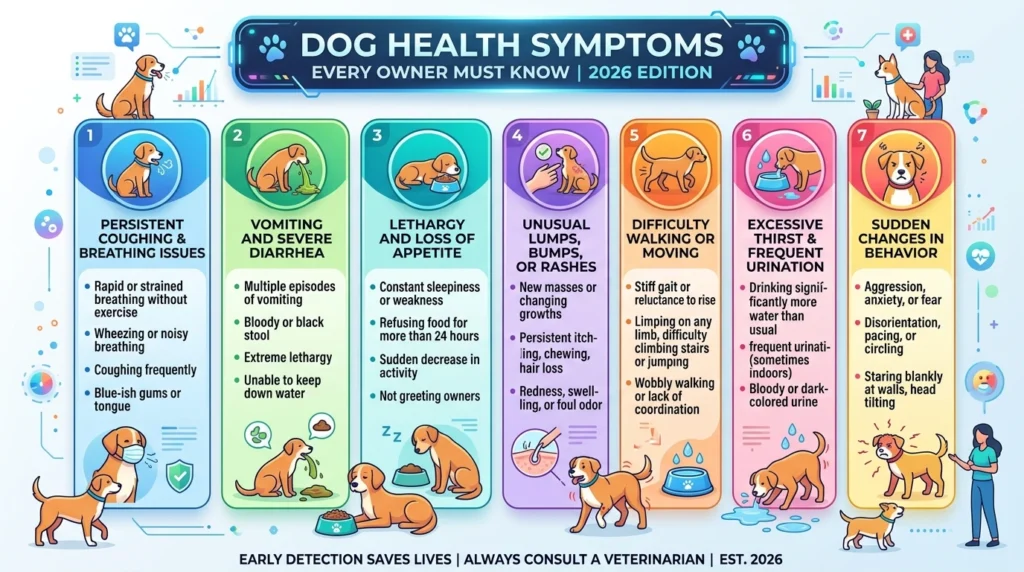
Here are the most common symptoms that deserve your immediate attention:
Physical Symptoms to Watch For
- Loss of appetite A dog skipping one meal occasionally is normal. However, refusing food for more than 24–48 hours is a red flag.
- Vomiting or diarrhea Occasional vomiting isn’t always serious. But repeated vomiting or bloody diarrhea needs vet attention right away.
- Excessive thirst or urination This can signal diabetes, kidney disease, or Cushing’s disease. Always track your dog’s drinking habits.
- Unexplained weight loss If your dog is losing weight without a diet change, something is wrong internally.
- Bloated or swollen abdomen This can be life-threatening, especially in large breeds. Don’t wait to call your vet immediately.
- Difficulty breathing, labored breathing, wheezing, or constant coughing all require prompt medical evaluation.
- Limping or stiffness This may indicate joint pain, arthritis, or injury. It’s especially common in older dogs.
Behavioral Symptoms That Signal Trouble
Sometimes the first signs aren’t physical at all. Instead, they show up as changes in behavior:
- Sudden aggression or irritability A normally gentle dog snapping at you may be in pain.
- Hiding or withdrawing Dogs that suddenly want to be alone often feel unwell.
- Restlessness or pacing This can indicate anxiety, pain, or gastrointestinal distress.
- Confusion or disorientation Especially in senior dogs, this may point to neurological issues.
Pro Tip: Keep a simple health journal for your dog. Note their eating habits, energy levels, and bathroom schedule each week. When something changes, you’ll have a clear baseline to share with your vet.
[Dogs Health Supplements: Complete Guide for 2026]
How to Assess Dog Health Symptoms at Home: Step-by-Step

A Simple System Any Owner Can Use
You don’t need medical training to do a basic health check on your dog. In fact, doing this regularly helps you spot dog health symptoms before they become serious problems. Here’s a simple process you can follow at home:
- Check their eyes. Healthy dog eyes should be clear and bright. Therefore, cloudiness, discharge, or redness all deserve attention.
- Look at their nose. A slightly wet nose is normal. However, a very dry, cracked, or constantly runny nose can signal illness.
- Inspect their ears. Sniff gently near their ears. A bad smell or dark discharge may indicate an ear infection.
- Examine their mouth and gums. Healthy gums should be pink and moist. Pale, white, blue, or yellow gums are medical emergencies.
- Feel their body. Run your hands gently over their body. Look for lumps, bumps, tender spots, or areas of swelling.
- Watch their walk. Does your dog walk normally? Limping, dragging a leg, or stumbling can all point to pain or neurological issues.
- Monitor their bathroom habits. Changes in frequency, consistency, or color of urine and stool are important health clues.
- Assess their energy level. A dog that suddenly seems tired, sluggish, or unwilling to play needs watching carefully.
When to Call the Vet Immediately
Some symptoms can’t wait for a scheduled appointment. Call your vet right away if you notice:
- Difficulty breathing or choking
- Sudden collapse or loss of consciousness
- Seizures
- Suspected poisoning
- Severe vomiting or diarrhea with blood
- Inability to urinate or defecate
- Visible trauma or injury
Always consult your veterinarian for any symptom you’re unsure about. This guide is for informational purposes only your vet is the only one who can properly diagnose your dog.
Dog Health Symptoms by Body System: Quick Reference Guide
Understanding What Each Symptom Might Mean
This table gives you a quick overview of common dog health symptoms organized by body system. Use it as a reference not a diagnosis tool.
| Body System | Common Symptoms | Possible Causes |
| Digestive | Vomiting, diarrhea, bloating, loss of appetite | Infection, parasites, dietary issues, obstruction |
| Respiratory | Coughing, wheezing, labored breathing | Kennel cough, pneumonia, heart disease |
| Urinary | Excessive thirst, frequent urination, blood in urine | UTI, kidney disease, diabetes |
| Musculoskeletal | Limping, stiffness, reluctance to move | Arthritis, injury, hip dysplasia |
| Neurological | Seizures, confusion, loss of balance | Epilepsy, brain tumor, toxin exposure |
| Skin and Coat | Excessive scratching, hair loss, redness | Allergies, parasites, skin infection |
| Eyes | Redness, discharge, cloudiness | Conjunctivitis, cataracts, glaucoma |
| Ears | Scratching, head shaking, bad odor | Ear infection, mites, foreign body |
In Puppies
Young dogs have developing immune systems. Therefore, they’re more vulnerable to infections. Watch for:
- Lack of energy in a normally playful puppy
- Persistent diarrhea or vomiting
- Not eating for more than 12 hours
- Coughing or nasal discharge
In Senior Dogs
Older dogs develop different health challenges. As a result, regular vet check-ups become even more important. Common senior dog health symptoms include:
- Increased thirst and urination
- Stiffness in the morning or after rest
- Cloudy eyes or hearing loss
- Confusion or changed sleep patterns
- Lumps or bumps appearing under the skin
Mistakes Dog Owners Make When Spotting Health Symptoms
Are You Accidentally Missing the Warning Signs?
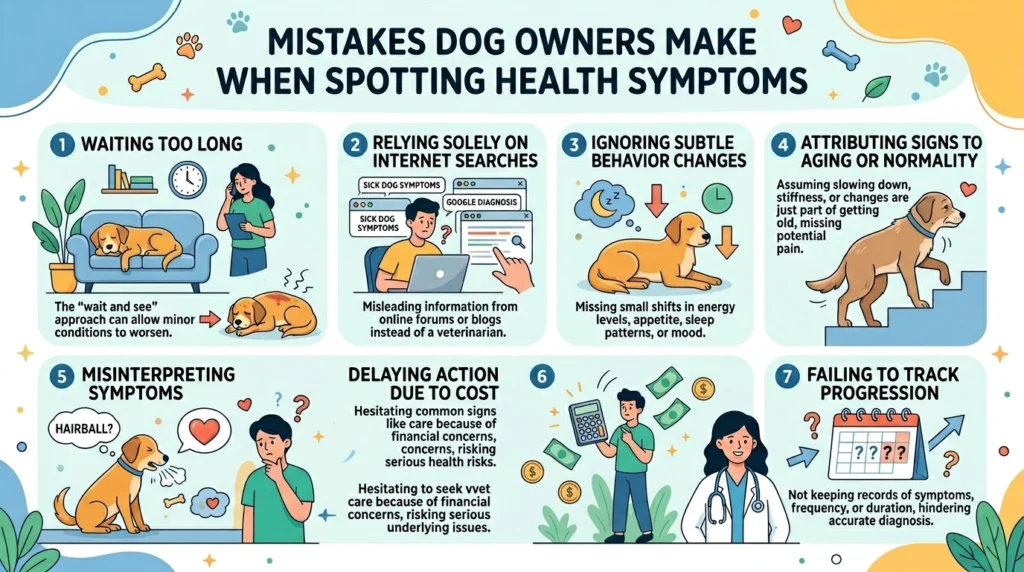
Even caring, attentive dog owners make these common mistakes. Knowing them helps you avoid the same pitfalls.
Waiting Too Long to Act
This is the most common mistake I see. Many owners wait days, sometimes weeks before calling the vet. However, early intervention almost always leads to better outcomes. If something feels wrong with your dog, trust your instincts and call your vet sooner rather than later.
Assuming Symptoms Will Resolve on Their Own
Some mild symptoms do resolve naturally. But symptoms like persistent vomiting, significant weight loss, or changes in urination rarely fix themselves. In addition, waiting too long can allow a treatable condition to become serious.
Googling Symptoms and Self-Diagnosing
We’ve all done it. However, searching dog symptoms online often leads to the worst-case conclusion. Use online resources to gather general information then let your vet make the actual diagnosis based on examination and testing.
Ignoring Behavioral Changes
Physical symptoms are easier to spot. Behavioral changes, however, are often the first sign that something is wrong. A dog that suddenly becomes clingy, aggressive, or withdrawn may be trying to tell you they’re in pain or distress.
Skipping Regular Vet Check-Ups
Annual wellness exams catch problems before symptoms even appear. Therefore, preventive care is just as important as reactive care. Many serious conditions including cancer, diabetes, and kidney disease are much more treatable when caught early.
Pro Tip: Take a short video on your phone whenever you notice an unusual symptom. Showing your vet a video of the behavior or symptom helps them make a faster, more accurate assessment especially for intermittent issues like limping or coughing.
Frequently Asked Questions About Dog Health Symptoms
1. What are the most serious dog health symptoms that need emergency care?
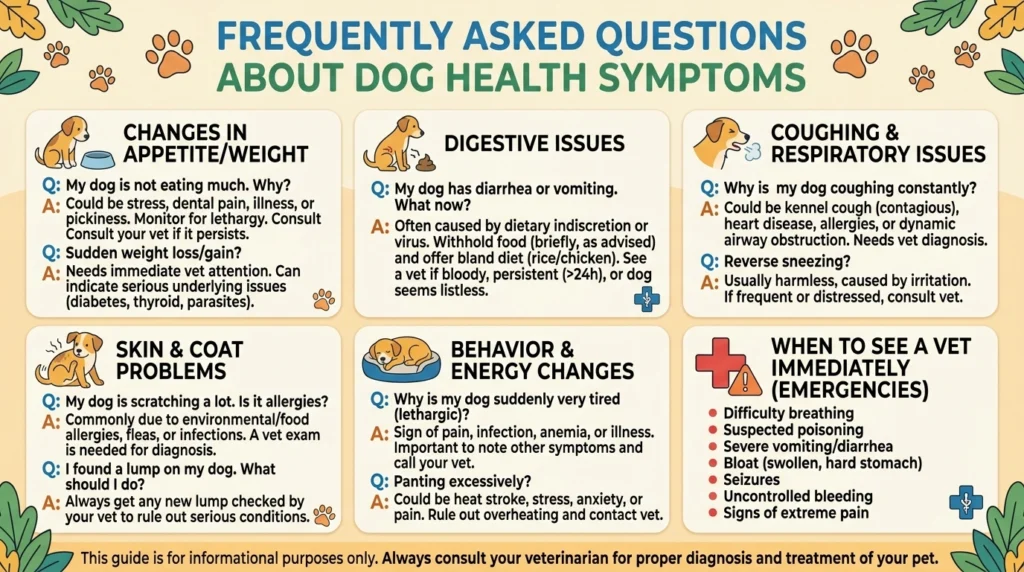
Some symptoms require immediate emergency veterinary care without delay. These include difficulty breathing or sudden collapse, seizures lasting more than two minutes, suspected poisoning or toxic ingestion, bloated or distended abdomen (especially in large breeds), pale or blue-tinged gums, inability to urinate or pass stool, and severe uncontrolled bleeding. Also, any sudden paralysis or inability to move normally is an emergency. Don’t wait to see if these symptoms improve contact an emergency vet clinic immediately. Time is critical in all of these situations.
2. How do I know if my dog is in pain?
Dogs rarely cry out in pain the way humans do. Instead, they show pain through behavioral and physical changes. Signs of pain include reluctance to move or be touched, hunching their back, flattened ears, panting without heat or exercise, whimpering or growling when touched, licking a specific area repeatedly, and loss of appetite. In addition, a normally social dog that suddenly wants to be alone is often experiencing discomfort. Always consult your vet if you suspect your dog is in pain they can assess properly and recommend appropriate treatment.
3. Can dog health symptoms be caused by stress or anxiety?
Yes absolutely. Stress and anxiety cause real physical symptoms in dogs. These include digestive upset like vomiting or diarrhea, excessive licking or chewing, hair loss from over-grooming, loss of appetite, and changes in bathroom habits. Common causes of stress in dogs include moving to a new home, changes in the family, loud noises like fireworks, and separation from their owner. Therefore, if your vet rules out physical illness, behavioral or environmental factors are worth exploring with a qualified animal behaviorist.
4. How often should I check my dog for health symptoms at home?
A quick informal health check once a week is a great habit for any dog owner. This doesn’t need to be formal; simply run your hands over your dog’s body while petting them. Check their eyes, ears, mouth, and skin. Also, pay attention to their energy levels, eating habits, and bathroom routine daily. For senior dogs or dogs with known health conditions, more frequent monitoring is helpful. Sharing your observations at each vet visit gives your veterinarian valuable information about your dog’s baseline health.
5. What dog health symptoms are specific to certain breeds?
Yes certain breeds are predisposed to specific health conditions. For example, flat-faced breeds like Bulldogs and Pugs often show respiratory symptoms because of their anatomy. Large breeds like Great Danes are more prone to bloat. German Shepherds frequently develop hip dysplasia. Golden Retrievers have higher rates of certain cancers. Dachshunds are prone to back problems. Therefore, knowing your breed’s common health risks helps you spot relevant symptoms earlier. Your vet can guide you on breed-specific screening and prevention strategies appropriate for your dog.
6. Are there dog health symptoms that look minor but are actually serious?
Yes, several seemingly minor symptoms can signal serious underlying problems. Pale gums look subtle but indicate poor circulation or severe anemia. Subtle changes in drinking habits can signal diabetes or kidney disease early. A dog scooting their rear on the floor might seem funny, but it can indicate anal gland problems or parasites. Also, a slight head tilt that persists could point to an ear infection or neurological issue. Because these symptoms appear mild, owners often delay seeking help. When in doubt, always get any new or persistent symptom checked by your vet promptly.
Take Action Before Symptoms Become Serious
Recognizing dog health symptoms early is one of the most powerful things you can do as a dog owner. Your dog depends on you to notice when something isn’t right because they can’t tell you themselves.
The key takeaways from this guide are simple. First, pay attention to both physical and behavioral changes in your dog. Second, do a quick weekly home check to catch issues early. Third, never wait too long when something feels wrong, trust your instincts. Finally, build a strong relationship with your vet through regular wellness check-ups.