
Introduction
Your small dog deserves food that actually fits their tiny body, not a one-size-fits-all formula designed for a 70-pound Labrador. Dog food Pedigree small dog formulas are specifically made for little breeds, and they’ve become one of the most popular choices for small dog owners worldwide.
However, with so many options on the shelf, it’s easy to feel confused. Which Pedigree formula is right for your Chihuahua, Shih Tzu, or Pomeranian? How much should you feed them? Are the ingredients actually good enough?
In my experience helping dog owners navigate pet food choices, these questions come up constantly. Therefore, I’ve put together this complete guide to help you make a confident, informed decision. You’ll find honest product breakdowns, feeding tips, and practical advice all in one place.
Let’s get started!
Why Dog Food Pedigree Small Dog Formulas Are Different
Small Dogs Have Unique Nutritional Needs
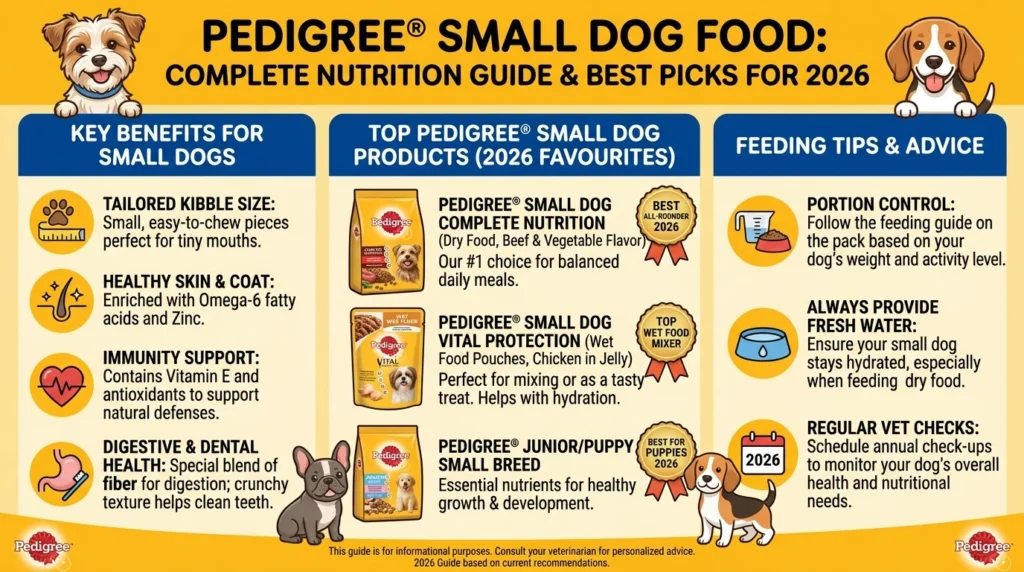
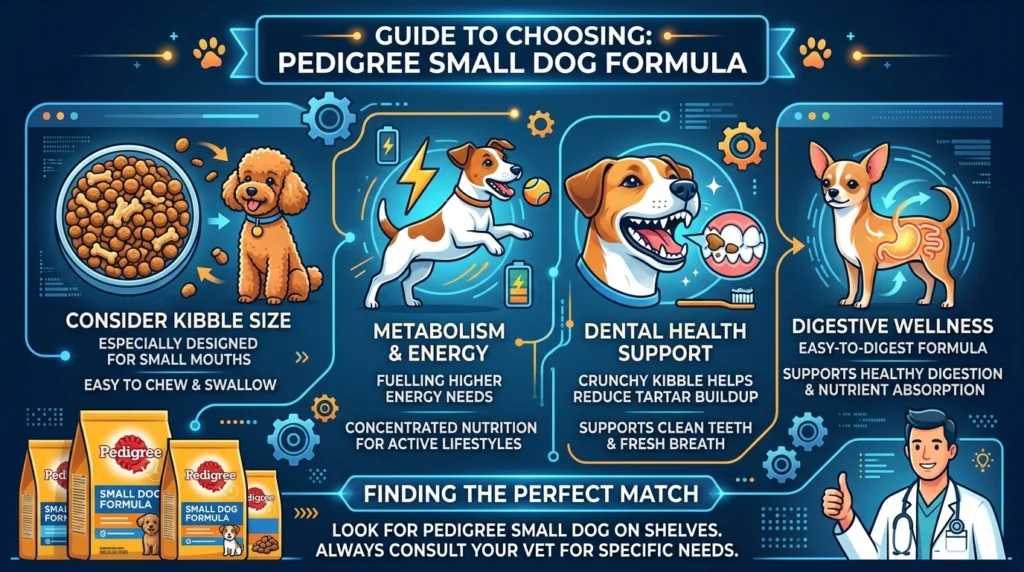
Small breeds aren’t simply miniature versions of big dogs. Their bodies work differently in several important ways. First, small dogs have faster metabolisms; they burn calories more quickly than larger breeds. As a result, they need more calorie-dense food in smaller portions.
Also, small dogs have tiny mouths and smaller teeth. Therefore, kibble size matters a lot. Large kibbles can be difficult to chew and may even become a choking hazard. Pedigree small dog formulas use specifically sized, smaller kibble that fits comfortably in a little mouth.
In addition, small breeds are more prone to dental problems. Because of their crowded teeth, plaque builds up faster. Fortunately, the crunchy texture of dry kibble helps clean teeth naturally with every bite.
What Makes Pedigree a Trusted Brand?
Pedigree has been feeding dogs since 1957. It’s owned by Mars Petcare, one of the world’s largest and most research-driven pet food companies. However, popularity alone doesn’t mean quality, so let’s look at what’s actually inside the bag.
Pedigree small dog formulas typically include:
- Real meat or meat by-products as a protein source
- Whole grains for digestible energy
- Omega-6 fatty acids for a shiny coat
- Added vitamins and minerals for complete nutrition
- Smaller kibble size designed for small breed jaws
All Pedigree products meet AAFCO nutritional standards, which means they provide complete and balanced nutrition for everyday feeding.
How to Choose the Right Dog Food Pedigree Small Dog Formula
Step-by-Step Selection Guide
Choosing the right formula doesn’t have to be overwhelming. Here’s a simple process to follow:
- Check your dog’s age first. Pedigree makes formulas for puppies, adults, and senior dogs. Each one has a different nutritional profile. For example, puppy formulas contain DHA for brain development. Senior formulas, however, have fewer calories and added joint support.
- Look at the AAFCO statement. This small line on the back of the bag confirms the food is nutritionally complete. Also, check whether it says “based on feeding trials” that’s the stronger validation.
- Check the first ingredient. Ideally, you want a named protein like chicken or beef listed first. However, Pedigree often uses “meat by-products” which are not harmful but are less specific than whole meat sources.
- Consider your dog’s specific health needs. Does your small dog have a sensitive stomach? Therefore, look for Pedigree’s gentle formulas with rice-based recipes. Is your dog overweight? In that case, look for a weight management option.
- Compare kibble size. Always choose a formula specifically labeled for small or toy breeds. Because standard kibble is too large for tiny mouths, using the right size makes a real difference in how well your dog eats.
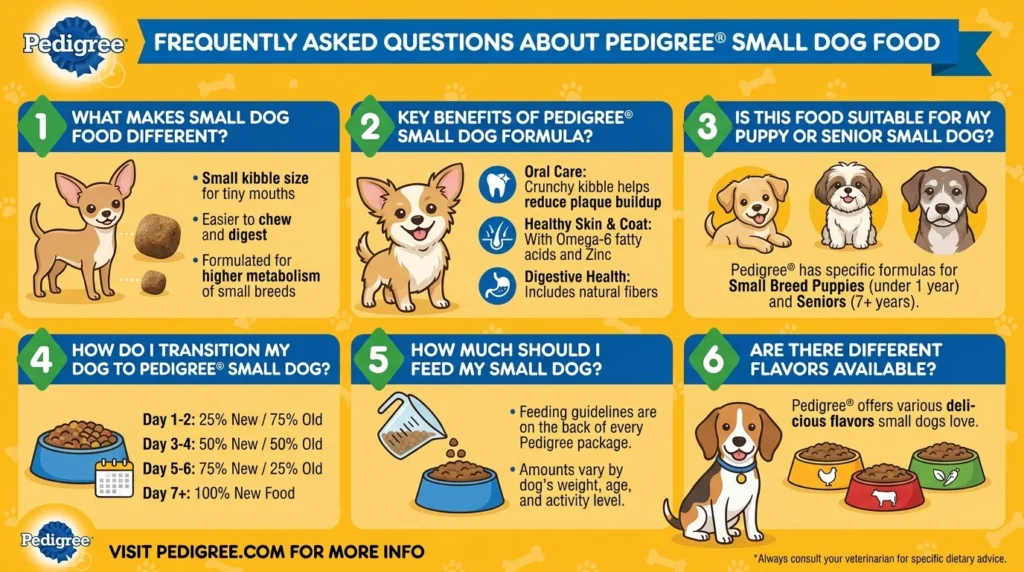
- Transition slowly over 7 to 10 days. Mix 25% new food with 75% old food at the start. Then gradually shift the ratio every few days. Finally, serve 100% of the new formula by day ten.
- Consult your vet if your dog has health conditions. Kidney issues, diabetes, or allergies all affect which formula is best. Therefore, always get professional advice before making major dietary changes.
Pro Tip: Take a photo of your dog’s current food bag before shopping. Having the exact formula name and life stage on hand makes it much easier to find a good Pedigree alternative or confirm you’re buying the right match.
[Best Dry Dog Food Small Breed: Top Picks & Guide 2026]
Pedigree Small Dog Products: Honest Comparison
Top Pedigree Small Dog Formulas at a Glance
Here’s a clear comparison of the most popular dog food Pedigree small dog options available:
| Product | Best For | Key Feature | Format | Price Range |
| Pedigree Small Dog Adult (Chicken & Veg) | Healthy adult small dogs | Smaller kibble, everyday nutrition | Dry | $ |
| Pedigree Puppy Small Breeds | Small breed puppies | DHA for brain development | Dry | $ |
| Pedigree Senior Small Dog | Dogs aged 7+ | Lower calories, joint support | Dry | $ |
| Pedigree Small Dog Wet Pouches | Picky eaters, seniors | High moisture, soft texture | Wet | $ |
| Pedigree Dentastix Small | Dental health | Clinically proven plaque reduction | Treat | $ |
My Honest Take on Each
Pedigree Small Dog Adult (Chicken & Vegetable) is the most popular everyday choice. It’s affordable, widely available, and specifically sized for small breeds. However, the protein source is listed as “meat and bone meal” rather than named fresh meat, worth knowing if you prioritize ingredient transparency.
Pedigree Puppy Small Breeds includes DHA from omega-rich fish oil, which supports healthy brain and eye development. Therefore, it’s a solid option for puppies up to 12 months of age.
Pedigree Senior Small Dog has lower caloric density and added vitamins to support aging joints and immune function. In addition, the softer formula works well for older dogs with dental sensitivity.
Wet Pouches are fantastic for picky eaters or dogs who need extra hydration. Also, they work well as a kibble topper to encourage appetite in reluctant eaters.
How Pedigree Small Dog Compares to Competitors
| Brand | Price | Protein Source | Small Breed Formula | Vet Recommended |
| Pedigree Small Dog | $ | Meat by-products/meal | Yes | Sometimes |
| Purina ONE Small Dog | $$ | Real chicken | Yes | Yes |
| Royal Canin Small Adult | $$$ | Chicken by-product meal | Yes breed specific | Frequently |
| Hill’s Science Diet Small Paws | $$$ | Chicken meal | Yes | Frequently |
| Blue Buffalo Small Breed | $$$ | Deboned chicken | Yes | Sometimes |
Pedigree wins clearly on affordability and availability. However, if your small dog has specific health needs or sensitivities, premium options like Purina ONE or Hill’s Science Diet may serve them better long-term.
Common Mistakes Small Dog Owners Make With Pedigree Food
Mistakes That Are Easy to Avoid
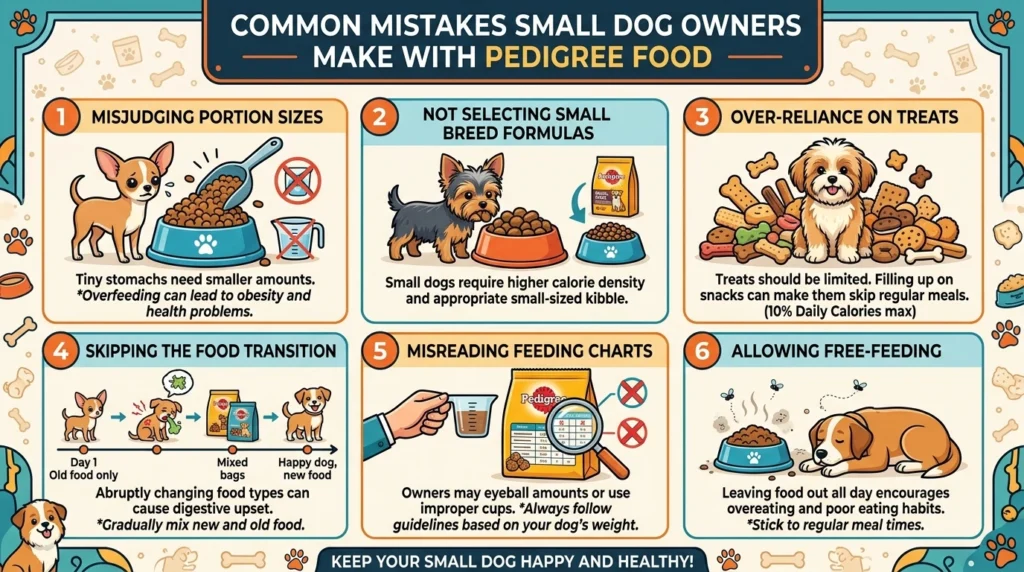
Even experienced dog owners make these errors. Therefore, knowing them in advance saves you time, money, and stress.
Feeding Standard Adult Kibble to a Small Dog
This is the most common mistake I see. Standard Pedigree adult formulas use larger kibble designed for medium or large breeds. Because small dogs struggle to chew big pieces properly, they often swallow whole chunks which can cause digestive upset or even choking.
Always choose a formula specifically labeled for small breeds or toy breeds.
Overfeeding Because Small Dogs Are Hard to Resist
Have you ever watched a tiny Chihuahua beg with those enormous eyes? It’s nearly impossible to say no. However, small dogs gain weight faster than large breeds and obesity leads to joint pain, heart strain, and a shorter lifespan. Therefore, measure every meal with a proper measuring cup and follow the feeding guidelines on the bag.
Ignoring the Life Stage Label
Pedigree puppy food fed to a senior dog provides too many calories. Similarly, the senior formula given to a puppy misses critical nutrients for healthy development. As a result, always match the formula to your dog’s actual age, not just what’s on sale.
Skipping the Transition Period
Switching food abruptly causes loose stools and stomach upset in most dogs, especially sensitive small breeds. Therefore, always transition over 7 to 10 days by mixing old and new food gradually. This simple step prevents days of digestive discomfort.
Not Considering Dental Health
Small breeds are significantly more prone to dental disease than large dogs. Pedigree dry kibble helps mechanically clean teeth through chewing. However, relying on food alone isn’t enough. Also add regular brushing and consider Pedigree Dentastix as part of a complete dental routine.
Pro Tip: If your small dog refuses their Pedigree kibble, try warming it slightly with a splash of warm water. The enhanced aroma makes it far more appealing especially for picky small breed eaters who respond strongly to smell.
Frequently Asked Questions About Dog Food Pedigree Small Dog
1. Is Pedigree dog food good for small dogs?
Yes Pedigree small dog formulas are safe and nutritionally adequate for most healthy small breed dogs. They meet AAFCO minimum nutritional standards and use smaller kibble specifically designed for tiny mouths. However, they use meat by-products rather than named whole meat proteins, which some owners prefer to avoid. For healthy small dogs on a budget, Pedigree is a reliable everyday option. If your dog has specific health conditions, however, consulting your vet before choosing any food is always the right move.
2. How much Pedigree should I feed my small dog daily?
Portion size depends on your dog’s weight, age, and activity level. As a general guide, most small dogs between 5 and 20 pounds need roughly half a cup to one and a half cups of dry Pedigree per day split across two meals. However, always check the specific feeding chart on your Pedigree bag, as caloric density varies between formulas. Also, weigh your dog monthly and adjust portions if you notice weight gain or loss.
3. Can I mix Pedigree wet and dry food for my small dog?
Absolutely and many small dog owners find this combination works really well. Mixing a small amount of Pedigree wet food into dry kibble improves palatability, adds moisture to the diet, and makes mealtime more enjoyable for picky eaters. However, when you add wet food, reduce the dry portion proportionally so you don’t overfeed. Also, remove any uneaten wet food within two hours to prevent bacterial growth.
4. Is Pedigree small dog food safe from recalls?
Pedigree has had a small number of recalls over its history, most notably a 2014 recall involving potential metal fragment contamination in some dry food products. However, the brand’s overall safety record is reasonable for a company of its size and production volume. Therefore, it’s always a good habit to check the FDA’s pet food recall database periodically at fda.gov and sign up for recall email alerts. Staying informed is one of the simplest ways to protect your small dog.
5. What is the best Pedigree formula for a senior small dog?
Pedigree’s Senior Small Dog formula is designed specifically for dogs aged seven and older. It features lower caloric density to prevent weight gain in less active seniors, added vitamins to support immune function, and a smaller kibble size that’s easier for older teeth to handle. In addition, its softer texture works well for senior dogs with dental sensitivity or missing teeth. Always consult your vet about transitioning your aging small dog to a senior formula. They can confirm the right timing based on your dog’s individual health.
6. Does Pedigree small dog food help with dental health?
Pedigree dry kibble provides some mechanical dental cleaning through chewing the crunchy texture helps reduce plaque buildup on teeth. However, dry food alone isn’t sufficient for complete dental care in small breeds, which are disproportionately prone to dental disease. Therefore, combine Pedigree kibble with regular tooth brushing and Pedigree Dentastix for small dogs which are clinically proven to reduce tartar buildup. Annual professional dental cleanings at your vet are also an important part of small breed oral health.
7. Can Pedigree small dog food cause allergies?
Food allergies in dogs are less common than many people believe and when they do occur, the most frequent triggers are specific proteins like beef, chicken, or dairy rather than grains. Pedigree formulas do contain common protein and grain ingredients, so if your small dog shows signs of food sensitivity such as chronic itching, ear infections, loose stools, or skin rashes consult your vet. They may recommend an elimination diet to identify the specific trigger. In that case, a limited-ingredient formula may be more appropriate than a standard Pedigree product.
Conclusion: Is Pedigree Small Dog Food Right for Your Pup?
Dog food Pedigree small dog formulas offer real value for small breed owners who want accessible, affordable, and nutritionally complete daily nutrition. The smaller kibble size, life-stage specific options, and wide availability make Pedigree a genuinely practical choice for millions of small dog owners around the world.
However, every dog is different. Therefore, always match the formula to your dog’s age, size, and health needs. Transition slowly, measure portions carefully, and keep dental health in your routine alongside food.
For small dogs with specific health conditions, sensitive stomachs, allergies, joint issues, or weight problems, always consult your vet before choosing any food, including Pedigree.