
Introduction
You’re slicing cucumbers for a salad and your dog is watching with intense interest. The question arrives naturally: can dogs have cucumbers, or is this one of those vegetables that looks harmless but causes problems?
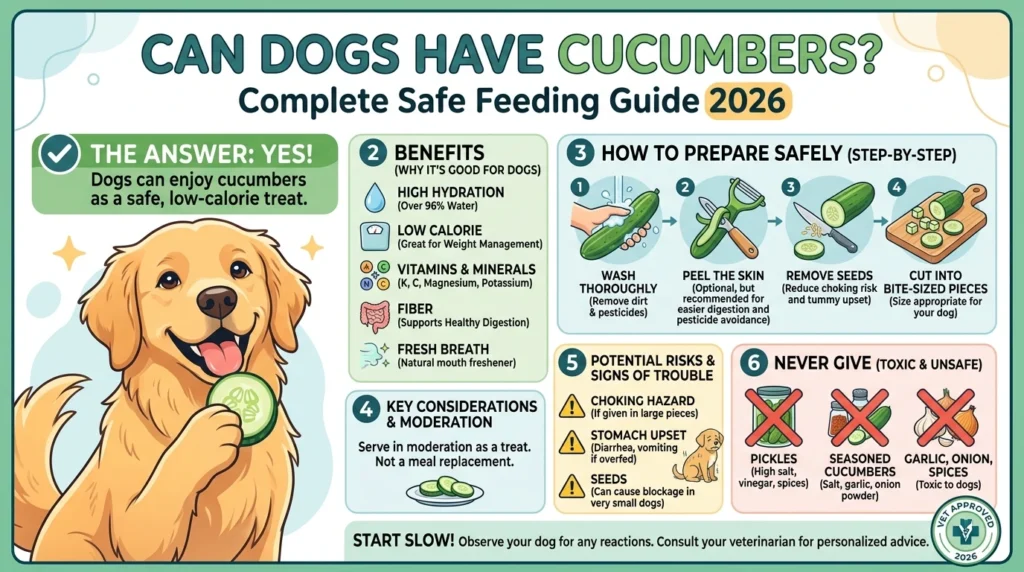
Here’s genuinely good news: cucumbers are not only safe for dogs, they’re one of the best low-calorie snacks you can share with your furry companion. Many pet owners don’t realize that cucumbers are nearly perfect dog treats for one specific reason they’re approximately 96% water and extremely low in calories.
This makes cucumbers especially valuable for dogs who need to lose weight, dogs watching their caloric intake, or any dog who simply deserves a crunchy, hydrating snack without the sugar content of most fruits.
In my experience, cucumbers are the treat I recommend most consistently to owners of overweight dogs. They’re natural, refreshing, widely available, and most dogs enjoy the satisfying crunch they provide.
However, a few preparation guidelines and portion considerations make the difference between a perfect snack and a potential digestive issue. This guide covers everything you need to know: benefits, preparation, portion sizes, serving ideas, and the most common mistakes owners make.
Quick Answer
Yes, dogs can have cucumbers safely. Cucumbers are low in calories, high in water content, and provide vitamins K, C, and B1, plus potassium and magnesium. They make an excellent treat for weight-conscious dogs. Remove seeds for sensitive dogs, and cut into appropriate pieces to prevent choking. Serve plain, never pickled.
Key Takeaways
- Cucumbers are completely safe for dogs non-toxic and genuinely nutritious
- They’re approximately 96% water excellent for hydration on hot days
- Cucumbers contain only about 1 calorie per slice ideal for overweight dogs
- Pickled cucumbers (pickles) are NOT safe they contain salt, spices, and sometimes onion or garlic
- The skin and seeds are generally safe but remove seeds for dogs with sensitive stomachs
- Cut into appropriate sizes to prevent choking especially for small dogs
Are Cucumbers Safe for Dogs? Everything You Need to Know
Cucumbers are completely safe for dogs and are considered one of the most diet-friendly natural treats available. They’re non-toxic, hydrating, crunchy, and genuinely low enough in calories to use generously without derailing your dog’s daily nutritional balance.
What Nutrients Do Cucumbers Provide for Dogs?
Cucumbers deliver several beneficial nutrients in a remarkably low-calorie package:
| Nutrient | Benefit for Dogs |
| Vitamin K | Supports bone health and blood clotting |
| Vitamin C | Antioxidant support for immune health |
| Vitamin B1 (Thiamine) | Supports energy metabolism and brain function |
| Potassium | Supports heart function, muscles, and kidneys |
| Magnesium | Supports bone development and enzyme function |
| Molybdenum | Supports enzyme activity and metabolism |
| Water (96%) | Excellent natural hydration support |
| Fiber | Supports healthy digestion |
Why Are Cucumbers Especially Good for Overweight Dogs?
This is where cucumbers truly stand out. One cup of sliced cucumber contains only 16 calories making them one of the most calorie-efficient treats available for dogs on weight management programs.
Also, the high water content means cucumbers fill your dog’s stomach more than their caloric content would suggest. Therefore, an overweight dog gets genuine satiety from cucumber snacks without consuming the excess calories that contribute to weight gain.
In my experience, dogs on caloric restriction actually respond very positively to cucumber treats during training. They get the positive reinforcement experience without the caloric cost of traditional treats.
Are Cucumbers Safe for All Dogs?
Cucumbers are safe for the vast majority of dogs. However, a few considerations apply:
- Diabetic dogs cucumbers are an excellent treat choice because of their very low sugar content
- Overweight dogs cucumbers are ideal and actively beneficial for weight management
- Dogs with sensitive stomachs remove seeds, which can occasionally cause gas or loose stools
- Small dogs and puppies cut into very small pieces to prevent choking
- Dogs on prescription diets always check with your vet before adding any new food
How to Feed Cucumbers to Dogs Safely: Step-by-Step Guide
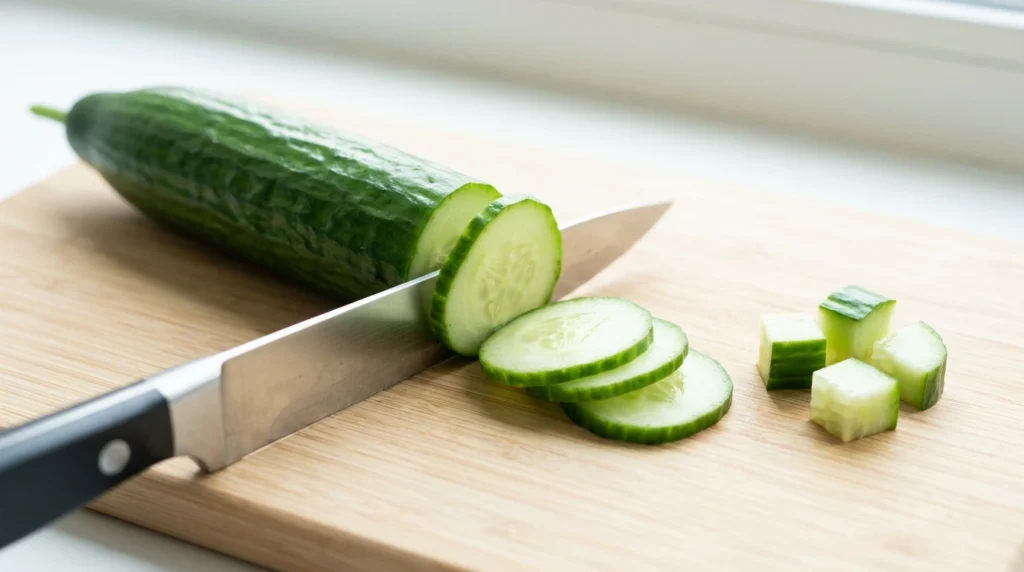
Feeding cucumbers safely is genuinely straightforward. However, a few specific preparation steps ensure the best possible experience for your dog.
Step-by-Step Safe Cucumber Feeding Guide
- Choose fresh, plain cucumbers only. Always use fresh cucumbers not pickled cucumbers or any cucumber product that contains salt, vinegar, spices, garlic, or onion. Pickles are genuinely dangerous for dogs because of their high sodium content and potential toxic seasoning additions. Therefore, plain, fresh cucumber is the only safe option.
- Wash thoroughly before preparation. Rinse the cucumber under cold running water before cutting. Also, if the cucumber was conventionally grown, consider peeling it to reduce pesticide exposure particularly for small dogs. Choose organic cucumbers when possible for the cleanest option.
- Decide whether to peel or leave skin on. Cucumber skin is safe for most healthy dogs. However, the skin is slightly more difficult to digest than the flesh. Therefore, for dogs with known digestive sensitivity, peel the cucumber before serving. Also, the skin can be bitter in some cucumber varieties, peeling eliminates this concern entirely.
- Remove seeds if needed. Cucumber seeds are safe for most dogs. However, they can occasionally cause gas or loose stools in dogs with sensitive digestive systems. Therefore, if your dog has a history of digestive sensitivity, scoop out the seeds with a spoon before cutting the cucumber into serving pieces.
- Cut into appropriate pieces for your dog’s size. This step is critical for safety. Small dogs and puppies need very thin slices or small cubes no larger than a pea. Medium dogs can handle larger slices. Large dogs can eat standard cucumber slices comfortably. As a result, appropriately sized pieces eliminate the most significant physical risk associated with cucumber feeding.
- Introduce gradually on the first offering. If your dog has never eaten cucumber before, start with just one or two small pieces. Then wait 24 hours and observe for any digestive reaction before establishing cucumber as a regular treat. As a result of this gradual introduction, you identify any individual sensitivity without causing significant discomfort.
- Serve plain, never seasoned. Never add salt, lemon juice, ranch dressing, hummus, or any other human condiment to cucumber pieces before giving them to your dog. These additions contain ingredients that range from unnecessary to outright harmful. Plain cucumber is always the safest and most appropriate option.
Safe Cucumber Serving Sizes by Dog Size
| Dog Size | Weight | Safe Serving Size |
| Extra Small (Toy) | Under 10 lbs | 2–3 thin slices |
| Small | 10–25 lbs | 4–6 slices |
| Medium | 25–60 lbs | A small handful of slices |
| Large | 60–100 lbs | Several large slices |
| Giant | Over 100 lbs | Half a cucumber maximum |
Cucumbers vs. Other Popular Dog Vegetable Treats
How do cucumbers compare to other commonly shared vegetables? Here’s an honest comparison:
| Vegetable | Calories Per Cup | Safe for Dogs | Water Content | Best Benefit |
| Cucumber | 16 calories | Yes | 96% | Weight management, hydration |
| Carrot | 52 calories | Yes | 88% | Dental health, vitamin A |
| Celery | 16 calories | Yes | 95% | Hydration, freshens breath |
| Broccoli | 31 calories | Yes (small amounts) | 89% | Vitamins C and K |
| Green beans | 31 calories | Yes | 90% | Fiber, low calorie |
| Peas | 117 calories | Yes (plain) | 79% | Protein, vitamins |
| Onion | Any amount | NO TOXIC | Never feed | |
| Garlic | Any amount | NO TOXIC | Never feed |
Benefits of Cucumbers as a Dog Treat
For weight management:
- Only 1 calorie per slice genuinely guilt-free treating
- High water content provides satiety without calories
- Crunchy texture satisfies the urge to chew
or hydration:
- 96% water content supports daily fluid intake
- Especially valuable on hot days or after exercise
- Helps dogs who don’t drink enough water from their bowl
For training:
- Very low calorie allows high-repetition rewarding
- Satisfying crunch makes them motivating for many dogs
- Easy to carry and portion in training sessions
Pros and Cons of Cucumbers as Dog Treats
Pros:
- Near-zero calories ideal for weight management
- Excellent hydration support
- Safe for diabetic dogs
- Widely available and inexpensive
- No preparation complexity for most dogs
- Most dogs enjoy the crunchy texture
Cons:
- Seeds may cause digestive upset in sensitive dogs
- High water content means potential for loose stools if overfed
- Less nutritionally dense than many other vegetables
- Some dogs find the mild flavor uninteresting
- Pickled versions are dangerous owners must be careful about product selection
Common Mistakes When Feeding Cucumbers to Dogs
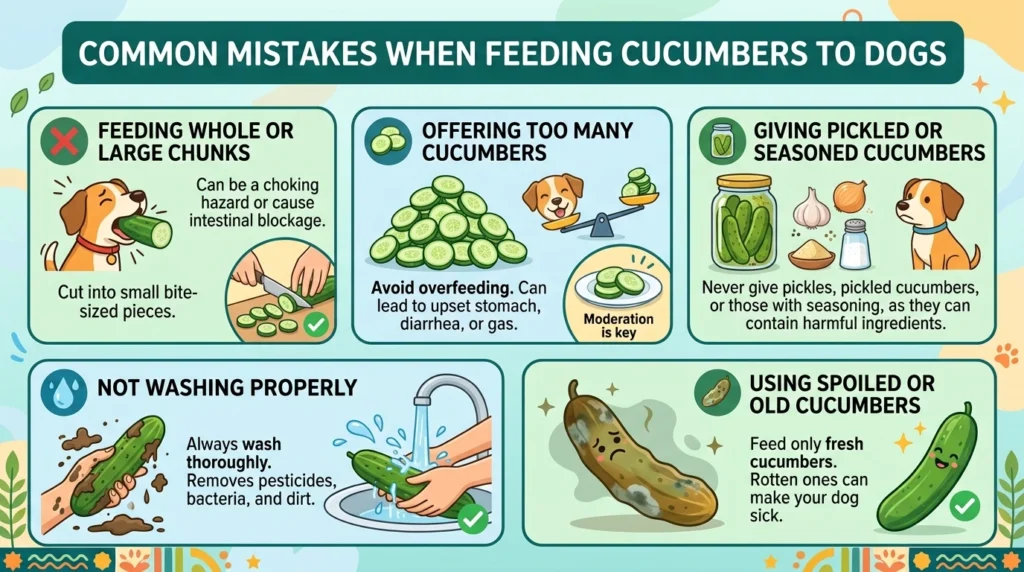
Mistake 1: Feeding Pickles Instead of Fresh Cucumber
This is the most dangerous cucumber mistake and it happens more often than you’d expect. Owners assume that cucumbers and pickles are essentially the same food. However, pickles are cucumbers preserved in brine containing high amounts of salt, vinegar, and various spices. Some pickle recipes also include garlic or onion both toxic to dogs. Therefore, never offer any pickle product to your dog. Only plain, fresh cucumbers are safe and appropriate.
Mistake 2: Cutting Pieces Too Large for Small Dogs
Cucumber flesh is slippery and firm, creating a genuine choking risk when pieces are too large for small or toy breed dogs. Also, some dogs gulp food without chewing thoroughly, which amplifies this risk. A simple mistake I often see is owners cutting cucumber into human-sized slices and offering them to small dogs. Therefore, always match piece size to your dog’s mouth and eating habits when in doubt, cut smaller.
Mistake 3: Overfeeding Because Cucumbers Are “Basically Water”
The high water content of cucumbers leads some owners to assume they can feed unlimited amounts. However, excessive cucumber consumption causes loose stools and digestive discomfort from the high fiber and water load. Also, even low-calorie treats should stay within the 10% treat rule. Therefore, use the serving size guidelines above particularly for small dogs where even moderate cucumber amounts can cause digestive effects.
Mistake 4: Adding Human Condiments
Ranch dressing, hummus, salt, lemon juice, and other common cucumber accompaniments contain ingredients that range from unhealthy to toxic for dogs. Salt raises sodium intake significantly. Garlic and onion present in many dressings and dips are toxic to dogs at meaningful doses. Therefore, always serve cucumber plain, nothing added, nothing seasoned. Your dog doesn’t need flavoring to enjoy cucumber; most dogs are perfectly happy with the natural taste and texture.
Mistake 5: Feeding Cucumber to a Dog Without Introducing Gradually
Even completely safe foods cause digestive upset when introduced abruptly in significant quantities. Because cucumbers have a high fiber and water content, large first-time servings can cause loose stools or gas giving owners the false impression that cucumbers don’t agree with their dog. Therefore, always start with just a few small pieces for the first introduction, then wait 24 hours before offering more. As a result, your dog’s digestive system adjusts appropriately.
Pro Tip: For overweight dogs on caloric restriction, replace regular treats with cucumber slices during training sessions. Because each slice contains roughly 1 calorie, you can reward your dog dozens of times during a training session without adding meaningful calories to their daily intake. Also, the satisfying crunch makes cucumber feel rewarding to most dogs even without the sweetness of higher-calorie treat options. This single swap can make a meaningful difference in weight management over weeks of consistent training.
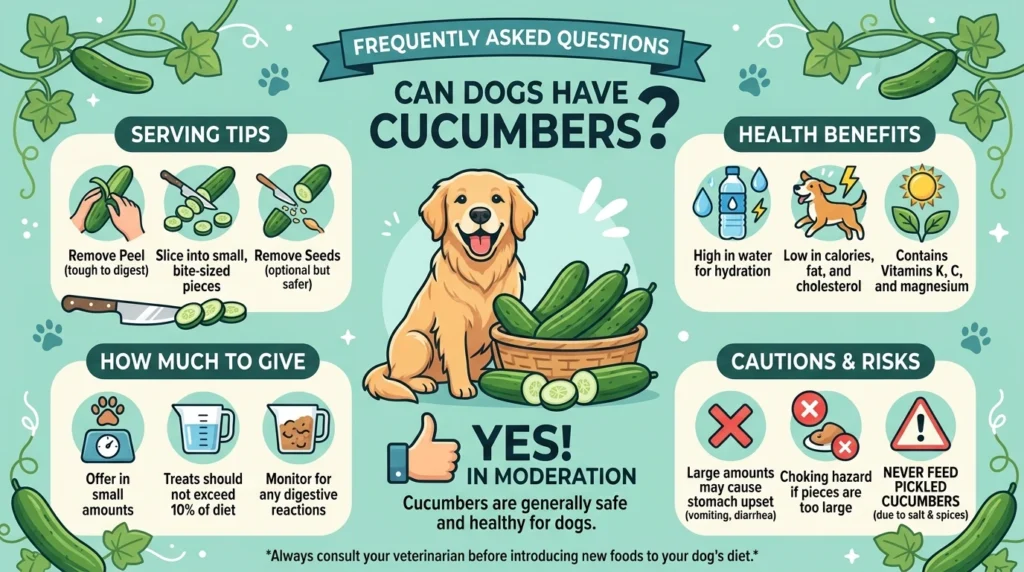
Frequently Asked Questions: Can Dogs Have Cucumbers?
1. Can dogs eat cucumber skin?
Yes, cucumber skin is safe for most healthy dogs. The skin is non-toxic and contains some additional fiber compared to the flesh alone. However, cucumber skin is slightly more difficult to digest than the inner flesh particularly for dogs with sensitive digestive systems. Also, conventionally grown cucumbers may carry pesticide residue on the skin. Therefore, for sensitive dogs, peeling cucumber before serving is a sensible precaution. For healthy dogs without digestive sensitivity, the skin is perfectly fine to leave on. Choose organic cucumbers when possible to minimize pesticide exposure, especially if you prefer leaving the skin intact.
2. Can dogs eat cucumber seeds?
Yes, cucumber seeds are generally safe for dogs. They’re soft, small, and non-toxic. However, cucumber seeds occasionally cause gas or loose stools in dogs with known digestive sensitivity. Also, in very large quantities, the seeds contribute to the overall fiber load that can cause digestive upset. Therefore, for dogs with sensitive stomachs, removing seeds with a spoon before cutting is a worthwhile precaution. For healthy dogs without digestive issues, cucumber seeds pose no meaningful risk and don’t require removal before serving.
3. Can diabetic dogs eat cucumbers?
Yes cucumbers are actually an excellent treat choice for diabetic dogs. Because cucumbers are very low in natural sugars and calories, they have minimal impact on blood glucose levels compared to many other treats and fruits. Also, the high water content and fiber support steady digestive function without glucose spikes. Therefore, cucumbers are often one of the few treats that diabetic dogs can enjoy relatively freely, though you should still confirm with your veterinarian that cucumbers fit within your specific dog’s dietary management plan. Every diabetic dog’s needs are individual and require veterinary guidance.
4. Can puppies eat cucumbers?
Yes puppies can eat small amounts of cucumber from approximately 8 weeks of age. However, cut cucumber into very small, thin pieces appropriate for your puppy’s developing jaw and swallowing ability. Also, introduce cucumber gradually to just one or two small pieces initially and monitor for any digestive reaction before establishing it as a regular treat. Because puppies need precise nutrition during growth, treats of any kind should remain minimal to avoid disrupting their complete, balanced dietary intake. Also, remove seeds for puppies because their digestive systems are still developing and seeds may cause more irritation than in adult dogs.
5. Are pickles safe for dogs?
No pickles are not safe for dogs, despite being made from cucumbers. Pickled cucumbers contain high amounts of sodium from brine far more than dogs should consume. Also, many pickle recipes include garlic, onion, dill, vinegar, and other spices. Garlic and onion are toxic to dogs even in relatively small amounts, causing damage to red blood cells. Therefore, never offer any pickle product to your dog including dill pickles, bread and butter pickles, or sweet pickles. The salt content alone in a single large pickle exceeds a small dog’s recommended daily sodium intake significantly.
6. How do cucumbers help with dog hydration?
Cucumbers are approximately 96% water by weight making them one of the most hydrating natural treats available for dogs. When dogs eat cucumbers, they consume water alongside nutrients contributing meaningfully to daily fluid intake. This is particularly valuable on hot days, after exercise, for dogs in hot climates, or for dogs who don’t drink enough water from their bowl naturally. Also, dogs experiencing mild dehydration often find food-based water sources more appealing than drinking from a bowl. Therefore, offering cucumber slices during warm weather or after physical activity provides both hydration and a satisfying treat simultaneously.
7. Can dogs eat cucumbers every day?
Yes cucumber can be part of a dog’s daily treat routine because of its extremely low caloric content. However, even safe vegetables should stay within the 10% treat rule. All treats combined should account for no more than 10% of your dog’s daily caloric intake. For most healthy dogs, daily cucumber treats well within serving guidelines pose no health concern. Also, variety in treats is generally beneficial. Rotating cucumber with other safe vegetables like carrots and green beans provides a broader range of micronutrients. If your dog eats cucumber daily, monitor stool quality consistent loose stools may indicate the daily fiber and water load is too much for your dog’s individual digestive system.
Cucumbers and Dogs Cool, Crunchy, and Completely Healthy
So can dogs have cucumbers ? Without question, yes. Cucumbers represent one of the simplest, most accessible, and most genuinely beneficial natural treats you can add to your dog’s routine. They’re low in calories, high in water, safe for diabetic dogs, and satisfying for most dogs who enjoy a good crunch.
The preparation is minimal wash, cut appropriately, and served plain. The benefits are real hydration support, weight management assistance, and genuine nutritional value from vitamins and minerals. Also, the cost is minimal. Cucumbers are one of the most affordable fresh vegetables available year-round.
Therefore, keep fresh cucumbers in your refrigerator as a go-to dog snack. Use them during training sessions to replace higher-calorie treats. Also, offer cold cucumber slices on warm summer days for natural cooling and hydration.