

Introduction
You’re making a salad, a leaf of spinach drops on the floor, and your dog hoovers it up instantly. Sound familiar? Most dog owners have been there. Then comes that immediate worry, wait, can dogs eat spinach safely?
The short answer is yes dogs can eat spinach in small amounts. However, the longer answer involves some important nuances that every dog owner should understand before making spinach a regular part of their dog’s diet.
Spinach is packed with vitamins and minerals that benefit humans enormously. But dogs process certain compounds in spinach very differently than we do. Therefore, what’s a superfood for you could cause problems for your pup if fed incorrectly or in large quantities.
This guide covers everything you need to know about the genuine nutritional benefits, the real risks, safe serving sizes, and practical tips for feeding spinach to your dog the right way. Let’s get into it.
Can Dogs Eat Spinach? The Complete Honest Answer
Yes But With Important Conditions
Dogs can eat spinach. That’s the good news. However, spinach contains a compound called oxalic acid and that’s where things get more complicated.
Oxalic acid interferes with the body’s ability to absorb calcium. In large amounts, it also causes kidney damage by forming calcium oxalate crystals in the urinary tract. Therefore, while an occasional small serving of spinach is perfectly safe for most healthy dogs, feeding large quantities regularly is genuinely risky.
In my experience, the key word here is moderation. A leaf or two as an occasional treat? Totally fine for most dogs. A bowl of spinach every day? That’s where problems can develop over time.
What Makes Spinach Nutritionally Attractive for Dogs?
Before we focus entirely on the risks, let’s acknowledge why spinach catches the attention of health-conscious dog owners in the first place. Spinach genuinely offers impressive nutritional value:
- Vitamin A supports eye health and immune function
- Vitamin C a powerful antioxidant that supports the immune system
- Vitamin K important for healthy blood clotting
- Iron essential for healthy red blood cell production
- Folate supports cell growth and DNA synthesis
- Magnesium helps regulate nerve and muscle function
- Fiber supports healthy digestion in appropriate amounts
- Antioxidants help fight cellular damage and inflammation
However, here’s an important reality check. Dogs already get all these nutrients from a complete and balanced dog food. Therefore, spinach adds nutritional variety but it’s not filling any critical gap in your dog’s diet.
The Real Risks of Feeding Dogs Spinach
Understanding Oxalic Acid
Oxalic acid is the most significant concern when dogs eat spinach. This naturally occurring compound binds to minerals like calcium and magnesium. As a result, it prevents the body from absorbing them properly.
For healthy adult dogs eating small amounts occasionally, this isn’t a serious problem. However, for dogs with existing kidney disease, bladder stones, or urinary tract issues, spinach can make these conditions significantly worse. Therefore, if your dog has any kidney or urinary health concerns, avoid spinach entirely and consult your vet.
Which Dogs Should Never Eat Spinach?
Some dogs should skip spinach altogether. These include:
- Dogs with kidney disease or reduced kidney function
- Dogs with a history of bladder or kidney stones
- Dogs with urinary tract problems
- Dogs on low-oxalate diets prescribed by a vet
- Puppies their developing kidneys are more vulnerable
- Very small breeds where even small amounts affect the body more strongly
If your dog falls into any of these categories, talk to your vet before offering any spinach even as an occasional treat.
Other Concerns Worth Knowing
Beyond oxalic acid, there are a few other considerations:
- Sodium content cooked spinach from human meals often contains added salt. Salt is harmful to dogs in large quantities. Therefore, always feed plain, unseasoned spinach only.
- Garlic and onion spinach dishes often include these ingredients. Both are toxic to dogs. Therefore, never share cooked spinach dishes from your plate.
- Pesticide residue spinach regularly appears on the “dirty dozen” list of most pesticide-contaminated produce. Always wash thoroughly, or choose organic.
Pro Tip: If you want to add leafy greens to your dog’s diet safely, steamed plain spinach with no seasonings is the safest option. Steam it lightly to reduce the oxalic acid content, slightly cooking breaks down some of the oxalates compared to raw spinach.
How to Safely Feed Spinach to Your Dog: Step-by-Step Guide
Preparation and Serving Rules
Follow these steps every time you offer spinach to your dog:
- Choose fresh, organic spinach when possible. Organic reduces pesticide exposure. Fresh spinach is preferable to canned canned spinach often contains added sodium, which is harmful to dogs.
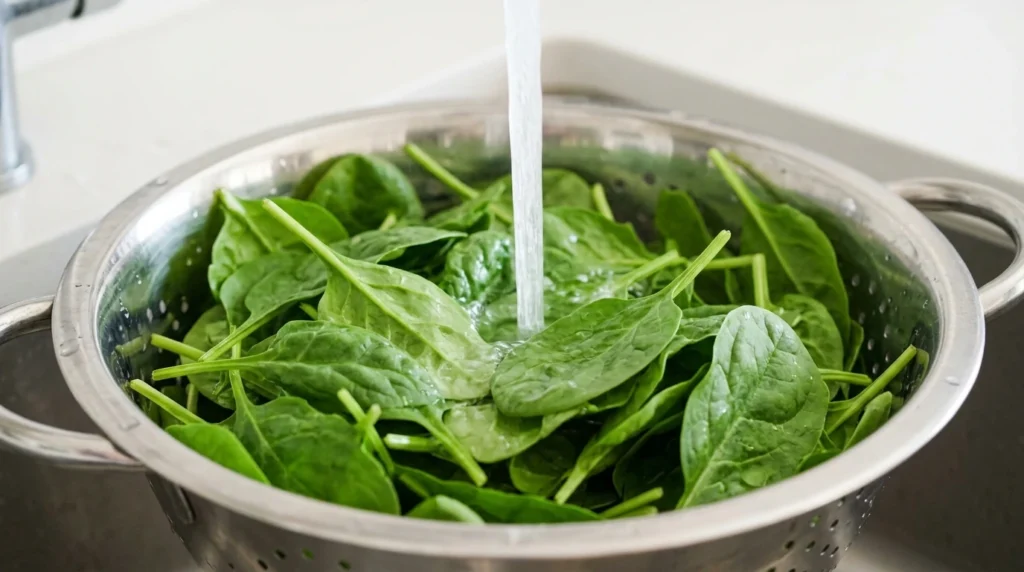
- Wash the spinach thoroughly. Rinse under running water for at least 30 seconds. This removes surface pesticides, dirt, and bacteria effectively.
- Decide between raw or cooked. Both are safe in small amounts. However, steaming lightly reduces oxalic acid content slightly. Never boil in salted water, and never add butter, oil, garlic, or seasoning.
- Chop or tear into small pieces. Large leaves can be a choking hazard for small dogs. Also, smaller pieces mix easily into food if your dog isn’t keen on eating spinach alone.
- Start with a tiny amount. First-time spinach? Offer just one or two small leaves. Then watch for any digestive reaction over the next 24 hours before offering more.
- Keep portions small and infrequent. Spinach should make up no more than 5–10% of your dog’s daily vegetable intake. Think of it as an occasional treat not a daily food.
- Never replace meals with spinach. Spinach doesn’t provide complete nutrition for dogs. Therefore, it supplements your dog’s regular balanced diet and never replaces it.
Safe Serving Size by Dog Size
| Dog Size | Weight | Safe Spinach Amount |
| Toy / Extra Small | Under 10 lbs | 1–2 small leaves occasionally |
| Small | 10–25 lbs | 2–3 leaves, 2–3 times per week max |
| Medium | 25–50 lbs | Small handful, 2–3 times per week |
| Large | 50–90 lbs | Small handful, a few times per week |
| Giant | Over 90 lbs | Moderate amounts, a few times per week |
Remember these are maximum guidelines for healthy dogs. Also, always consult your vet if you’re unsure about the right amount for your specific dog.
Spinach Compared to Other Safe Dog Vegetables
How Does Spinach Stack Up?
Spinach is one of many vegetables that dogs can eat safely. However, some vegetables offer better nutritional value with fewer risks. Here’s a helpful comparison:
| Vegetable | Safe for Dogs? | Main Benefit | Main Risk |
| Spinach | Yes in moderation | Rich in vitamins | Oxalic acid, kidney risk |
| Carrots | Yes freely | Great for teeth, vitamin A | Very low risk |
| Broccoli | Yes in moderation | Vitamin C, fiber | Isothiocyanates in large amounts |
| Sweet Potato | Yes cooked | Fiber, beta-carotene | High sugar limit for diabetic dogs |
| Green Beans | Yes freely | Low calorie, fiber | Very low risk |
| Cucumber | Yes freely | Hydrating, low calorie | Very low risk |
| Kale | Yes in moderation | Vitamins K, A, C | Oxalic acid similar to spinach |
| Onion | NO toxic | None | Toxic destroys red blood cells |
| Garlic | NO toxic | None | Toxic causes anemia |
Better Alternatives to Spinach
If you’re looking for leafy greens to add to your dog’s diet, these options carry lower oxalate levels:
- Romaine lettuce hydrating, low oxalates, very safe
- Butter lettuce gentle on the digestive system
- Green beans excellent low-calorie treat with great fiber
- Cucumber slices hydrating and dogs love the crunch
However, if your dog already enjoys spinach and tolerates it well, there’s no reason to eliminate it entirely. Just keep portions small and infrequent.
Common Mistakes Dog Owners Make With Spinach
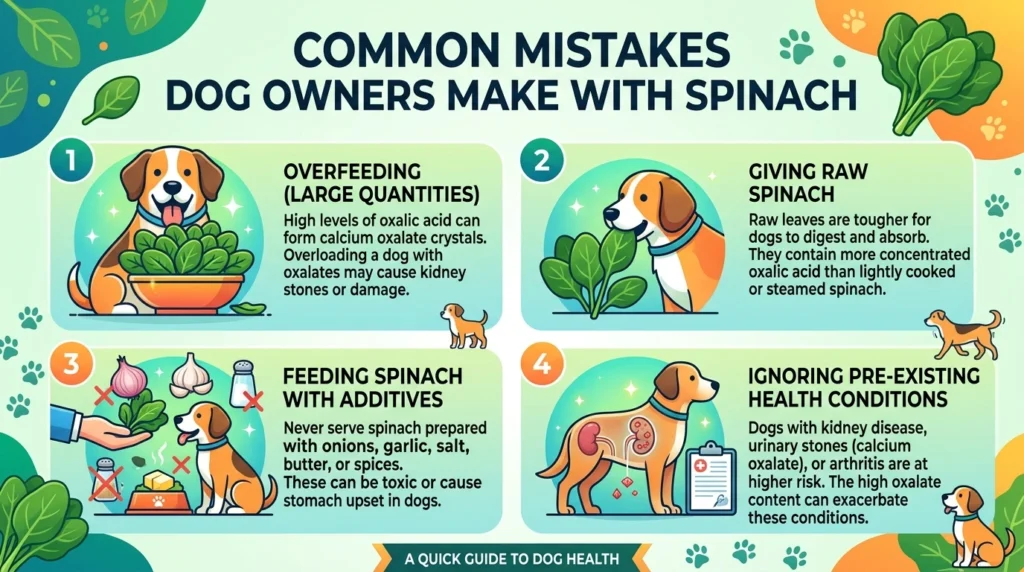
Mistake 1: Feeding Cooked Spinach From Human Meals
This is the most dangerous mistake. Cooked spinach from your plate likely contains garlic, onion, salt, butter, or oil all of which are harmful to dogs. Therefore, always prepare plain, unseasoned spinach specifically for your dog. Never share your own spinach dish.
Mistake 2: Feeding Too Much Too Often
Because spinach is healthy for humans, many owners assume more is better for dogs. However, the oxalic acid in spinach accumulates with repeated large servings. Therefore, treat spinach as an occasional addition not a daily staple even for healthy adult dogs.
Mistake 3: Ignoring Signs of Digestive Upset
Some dogs simply don’t tolerate spinach well regardless of the amount. Watch for these signs after feeding spinach:
- Loose stools or diarrhea
- Vomiting
- Unusual lethargy
- Loss of appetite
- Changes in urination frequency or color
If you notice any of these signs, stop feeding spinach immediately. Then contact your vet if symptoms persist beyond 24 hours.
Mistake 4: Feeding Spinach to Dogs With Kidney Issues
This mistake can cause serious harm. Dogs with kidney disease or a history of urinary stones should never eat spinach even in small amounts. Therefore, always check your dog’s medical history before introducing any new food. When in doubt, ask your vet first.
Mistake 5: Skipping the Vet Conversation
Many dog owners make food decisions without ever consulting their vet. However, your vet knows your dog’s specific health profile including any conditions that might make spinach risky. Therefore, a quick conversation before introducing new foods is always worthwhile. It takes two minutes and could prevent a real health problem.
Pro Tip: Keep a simple food diary for your dog. Note every new food you introduce, the amount given, and any reactions observed. This habit helps your vet identify food sensitivities quickly and it helps you track exactly what’s working well for your dog’s diet over time.
Frequently Asked Questions About Can Dogs Eat Spinach
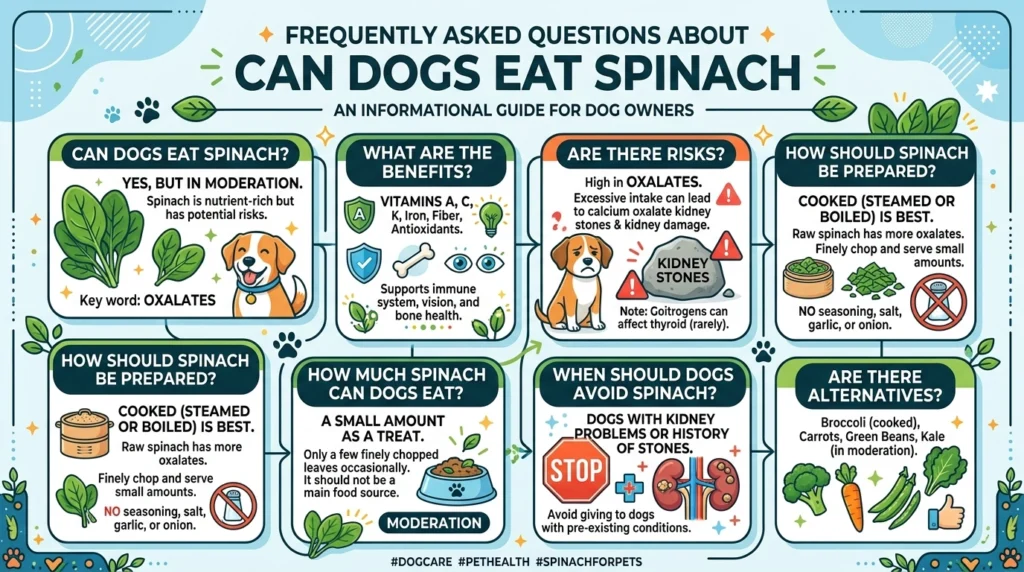
1. Can dogs eat spinach every day?
Not feeding spinach every day isn’t recommended. The oxalic acid in spinach builds up with repeated daily consumption. Over time, this can interfere with calcium absorption and potentially cause kidney damage especially in dogs with existing kidney vulnerabilities. Therefore, treat spinach as an occasional addition to your dog’s diet rather than a daily food. Two to three times per week in small amounts is a safer approach for healthy adult dogs. Always consult your vet if you’re unsure about frequency for your specific dog.
2. Can puppies eat spinach?
It’s best to avoid feeding spinach to puppies. Their kidneys are still developing and are more sensitive to oxalic acid than adult dog kidneys. Also, puppies need very specific nutritional balance during growth and introducing too many human foods can disrupt that balance. Therefore, stick to a complete, vet-approved puppy food during the first year of life. After your puppy’s first birthday, discuss safe treat options with your vet.
3. Is raw or cooked spinach better for dogs?
Both raw and lightly cooked spinach are safe for dogs in small amounts. However, light steaming reduces the oxalic acid content slightly making cooked spinach marginally safer from a kidney health perspective. The most important rule is that cooked spinach must be completely plain, no salt, oil, butter, garlic, or seasoning of any kind. Raw spinach is fine but should be washed thoroughly to remove pesticide residue before serving.
4. What happens if my dog eats a large amount of spinach?
If your dog accidentally eats a large amount of spinach, watch closely for symptoms over the next 12 to 24 hours. Mild digestive upset like soft stools or slight stomach discomfort may occur but usually resolves on its own. However, if your dog shows signs of vomiting, severe diarrhea, lethargy, or changes in urination, contact your vet promptly. Also, if your dog has known kidney issues, contact your vet immediately even without visible symptoms because internal effects may not be obvious right away.
5. Can dogs eat baby spinach?
Yes baby spinach is safe for dogs in the same way regular spinach is. Baby spinach leaves are smaller and softer, which actually makes them easier to serve safely. However, the same rules apply: keep portions small, wash thoroughly, and serve plain without any seasoning. Baby spinach still contains oxalic acid, so moderation remains important regardless of the leaf size or variety.
6. Are there vegetables healthier than spinach for dogs?
Yes, several vegetables are safer and easier for dogs to eat regularly. Carrots are one of the best dog-safe vegetables low in calories, great for dental health, and very low risk. Green beans are another excellent choice high in fiber, low in calories, and perfectly safe for daily feeding in moderate amounts. Cucumber slices are also wonderful hydrating, crunchy, and very gentle on the digestive system. Therefore, if you want to add vegetables to your dog’s diet regularly, these options are better daily choices than spinach.
7. My dog stole a big spinach salad. Should I panic?
First, don’t panic. A one-time accidental eating of plain spinach is unlikely to cause serious harm in a healthy adult dog. However, if the salad contained garlic, onion, dressing, salt, or other seasonings, that’s a different situation. Garlic and onions are genuinely toxic to dogs and require veterinary attention. Therefore, assess what exactly your dog ate, then call your vet or an animal poison control line if any toxic ingredients were present. For plain spinach only, monitor for digestive upset and contact your vet if symptoms concern you.
The Bottom Line on Dogs and Spinach
So can dogs eat spinach ? Yes, they can but with clear boundaries. Small amounts of plain, washed spinach make a perfectly safe occasional treat for most healthy adult dogs. The vitamins and antioxidants offer real nutritional value when fed appropriately.
However, dogs with kidney disease, urinary issues, or bladder stones should avoid spinach entirely. Also, daily feeding in large amounts risks oxalic acid buildup over time even in healthy dogs. Therefore, treat spinach as an occasional addition rather than a dietary staple.
When in doubt, always consult your vet before introducing any new food into your dog’s diet. Your vet knows your dog’s specific health history and that context makes all the difference when making safe food choices.