
Introduction
You’re settled on the couch, movie playing, bowl of popcorn in hand and then those eyes appear. Your dog stares at you with that irresistible look, and you start wondering: can dogs eat popcorn safely, or is this one snack you should keep to yourself?
It’s a question millions of dog owners ask every single day. The answer isn’t a simple yes or no. Therefore, getting it right actually matters for your dog’s health.
Here’s the good news: plain popcorn is not toxic to dogs. However, most popcorn humans eat is loaded with butter, salt, oil, and artificial flavors. Those additions change everything. In my experience, many dog owners share popcorn without realizing the toppings are the real problem, not the popcorn itself.
This guide covers everything you need to know. You’ll learn exactly when popcorn is safe, when it’s dangerous, and how to share it responsibly. Let’s get your movie night sorted for you and your pup.
Can Dogs Eat Popcorn? The Honest Answer
The Short Answer First
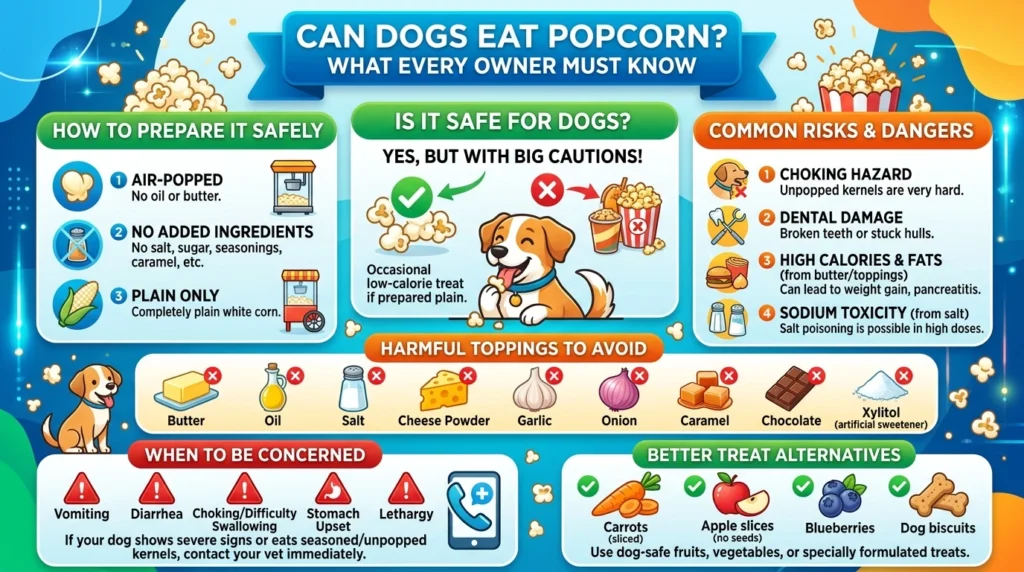
Yes dogs can eat popcorn, but only in specific circumstances. Plain, air-popped popcorn without any toppings is generally safe for dogs in small amounts. However, the moment you add butter, salt, caramel, cheese, or artificial flavoring, the situation changes completely.
Most popcorn that humans eat contains ingredients that are genuinely harmful to dogs. Therefore, the type of popcorn matters far more than the popcorn itself.
What Makes Plain Popcorn Safe?
Plain air-popped popcorn actually contains some nutritional value. It includes:
- Fiber supports healthy digestion
- Magnesium important for nerve and muscle function
- Manganese supports bone health and metabolism
- Zinc supports immune function
- Small amounts of B vitamins support energy levels
These nutrients aren’t significant enough to make popcorn a health food for dogs. However, they do mean plain popcorn isn’t just empty calories. As a result, an occasional plain popcorn kernel won’t hurt most healthy adult dogs.
What Makes Flavored Popcorn Dangerous?
Here’s where it gets serious. The toppings and flavorings on most human popcorn create real health risks:
- Salt causes sodium ion poisoning in large amounts; leads to excessive thirst, vomiting, and lethargy
- Butter high fat content triggers pancreatitis, especially in smaller breeds
- Artificial butter flavoring contains diacetyl, which causes lung damage in high quantities
- Caramel high sugar content leads to obesity and dental disease
- Cheese flavoring often contains onion or garlic powder, both of which are toxic to dogs
- Kettle corn sugar and salt combination that strains your dog’s kidneys and metabolism
- Xylitol sometimes found in flavored varieties; extremely toxic and potentially fatal to dogs
Therefore, always check ingredients before sharing any flavored popcorn with your dog.
Step-by-Step Safe Sharing Guide
Sharing popcorn with your dog doesn’t have to be off the table entirely. However, following these steps keeps the experience safe and enjoyable for both of you:
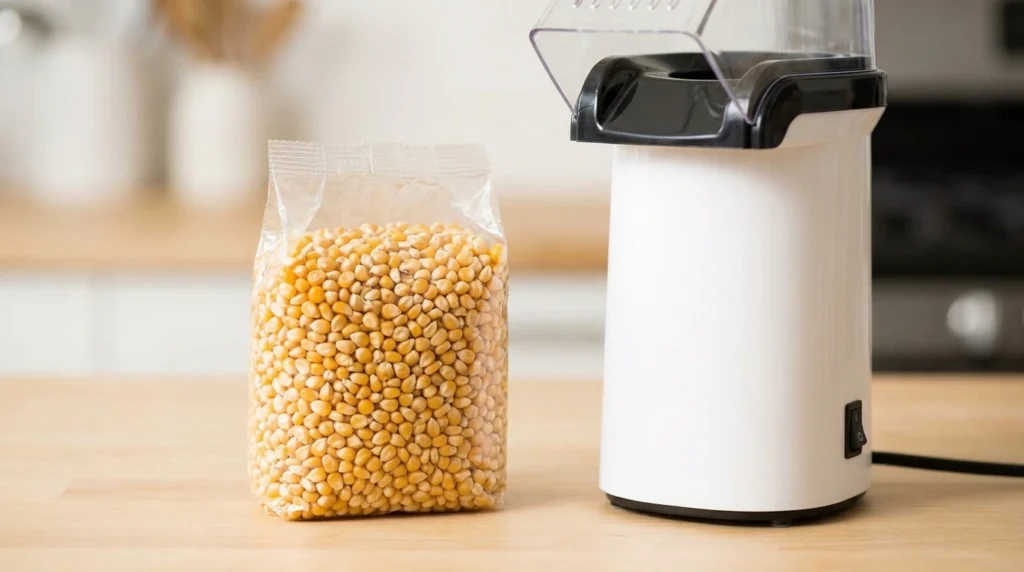
- Use an air popper only. Air-popped popcorn contains no added oils or fats. Therefore, it’s the only preparation method genuinely safe for dogs. Microwave popcorn bags contain artificial butter flavoring and additives so avoid those entirely.
- Skip all toppings completely. Don’t add salt, butter, oil, or any seasoning to your dog’s portion. Also, avoid coconut oil even though it’s often considered “natural,” the high fat content still poses a pancreatitis risk for some dogs.
- Remove all unpopped kernels first. Unpopped or partially popped kernels are hard and dense. They create a real choking hazard, especially for small breeds. Also, they can crack teeth which means an unexpected vet bill for something completely avoidable.
- Offer only a small amount. Popcorn should be an occasional treat not a regular snack. A few plain pieces for a small dog and a small handful for a larger dog is a reasonable amount. Therefore, don’t let your dog finish the whole bowl.
- Watch for a reaction after the first time. Some dogs have sensitive digestive systems. Therefore, offer just two or three kernels the first time and watch for any signs of upset loose stools, gas, or vomiting. If you see any reaction, stop immediately.
- Store popcorn bags safely. Microwave popcorn bags contain chemical linings that release toxic compounds when heated. Therefore, keep bags well out of reach and dispose of them immediately after use.
- Consult your vet if you’re unsure. Every dog is different. If your dog has a history of pancreatitis, digestive issues, or obesity, ask your vet before offering any human snack including plain popcorn.
Pro Tip: Make a small separate batch of plain air-popped popcorn just for your dog before adding your own toppings. That way, your dog gets a safe movie night snack without you having to hold back on your own seasonings. It takes two extra minutes and makes movie night genuinely fun for everyone.
Popcorn Types Compared: What’s Safe and What’s Not
Quick Reference Guide for Dog Owners
Use this table to quickly assess whether a specific popcorn type is safe to share with your dog:
| Popcorn Type | Safe for Dogs? | Reason |
| Plain air-popped | ✅ Yes (small amounts) | No harmful additives |
| Lightly salted | ⚠️ Avoid | Sodium causes health issues |
| Butter popcorn | ❌ No | High fat triggers pancreatitis |
| Microwave popcorn | ❌ No | Artificial additives, chemical linings |
| Caramel popcorn | ❌ No | High sugar, tooth decay, obesity |
| Cheese-flavored | ❌ No | May contain onion/garlic powder |
| Kettle corn | ❌ No | Sugar and salt combination |
| White cheddar | ❌ No | Dairy, salt, artificial flavors |
| Popcorn with xylitol | ❌ Dangerous | Xylitol is toxic and potentially fatal |
| Chocolate-drizzled | ❌ Dangerous | Chocolate is toxic to dogs |
The Safest Alternative Snacks
If you’d rather not risk popcorn at all, here are genuinely safe movie-night alternatives for your dog:
- Plain rice cakes low calorie and dog-safe
- Baby carrots crunchy, satisfying, and nutritious
- Plain cucumber slices hydrating and low calorie
- Blueberries antioxidant-rich and naturally sweet
- Watermelon pieces (seedless, no rind) hydrating and refreshing
- Plain cooked chicken pieces high protein, zero additives
These alternatives satisfy your dog’s snacking instinct without any of the risks associated with popcorn toppings.
Dangerous Mistakes to Avoid When Dogs and Popcorn Mix
Mistake 1: Sharing Straight From Your Bowl
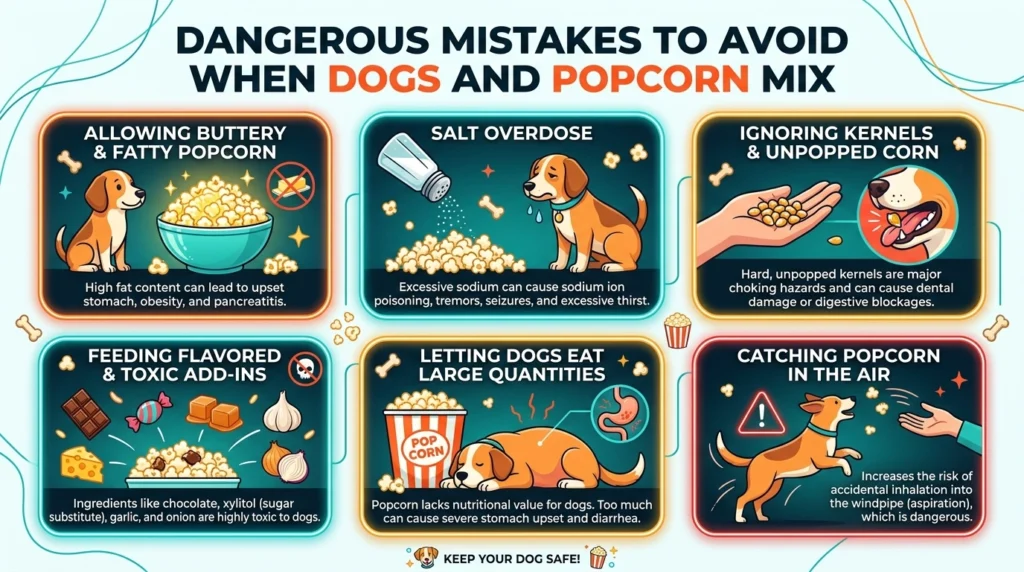
Your popcorn bowl almost certainly contains salt, butter, or other toppings. Sharing directly from your bowl means your dog eats everything you added. Therefore, always prepare a separate plain portion for your dog rather than grabbing from your own bowl.
Mistake 2: Letting Your Dog Eat Dropped Pieces Off the Floor
Floor popcorn seems harmless but it contains everything your seasoned batch has on it. Also, your dog doesn’t know the difference between a dropped buttered kernel and a plain one. As a result, make it a habit to pick up dropped pieces immediately rather than letting your dog vacuum them up.
Mistake 3: Offering Popcorn to Dogs With Health Conditions
Dogs with pancreatitis, kidney disease, diabetes, or obesity need strict dietary management. Even plain popcorn adds unnecessary calories and carbohydrates. Therefore, always check with your vet before offering any human food to a dog with a diagnosed health condition.
Mistake 4: Ignoring the Choking Risk for Small Breeds
Small dogs, particularly toy breeds like Chihuahuas, Yorkies, and Maltese face a real choking risk from whole kernels and unpopped pieces. Therefore, if you share popcorn with a small breed, break fully popped pieces into smaller bits and remove every unpopped kernel without exception.
Mistake 5: Assuming “Natural” Flavors Are Safe
Many gourmet popcorn brands use “natural flavors” that still contain onion, garlic, or other dog-toxic ingredients. Also, some use xylitol as a sugar substitute which is extremely dangerous for dogs. Therefore, never assume a popcorn product is safe without reading the full ingredient list carefully.
Mistake 6: Making Popcorn a Regular Treat
Even plain popcorn adds empty carbohydrate calories to your dog’s diet. As a result, regular popcorn snacking contributes to weight gain over time. Therefore, keep popcorn as a very occasional treat not a daily habit regardless of how much your dog enjoys it.
Pro Tip: If your dog begs heavily during movie nights, redirect their attention with a Kong toy stuffed with plain peanut butter (xylitol-free) or a lick mat with plain yogurt. These options keep them happily occupied without the risks associated with shared human snacks.
Frequently Asked Questions Can Dogs Eat Popcorn?
1. Can dogs eat popcorn every day?
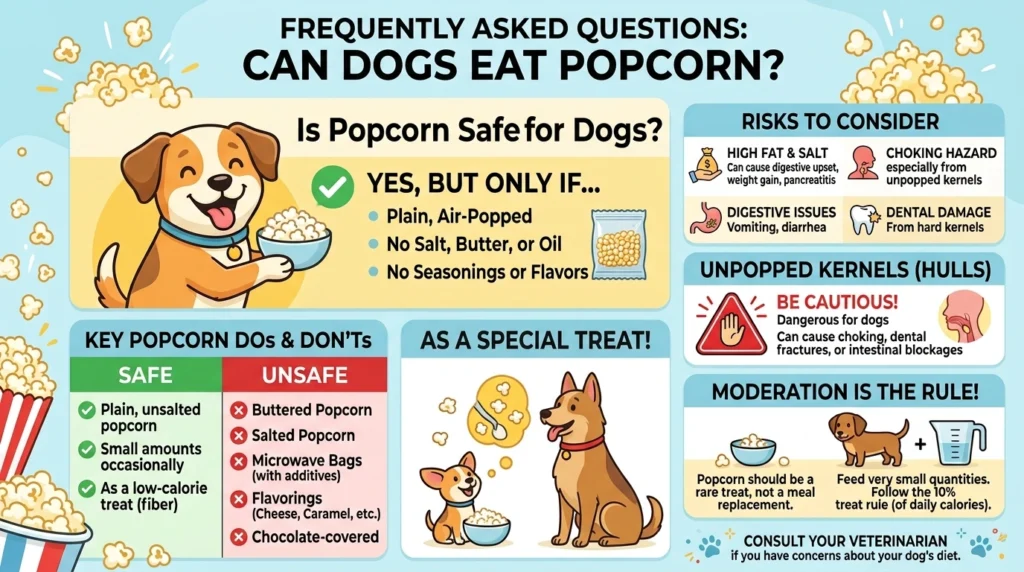
No dogs shouldn’t eat popcorn every day, even if it’s plain. Popcorn offers minimal nutritional value for dogs and adds unnecessary carbohydrate calories to their diet. Also, daily treats of any kind should make up no more than 10% of your dog’s total daily caloric intake. Therefore, treat popcorn as an occasional snack with a few pieces here and there rather than a daily ritual. If your dog is overweight or has dietary restrictions, consult your vet before offering any human snack regularly.
2. What happens if my dog ate buttered popcorn?
A few pieces of buttered popcorn are unlikely to cause serious harm in a large, healthy dog. However, larger amounts can trigger digestive upset including vomiting, diarrhea, and stomach pain. In dogs prone to pancreatitis, even a small amount of high-fat food can trigger a serious flare-up. Therefore, if your dog ate a significant amount of buttered popcorn and shows signs of distress vomiting, lethargy, loss of appetite, or abdominal pain contact your vet immediately for guidance.
3. Can puppies eat popcorn?
It’s best to avoid giving popcorn to puppies entirely. Puppies have sensitive developing digestive systems that react more strongly to unusual foods. Also, their smaller airways create a higher choking risk from popcorn kernels. In addition, establishing good food habits early means avoiding unnecessary human food treats during puppyhood. Therefore, stick to puppy-approved treats and wait until your dog is fully grown before considering any human snack sharing.
4. Is popcorn toxic to dogs?
Plain popcorn itself is not toxic to dogs. However, many common popcorn additives are genuinely toxic. Xylitol, sometimes used as a sweetener, is potentially fatal to dogs even in small amounts. Chocolate-drizzled popcorn is also dangerous, because chocolate is toxic to dogs at any quantity. Also, onion and garlic powder found in some cheese-flavored varieties are toxic and cause red blood cell damage over time. Therefore, always read ingredient labels carefully before sharing any flavored popcorn product.
5. How much popcorn can a dog safely eat?
The safe amount depends on your dog’s size. As a general guideline, a small dog (under 20 lbs) should have no more than 3 to 5 plain pieces occasionally. A medium dog (20–50 lbs) can handle a small handful of plain pieces. A large dog (over 50 lbs) can tolerate slightly more but popcorn should still remain an occasional treat, not a significant food source. Also, always remove unpopped kernels regardless of your dog’s size, because they pose a choking and dental risk for all breeds.
6. Can dogs eat microwave popcorn?
No microwave popcorn is safe for dogs. It contains artificial butter flavoring, high levels of salt, and chemical compounds from the bag lining. Also, many microwave popcorn brands use diacetyl in their artificial butter flavoring. This compound causes lung damage with high or repeated exposure. Therefore, stick exclusively to plain air-popped popcorn if you want to share this snack with your dog and avoid microwave varieties entirely.
7. My dog stole popcorn from the bowl. Should I be worried?
That depends on what was on the popcorn. If your bowl contained plain, lightly salted popcorn and your dog ate a small amount, monitor them for a few hours but don’t panic. However, if your popcorn contains butter, cheese flavoring, caramel, or any artificial sweeteners, check the ingredient label immediately for xylitol or chocolate. If xylitol or chocolate was present, contact your vet or the Pet Poison Helpline right away. Otherwise, watch for vomiting, lethargy, or digestive upset and call your vet if symptoms appear.
The Bottom Line on Dogs and Popcorn
So can dogs eat popcorn ? Yes, but only the plain, air-popped kind with zero toppings, in small amounts, as an occasional treat. That’s the complete honest answer.
The real danger isn’t the popcorn, it’s everything humans add to it. Butter, salt, caramel, cheese powder, and artificial sweeteners all pose genuine risks to your dog’s health. Therefore, if you want to share movie night with your pup, prepare a small separate plain batch just for them.
Also, always remove unpopped kernels, keep portion sizes small, and watch for any unusual reactions the first time. For dogs with existing health conditions, always consult your vet before adding any human food to their diet.