
Introduction
Bringing home a new puppy is one of the most exciting things in the world. However, it also comes with a lot of questions and the biggest one for most new owners is: what should I feed them?
Choosing the best puppy dog food matters more than most people realize. Your puppy’s first year of life is a critical growth window. During this time, their bones develop, their brain grows, and their immune system builds its foundation. The food you choose directly affects all of this.
In my experience, many new puppy owners grab whatever looks appealing at the store. However, not all puppy foods deliver the nutrition growing dogs actually need. Some are full of fillers. Others use low-quality protein sources that don’t support healthy development.
This guide cuts through the confusion. You’ll find the key nutrients to look for, the top-rated brands to consider, a clear feeding schedule, and the mistakes to avoid. Let’s give your puppy the best possible start in life.
What Makes the Best Puppy Dog Food Different?
Why Puppies Can’t Eat Adult Dog Food
Ever wondered why puppy food and adult food are sold separately? It’s not just marketing. Puppies have genuinely different nutritional needs than adult dogs and those differences are significant.
First, puppies grow incredibly fast. A Labrador puppy, for example, gains roughly 2 pounds per week during peak growth. Therefore, they need more calories, more protein, and specific nutrients that adult formulas simply don’t provide in the right amounts.
Here’s what separates the best puppy dog food from adult formulas:
- Higher protein content supports rapid muscle and tissue development
- More calories per cup fuels fast growth without requiring huge portions
- DHA (Docosahexaenoic acid) an omega-3 fatty acid essential for brain and vision development
- Controlled calcium and phosphorus ratios critical for healthy bone growth, especially in large breeds
- Added vitamins and minerals support immune system development during vulnerable early months
The AAFCO Standard Every Puppy Food Must Meet
The AAFCO (Association of American Feed Control Officials) sets nutritional standards for all commercial dog food. For puppy food specifically, look for one of these two statements on the label:
- “Complete and balanced for growth”
- “Complete and balanced for all life stages”
Either statement confirms the food meets minimum nutritional requirements for puppies. However, ideally look for foods validated through feeding trials rather than just formulation. This means real puppies ate the food and thrived not just that the formula looks good on paper.
How to Choose the Best Puppy Dog Food: Step-by-Step Guide

A Simple Framework for First-Time Puppy Owners
Choosing puppy food doesn’t need to feel overwhelming. Therefore, follow these steps to find the right match for your specific puppy:
- Know your puppy’s expected adult size. This is the most important starting point. Large breed puppies (expected adult weight over 50 lbs) need specially formulated large breed puppy food. Because of their rapid skeletal growth, too much calcium causes developmental bone problems. Small and medium breeds don’t face this risk in the same way.
- Check the ingredient list immediately. The first ingredient should always be a named animal protein chicken, beef, lamb, or salmon. Therefore, avoid any food where corn, wheat, or soy appears before the protein source.
- Look for DHA on the label. DHA supports brain development and vision. It typically comes from fish oil or fish meal. In addition, some formulas add ARA (Arachidonic Acid) for further brain support, a bonus worth looking for.
- Verify the AAFCO statement. Find the nutritional adequacy statement on the back of the bag. Look for “growth” or “all life stages” ; these confirm the food meets puppy nutritional requirements.
- Research the brand’s recall history. Check the FDA’s pet food recall database before committing to any brand. A pattern of recalls signals quality control problems you don’t want associated with your puppy’s food.
- Calculate the daily feeding cost. Premium puppy food costs more per bag but puppies eat smaller portions than adult dogs. Therefore, the daily cost is often more affordable than the bag price suggests.
- Consult your vet before finalizing your choice. Your vet knows your puppy’s breed, health status, and specific needs. Always confirm your food choice with them especially for large breeds or puppies with health concerns.
Pro Tip: When you first bring your puppy home, ask the breeder or rescue what food the puppy has been eating. Then continue feeding that food for at least the first week. After that, transition gradually to your chosen food over 7–10 days. This simple step prevents a lot of digestive upset during an already stressful transition period.
[Best Dry Dog Food 2026: Top Picks & Expert Guide]
Best Puppy Dog Food Brands in 2026: Honest Comparisons
Top Picks at Every Price Point
Here’s a clear comparison of the most consistently recommended puppy foods across different budgets and needs:
| Brand & Formula | Price Range | First Ingredient | DHA Added | Large Breed Version | AAFCO Basis |
| Purina Pro Plan Puppy | $$$ | Chicken | Yes (fish oil) | Yes | Feeding trials |
| Hill’s Science Diet Puppy | $$$ | Chicken meal | Yes | Yes | Feeding trials |
| Royal Canin Breed Specific | $$$ | Chicken by-product | Yes | Yes | Feeding trials |
| Purina ONE Puppy | $$ | Chicken | Yes | No | Formulation |
| Blue Buffalo Life Protection Puppy | $$$ | Deboned chicken | Yes | Yes | Some trials |
| Iams Puppy | $$ | Chicken | Yes | Yes | Formulation |
| Wellness Complete Puppy | $$$ | Deboned chicken | Yes | No | Formulation |
| Open Farm Ancient Grains Puppy | $$$ | Chicken | Yes | No | Limited |
My Honest Top Picks
Best Overall Puppy Food: Purina Pro Plan Puppy
This is the formula I recommend most often and for good reason. Real chicken leads the ingredient list. DHA from fish oil supports brain and vision development. The formula is backed by genuine feeding trial data. Also, Purina Pro Plan is one of the most consistently vet-recommended brands in the United States. For most healthy puppies, this is the gold standard choice.
Best for Large Breed Puppies: Hill’s Science Diet Large Breed Puppy
Large breed puppy nutrition requires specific calcium-to-phosphorus control. Hill’s Science Diet Large Breed Puppy formula handles this with clinical precision. As a result, it’s consistently recommended by veterinarians for breeds like Labrador Retrievers, German Shepherds, and Golden Retrievers during their growth phase.
Best Budget Puppy Food: Purina ONE Puppy
Real chicken first, added DHA, solid protein percentages, and Purina’s manufacturing quality at a meaningfully lower price than Pro Plan. Therefore, if the premium price is a stretch, Purina ONE Puppy delivers genuinely good nutrition without compromising your budget significantly.
Best Natural Option: Wellness Complete Health Puppy
Wellness uses deboned chicken first, adds DHA from salmon oil, and avoids artificial preservatives, colors, and flavors. In addition, their ingredient sourcing is transparent and their formula genuinely earns the “natural” label rather than just wearing it as marketing.
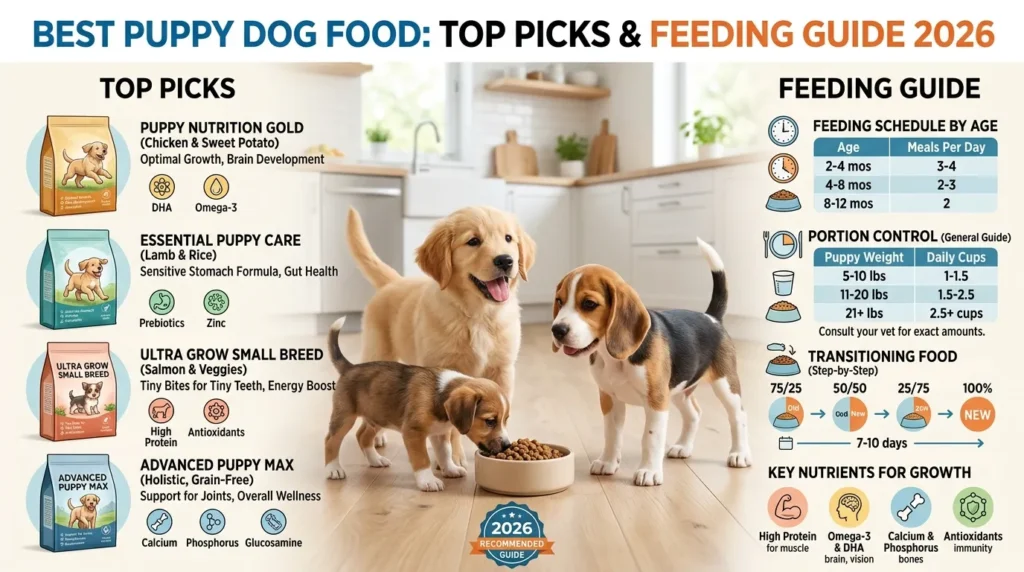
Puppy Feeding Schedule: How Much and How Often
Age-by-Age Feeding Guide
Feeding frequency matters just as much as food quality. Therefore, follow this age-based schedule for the best results:
6–12 weeks old:
- Feed 3 to 4 small meals per day
- Puppies this young have tiny stomachs and low blood sugar reserves
- Also, keep food and water easily accessible at all times
3–6 months old:
- Transition to 3 meals per day
- Portion sizes increase as your puppy grows
- Therefore, weigh your puppy monthly and adjust portions accordingly
6–12 months old:
- Move to 2 meals per day for most breeds
- Large breeds may stay on 3 meals slightly longer
- In addition, monitor body condition ribs should be felt but not seen
12+ months (small breeds) / 18–24 months (large breeds):
- Transition to adult food when growth plates close
- Large breeds reach skeletal maturity later than small breeds
- Therefore, always consult your vet about the right transition timing for your specific breed
How Much to Feed Each Meal
Each best puppy dog food brand provides feeding guidelines on the bag. However, those are starting points, not fixed rules. Your puppy’s actual intake should be guided by their body condition score.
A healthy puppy should have:
- A visible waist when viewed from above
- Ribs that you can feel with gentle pressure but not see prominently
- Good energy and consistent growth week to week
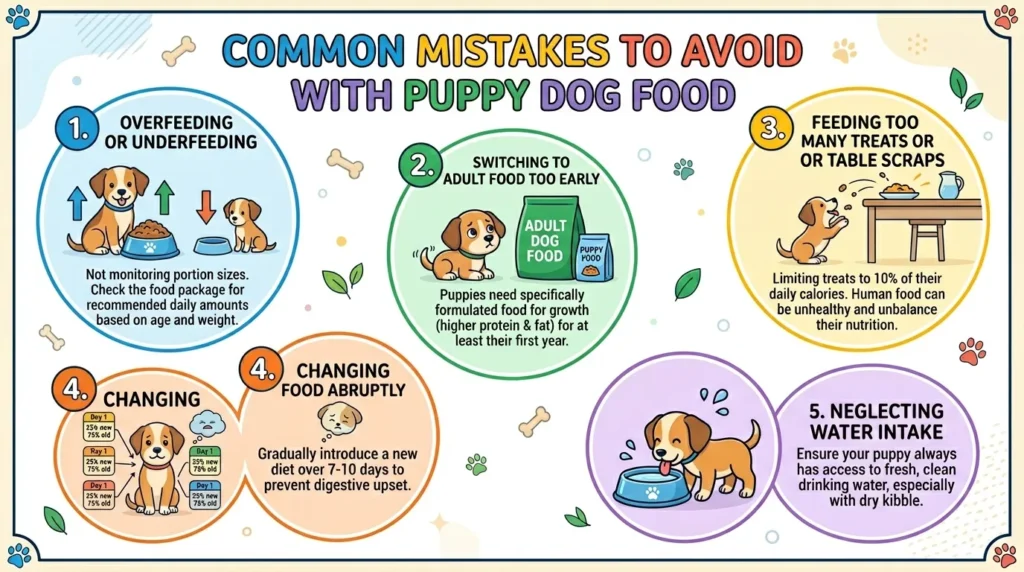
Common Mistakes to Avoid With Puppy Dog Food
Mistake 1: Feeding Adult Food to a Puppy
Adult formulas don’t contain enough protein, calories, or DHA for healthy puppy development. However, this mistake is surprisingly common especially when owners already have adult dogs at home and want to simplify feeding. Therefore, always feed age-appropriate food until your vet confirms your puppy has reached adult nutritional needs.
Mistake 2: Choosing Grain-Free Puppy Food Without Vet Guidance
Grain-free diets have been associated with potential heart concerns (dilated cardiomyopathy or DCM) in ongoing FDA research. Because puppies are in a critical development window, introducing unnecessary dietary risks at this stage is worth avoiding. Therefore, unless your vet specifically recommends grain-free for a diagnosed sensitivity, stick with grain-inclusive puppy formulas from trusted brands.
Mistake 3: Overfeeding Because “They’re Growing”
More food doesn’t mean faster or healthier growth. In fact, overfeeding puppies, especially large breeds, accelerates skeletal development faster than joints can handle. This contributes to developmental orthopedic disease. Therefore, measure every meal precisely and follow your vet’s portion guidance carefully.
Mistake 4: Switching Foods Too Quickly
Abrupt food changes cause diarrhea, gas, and vomiting in puppies. Always transition over 7–10 days by mixing old and new food gradually. Start with 75% old food and 25% new, then shift the ratio slowly. As a result, your puppy’s digestive system adjusts comfortably without unnecessary stress.
Mistake 5: Skipping the Vet Conversation
Every puppy is different. Breed, size, health status, and individual metabolism all affect which food and portion size is truly right. Therefore, always discuss your food choice with your veterinarian ideally at your first puppy wellness visit within the first week of bringing them home.
Pro Tip: Weigh your puppy every two weeks during the first six months of life. Record the weight in a simple notebook or phone app. This helps you track healthy growth, catch any concerning dips or spikes early, and adjust food portions based on real data rather than guesswork.
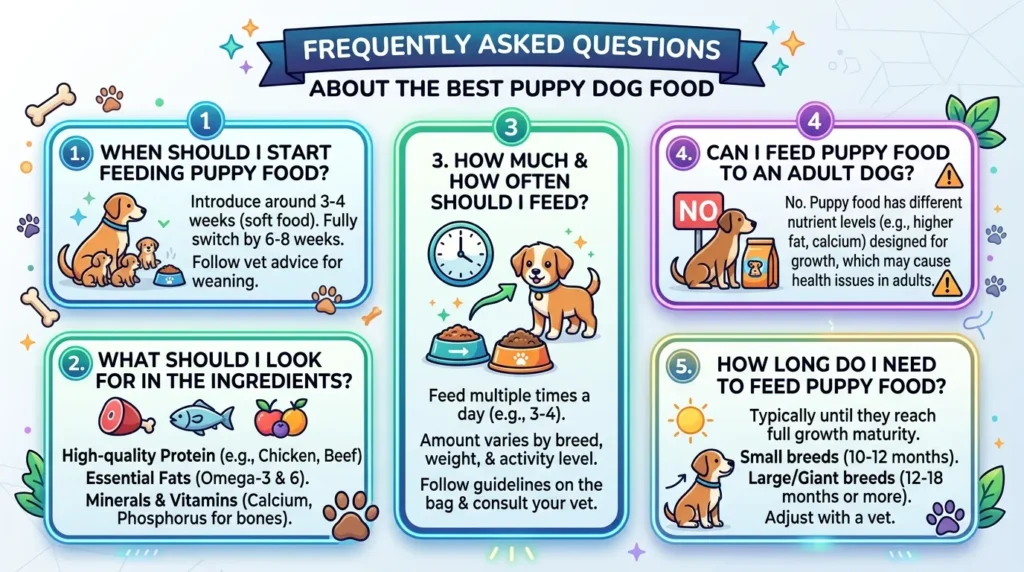
Frequently Asked Questions About the Best Puppy Dog Food
1. When should I switch from puppy food to adult food?
The right timing depends on your dog’s breed and size. Small breeds (under 20 lbs as adults) typically transition to adult food at around 9–12 months. Medium breeds transition at 12 months. Large and giant breeds, however, should stay on puppy formula until 18–24 months because their growth plates take longer to close. Therefore, always ask your vet specifically about transition timing for your breed; it varies more than most owners realize.
2. How do I know if my puppy’s food is working well?
Look for these positive signs over the first 4–8 weeks on a new food. Your puppy should have firm, well-formed stools not loose or excessively large in volume. Their coats should look shiny and feel soft. Also, energy levels should be consistently good, and they should gain weight steadily at a rate appropriate for their breed. If you notice persistent loose stools, dull coat, low energy, or poor weight gain, consult your vet before switching foods.
3. Is grain-free puppy food safe?
For most puppies the safest choice is a grain-inclusive formula from a reputable brand. Since 2018, the FDA has been investigating a potential link between grain-free diets and dilated cardiomyopathy (DCM) in dogs. Because puppies are in a critical developmental stage, avoiding unnecessary risk makes sense. Therefore, unless your vet has specifically recommended grain-free because of a confirmed grain sensitivity, stick with high-quality grain-inclusive puppy food.
4. Can I feed my puppy homemade food instead of commercial puppy food?
Homemade puppy food is possible but it’s genuinely difficult to get right. Puppies have very specific needs for protein, fat, calcium, phosphorus, DHA, and micronutrients in precise ratios. An unbalanced homemade diet during puppyhood can cause serious developmental problems. Therefore, if you want to feed homemade food, always work with a board-certified veterinary nutritionist who can design a properly balanced recipe for your puppy’s specific needs. Never follow random online recipes without professional verification.
5. How many calories does a puppy need per day?
Caloric needs vary significantly by breed, size, and age. A small breed puppy like a Chihuahua might need only 200–300 calories per day. A large breed puppy like a Labrador might need 1,200–2,000 calories daily depending on their age and growth stage. Therefore, use the feeding guidelines on your specific puppy food as a starting point. Then adjust based on your puppy’s actual weight and body condition and confirm targets with your vet at wellness visits.
6. What protein percentage should the best puppy dog food have?
The best puppy dog foods typically contain 22–32% crude protein on the guaranteed analysis panel. Puppies need higher protein than adult dogs because they’re actively building muscle, tissue, and organ systems. However, very high protein percentages (above 35%) aren’t necessary and can put unnecessary strain on developing kidneys in some breeds. Therefore, aim for the 22–32% range from named animal protein sources chicken, beef, salmon, or lamb as the first ingredient.
7. Should large breed puppies eat different food than small breed puppies?
Yes absolutely. Large breed puppy food is specifically formulated with controlled calcium and phosphorus levels. This prevents skeletal growth that’s too rapid, which causes developmental orthopedic diseases like hip dysplasia and osteochondrosis. Small and medium breed puppies don’t face the same risk. Therefore, always check whether your puppy food specifies large breed suitability if your dog will grow to over 50 pounds as an adult. This single distinction makes a significant difference in long-term joint and bone health.
Give Your Puppy the Best Start Possible
Choosing the best puppy dog food is one of the most important decisions you’ll make as a new dog owner. The right food during this critical growth window builds healthy bones, a sharp mind, a strong immune system, and the energy your puppy needs to thrive.
Purina Pro Plan Puppy leads the pack for most owners. Hill’s Science Diet covers large breed needs with exceptional precision. Purina ONE Puppy delivers strong value for budget-conscious families. However, the most important step is always confirming your choice with your veterinarian because they know your specific puppy best.