

Introduction
Your dog is giving you those eyes again staring at your plate of rice like it’s the most delicious thing on earth. Sound familiar? Most dog owners wonder at some point: can dogs eat rice, or is it something to avoid?
The short answer is yes dogs can absolutely eat rice. In fact, plain cooked rice is one of the safest and most beneficial foods you can share with your dog. Vets recommend it regularly, especially for dogs with upset stomachs. Also, it’s easy to prepare and gentle on sensitive digestive systems.
However, not all rice is created equal. Brown rice and white rice affect dogs differently. Also, how you prepare it matters just as much as which type you choose. Too much rice can cause problems too even with something this simple.
Therefore, this guide covers everything you need to know. You’ll learn the real benefits of rice for dogs, how much to feed safely, which types work best, and the mistakes most owners make. Let’s get into it.
Can Dogs Eat Rice? Here’s What Vets Actually Say
The Simple Truth About Dogs and Rice
Yes, dogs can eat rice safely. Vets have recommended plain cooked rice for dogs for decades. Because it’s easily digestible, low in fat, and gentle on the stomach, rice works especially well for dogs recovering from digestive upset or diarrhea.
In my experience, the classic “bland diet” that vets recommend is boiled chicken and white rice is one of the most effective home remedies for a dog with an upset tummy. It’s simple, affordable, and genuinely works for most healthy dogs.
However, rice should always be a supplement to your dog’s regular diet not a replacement. Therefore, understanding the right role for rice in your dog’s meals is essential before you start serving it regularly.
What Makes Rice Safe for Dogs?
Rice is safe for dogs because it contains:
- Simple carbohydrates easy for dogs to digest quickly
- Low fiber content (white rice) ideal for sensitive or irritated digestive systems
- Binding properties helps firm up loose stools naturally
- Mild flavor rarely causes allergic reactions in dogs
- No toxic compounds unlike many human foods, plain rice poses no toxicity risk
Also, rice contains small amounts of vitamins and minerals including niacin, thiamine, and manganese that support basic bodily functions in dogs.
White Rice vs. Brown Rice for Dogs: Key Differences
Which Type Is Better for Your Dog?
This is one of the most common questions dog owners ask. The answer depends on what you’re feeding rice for. Here’s a clear breakdown:
| Feature | White Rice | Brown Rice |
| Digestibility | Very easy to digest | Harder to digest |
| Fiber content | Low | High |
| Best use | Upset stomach, diarrhea | Long-term supplement |
| Nutrient density | Lower | Higher |
| Glycemic index | High | Lower |
| Cooking time | Short (15–20 mins) | Longer (40–45 mins) |
| Best for | Sensitive stomachs | Healthy active dogs |
When to Choose White Rice
White rice is the go-to choice when your dog has diarrhea or an upset stomach. Because it’s low in fiber and highly digestible, it moves through the digestive system easily. As a result, it soothes irritation and helps firm up loose stools quickly.
Most vets specifically recommend white rice not brown for the bland diet approach. Therefore, if your dog is unwell, white rice is the right choice.
When Brown Rice Works Better
Brown rice contains more fiber, vitamins, and minerals than white rice. Therefore, it’s a better long-term nutritional addition for healthy dogs who aren’t experiencing digestive issues. However, because it’s harder to digest, it’s not suitable for dogs with sensitive stomachs or active digestive problems.
Also, brown rice has a lower glycemic index which means it raises blood sugar more slowly. As a result, it’s sometimes a better option for dogs with diabetes or weight management needs. Always consult your vet before making dietary changes for dogs with health conditions.
How to Safely Feed Rice to Your Dog: Step-by-Step Guide
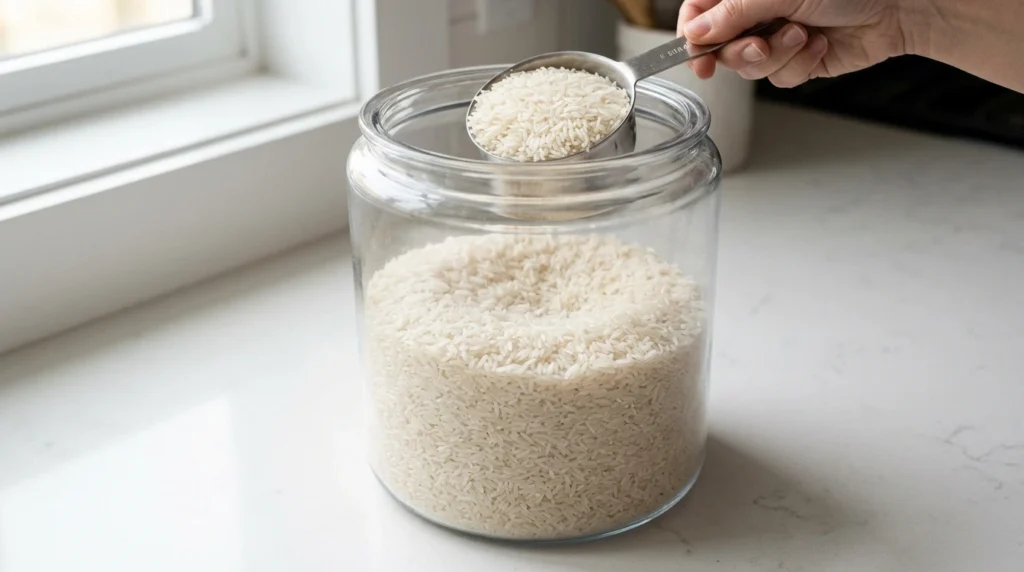
Preparing Rice the Right Way
The preparation method matters just as much as the type of rice. Follow these steps for safe, dog-friendly rice every time:
- Use plain water only. Never cook rice in broth, stock, or salted water. Because salt is harmful to dogs, even small amounts can cause problems. Plain water is always the safest option.
- Cook rice thoroughly. Undercooked rice is harder to digest. Therefore, always cooking rice until it’s soft and fully done, slightly overcooked is actually better for dogs with sensitive stomachs.
- Skip all seasonings. No butter, oil, garlic, onion, or spices ever. These ingredients are toxic to dogs. Plain rice is the only safe option for your dog.
- Let it cool completely. Never serve hot rice directly from the pot. Let it cool to room temperature first. Hot food can burn your dog’s mouth and throat.
- Serve in appropriate portions. Rice should make up no more than 25% of your dog’s meal. Therefore, always combine it with a protein source like plain boiled chicken for a balanced temporary meal.
- Store leftovers safely. Cooked rice stays fresh in the refrigerator for up to 4 days. Store it in a sealed container and reheat gently before serving. Also, never serve rice that smells off or looks discolored.
- Introduce gradually. If your dog hasn’t eaten rice before, start with a small amount. Then monitor for any digestive reaction over 24 hours before increasing the portion.
Pro Tip: When using the bland diet for an upset stomach, mix 2 parts plain white rice with 1 part plain boiled chicken (no skin, no bones). Feed this mixture in small portions every 4–6 hours. Most dogs show improvement within 24–48 hours. However, if symptoms persist beyond 48 hours, always consult your vet it could indicate a more serious underlying issue.
How Much Rice Can Dogs Eat Safely?
Portion Guidelines by Dog Size
The right amount of rice depends on your dog’s size and current health status. Here’s a practical guideline:
| Dog Size | Weight | Safe Rice Portion Per Meal |
| Extra Small | Under 10 lbs | 1–2 tablespoons |
| Small | 10–25 lbs | 2–4 tablespoons |
| Medium | 25–50 lbs | ¼ to ½ cup |
| Large | 50–80 lbs | ½ to ¾ cup |
| Extra Large | Over 80 lbs | ¾ to 1 cup |
Important Portioning Rules
First, these portions apply when rice is used as a supplement or part of a bland diet not as a daily staple. Also, rice is high in carbohydrates. Therefore, feeding too much regularly leads to weight gain, especially in less active or senior dogs.
In addition, dogs with diabetes need carefully controlled carbohydrate intake. As a result, always check with your vet before adding rice to a diabetic dog’s diet.
Health Benefits of Rice for Dogs
Why Rice Is Good for Your Dog
Rice isn’t just safe, it actively benefits your dog’s health in several ways. Therefore, understanding these benefits helps you use rice more effectively as part of your dog’s diet.
Digestive Health Support
Plain white rice is one of the most effective natural remedies for canine diarrhea. Because it’s low in fiber and easy to digest, it gives the intestines a chance to rest and recover. Also, the starch in white rice helps bind loose stools, which provides faster relief than many commercial remedies.
Energy Source
Rice provides a quick, accessible source of energy. Because dogs convert carbohydrates to glucose efficiently, rice gives working dogs and active breeds a reliable energy boost. Therefore, some performance dog diets include rice as a primary carbohydrate source.
Weight Management Support (Brown Rice)
Brown rice is higher in fiber than white rice. As a result, it helps dogs feel fuller for longer which can support weight management in overweight dogs. However, brown rice is still calorie-dense, so portion control remains essential even with this healthier option.
Gentle on Recovering Dogs
Dogs recovering from surgery, illness, or gastrointestinal issues often struggle with regular food. Therefore, plain rice provides a gentle, easy-to-digest source of nutrition that doesn’t stress a healing digestive system.
Mistakes to Avoid When Feeding Rice to Dogs
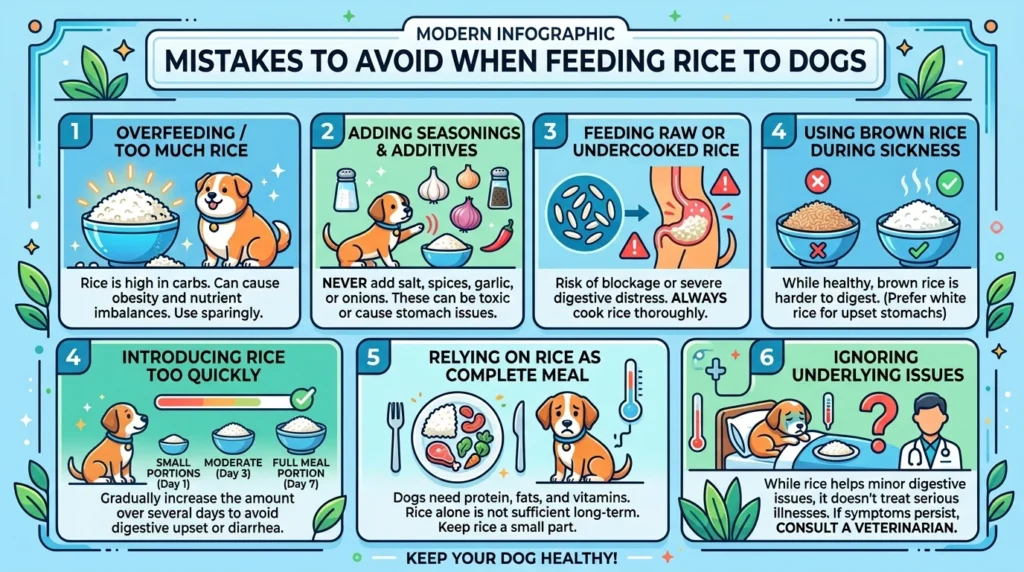
Mistake 1: Using Seasoned or Flavored Rice
This is the most dangerous mistake dog owners make. Garlic, onion, salt, butter, and spices are all harmful to dogs. Garlic and onion are actually toxic and can cause serious blood problems even in small amounts. Therefore, always use completely plain rice with no exceptions.
Mistake 2: Replacing Regular Dog Food With Rice
Rice alone doesn’t provide complete nutrition for dogs. Because it lacks sufficient protein, healthy fats, and essential vitamins, using rice as a primary diet causes nutritional deficiencies over time. Therefore, always use rice as a supplement or temporary measure, never as a meal replacement.
Mistake 3: Feeding Too Much Too Often
Rice is high in carbohydrates and calories. Feeding it daily in large amounts leads to weight gain especially in small breeds or less active dogs. Also, excess carbohydrates can spike blood sugar levels. Therefore, keep rice as an occasional supplement rather than a daily routine.
Mistake 4: Serving Rice Too Hot
Dogs are eager eaters. They’ll dive into a bowl of hot rice without hesitation and burn their mouths in the process. Therefore, always wait until rice cools completely to room temperature before serving. Run your wrist over the bowl to test the temperature the same way you’d test a baby’s bottle.
Mistake 5: Using Rice as a Long-Term Solution for Digestive Issues
The bland diet works well for temporary upset stomachs. However, if your dog needs bland food for more than 48 to 72 hours, something more serious may be happening. Therefore, always contact your vet if digestive symptoms persist. Rice treats symptoms it doesn’t diagnose or cure underlying health problems.
Pro Tip: Keep a small bag of plain white rice in your pantry specifically for your dog’s upset stomach days. In my experience, having it ready to go means you can respond quickly when your dog needs it without a late-night store run. It’s one of the simplest, cheapest, and most effective tools in any dog owner’s home first aid kit.
Frequently Asked Questions Can Dogs Eat Rice?

1. Can dogs eat rice every day?
Dogs can eat small amounts of plain cooked rice regularly, but daily large servings aren’t recommended. Because rice is high in carbohydrates, feeding it every day in significant quantities leads to weight gain over time. Also, it doesn’t provide complete nutrition on its own. Therefore, if you want to include rice in your dog’s regular diet, keep portions small no more than 10% of their daily food intake and always balance it with quality protein and healthy fats. Consult your vet for personalized portion guidance based on your dog’s size and activity level.
2. Can dogs eat rice when they have diarrhea?
Yes, plain white rice is one of the best foods for dogs with diarrhea. Because it’s low in fiber and highly digestible, it helps firm up loose stools and gives the digestive system a chance to recover. The classic vet-recommended bland diet combines plain boiled white rice with plain boiled chicken (no skin, no bones) in a 2:1 ratio. Feed small amounts every 4–6 hours. However, if diarrhea persists beyond 48 hours or is accompanied by vomiting, blood, or lethargy, contact your vet immediately.
3. Can dogs eat brown rice instead of white rice?
Yes, dogs can eat brown rice safely. However, brown rice is harder to digest than white rice because of its higher fiber content. Therefore, brown rice is better suited to healthy dogs as a long-term dietary supplement rather than for digestive upset. Also, the longer cooking time and firmer texture mean some dogs find brown rice less palatable than white rice. If you’re using rice for a sick dog, always choose white rice. For healthy dogs as a regular supplement, brown rice provides more nutritional value overall.
4. Can puppies eat rice?
Yes, puppies can eat plain cooked white rice safely. In fact, rice is often recommended for puppies experiencing digestive upset or diarrhea. However, puppies have very specific nutritional needs for growth and development. Therefore, rice should never replace their regular puppy food which provides the balanced nutrition puppies need during their critical growth phase. Also, keep portions very small for puppies, a teaspoon to a tablespoon depending on their size. Always consult your vet before making any dietary changes for a young puppy.
5. Is rice good for dogs with diabetes?
This question genuinely requires veterinary guidance. White rice has a high glycemic index meaning it raises blood sugar levels quickly. As a result, white rice isn’t suitable for diabetic dogs. Brown rice has a lower glycemic index and may be tolerable in small amounts for some diabetic dogs. However, every diabetic dog responds differently to carbohydrates. Therefore, always consult your vet before feeding any rice to a dog with diabetes. Your vet can advise on appropriate carbohydrate sources based on your dog’s specific blood glucose management plan.
6. Can dogs eat rice cakes or rice crackers?
Plain, unsalted rice cakes are generally safe for dogs as an occasional treat. However, most commercially sold rice cakes contain added salt, flavorings, or seasonings that aren’t safe for dogs. Also, flavored varieties often include garlic or onion powder which are toxic to dogs. Therefore, always check the ingredient list carefully before offering any rice cake to your dog. Plain, single-ingredient rice cakes in small amounts are the only safe option. Even then, they add empty calories without significant nutritional benefit.
7. Can dogs eat fried rice?
No, fried rice is not safe for dogs. Fried rice typically contains onion, garlic, soy sauce, salt, and oils all of which are harmful or toxic to dogs. Garlic and onion in particular cause serious damage to red blood cells and can lead to anemia. Also, the high fat content in fried rice can trigger pancreatitis in dogs, a painful and potentially serious condition. Therefore, never share fried rice or any restaurant-prepared rice dish with your dog. Plain, home-cooked rice with no additives is the only dog-safe version.
Rice and Your Dog Simple, Safe, and Effective
So can dogs eat rice ? Without question, yes. Plain cooked white or brown rice is one of the safest, most useful foods you can offer your dog. It soothes upset stomachs, firms up loose stools, and provides gentle energy when your dog needs it most.
However, rice works best as a tool not a staple. Therefore, keep it as a supplement or temporary dietary aid rather than a daily meal replacement. Always serve it plain, cooled, and in appropriate portions for your dog’s size.
Also, remember that persistent digestive issues always deserve a vet visit. No home remedy replaces professional veterinary care. Use rice as part of a smart, balanced approach to your dog’s nutrition.