
Introduction
Every dog owner faces it eventually. You wake up, walk into the living room, and discover the mess that tells you something’s not right with your pup. Dog diarrhea is one of the most common health concerns pet owners deal with and it’s also one of the most stressful.
The good news? Most cases of dog diarrhea resolve on their own within 24 to 48 hours with simple home care. However, some cases signal something more serious that needs immediate veterinary attention. Knowing the difference could genuinely save your dog’s life.
In my experience, the biggest mistake owners make is either panicking too soon or waiting too long. Both extremes cause unnecessary suffering. Therefore, this guide gives you everything you need to handle dog diarrhea confidently and calmly.
You’ll learn the most common causes, safe home treatment steps, the best bland foods to use, and the specific warning signs that mean it’s time to call your vet right away. Let’s get started.
What Causes Dog Diarrhea? A Complete Overview
The Most Common Triggers
Dog diarrhea happens when the digestive system moves food through too quickly. As a result, the intestines don’t absorb enough water and loose, watery stools follow. Understanding the cause helps you choose the right response.
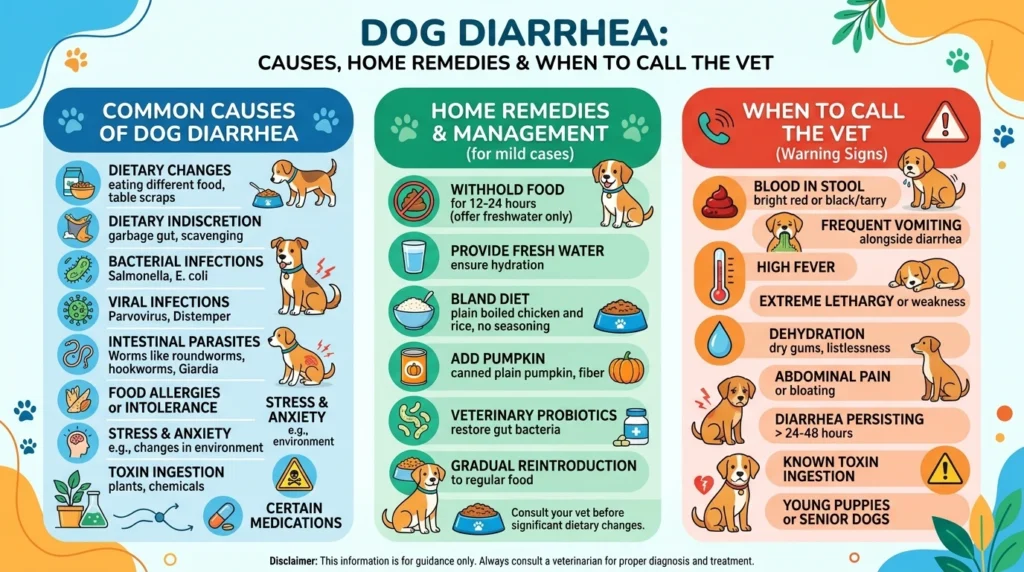
Here are the most common causes:
- Dietary indiscretion eating garbage, table scraps, or something they shouldn’t have
- Sudden food changes switching dog food too quickly without a gradual transition
- Food intolerances or allergies reactions to specific proteins or ingredients
- Stress or anxiety car rides, vet visits, moving house, or new pets
- Intestinal parasites roundworms, hookworms, giardia, or coccidia
- Bacterial infections salmonella or campylobacter from contaminated food or water
- Viral infections parvovirus, distemper, or coronavirus (canine, not COVID-19)
- Medications especially antibiotics, which disrupt gut bacteria balance
- Eating too fast swallowing large amounts of air along with food
Small Intestine vs. Large Intestine Diarrhea
Not all dog diarrhea looks the same. Therefore, understanding the difference helps you communicate clearly with your vet.
| Type | Location | Stool Appearance | Other Signs |
| Small intestine | Upper GI tract | Large volume, watery | Weight loss possible |
| Large intestine | Lower GI tract | Smaller, mucus present | Straining, urgency |
| Mixed | Both areas | Variable | Multiple symptoms |
Also, blood in stool always warrants a vet call regardless of which type it appears to be.
How to Treat Dog Diarrhea at Home: Step-by-Step Guide
When Home Treatment Is Appropriate
Home treatment works well for mild cases. Therefore, look for these signs that home care is suitable:
- Your dog is alert, active, and behaving normally
- Diarrhea started within the last 24 hours
- There’s no blood in the stool
- Your dog isn’t vomiting repeatedly
- Your dog is drinking water normally
- Your dog has no pre-existing health conditions
However, if your dog is a puppy, elderly, or has a chronic health condition, call your vet first before attempting home treatment. These groups dehydrate much faster than healthy adults.
Step-by-Step Home Treatment Plan
Follow these steps carefully for the best results:
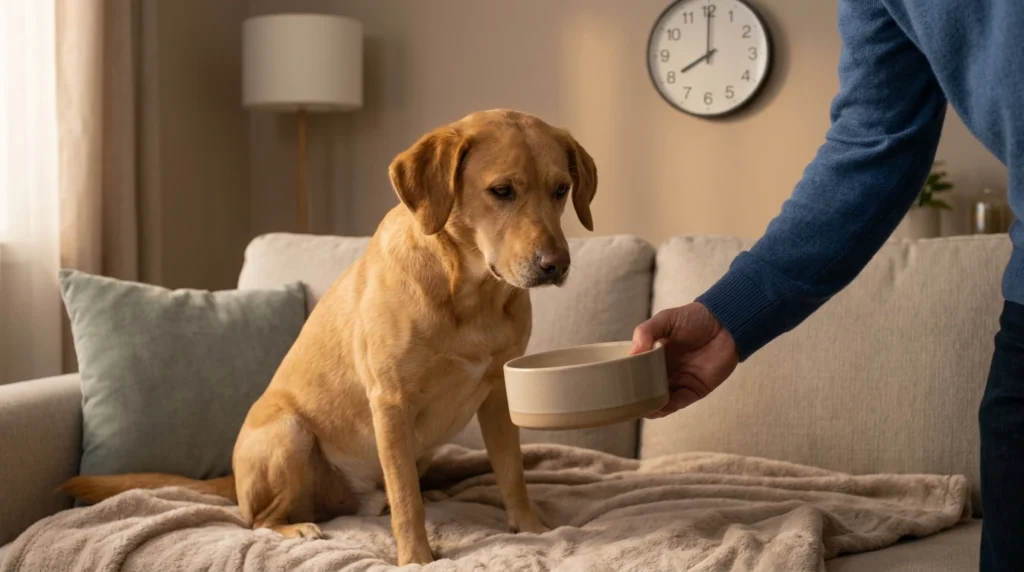
- Withhold food for 12 to 24 hours. This gives the gut time to rest and recover. However, always keeping fresh water available hydration is critical during diarrhea episodes.
- Monitor water intake closely. Diarrhea causes rapid fluid loss. Therefore, encourage your dog to drink small amounts frequently. If your dog refuses water entirely, call your vet.
- Introduce a bland diet after fasting. After 12 to 24 hours, offer small portions of a bland, easy-to-digest meal. The classic combination is plain boiled chicken (no skin, no seasoning) with plain white rice.
- Feed small, frequent meals. Instead of one large meal, offer three to four small portions throughout the day. This reduces digestive stress and helps the gut recover gradually.
- Add a probiotic if available. Dog-specific probiotics like FortiFlora or Proviable help restore healthy gut bacteria. In addition, plain unsweetened pumpkin puree (one to two tablespoons) provides gentle fiber that firms stools naturally.
- Gradually reintroduce normal food. After 48 hours on a bland diet, slowly mix your dog’s regular food back in starting with 25% regular food and 75% bland. Then increase gradually over three to five days.
- Keep a symptom diary. Note the frequency, consistency, and appearance of stools. Also note what your dog ate before symptoms started. This information helps your vet enormously if a visit becomes necessary.
Pro Tip: Plain canned pumpkin (not pumpkin pie filling that contains sugar and spices) is one of the most effective natural remedies for mild dog diarrhea. The soluble fiber absorbs excess water in the colon and helps firm up loose stools within 24 hours. Start with one tablespoon for small dogs and two tablespoons for larger breeds.
Bland Diet Foods for Dog Diarrhea: What Works Best
Safe Foods to Use During Recovery
Choosing the right bland diet foods makes a significant difference in recovery speed. Therefore, stick to these proven options:
| Food | Preparation | Benefit | Portion Guide |
| Boiled chicken breast | Plain, no skin or seasoning | Easily digestible protein | 1/3 of meal |
| White rice | Plain, well-cooked | Binding, gentle carb | 2/3 of meal |
| Plain pumpkin puree | Canned, unsweetened | Fiber, firms stools | 1–2 tbsp as topper |
| Plain boiled potato | No butter or salt | Gentle carbohydrate | Alternative to rice |
| Plain scrambled egg | No butter or oil | Easily digestible protein | Alternative to chicken |
| Boiled white fish | Cod or tilapia, plain | Light protein source | Alternative protein |
Foods to Absolutely Avoid
Some foods make dog diarrhea significantly worse. Therefore, keep these away from your dog during recovery:
- Dairy products most dogs are lactose intolerant; dairy worsens diarrhea
- Fatty foods triggers pancreatitis in predisposed dogs
- Spiced or seasoned foods irritates the already inflamed gut lining
- Onions and garlic toxic to dogs at any time
- Grapes and raisins toxic; cause kidney failure
- Artificial sweeteners (xylitol) extremely toxic to dogs
- Raw meat carries bacterial contamination risk during gut vulnerability
Hydration Support Options
Plain water is always the priority. However, if your dog refuses water, these options help encourage fluid intake:
- Diluted low-sodium chicken broth adds flavor that encourages drinking
- Pedialyte (unflavored, diluted 50/50) replaces electrolytes lost during diarrhea
- Ice cubes made from broth works especially well for reluctant drinkers
Always consult your vet before using electrolyte supplements, especially for puppies or senior dogs.
Warning Signs: When Dog Diarrhea Requires Urgent Vet Care
Never Wait If You See These Signs
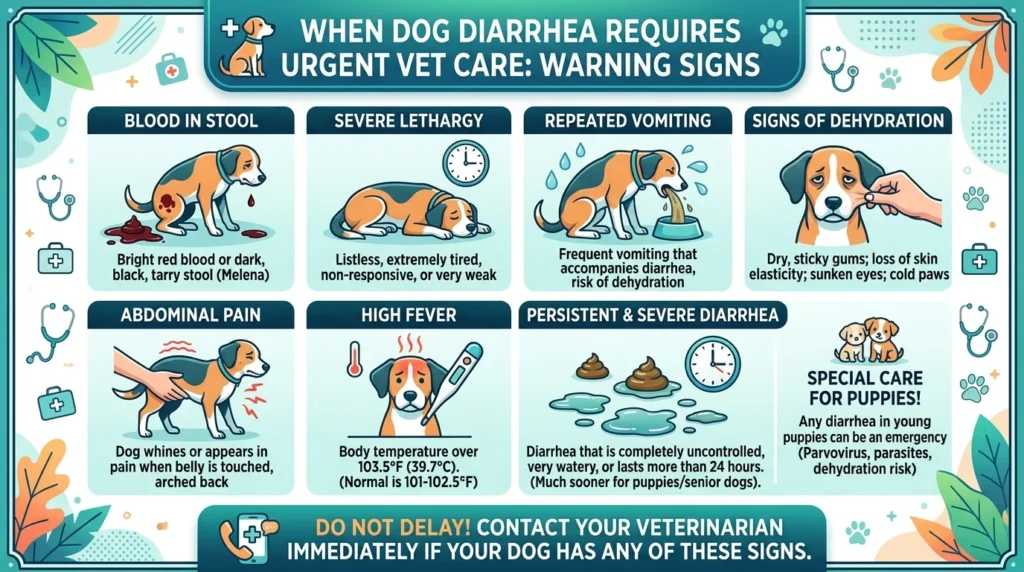
Some forms of dog diarrhea are medical emergencies. Therefore, call your vet immediately or go to an emergency clinic if you observe any of the following:
- Blood in stool either bright red or dark, tarry black stools
- Diarrhea lasting more than 48 hours despite home treatment
- Repeated vomiting alongside diarrhea rapid dehydration risk
- Extreme lethargy your dog won’t lift their head or move normally
- Bloated or painful abdomen could signal a serious blockage
- Signs of dehydration gums appear pale, dry, or tacky; skin doesn’t spring back when pinched
- Loss of consciousness or collapse emergency situation requiring immediate care
- Known toxin ingestion if your dog ate something poisonous, don’t wait for symptoms
Special At-Risk Groups
Certain dogs need faster veterinary intervention than healthy adults. These groups include:
- Puppies under 6 months dehydrate within hours; parvo risk is real
- Senior dogs over 10 years organ function is less resilient
- Immunocompromised dogs those on chemotherapy or with autoimmune conditions
- Pregnant or nursing dogs require specialist veterinary guidance
- Dogs with diabetes or Addison’s disease diarrhea disrupts medication management
Common Mistakes That Make Diarrhea Worse
Avoid these well-intentioned errors:
- Giving human medications Ibuprofen and Pepto-Bismol can be toxic to dogs. Never give human anti-diarrhea medications without explicit veterinary approval.
- Feeding too soon after fasting returning to a full normal meal too quickly overwhelms the recovering gut
- Overfeeding bland diet portions large portions strain digestion even with gentle foods
- Skipping the vet because your dog “seems okay” some serious conditions (like parvo or giardia) appear mild initially
Pro Tip: Keep a simple dog health kit at home that includes dog-specific probiotics, a can of plain pumpkin puree, and plain white rice in your pantry. Having these basics ready means you can start supportive care immediately without a stressful late-night grocery run when your dog needs you home with them.
Frequently Asked Questions About Dog Diarrhea
1. How long does dog diarrhea normally last?
Most cases of mild dog diarrhea caused by dietary indiscretion or stress resolve within 24 to 48 hours with proper home care. However, if diarrhea continues beyond 48 hours despite a bland diet and fasting period, contact your vet. Persistent diarrhea lasting more than two days suggests an underlying cause such as parasites, infection, or food intolerance that needs professional diagnosis and treatment.
2. Should I starve my dog when they have diarrhea?
A short fasting period of 12 to 24 hours helps the gut rest and recover from mild diarrhea. However, always keeping fresh water available throughout the fast dehydration is the primary danger with diarrhea. Also, never fast a puppy, a very small breed, or a diabetic dog without veterinary guidance. These dogs can experience dangerous blood sugar drops from even short fasting periods.
3. Can I give my dog Pepto-Bismol for diarrhea?
This is a common question and the answer requires caution. Some vets do approve very small doses of Pepto-Bismol for adult dogs in specific situations. However, it contains salicylates (similar to aspirin) that can be harmful to dogs, especially those on blood thinners or with certain health conditions. Therefore, never give any human medication to your dog without explicit approval from your veterinarian. Dog-safe alternatives like probiotics and plain pumpkin are safer first choices.
4. What does blood in dog diarrhea mean?
Blood in your dog’s stool always warrants a veterinary call the same day. Bright red blood in diarrhea (hematochezia) often indicates large intestine irritation or colitis, which is frequently treatable. However, dark, tarry black stools (melena) suggest bleeding higher in the digestive tract which is more serious and needs immediate evaluation. Also, profuse bloody diarrhea in unvaccinated puppies could indicate parvovirus, a life-threatening emergency that requires urgent treatment without delay.
5. What home remedy works fastest for dog diarrhea?
The fastest-acting gentle home remedy is a combination of fasting, followed by plain boiled chicken and white rice in a 1:2 ratio. Adding one to two tablespoons of plain canned pumpkin puree to each meal speeds stool firming significantly because of its high soluble fiber content. Also, a dog-specific probiotic like FortiFlora sprinkled over food helps restore gut bacteria balance within 24 to 48 hours. However, if your dog shows any warning signs alongside diarrhea, skip home remedies and call your vet directly.
6. Can stress cause dog diarrhea?
Yes, stress is one of the most underappreciated causes of dog diarrhea. The gut-brain connection in dogs works similarly to humans. Therefore, major life changes like moving house, a new baby, a new pet, fireworks, thunderstorms, or even a change in your schedule can trigger acute digestive upset. Stress-related diarrhea typically resolves once the stressor passes. However, if your dog regularly suffers from anxiety-related digestive problems, discuss longer-term management strategies with your vet.
7. How do I prevent dog diarrhea in the future?
Prevention focuses on digestive consistency. First, always transition food changes gradually over 7 to 10 days and never switch food abruptly. Also, keep garbage, human food, and outdoor debris away from your dog’s reach. In addition, keep vaccinations and parasite prevention treatments current to protect against several major diarrhea-causing infections. Finally, managing stress proactively with routine, exercise, and enrichment significantly reduces stress-related digestive episodes over the long term.
Keep Your Dog’s Gut Happy and Healthy
Dog diarrhea is uncomfortable for your dog and stressful for you but most cases are manageable with calm, informed home care. The key is knowing when to treat at home and when to call your vet without delay.
Start with a short fast and plenty of water. Then introduce a gentle bland diet. Add plain pumpkin and probiotics to support recovery. Monitor carefully and act quickly if warning signs appear.
Your dog counts on you to notice when something’s wrong and respond wisely. Therefore, bookmark this guide, keep your home care supplies stocked, and never hesitate to call your vet when you’re unsure. A quick phone call is always better than waiting too long.