
Introduction
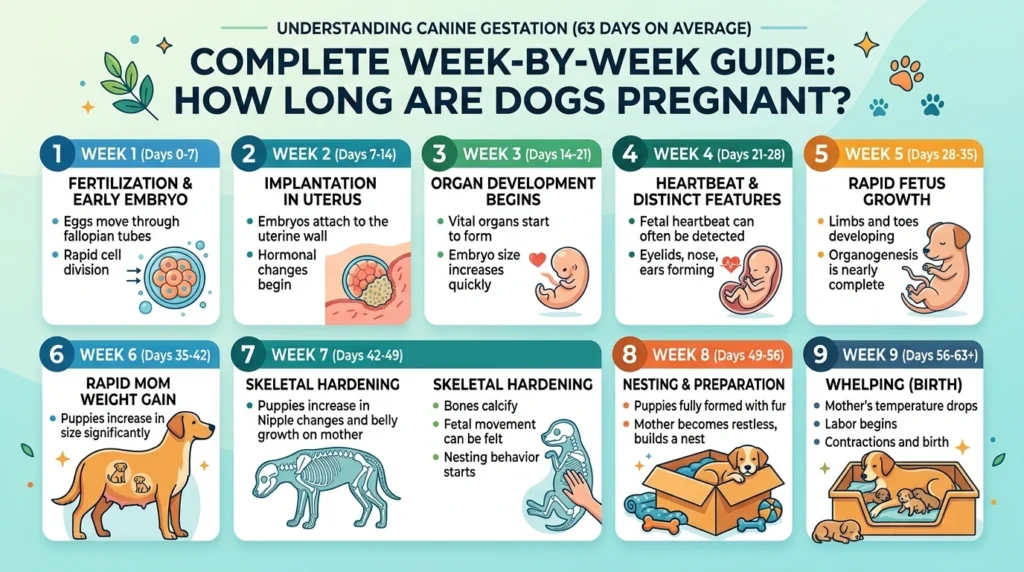
If your dog is expecting puppies, the first question that pops into your head is probably how long are dogs pregnant? It’s one of the most searched dog health questions online. And honestly, it makes perfect sense. Knowing the timeline helps you prepare, stay calm, and give your dog the best possible care.
Here’s the short answer: dogs are pregnant for approximately 63 days, roughly nine weeks. However, the full picture is a little more detailed than that single number suggests. Pregnancy length can vary slightly by breed, litter size, and individual dog. Also, knowing what happens during each week of pregnancy makes a huge difference in how well you support your dog.
In my experience, prepared dog owners have much smoother whelping experiences than those who wing it. Therefore, this complete guide walks you through every stage from conception to birth with practical tips, warning signs to watch for, and everything you need to know. Let’s get started.
How Long Are Dogs Pregnant? The Essential Timeline
The 63-Day Canine Gestation Period
Dogs carry their puppies for an average of 58 to 68 days from conception. However, 63 days is the most commonly cited average. That’s just over nine weeks significantly shorter than human pregnancy.
The exact length varies for several reasons:
- Breed size smaller breeds sometimes deliver slightly earlier
- Litter size larger litters sometimes arrive a few days sooner
- Individual variation every dog’s body works slightly differently
- Timing of mating conception doesn’t always happen on the exact day of mating
Therefore, don’t panic if your dog delivers a day or two before or after the 63-day mark. However, if delivery happens before day 58 or doesn’t happen by day 68, contact your vet immediately.
How Vets Calculate Due Dates
Vets typically calculate a dog’s due date using one of three methods:
- Date of mating the simplest method, but not always the most accurate
- Progesterone testing measures hormone levels to pinpoint ovulation timing
- Ultrasound dating uses fetal measurements to estimate gestational age
In addition, your vet may use a combination of these methods for the most accurate due date. Therefore, scheduling an early vet appointment when you suspect pregnancy is always a smart first step.
Week-by-Week Dog Pregnancy Timeline
What Happens During Each Stage of Pregnancy
Understanding the week-by-week changes helps you know exactly what your dog needs at every stage. Here’s a complete breakdown:
Week 1 Days 1 to 7: Fertilization
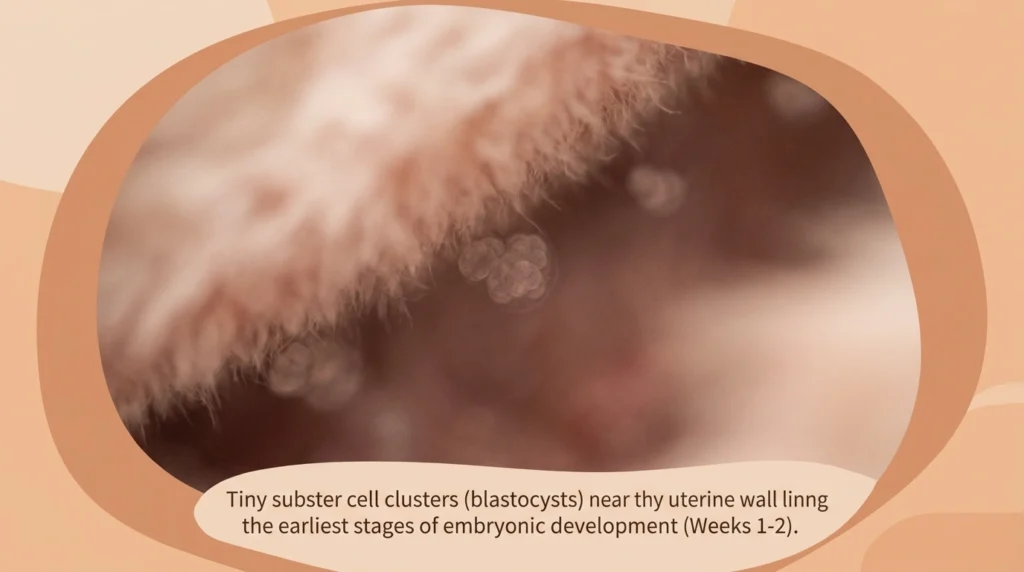
Fertilization happens within a few days of mating. The fertilized eggs travel toward the uterus but haven’t implanted yet. Your dog shows no visible signs of pregnancy at this stage. Also, her behavior and appetite remain completely normal.
What to do:
- Maintain normal feeding and exercise routines
- Avoid unnecessary medications or supplements
- Schedule a vet appointment to discuss prenatal care
Week 2 Days 8 to 14: Implantation
The embryos implant into the uterine wall during this week. However, you still won’t see any visible signs. Your dog may seem slightly more tired than usual but many owners miss this subtle change entirely.
What to do:
- Continue normal routines
- Avoid stress-inducing situations for your dog
- Don’t attempt to feel for puppies it’s too early and could cause harm
Week 3 Days 15 to 21: Embryo Development
This week brings the first subtle physical changes. Some dogs experience mild morning sickness, reduced appetite, occasional vomiting, or lethargy. Also, nipples may begin to look slightly larger or pinker than usual.
What to do:
- Offer smaller, more frequent meals if appetite decreases
- Contact your vet if vomiting is severe or persistent
- Schedule an ultrasound heartbeats may be detectable by day 28
Pro Tip: If your dog shows signs of morning sickness, try feeding smaller portions three times daily instead of two larger meals. This simple change often makes a big difference in keeping food down during early pregnancy.
Week 4 Days 22 to 28: Rapid Growth
This is a big week. The fetuses develop rapidly, and by day 28 to 30, your vet can confirm pregnancy via ultrasound. Your dog’s abdomen may start to show slight rounding. Also, her appetite typically increases noticeably.
What to do:
- Schedule your first prenatal vet visit if not already done
- Begin transitioning to a high-quality puppy food for extra nutrition
- Reduce vigorous exercise gentle walks are ideal now
Week 5 Days 29 to 35: Visible Pregnancy
The puppies are now clearly forming with paws, claws, and whisker buds developing. Your dog’s belly becomes visibly rounder. Weight gain accelerates. Also, her energy levels may drop further as her body focuses resources on the growing puppies.
What to do:
- Feed high-quality puppy food it provides the extra calories and nutrients needed
- Keep exercise gentle and consistent
- Avoid crowded or stressful environments
Week 6 Days 36 to 42: Active Puppy Growth
The puppies grow rapidly this week. Your dog’s abdomen expands significantly. You may even feel gentle movement if you place your hand softly on her belly. However, avoid pressing hard and always be extremely gentle.
What to do:
- Increase food portions gradually as appetite grows
- Begin setting up a whelping box in a quiet, warm area
- Watch for any signs of vaginal discharge clear or white is normal, but green or bloody discharge needs immediate vet attention
Week 7 Days 43 to 49: Preparing for Birth
The puppies’ skeletons hardened during this week making them visible on X-ray for the first time. Therefore, your vet can now count the litter size accurately. Your dog may begin nesting behavior restlessly searching for a safe spot to give birth.
What to do:
- Schedule an X-ray to confirm litter count
- Introduce your dog to the whelping box so she feels comfortable there
- Reduce exercise further short, gentle walks only
Week 8 Days 50 to 56: Almost There
Your dog is visibly heavily pregnant now. The puppies move into position for birth. Milk production begins and you may notice colostrum (early milk) appearing at the nipples. Also, your dog’s appetite may decrease slightly as the puppies press against her stomach.
What to do:
- Monitor temperature daily a drop below 100°F (37.8°C) signals labor within 24 hours
- Keep the whelping box warm and accessible
- Have your vet’s emergency number ready
Week 9 Days 57 to 65: Birth
Labor can begin anytime from day 57 onwards. Most dogs give birth between days 63 and 65. However, some go to day 68 without concern. Watch for active labor signs and stay close to your dog during this critical time.
Signs labor is beginning:
- Restlessness and nesting behavior intensifies
- Refusal to eat
- Panting and trembling
- Rectal temperature drops below 100°F
- Visible contractions begin
Dog Pregnancy Stages at a Glance
Quick Reference Table
| Week | Days | Key Development | Your Action |
| Week 1 | 1–7 | Fertilization | Normal routine |
| Week 2 | 8–14 | Implantation | Reduce stress |
| Week 3 | 15–21 | Embryo forms | Watch for nausea |
| Week 4 | 22–28 | Ultrasound possible | First vet visit |
| Week 5 | 29–35 | Visible growth | Switch to puppy food |
| Week 6 | 36–42 | Rapid expansion | Set up whelping box |
| Week 7 | 43–49 | Skeletons harden | X-ray for litter count |
| Week 8 | 50–56 | Birth position | Monitor temperature |
| Week 9 | 57–65 | Birth | Attend and support |
Nutrition During Pregnancy
Feeding your pregnant dog correctly makes a significant difference in puppy health. Therefore, follow these nutrition guidelines:
- Weeks 1 to 4: Maintain normal adult food portions
- Weeks 5 to 9: Gradually transition to high-quality puppy food it contains extra protein, calcium, and calories
- Final two weeks: Feed smaller meals more frequently as the puppies take up abdominal space
- Always provide: Fresh, clean water at all times hydration is critically important
Avoid calcium supplements unless specifically prescribed by your vet. Because excess calcium during pregnancy can actually cause complications during whelping, always consult your vet before adding any supplements.
Warning Signs During Dog Pregnancy to Never Ignore
When to Call Your Vet Immediately
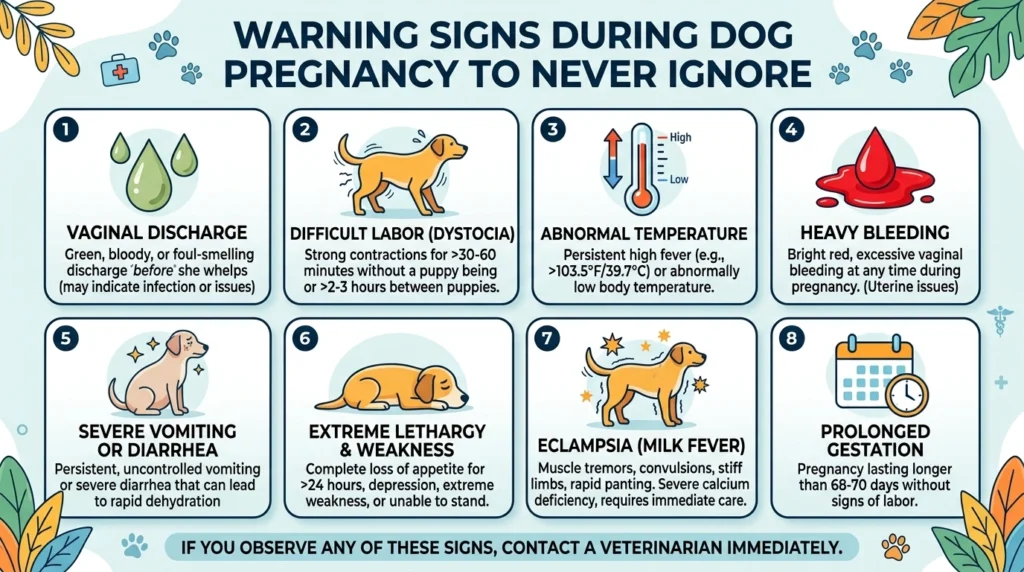
Most dog pregnancies progress smoothly. However, some situations require urgent veterinary attention. Therefore, know these warning signs before they happen:
Call your vet immediately if you notice:
- Green, black, or bloody vaginal discharge before birth begins
- More than four hours pass between puppy deliveries during labor
- Your dog strains actively for more than 30 minutes without delivering a puppy
- A puppy appears stuck in the birth canal
- Your dog collapses, seems extremely weak, or loses consciousness
- Pregnancy extends beyond day 68 with no signs of labor
- Severe loss of appetite lasting more than 24 hours in the final weeks
- Signs of extreme distress, excessive panting, or shaking throughout pregnancy
Also, watch for eclampsia (milk fever) after birth, a dangerous drop in calcium levels that causes muscle tremors and weakness. This condition requires immediate emergency veterinary care.
Mistakes That Can Harm a Pregnant Dog
Here are common mistakes dog owners make during pregnancy:
Mistake 1: Over-supplementing with calcium Many owners add calcium supplements thinking it helps. However, excess calcium during pregnancy actually increases the risk of eclampsia after birth. Therefore, only supplement if your vet specifically recommends it.
Mistake 2: Allowing too much exercise late in pregnancy Vigorous exercise after week 5 puts unnecessary stress on the developing puppies. Instead, keep activity gentle, short, calm walks are ideal from week 5 onwards.
Mistake 3: Missing veterinary check-ups Some owners skip vet visits to save money. However, prenatal check-ups catch potential complications early when they’re much easier to address. Therefore, budget for at least two to three vet visits during the pregnancy.
Mistake 4: Not preparing a whelping area Setting up the whelping box at the last minute causes stress for both you and your dog. Therefore, introduce it by week 7 so your dog feels comfortable and familiar with the space before labor begins.
Pro Tip: Take your dog’s rectal temperature twice daily starting from day 58. When her temperature drops from the normal range of 101–102.5°F to below 100°F (37.8°C), labor will typically begin within 12 to 24 hours. This simple daily habit removes a lot of uncertainty and helps you prepare at exactly the right time.
Frequently Asked Questions: How Long Are Dogs Pregnant?
1. How long are dogs pregnant exactly?
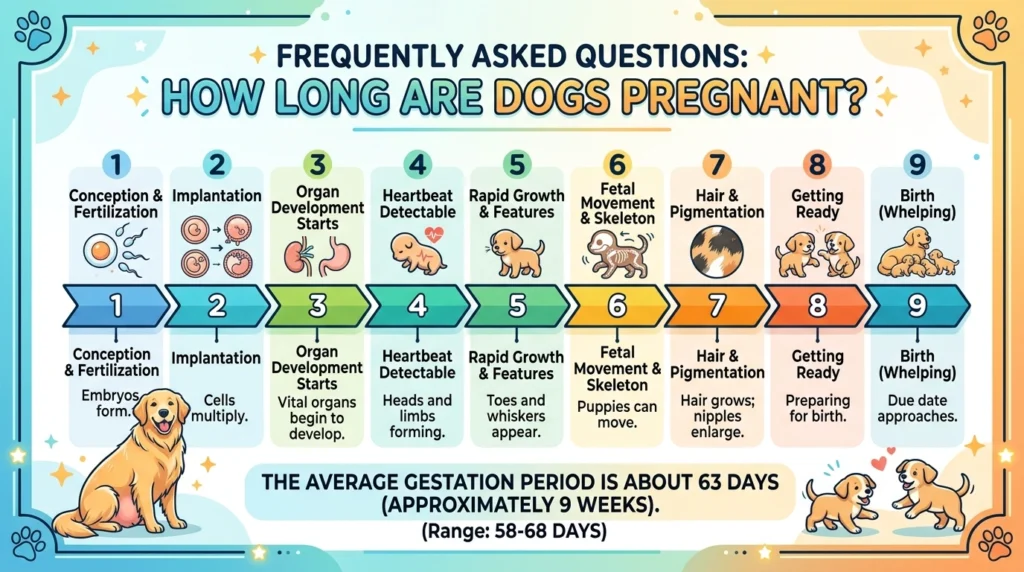
Dogs are pregnant for approximately 58 to 68 days, with 63 days being the most commonly referenced average. However, the exact length varies by breed, litter size, and individual dog. Small breeds sometimes deliver slightly earlier, while larger breeds may go closer to 65 days. Therefore, watch for labor signs from day 58 onwards and contact your vet if nothing happens by day 68.
2. Can you tell if a dog is pregnant in the first week?
No you cannot reliably detect pregnancy in the first week. During days 1 to 14, the embryos are still traveling and implanting. There are no visible physical changes at this stage. The earliest reliable confirmation comes from an ultrasound around day 25 to 28, or from blood tests that detect pregnancy hormones from around day 28 to 30. Therefore, don’t rely on visible signs in the first two weeks.
3. How many puppies can a dog have?
Litter size varies enormously by breed and individual dog. Small breeds typically have one to four puppies per litter. Medium breeds average four to six puppies. Large breeds can have six to ten or more puppies in a single litter. However, individual variation is significant; a Golden Retriever might have three puppies one litter and ten the next. An X-ray in week 7 gives you the most accurate litter count.
4. What should I feed my pregnant dog?
During the first four weeks, maintain your dog’s normal adult food. From week 5 onwards, gradually transition to a high-quality puppy food it provides additional protein, fat, calcium, and calories that a pregnant dog needs. Also, increase portion sizes gradually as the pregnancy progresses. In the final two weeks, feed smaller, more frequent meals because the puppies take up abdominal space. Always consult your vet before adding supplements.
5. How do I know when my dog is about to give birth?
Several reliable signs signal that labor is approaching. First, your dog’s rectal temperature will drop below 100°F (37.8°C) within 12 to 24 hours of labor starting. Also, she’ll show intense nesting behavior pawing at bedding and seeking a quiet spot. Appetite usually disappears completely. Then visible contractions begin, followed by the birth of the first puppy. However, if more than four hours pass between puppies during active labor, contact your vet immediately.
6. Is it normal for a pregnant dog to vomit?
Mild nausea and occasional vomiting are normal during weeks 3 and 4 similar to morning sickness in humans. However, severe or persistent vomiting at any stage of pregnancy requires veterinary attention. Therefore, offer smaller, more frequent meals during this phase and ensure fresh water is always available. If your dog can’t keep any food down for more than 24 hours, call your vet promptly.
7. Should a pregnant dog see a vet during pregnancy?
Yes absolutely. At minimum, schedule one visit around week 4 to confirm pregnancy via ultrasound, and another around week 7 for an X-ray to count the puppies. Also, discuss your specific dog’s health history and any breed-specific concerns with your vet at these appointments. Regular prenatal care significantly improves outcomes for both mother and puppies. Never attempt to manage a dog pregnancy without professional veterinary guidance.
Supporting Your Dog Through Every Stage
Now you know exactly how long dogs are pregnant 63 days on average, spread across nine remarkable weeks of development. Each week brings significant changes for both mother and puppies. Therefore, staying informed and prepared makes the entire experience smoother and safer.
The most important steps are simple. Schedule regular vet visits. Switch to puppy food from week 5. Monitor temperature in the final week. Set up a comfortable whelping space early. Also, know the warning signs that require immediate veterinary attention.
Dog pregnancy is genuinely one of the most extraordinary natural experiences you’ll witness. With the right preparation and care, your dog will deliver her puppies safely and you’ll be ready for every moment of it.