
Introduction
Bringing a new dog home is exciting. However, one of the first challenges most owners face is helping their dog feel safe and settled. That’s exactly where a dog crate becomes one of the most valuable tools you’ll ever own.
A good dog crate isn’t a punishment. It’s a den. Dogs are naturally den animals; they actually feel safer in a cozy, enclosed space. Therefore, a well-chosen crate becomes your dog’s personal retreat somewhere calm and familiar they can call their own.
But here’s the problem. Walk into any pet store and you’ll find dozens of crate styles, sizes, and materials. Which one is right for your dog? How do you set it up correctly? And how do you get your dog to actually like it?
In my experience, the right crate chosen carefully and introduced properly transforms the training process completely. This guide covers everything you need. Let’s find the perfect crate for your dog.
What Are Dog Crates and Why Does Every Dog Need One?
The Real Purpose of a Dog Crate
A dog crate is a specially designed enclosure that gives your dog a safe, personal space. However, many new owners misunderstand its purpose entirely. A crate is never meant for punishment. Instead, it serves as your dog’s own private den, a place they choose to relax, sleep, and feel secure.
Dogs descend from den-dwelling ancestors. Therefore, enclosed spaces feel natural and comforting to them, not frightening. When introduced correctly, most dogs genuinely love their crates and retreat there voluntarily throughout the day.
Key Benefits of Using a Dog Crate
Here’s why a crate is one of the smartest investments you’ll make as a dog owner:
- Speeds up house training dogs instinctively avoid soiling their sleeping space
- Keeps your dog safe especially important when you can’t supervise them directly
- Reduces destructive behavior a crated dog can’t chew your furniture or cables
- Creates a stress-free travel experience familiar crate = calm dog in cars or flights
- Helps anxious dogs feel secure a den space reduces separation anxiety significantly
- Makes vet stays less stressful dogs familiar with crates adapt faster to clinic kennels
In addition, a crate protects your dog from household hazards when you’re not watching. Therefore, it’s both a training tool and a genuine safety measure.
Types of Dog Crates: Which Crate Is Right for Your Dog?
The Main Crate Types Explained
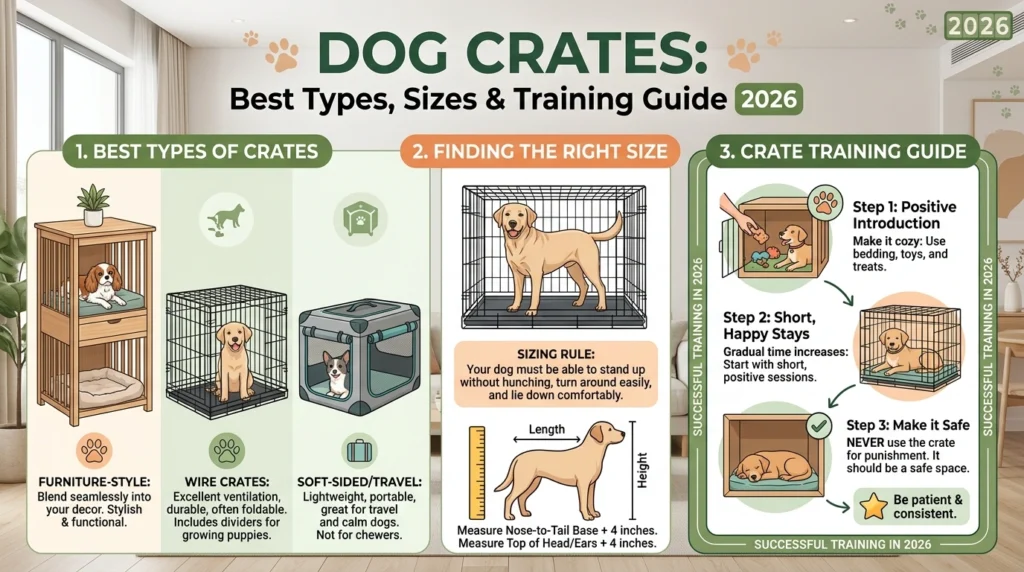
Not all dog crates are the same. Therefore, understanding each type helps you choose the right one for your dog’s size, temperament, and lifestyle.
1. Wire Dog Crates
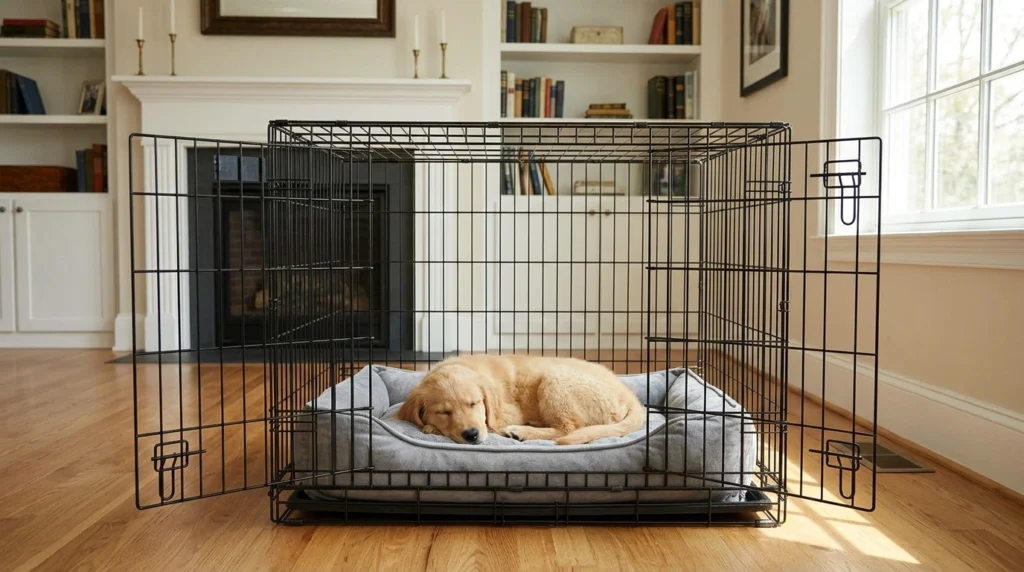
Wire crates are the most popular choice for home use. They offer excellent ventilation and visibility so your dog can see what’s happening around them, which reduces anxiety. Also, most wire crates fold flat for easy storage and travel.
Best for: Home training, puppies, dogs who prefer visibility Key advantage: Maximum airflow and easy cleaning Key consideration: Less cozy-feeling add a crate cover to create den atmosphere
2. Plastic Dog Crates (Airline Crates)
Plastic crates feel more enclosed and den-like. Because of this, many dogs actually prefer them over wire options. Also, most plastic crates meet airline regulations making them essential for air travel.
Best for: Travel, anxious dogs, air travel Key advantage: Enclosed, den-like feeling reduces stress Key consideration: Less ventilation than wire not ideal for hot climates
3. Soft-Sided Dog Crates
Soft crates are lightweight, portable, and easy to set up. However, they’re only suitable for calm, already crate-trained dogs. Determined chewers or anxious dogs can escape soft crates easily.
Best for: Travel, calm adult dogs, short-term use Key advantage: Lightweight and packable Key consideration: Not escape-proof unsuitable for untrained dogs
4. Heavy-Duty Dog Crates
Heavy-duty crates use reinforced steel construction. Therefore, they suit dogs who are powerful escape artists or have severe anxiety. However, they’re significantly heavier and more expensive than standard options.
Best for: Large breeds, escape artists, high-anxiety dogs Key advantage: Extremely secure and durable Key consideration: Heavy, expensive, and less portable
5. Furniture-Style Dog Crates
Furniture crates double as end tables or cabinets. As a result, they blend into your home’s décor beautifully. However, they typically cost more and aren’t suitable for puppies who chew.
Best for: Aesthetically conscious owners, calm adult dogs Key advantage: Looks great in any room Key consideration: More expensive, less durable for active chewers
How to Choose the Right Size Dog Crate
Sizing Is Everything
Choosing the wrong size is the most common dog crate mistake owners make. Therefore, getting this right from the start saves you time, money, and frustration.
The Golden Sizing Rule
Your dog’s crate should be:
- Long enough for your dog to lie down fully stretched out
- Wide enough to turn around comfortably
- Tall enough to stand up without hunching
However, bigger isn’t always better, especially for house training. A crate that’s too large allows puppies to use one end as a bathroom and sleep at the other end. Therefore, always size appropriately for your dog’s current size.
Crate Size Guide by Dog Weight
| Dog Weight | Recommended Crate Size | Example Breeds |
| Under 10 lbs | 18″–22″ | Chihuahua, Maltese |
| 11–25 lbs | 24″–30″ | Beagle, Shih Tzu |
| 26–40 lbs | 30″–36″ | Cocker Spaniel, Corgi |
| 41–70 lbs | 36″–42″ | Labrador, Border Collie |
| 71–90 lbs | 42″–48″ | German Shepherd, Boxer |
| Over 90 lbs | 48″–54″+ | Great Dane, Mastiff |
Divider Panels for Growing Puppies
Most quality wire crates include a divider panel. This feature lets you buy one crate for your puppy’s adult size, then use the divider to make it smaller while they’re still growing. As a result, you save money and avoid buying multiple crates as your puppy grows.
Pro Tip: When sizing a crate for a puppy, look up your breed’s expected adult weight. Then buy the adult-sized crate with a divider panel included. This approach saves you from purchasing multiple crates during the growth stages and it’s genuinely the most cost-effective approach long-term.
Step-by-Step Dog Crate Training Guide
How to Introduce Your Dog to Their New Crate
Crate training works best when you go slowly and make every experience positive. Therefore, follow this proven step-by-step process for the smoothest introduction:
- Place the crate in a busy family area. Dogs want to feel part of family life. Therefore, position the crate in your living room or kitchen not in an isolated back room. Familiarity reduces initial anxiety significantly.
- Make the crate inviting immediately. Add a soft blanket, a worn piece of your clothing, and a safe chew toy. Your scent provides comfort and makes the crate feel familiar from day one.
- Let your dog explore freely. Open the door and let your dog sniff and investigate at their own pace. Never force them inside. Instead, toss treats near them inside the crate to build positive associations gradually.
- Feed meals near them inside the crate. First, place your dog’s food bowl near the crate entrance. Then move it just inside. Finally, place it at the back. As a result, your dog starts associating the crate with the best thing in their day mealtime.
- Begin closing the door briefly. Once your dog enters comfortably, gently close the door for 30 seconds while they eat. Then open it. Gradually extend the closed time over several days.
- Build up alone time slowly. After your dog rests comfortably with the door closed, start leaving the room briefly. Return calmly. Extend your absence gradually over days and weeks.
- Never use the crate as punishment. This rule is non-negotiable. If your dog associates the crate with negative experiences, the training process fails completely. Always keep crate time positive.
- Establish a consistent routine. Dogs thrive on predictability. Therefore, use the crate at the same times each day overnight, during meals, and during short absences.
How Long Can Dogs Stay in a Crate?
This question comes up constantly. Here’s a simple guide:
- Puppies under 6 months maximum 2 to 3 hours at a time
- Adult dogs (daytime) maximum 4 to 5 hours
- Overnight most adult dogs sleep 7 to 8 hours comfortably in a crate
- Never exceed 8 hours dogs need bathroom breaks, exercise, and interaction
Common Dog Crate Mistakes to Avoid
Mistake 1: Using the Crate as Punishment
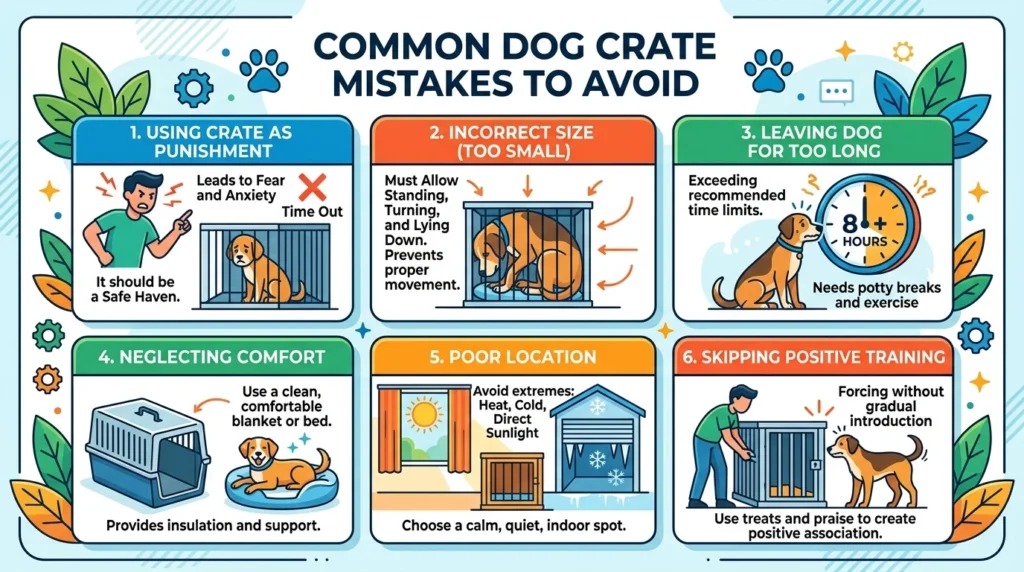
This single mistake destroys all crate training progress. Because dogs learn through association, using the crate negatively creates fear and resistance. Therefore, always send your dog to their crate calmly and positively, never in anger.
Mistake 2: Leaving Your Dog in the Crate Too Long
Crating a dog for excessive periods causes physical discomfort, anxiety, and behavioral problems. Also, puppies physically cannot hold their bladder as long as adult dogs. Therefore, always observe the maximum crating times listed above and never exceed them.
Mistake 3: Giving In to Whining
Many owners make the mistake of opening the crate the moment their dog whines. As a result, the dog learns that whining equals freedom and the behavior escalates. Instead, wait for a brief pause in whining before opening the door. This teaches your dog that calm behavior not noise opens the crate.
Mistake 4: Rushing the Training Process
Crate training takes days to weeks not hours. Therefore, never rush the introduction steps. Each dog moves at a different pace. Some dogs accept crates within two days. Others need two weeks. Both timelines are completely normal.
Mistake 5: Wrong Crate Placement
Placing a crate in an isolated, dark, or cold area makes dogs anxious and resistant. Also, avoiding family activity increases loneliness and stress. Therefore, always position the crate in a warm, social area of your home especially during the training phase.
Mistake 6: Removing the Crate Too Soon
Many owners remove the crate once house training is complete. However, most dogs continue using their crate voluntarily long after training ends because it’s genuinely their safe space. Therefore, keep the crate available even after your dog earns more freedom. You’ll likely find them sleeping in it by choice.
Pro Tip: Cover three sides of a wire crate with a blanket or dedicated crate cover. This simple addition transforms a wire crate into a cozy den immediately. The enclosed feeling dramatically reduces anxiety especially for nervous or rescue dogs adjusting to a new home.
Top Dog Crates Compared: Quick Reference Guide
Best Dog Crates by Category
| Crate Type | Best Brand Option | Price Range | Best For |
| Wire Crate | MidWest Homes iCrate | $$ | Home training, puppies |
| Plastic Airline Crate | Petmate Sky Kennel | $$ | Travel, anxious dogs |
| Soft-Sided Crate | Petsfit Portable Crate | $ | Travel, calm adult dogs |
| Heavy-Duty Crate | Impact Dog Crates | $$$$ | Escape artists, large breeds |
| Furniture Crate | Unipaws Wood Crate | $$$ | Home décor, calm adults |
| Puppy Starter Crate | Amazon Basics Wire Crate | $ | First-time owners, puppies |
What the Price Ranges Mean
- $ = Under $50 great for beginners and budget-conscious owners
- $$ = $50–$150 solid quality for everyday home use
- $$$ = $150–$300 premium quality with extra features
- $$$$ = $300+ professional-grade for special needs dogs
Frequently Asked Questions About Dog Crates
1. Is it cruel to create a dog?
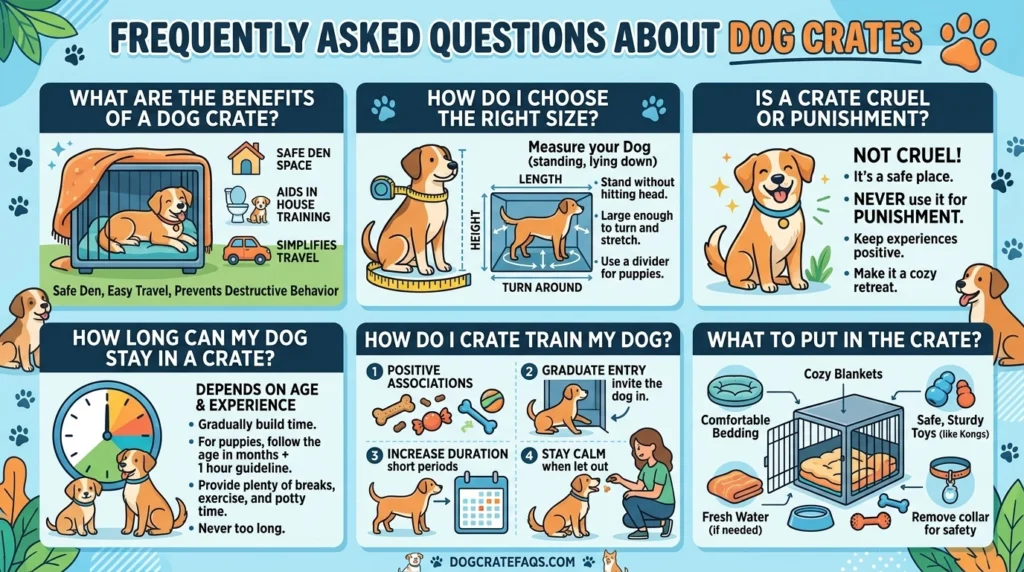
No when used correctly, a dog crates crate is not cruel at all. In fact, most dogs genuinely love their crates and use them voluntarily as a resting space. The key word is “correctly.” Never use a crate as punishment, never crate a dog for excessive hours, and always make the experience positive. Dogs are den animals by nature therefore, a properly sized, comfortable crate meets a genuine instinctive need rather than creating one.
2. How long does crate training take?
Crate training timelines vary widely between individual dogs. Some puppies accept their crate within three to five days. Others particularly rescue dogs with previous negative associations may take two to four weeks. Therefore, patience is essential. Never rush the process. Focus on building positive associations gradually, and your dog will come to love their crate at their own pace.
3. Should I put a dog bed inside the crate?
Yes a comfortable bed or blanket makes the crate significantly more inviting. However, wait until your puppy is reliably house trained before adding expensive bedding. Young puppies sometimes chew or soil bedding during the early training phase. Therefore, start with an inexpensive washable blanket and upgrade once your dog is fully trained and trustworthy.
4. Where should I put my dog’s crate at night?
During the initial training phase, place your dog’s crate in your bedroom or just outside the door. Your presence and scent help puppies feel secure and reduces overnight whining significantly. Also, being nearby allows you to hear if your puppy needs a bathroom break during the night. Once fully trained, you can gradually move the crate to whatever location works best for your household routine.
5. Can I use one crate for multiple dogs?
Generally, each dog should have their own crate. Dogs feel most secure in a space they consider exclusively their own. Sharing a crate can create competition, stress, and territorial behavior especially between dogs who aren’t closely bonded. Therefore, if you have multiple dogs, invest in individual crates for each one. However, some bonded pairs do rest together comfortably and always observe your dogs’ individual preferences and body language.
6. What should I put in my dog’s crate?
A well-equipped dog crate should include:
- A soft blanket or dog bed comfort and warmth
- A worn piece of your clothing your scent provides security
- A safe chew toy mental stimulation and comfort
- A water bowl (for longer periods) clip-on crate bowls work best
- Avoid food can cause messes and stomach upset in an enclosed space
7. Is a wire crate or plastic crate better?
Both types have genuine advantages; it depends entirely on your dog’s personality and your needs. Wire crates offer better ventilation and visibility, making them excellent for home training. Plastic crates feel more enclosed and den-like, which suits anxious dogs and travel situations. Therefore, consider your dog’s temperament first. A nervous dog often feels more secure in a plastic crate. A sociable, curious dog typically prefers the visibility of wire.
Find the Perfect Dog Crate Your Dog Will Thank You
A good dog crates crate is one of the most valuable investments you’ll make as a dog owner. It speeds up house training, keeps your dog safe, reduces anxiety, and gives your dog a personal retreat they’ll genuinely love.
The key is choosing the right type and size for your specific dog then introducing it patiently with positive reinforcement. Also, remember that crate training isn’t about restriction. It’s about giving your dog a safe, comfortable den they can call their own.
Therefore, start with the right size, choose the right type for your lifestyle, and follow the step-by-step training guide above. Your dog will adapt faster than you expect and soon enough, you’ll find them choosing their crate even when the door is wide open.