
Introduction
It’s mango season, you’re cutting up a beautiful ripe mango, and your dog appears beside you with that hopeful expression that’s impossible to ignore. The question hits immediately: can dogs eat mango, or is this a fruit you need to keep strictly to yourself?
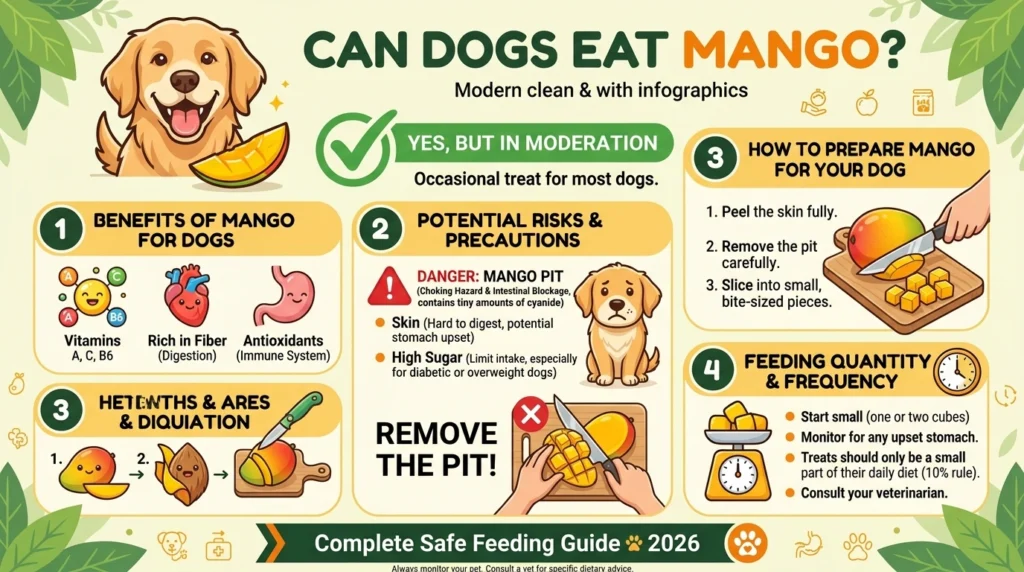
Here’s the reassuring answer: dogs can eat mango safely and many genuinely love the sweet, tropical taste. However, there are important preparation steps that make the difference between a healthy treat and a trip to the emergency vet.
Many pet owners don’t realize that while mango flesh is completely safe, other parts of the fruit pose real dangers. The pit is a serious choking hazard and contains a compound called amygdalin. The skin is difficult to digest and may contain traces of urushiol, the same compound found in poison ivy.
In my experience, mango makes a wonderful occasional dog treat when prepared correctly. It’s naturally sweet, genuinely nutritious, and most dogs respond to it enthusiastically. However, preparation and portion control are non-negotiable.
This complete guide covers everything: what’s safe, what isn’t, nutritional benefits, serving ideas, and the mistakes that send dogs to the vet unnecessarily.
Quick Answer
Yes dogs can eat mango safely when properly prepared. Remove the skin and pit completely before serving. Mango flesh provides vitamins A, B6, C, and E, plus fiber and antioxidants. Feed in small portions only mango is high in natural sugar. Limit to a few small cubes per day for most dogs.
Key Takeaways
- Mango flesh is safe for dogs packed with vitamins and antioxidants
- The pit must always be removed it’s a choking hazard and contains amygdalin
- The skin should always be removed it’s hard to digest and may cause reactions
- Mango is high in natural sugar small portions only, especially for diabetic or overweight dogs
- Frozen mango cubes make an excellent summer cooling treat for most dogs
- Always consult your vet before giving mango to dogs with diabetes, pancreatitis, or weight issues
Is Mango Safe for Dogs? The Complete Breakdown
Mango is safe for dogs but only specific parts of the fruit. Understanding exactly which parts are safe and which are dangerous is the most important knowledge any dog owner needs before sharing this tropical fruit.
Which Parts of Mango Can Dogs Eat?
| Part of Mango | Safe for Dogs? | Reason |
| Flesh (ripe) | ✅ Yes | Nutritious, digestible, safe |
| Skin/peel | ❌ No | Hard to digest; may contain urushiol |
| Pit/seed | ❌ Never | Choking hazard; contains amygdalin |
| Leaves | ❌ Never | Contain urushiol-like compounds |
| Unripe flesh | ⚠️ Caution | Higher acidity; may cause digestive upset |
What Nutrients Does Mango Provide for Dogs?
Ripe mango flesh delivers impressive nutrition in a relatively small serving:
- Vitamin A supports eye health, immune function, and skin health
- Vitamin B6 supports brain function and hormone regulation
- Vitamin C powerful antioxidant supporting immune system health
- Vitamin E protects cells and supports coat and skin quality
- Fiber supports healthy digestion and gut microbiome balance
- Folate supports cell growth and metabolic function
- Potassium supports heart function and muscle health
- Antioxidants combat oxidative stress and support healthy aging
What About the Mango Pit?
The mango pit deserves special attention because it poses two distinct risks. First, it’s a serious choking hazard particularly for medium and small dogs who might try to swallow it whole. Second, mango pits contain amygdalin, a compound that breaks down into cyanide when metabolized. While a dog would need to consume significant amounts to experience cyanide toxicity, the choking risk alone makes the pit absolutely off-limits.
Therefore, always remove the pit completely and dispose of it where your dog cannot access it afterward.
How to Safely Feed Mango to Your Dog: Step-by-Step Guide
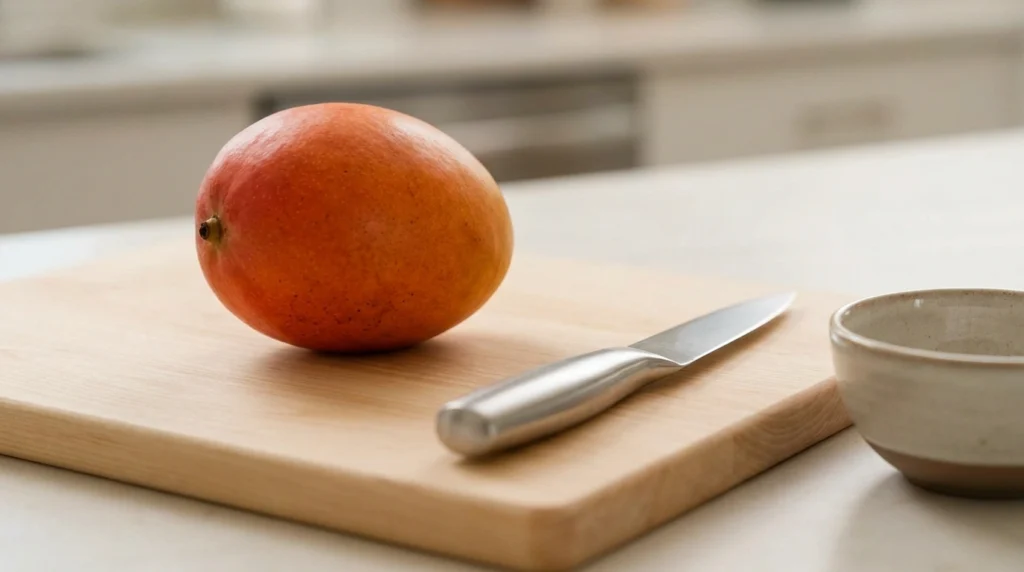
Preparing mango for your dog correctly eliminates all the significant risks associated with this fruit. Here’s exactly how to do it safely every time.
Step-by-Step Safe Mango Preparation
- Choose a ripe mango. Ripe mangoes are softer, sweeter, and easier for dogs to digest than unripe fruit. Also, unripe mango has higher acidity that can cause stomach upset. A ripe mango yields slightly when pressed gently and has a sweet, fruity aroma at the stem end.
- Wash the mango thoroughly. Rinse the outside of the mango under cold running water before cutting. Because the skin comes into contact with the flesh during cutting, surface contaminants can transfer to the edible portion. Therefore, washing first is an important food safety step.
- Remove the skin completely. Peel away all mango skin using a sharp knife or vegetable peeler. Also, check for any remaining skin fragments along the edges of the flesh, even small pieces can cause digestive irritation in sensitive dogs.
- Remove the pit entirely. Cut the mango flesh away from the large central pit on all sides. Also, trim away any flesh that remained attached to the pit, as the area closest to the pit may contain trace amounts of the pit’s compounds. Dispose of the pit immediately in a covered trash container.
- Cut into appropriately sized pieces. Cube the mango flesh into small, bite-sized pieces appropriate for your dog’s size. Small dogs need pea-sized cubes. Medium dogs can handle marble-sized pieces. Large dogs can manage slightly larger cubes but are always small enough to prevent choking.
- Serve at room temperature or frozen. Fresh mango at room temperature is easy for most dogs to eat. Also, frozen mango cubes make excellent summer treats; they provide cooling relief and take longer to eat, creating natural enrichment. Freeze mango cubes in a single layer on a baking sheet before transferring to a freezer bag for convenient storage.
- Follow the 10% treat rule. All treats including mango should account for no more than 10% of your dog’s daily caloric intake. Because mango contains approximately 10 calories per ounce of flesh, calculate your dog’s daily caloric allowance and keep mango portions well within the treat threshold.
Safe Mango Serving Sizes by Dog Size
| Dog Size | Weight | Safe Mango Serving |
| Extra Small (Toy) | Under 10 lbs | 1–2 small cubes |
| Small | 10–25 lbs | 2–3 small cubes |
| Medium | 25–60 lbs | 3–5 cubes |
| Large | 60–100 lbs | 5–8 cubes |
| Giant | Over 100 lbs | Up to a small handful of cubes |
Creative Ways to Serve Mango to Dogs
Mango’s soft texture and natural sweetness make it one of the most versatile fruit treats for dogs. Here are genuinely enjoyable ways to serve it:
Fun and Safe Mango Treat Ideas
1. Frozen Mango Cubes Freeze small peeled, pitted mango cubes directly on a baking sheet. Transfer to a freezer bag once frozen. Serve directly from frozen as summer cooling treats. Also, most dogs find the colder temperature especially appealing on warm days.
2. Mango Kong Stuffing Blend ripe mango flesh into a smooth puree. Mix with plain, unsweetened yogurt and freeze in a stuffed Kong toy. As a result, you create a long-lasting mental enrichment treat that keeps your dog engaged for 20–30 minutes.
3. Mango Training Treats Cut mango into very small, pea-sized pieces for training sessions. Because mango is highly palatable and motivating for most dogs, it works well as a high-value reward during challenging training exercises. Also, the small piece size keeps caloric impact minimal even during repetitive training.
4. Mango and Banana Frozen Treats Blend equal parts ripe mango and banana with a small amount of plain yogurt. Pour into silicone molds and freeze. As a result, you create a tropical frozen treat packed with vitamins, antioxidants, and natural sweetness that most dogs find genuinely irresistible.
5. Mango Food Topper Mash a small amount of ripe mango and drizzle over your dog’s regular meal as an appetite-boosting topper. This works particularly well for picky eaters or dogs recovering from illness who need extra encouragement to eat.
Mango vs. Other Popular Dog Fruit Treats
| Fruit | Calories Per Serving | Sugar Level | Safe Parts | Key Benefit |
| Mango (3 cubes) | ~15 calories | High | Flesh only | Vitamins A, C, E, B6 |
| Blueberries (10) | ~10 calories | Low | Whole berry | Antioxidants |
| Banana (2 slices) | ~20 calories | Medium-High | Flesh only | Potassium |
| Watermelon (1 chunk) | ~8 calories | Low-Med | Flesh, no seeds | Hydration |
| Apple (1 slice) | ~10 calories | Medium | Flesh, no seeds/core | Fiber |
| Grapes | Any amount | NONE TOXIC | Never feed |
Common Mistakes When Feeding Mango to Dogs
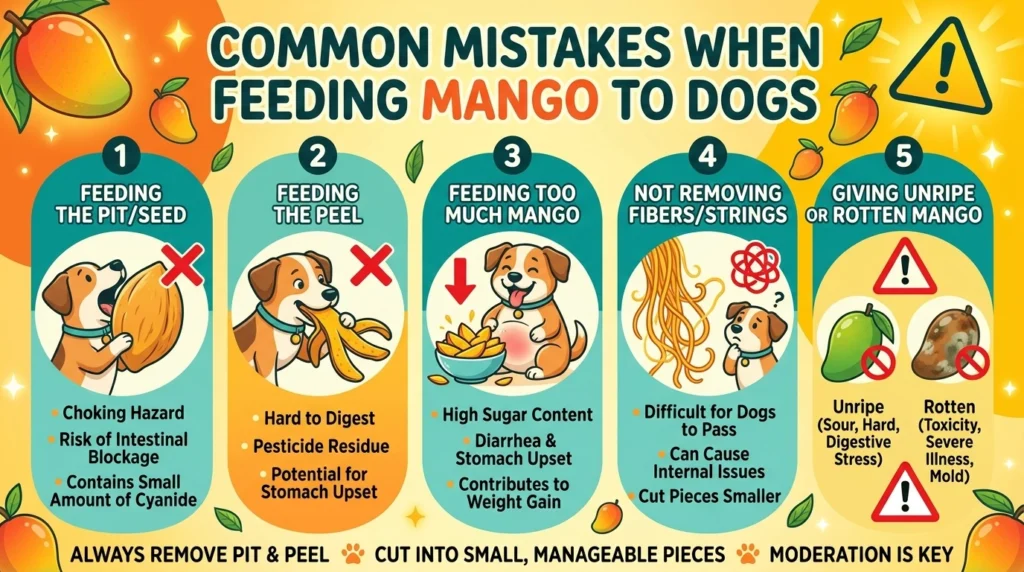
Mistake 1: Leaving the Pit Within Reach
This is the most dangerous mistake and it happens more often than you’d think. An owner peels and cuts a mango, leaves the pit on the counter, and their dog jumps up and grabs it. Because the pit is large, smooth, and enticing, dogs attempt to swallow it whole with potentially fatal consequences. Therefore, always dispose of the mango pit immediately in a covered trash container as soon as you remove it.
Mistake 2: Feeding Mango Skin
Many owners assume that because the flesh is safe, the skin must be too. However, mango skin is genuinely problematic for dogs. It contains urushiol-like compounds related to those in poison ivy that can cause skin and digestive reactions in sensitive individuals. Also, the fibrous texture is very difficult for dogs to digest, potentially causing intestinal blockage in smaller dogs. Therefore, always peel mango completely before offering it to your dog.
Mistake 3: Offering Dried Mango
Dried mango seems like a convenient alternative to fresh. However, most commercial dried mango products contain added sugar significantly concentrated compared to fresh fruit. Also, some products include sulfites as preservatives, which can trigger reactions in sensitive dogs. Therefore, only offer fresh or frozen mango to your dog. If you use dried mango, check the ingredient list carefully and choose unsweetened, sulfite-free varieties then reduce portions significantly because of the concentrated sugar content.
Mistake 4: Ignoring the Sugar Content for At-Risk Dogs
Mango is significantly higher in natural sugar than many other dog-safe fruits. A single cup of mango flesh contains approximately 23 grams of sugar. Therefore, dogs with diabetes, pancreatitis, obesity, or insulin sensitivity should not eat mango without explicit veterinary approval. Also, regular mango feeding for healthy dogs should remain limited to prevent gradual weight gain from accumulated treat calories over time.
Mistake 5: Assuming Mango Juice or Dried Products Are Equivalent
Mango juice, mango chutney, mango candy, and other mango-flavored products often contain ingredients that are harmful or outright toxic to dogs including xylitol, added sugars, spices, and preservatives. Therefore, never offer any mango product other than plain fresh or frozen mango flesh. The safety of mango for dogs applies specifically to the plain fruit, not to any processed or flavored product containing mango.
Pro Tip: Freeze individual mango cubes in an ice cube tray for perfectly portioned dog treats. Each cube contains just 3–5 calories making portion management genuinely effortless. Also, if you’re preparing mango for yourself, simply set aside a few small pieces for your dog before adding any seasonings, lime juice, chili powder, or other human-food additions that aren’t appropriate for dogs.
Frequently Asked Questions: Can Dogs Eat Mango?

1. Can dogs eat mango skin?
No, dogs should not eat mango skin. While mango skin is not severely toxic, it contains compounds related to urushiol, the same chemical found in poison ivy that can cause digestive upset and skin reactions in sensitive dogs. Also, the fibrous, tough texture of mango skin is genuinely difficult for dogs to digest, potentially causing intestinal irritation or blockage particularly in smaller breeds. Therefore, always peel mango completely before offering it to your dog. Even a small amount of skin that accidentally remains on a piece of flesh is worth removing before serving to be safe and avoid unnecessary digestive complications.
2. Is the mango pit dangerous for dogs?
Yes, the mango pit is dangerous for dogs for two distinct reasons. First, it poses a serious choking hazard because of its large size and smooth surface. Second, mango pits contain amygdalin, a compound that metabolizes into hydrogen cyanide when consumed. While a dog would need to chew through the pit and consume significant quantities to reach toxic levels, the choking risk alone makes the pit absolutely off-limits. Also, even a dog that doesn’t choke on a swallowed pit can develop intestinal blockage. Therefore, always remove the pit completely and dispose of it immediately in a covered trash container where your dog cannot access it.
3. Can diabetic dogs eat mango?
Diabetic dogs should not eat mango without explicit veterinary approval. Mango is one of the higher-sugar fruits containing approximately 23 grams of natural sugar per cup of flesh. Because diabetic dogs need carefully controlled carbohydrate and sugar intake to manage blood glucose levels, the sugar in mango can cause problematic blood sugar spikes. Therefore, if your dog has diabetes, consult your veterinarian before offering mango or any other sweet fruit as a treat. Your vet can advise whether a very small occasional piece fits within your dog’s specific dietary management plan or whether avoiding mango entirely is the safer approach.
4. Can puppies eat mango?
Yes puppies can eat small amounts of properly prepared mango from approximately 8 weeks of age. However, start with a very small piece, just one small cube and introduce it gradually. Also, ensure the skin and pit are removed completely. Because puppies have smaller, more sensitive digestive systems than adult dogs, new foods should always be introduced slowly and monitored carefully. Also, because puppies need precise nutrition during growth, treats of any kind should remain minimal to avoid disrupting their complete, balanced dietary intake. Consult your vet about appropriate treat amounts for your puppy’s specific breed, size, and developmental stage.
5. How much mango can a dog eat safely?
Safe mango portions depend on your dog’s size, weight, and health status. As a general guideline: extra small dogs (under 10 lbs) should have just 1–2 small cubes; small dogs (10–25 lbs) can have 2–3 cubes; medium dogs can enjoy 3–5 cubes; large dogs up to 5–8 cubes per serving. However, mango shouldn’t be offered daily because of its relatively high sugar content. Two to three times per week is a more appropriate frequency for most healthy dogs. Also, count mango portions within the 10% treat rule. All treats combined should account for no more than 10% of your dog’s daily caloric allowance.
6. Can dogs eat frozen mango?
Yes, frozen mango is an excellent treat option. Freezing doesn’t change mango’s nutritional content or safety profile. Also, frozen mango cubes provide additional benefits: they take longer to eat, creating natural mental enrichment, and offer a cooling effect during warm weather. Many dogs actually prefer frozen mango over fresh because the firmer texture is more satisfying to chew. Also, frozen mango cubes are convenient for owners because they can be prepared in batches and stored for several months. The same preparation rules apply to frozen mango as to fresh, remove skin and pit completely before freezing, then cube appropriately for your dog’s size.
7. What should I do if my dog eats a mango pit?
If your dog swallows a mango pit, contact your veterinarian or emergency animal hospital immediately. Don’t wait for symptoms to develop. Also, call the ASPCA Animal Poison Control Center at (888) 426-4435 if your vet is unavailable. The pit poses two immediate risks: choking or intestinal obstruction from its physical size, and potential amygdalin exposure if the pit was chewed through significantly. Symptoms to watch for include choking, gagging, vomiting, lethargy, abdominal pain, or refusal to eat. The veterinarian may recommend monitoring at home, inducing vomiting, or bringing your dog in for examination depending on your dog’s size, the size of the pit, and how recently the pit was consumed.
Mango and Dogs Sweet, Safe, and Worth the Preparation
So can dogs eat mango ? Yes enthusiastically yes. When you prepare it correctly, mango delivers impressive nutrition, natural sweetness, and genuine enjoyment for your dog in every carefully portioned serving.
The preparation is genuinely simple. Remove the skin. Remove the pit. Cut into appropriate pieces. Serve fresh or frozen. That’s it. Those four steps transform a potentially risky tropical fruit into one of the most nutritionally impressive treats in your dog’s rotation.
Therefore, pick up a ripe mango on your next shopping trip and share a few carefully prepared cubes with your dog. Also, try the frozen mango cube approach for summer enrichment. It’s one of the simplest and most effective natural dog treats available anywhere.