
Introduction
You’re peeling a banana and your dog is staring at you with those irresistible eyes. The question hits immediately: can dogs eat bananas, or is this one of those foods that seems harmless but actually isn’t?
The good news? Bananas are safe for dogs. However, like most human foods shared with pets, there are important guidelines that make the difference between a healthy treat and a digestive disaster.
Many pet owners don’t realize that bananas, while nutritious for dogs, are also high in natural sugar and calories. Therefore, portion size matters far more than most people think. Also, the way you serve bananas significantly affects how well your dog handles them.
In my experience, bananas make an excellent occasional dog treat when given correctly. They’re natural, accessible, and most dogs love the taste. However, giving too much or giving them to the wrong dog creates real problems.
This guide answers every question you have about feeding bananas to dogs: benefits, risks, safe portions, serving ideas, and the most common mistakes owners make. Let’s get into it.
Quick Answer
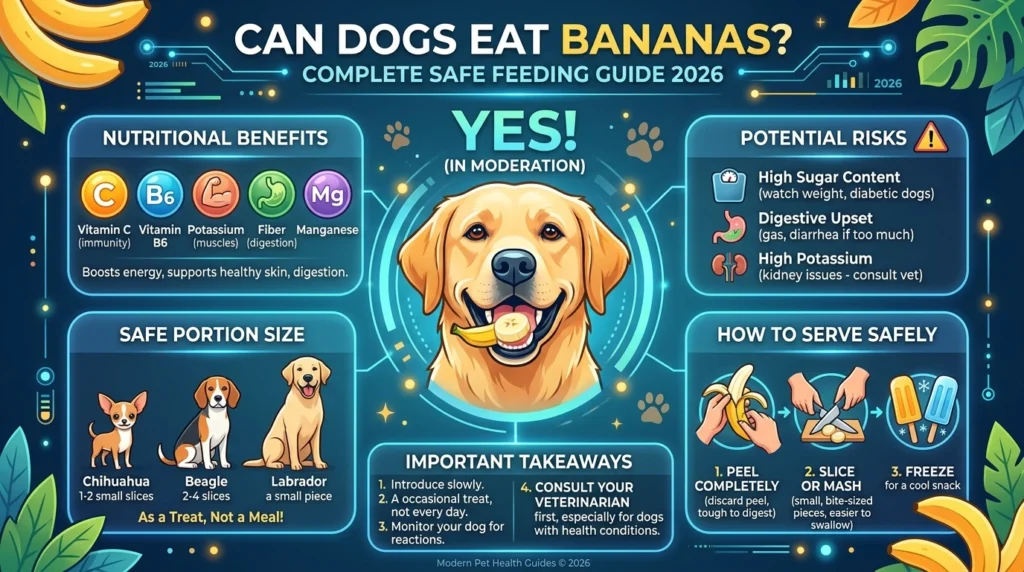
Yes, dogs can eat bananas safely. Bananas provide potassium, vitamin B6, vitamin C, and fiber. However, they’re high in natural sugar, so portions must stay small. Feed bananas as an occasional treat only, not as a dietary staple. Remove the peel before serving and limit to a few small slices per day.
Key Takeaways
- Bananas are safe for most healthy dogs when fed in small amounts
- They provide potassium, vitamin B6, vitamin C, magnesium, and fiber
- Bananas are high in natural sugar overfeeding causes weight gain and digestive upset
- The banana peel is not toxic but is hard to digest always remove it
- Dogs with diabetes or weight issues should avoid bananas consult your vet first
- A safe serving is 2–3 small slices for small dogs; half a banana maximum for large dogs
Are Bananas Safe for Dogs? The Complete Answer
Yes bananas are safe for dogs to eat in moderation. They’re non-toxic, naturally sweet, and provide several genuine nutritional benefits. However, their high sugar content means they should function as an occasional treat rather than a regular food addition.
What Nutrients Do Bananas Provide for Dogs?
Bananas contain several nutrients that benefit dogs when consumed in appropriate amounts:
| Nutrient | Benefit for Dogs |
| Potassium | Supports heart function and muscle health |
| Vitamin B6 | Supports brain function and immune health |
| Vitamin C | Antioxidant support for immune system |
| Magnesium | Supports bone development and energy production |
| Fiber | Supports digestive health and regularity |
| Biotin | Supports healthy coat and skin |
How Much Sugar Is in a Banana?
This is where many owners underestimate the issue. A medium banana contains approximately 14 grams of natural sugar and about 105 calories. For a 20-pound dog, that represents a significant caloric addition to their daily intake.
Therefore, while the nutrients in bananas are genuinely beneficial, the sugar content means strict portion limits are essential particularly for dogs prone to weight gain, diabetes, or pancreatitis.
Are Banana Peels Safe for Dogs?
Banana peels are not toxic to dogs. However, they’re extremely difficult to digest and can cause intestinal blockages particularly in smaller dogs. Also, the fibrous texture of banana peels can cause choking if swallowed in large pieces.
Therefore, always remove the peel completely before offering a banana to your dog. This simple step eliminates the most significant physical risk associated with banana feeding.
How to Feed Bananas to Dogs Safely: Step-by-Step Guide

Feeding bananas to your dog safely is genuinely straightforward. However, following a specific approach ensures your dog gets the benefits without the digestive consequences of incorrect serving.
Step-by-Step Safe Banana Feeding Guide
- Check your dog’s health status first. Before adding any new food, consider your dog’s individual health. Dogs with diabetes, obesity, kidney disease, or pancreatitis should not eat bananas without veterinary approval. Therefore, if your dog has any ongoing health condition, consult your vet before offering a banana for the first time.
- Remove the peel completely. Always peel the banana fully before feeding. Also, check for any remaining peel fragments, even small pieces can cause digestive irritation. Dispose of the peel where your dog cannot access it after you’ve finished.
- Cut into small, appropriate pieces. Never offer a whole or half banana at once. Instead, slice the banana into small, bite-sized pieces appropriate for your dog’s size. Smaller dogs need smaller pieces roughly the size of a blueberry while larger dogs can handle slightly larger slices.
- Offer as a treat not a meal replacement. Bananas should never replace any portion of your dog’s regular, balanced diet. Therefore, treat banana as a snack that falls within the 10% treat rule treats of all kinds should make up no more than 10% of your dog’s daily caloric intake.
- Introduce gradually for first-time banana dogs. If your dog has never eaten a banana before, start with a very small piece with just one or two bites. Then wait 24 hours and watch for any digestive reaction before offering more. As a result, you catch any individual sensitivity before feeding larger amounts.
- Monitor after feeding. Watch for loose stools, vomiting, or unusual behavior in the hours following banana consumption. Mild digestive changes are normal when introducing any new food. However, persistent symptoms warrant a call to your vet.
- Store bananas safely. Keep bananas and other fruits out of your dog’s reach. A dog that accesses a bunch of bananas unsupervised can consume far more than a safe amount causing significant digestive upset and caloric overload.
Safe Banana Serving Sizes by Dog Size
| Dog Size | Weight Range | Safe Banana Serving |
| Extra Small | Under 10 lbs | 1–2 small slices |
| Small | 10–25 lbs | 2–3 slices |
| Medium | 25–60 lbs | 3–5 slices |
| Large | 60–100 lbs | Half a banana maximum |
| Giant | Over 100 lbs | Half a banana maximum |
Creative Ways to Serve Bananas to Dogs
Bananas are one of the most versatile natural dog treats available. Because they’re soft and naturally sweet, they work well in many different formats that dogs genuinely enjoy.
Fun and Safe Banana Treat Ideas
1. Frozen Banana Slices Freeze small banana slices and offer them as cool summer treats. Also, frozen bananas provide natural enrichment dogs spend longer enjoying frozen treats than soft ones. As a result, frozen banana slices become a mentally stimulating activity as well as a treat.
2. Banana Kong Stuffing Mash banana and use it to stuff a Kong toy. Also, mix mashed banana with plain unsweetened peanut butter (xylitol-free) or plain yogurt for a layered Kong filling. Freeze the stuffed Kong for longer-lasting enrichment.
3. Banana Training Treats Slice bananas into tiny pea-sized pieces and use them as high-value training rewards. Because dogs find the sweet taste highly motivating, banana works excellently as a training treat particularly for challenging new skills.
4. Banana Dog Biscuits Bake simple dog biscuits using mashed banana, oat flour, and egg. These homemade treats are genuinely nutritious and free from artificial additives. However, keep portions small even with homemade biscuits the banana sugar content remains the same regardless of format.
5. Banana and Yogurt Frozen Treats Blend banana with plain, unsweetened, probiotic yogurt and freeze in silicone molds. As a result, you create a naturally nutritious frozen treat that supports both gut health and enjoyment simultaneously.
What NOT to Mix With Bananas for Dogs
| Ingredient | Why to Avoid |
| Peanut butter with xylitol | Xylitol is highly toxic to dogs |
| Chocolate | Toxic to dogs causes theobromine poisoning |
| Grapes or raisins | Toxic to dogs cause kidney failure |
| Added sugar | Unnecessary bananas are already sweet enough |
| Artificial sweeteners | Many are toxic to dogs particularly xylitol |
Common Mistakes When Feeding Bananas to Dogs
Mistake 1: Feeding Too Much Too Often
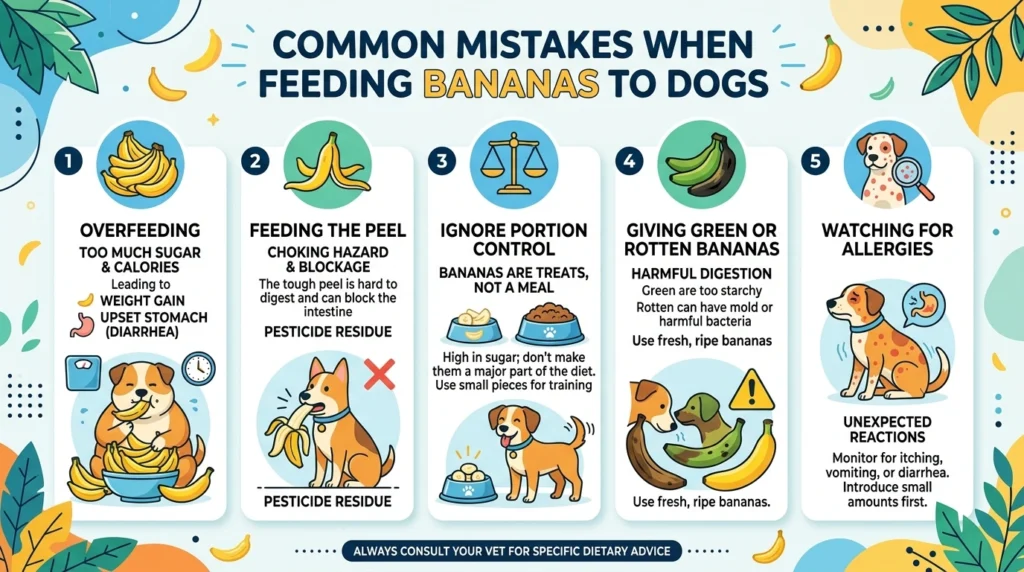
This is the most common mistake I see with banana-loving dog owners. Because dogs enjoy bananas so much, owners gradually increase how much they give, ending up feeding half a banana or more daily. As a result, sugar intake rises significantly, leading to weight gain and potential blood sugar issues over time. Therefore, keep banana portions small and infrequent two or three times per week maximum for most dogs.
Mistake 2: Leaving the Peel On
Some owners assume that because the peel isn’t toxic, it’s fine to leave it on. However, banana peel is extremely fibrous and difficult for dogs to digest. Also, it presents a choking hazard particularly for smaller dogs who may swallow pieces without properly chewing them. Therefore, always remove the peel entirely before offering a banana to any dog, regardless of size.
Mistake 3: Offering Banana to Dogs With Diabetes
Dogs with diabetes need carefully controlled carbohydrate and sugar intake. Because bananas contain approximately 14 grams of sugar per medium fruit, they can cause significant blood sugar spikes in diabetic dogs. Therefore, never offer bananas to a diabetic dog without explicit veterinary approval. Also, this warning applies to dogs on weight management programs the additional calories from frequent banana feeding undermine caloric restriction goals.
Mistake 4: Using Banana as a Meal Replacement
Some owners offer bananas instead of a proper meal when they’ve run out of dog food or the dog refuses to eat. However, bananas don’t provide the protein, fat, or complete nutrition that dogs need as a meal. Therefore, bananas should always complement a complete, balanced diet and never replace it. Also, using high-sugar treats to coax a reluctant eater creates long-term picky eating problems.
Mistake 5: Ignoring the 10% Treat Rule
The 10% rule is fundamental to responsible treat feeding. All treats including healthy ones like bananas should account for no more than 10% of your dog’s total daily caloric intake. Therefore, calculate your dog’s daily caloric allowance, take 10% of that number, and ensure banana portions stay within that limit alongside any other treats given that day.
Pro Tip: Freeze a peeled banana overnight, then slice it directly from frozen into small pieces for treats. Frozen banana has a firmer texture that most dogs find especially satisfying; it takes longer to eat, provides cooling relief on hot days, and the firmer texture reduces the messy squishiness of room-temperature banana. Also, frozen banana slices keep in the freezer for up to three months, making batch preparation genuinely convenient.
Frequently Asked Questions: Can Dogs Eat Bananas?
1. Can puppies eat bananas?
Yes, puppies can eat small amounts of bananas safely. However, puppies have smaller, more sensitive digestive systems than adult dogs. Therefore, start with an even smaller portion than you would give an adult dog just one tiny piece initially. Also, introduce bananas no earlier than 8 weeks of age, and always check with your vet about appropriate treats for your specific puppy’s developmental stage. Because puppies need precise nutrition during growth, treats of any kind should remain minimal and infrequent to avoid disrupting their balanced dietary intake.
2. Can dogs eat banana peels?
Banana peels are not toxic to dogs but they’re genuinely problematic.The peel is highly fibrous and difficult to digest, which can cause intestinal upset, constipation, or in the worst cases, intestinal blockage. Also, the rubbery texture creates a choking hazard for smaller dogs who don’t chew thoroughly. Therefore, always remove the peel completely before offering the banana. If your dog accidentally eats a small piece of peel, monitor for vomiting, lethargy, or changes in bowel movements, and contact your vet if symptoms develop or persist beyond 24 hours.
3. How often can dogs eat bananas?
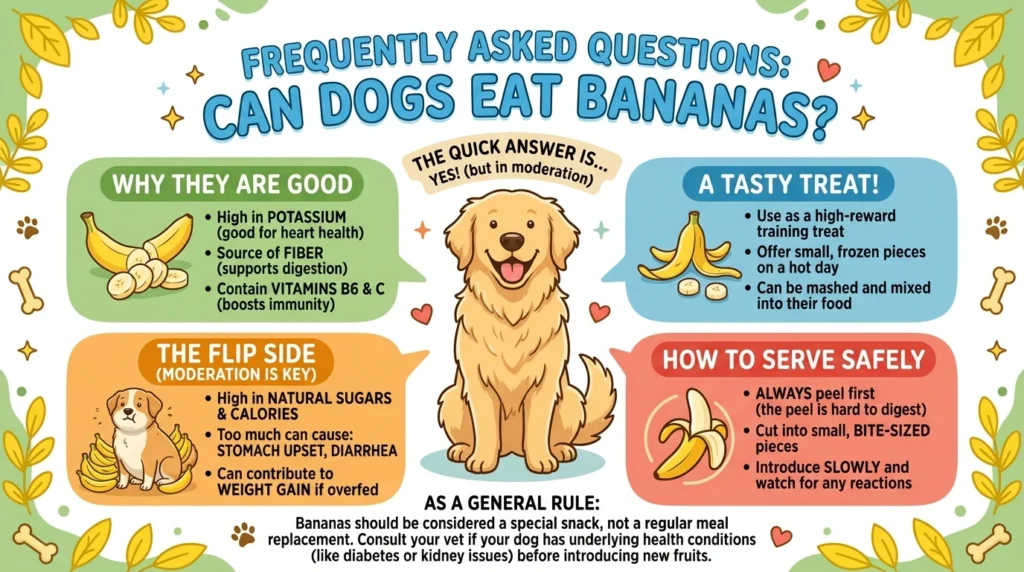
Most healthy adult dogs can safely enjoy small banana portions two to three times per week. However, daily banana feeding isn’t recommended because of the cumulative sugar intake over time. Also, the appropriate frequency depends on your dog’s size, weight, activity level, and overall health status. A small, sedentary dog can tolerate far less banana than a large, highly active working dog. Therefore, use the 10% treat rule as your guide banana and all other treats combined should never exceed 10% of your dog’s daily caloric allowance.
4. Can dogs eat frozen bananas?
Yes, frozen bananas are an excellent treat option for dogs. Freezing doesn’t change a banana’s nutritional content or safety profile. Also, frozen banana slices provide a firmer texture that many dogs find especially satisfying; they take longer to eat, provide mental enrichment, and offer cooling relief during warm weather. You can freeze plain banana slices or blend banana with plain yogurt and freeze in molds for a more elaborate treat. However, the same portion limits apply to frozen bananas as to fresh sugar content remaining identical regardless of temperature.
5. Are bananas good for dogs with upset stomachs?
Bananas contain pectin, a soluble fiber that may help firm up loose stools in some cases. Therefore, some veterinarians suggest small amounts of banana as part of a bland diet approach for mild digestive upset. However, bananas should never replace veterinary care for significant digestive illness. Also, the sugar in bananas can sometimes worsen diarrhea in dogs with sensitive digestive systems. Therefore, consult your vet before using bananas as a digestive remedy. What helps one dog may worsen another dog’s symptoms, depending on the underlying cause of the digestive issue.
6. Can diabetic dogs eat bananas?
Diabetic dogs should generally not eat bananas without explicit veterinary approval. Because bananas contain approximately 14 grams of natural sugar per medium fruit, they can cause significant blood sugar fluctuations in diabetic dogs even in small portions. Therefore, if your dog has diabetes, always consult your veterinarian before offering bananas or any other fruit as a treat. Your vet can advise whether the occasional very small piece is acceptable within your dog’s specific dietary management plan, or whether bananas should be avoided entirely based on your dog’s individual health status.
7. What other fruits can dogs safely eat besides bananas?
Several other fruits are safe and nutritious for dogs in moderation:
- Blueberries antioxidant-rich, low sugar, excellent small treat
- Watermelon (seedless, no rind) hydrating, low calorie
- Apple (no seeds or core) fiber and vitamins
- Strawberries vitamin C and antioxidants
- Mango (no pit or skin) vitamins A, B6, C, and E
- Pineapple (fresh only, no skin or core) digestive enzymes and vitamins
Always introduce new fruits gradually and in small amounts. Also, avoid grapes, raisins, cherries, and citrus fruits that cause significant health problems in dogs. When in doubt about any specific fruit, consult your veterinarian before offering it.
Bananas and Dogs A Safe, Sweet Treat Done Right
So can dogs eat bananas ? Yes, without question. When served correctly, bananas make a genuinely healthy, natural treat that most dogs love.The potassium, B vitamins, fiber, and antioxidants in bananas provide real nutritional value when given in appropriate amounts.
However, “appropriate amounts” is the key phrase here. Small portions, infrequent serving, peel always removed, and careful attention to your dog’s individual health status these four principles make banana feeding both safe and beneficial.
Therefore, feel confident sharing that occasional banana slice with your dog. Also, get creative with frozen slices, Kong stuffing, or homemade biscuits for variety. Just keep portions sensible and consult your vet if your dog has any ongoing health conditions.