
Introduction
Have you ever stopped and wondered what would my dog eat if they lived in the wild? It’s a question more dog owners are asking today than ever before. And honestly, it’s one of the most important questions you can ask when it comes to your dog’s long-term health.
Natures food dog isn’t just a trendy concept. It’s a genuine movement rooted in understanding canine biology, ancestral nutrition, and the science of what dogs actually need to thrive. More veterinarians, nutritionists, and experienced dog owners are moving toward feeding principles that align with what nature intended: whole proteins, natural fats, and minimally processed ingredients.
Many pet owners don’t realize how far most commercial dog foods have drifted from what dogs evolved to eat. Also, they don’t realize how accessible natural feeding approaches actually are even on a regular budget.
This guide covers everything you need to know about nature’s food for dogs, what it means, how to implement it, which products and approaches work best, and the most common mistakes to avoid. Let’s get into it.
Quick Answer
Natures food dog means feeding whole, minimally processed ingredients that align with canine evolutionary biology, primarily animal proteins, healthy fats, and limited plant matter. This includes raw feeding, fresh cooked diets, and high-quality commercial foods using whole food ingredients. The goal is nutrition that mirrors what dogs evolved to eat in nature.
Key Takeaways
- Dogs evolved as primarily carnivorous animals their digestive systems prioritize animal protein and fat
- Nature’s food approaches include raw feeding, fresh cooked diets, and whole-food commercial options
- Whole animal proteins meat, organs, and bone form the foundation of natural canine nutrition
- Natural feeding can deliver improved coat condition, digestion, energy, and dental health
- Transition should be gradual abrupt dietary changes cause digestive upset in most dogs
- Always consult your vet before making significant dietary changes especially for dogs with health conditions
What Is Nature’s Food for Dogs? Understanding Canine Nutrition
Nature’s food for dogs refers to feeding approaches that align with canine evolutionary biology prioritizing whole animal proteins, natural fats, and minimally processed ingredients over heavily manufactured commercial pet food.
What Did Dogs Evolve to Eat?
Dogs descended from wolves through thousands of years of domestication. However, their digestive systems retain many characteristics of their carnivorous ancestors. Understanding this evolutionary background helps explain what nature’s food for dogs actually looks like.
In the wild, canine ancestors consumed:
- Whole prey animals muscle meat, organs, fat, and raw bones
- Stomach contents partially digested plant matter from prey animals
- Occasional plant material berries, grasses, and vegetation when prey was scarce
- Eggs and fish whenever available seasonally
Therefore, a dog’s natural diet is primarily animal protein and fat with plant matter playing a secondary, supplementary role. This biological reality forms the foundation of nature’s food principles for modern dogs.
How Commercial Dog Food Differs From Nature’s Design
Most commercial dry kibble bears little resemblance to what dogs evolved to eat. The processing involved extreme heat, extrusion, and the addition of synthetic nutrients alters ingredient quality significantly. Also, many commercial formulas use high percentages of grain and starchy carbohydrates as primary caloric sources.
In nature, dogs don’t dig up fields of corn or wheat. Therefore, high-carbohydrate diets represent a significant departure from natural canine nutrition, one that some researchers link to increased rates of obesity, diabetes, and inflammatory conditions in modern dogs.
How to Feed Your Dog Nature’s Food: Step-by-Step Guide
Transitioning to Natures food dogdoesn’t require perfection from day one. A practical, gradual approach produces the best results for your dog’s health and your household’s routine.
- Consult your veterinarian first. Before changing your dog’s diet significantly, discuss it with your vet. This step is especially important for dogs with kidney disease, pancreatitis, diabetes, food allergies, or other health conditions. Also, puppies and senior dogs have specific nutritional requirements that need veterinary input. Therefore, professional guidance helps you choose the most appropriate natural feeding approach for your specific dog.
- Choose your natural feeding approach. Several approaches align with nature’s food principles for dogs. Therefore, select the method that fits your lifestyle, budget, and comfort level:
- Raw feeding (BARF or PMR) biologically appropriate raw food
- Fresh cooked diet gently cooked whole food ingredients
- Freeze-dried raw raw nutrition in a convenient shelf-stable format
- High-quality whole food commercial premium kibble or wet food using whole ingredients
- Hybrid approach quality commercial food with fresh food toppers
- Start with protein selection. Identify a single animal protein source to start with chicken, beef, turkey, or salmon. Also, choose a protein your dog hasn’t eaten extensively before if food sensitivities are a concern. Starting with one protein makes it easier to identify reactions or preferences during the transition.
- Transition gradually over 10–14 days. Never switch food abruptly. As a result of rushing transitions, dogs develop digestive upset, loose stools, gas, and vomiting. Start with 80% current food and 20% new food for the first three days. Then move to 60/40, then 40/60, then 20/80, then 100% new diet.
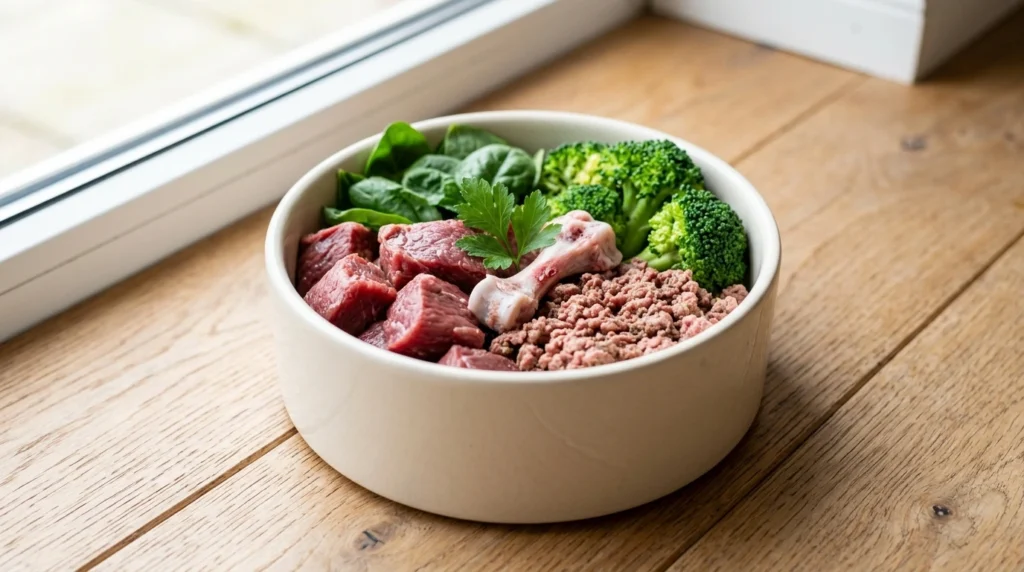
- Include the right balance of nutrients. Natures food dog needs proper nutritional balance. For raw diets, the general guideline is:
- 70–80% muscle meat
- 10% raw meaty bones (for calcium)
- 10% organ meat (at least half should be liver)
- 10% vegetables and other supplements
- Monitor your dog’s response carefully. Track stool quality, energy level, coat condition, and appetite during and after the transition. Firm, small stools indicate good digestibility. Loose stools may indicate too much organ meat or a food sensitivity. Therefore, adjust quantities and ingredients based on your dog’s specific response.
- Supplement where necessary. Even a carefully constructed natural diet may need specific supplements depending on your approach. For example, raw diets without bone need calcium supplementation. Also, omega-3 fatty acids from fish oil benefit dogs on all diet types. Consult your vet about which supplements your specific natural diet requires.
Nature’s Food Transition Timeline
| Days | Old Food % | New Natural Food % |
| Days 1–3 | 80% | 20% |
| Days 4–6 | 60% | 40% |
| Days 7–9 | 40% | 60% |
| Days 10–12 | 20% | 80% |
| Day 14+ | 0% | 100% |
Natures Food Dog Approaches: Full Comparison
Several distinct approaches fall under the umbrella of natural dog feeding. Here’s an honest comparison to help you choose the right fit:
| Approach | Description | Cost | Convenience | Nutritional Completeness |
| BARF Raw Diet | Biologically Appropriate Raw Food raw meat, bones, organs, veg | $$–$$$ | Low–Moderate | Excellent when balanced |
| PMR Raw Diet | Prey Model Raw whole prey components only, no veg | $$–$$$ | Low | Excellent when balanced |
| Fresh Cooked | Gently cooked whole food ingredients at home | $$ | Moderate | Good needs supplementation |
| Commercial Fresh | Subscription-delivered fresh cooked (e.g. The Farmer’s Dog) | $$$ | High | Excellent professionally formulated |
| Freeze-Dried Raw | Raw nutrition in shelf-stable format | $$$ | Very High | Excellent when complete formula |
| Premium Kibble | High-quality whole-food ingredient commercial food | $$ | Very High | Good varies by formula |
| Hybrid Approach | Quality kibble + fresh food toppers | $–$$ | High | Good to Excellent |
Benefits of Nature’s Food for Dogs
Many dog owners report significant improvements after transitioning to natural feeding approaches:
- Improved coat quality shinier, softer coat with less shedding
- Better digestive health firmer, smaller stools and less gas
- Higher energy levels more vitality and enthusiasm for activity
- Improved dental health raw bones clean teeth naturally
- Healthier body weight better muscle maintenance and fat management
- Reduced allergic reactions fewer skin issues in some food-sensitive dogs
Pros and Cons of Natural Dog Feeding
Pros:
- Aligns with canine evolutionary biology
- Higher ingredient quality and transparency
- Potential health improvements across multiple systems
- Greater control over what your dog actually eats
- Fresh food is more digestible than heavily processed kibble
Cons:
- Raw diets carry bacterial contamination risks (salmonella, listeria)
- Achieving complete nutritional balance requires research and care
- Higher cost than budget commercial food
- Time investment for preparation especially for home-prepared diets
- Requires freezer space for raw feeding approaches
- Not all vets have extensive natural feeding expertise
Common Mistakes When Feeding Dogs Nature’s Food
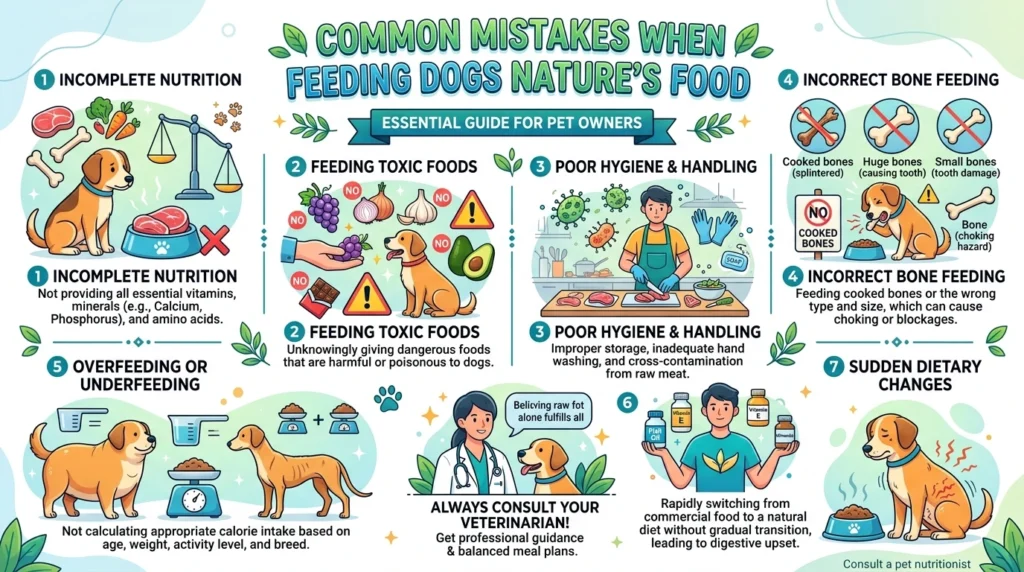
Mistake 1: Switching Cold Turkey
This is the most common and most damaging mistake in natural dog feeding. Abruptly replacing commercial kibble with a raw or fresh diet shocks the digestive system. As a result, dogs develop severe diarrhea, vomiting, and refuse to eat. Therefore, always use the gradual 10–14 day transition plan regardless of how excited you are to start.
Mistake 2: Feeding an Unbalanced Raw Diet
A simple mistake I often see is owners feeding raw meat alone without organs, bones, or appropriate supplementation. Raw muscle meat alone creates serious nutritional deficiencies over time particularly in calcium, phosphorus, and fat-soluble vitamins. Therefore, research complete raw diet formulations carefully before starting, or use a commercially prepared complete raw food that meets AAFCO nutritional standards.
Mistake 3: Ignoring Food Safety
Raw meat, even high-quality human-grade meat, carries bacterial contamination risks. Salmonella and listeria can affect both dogs and human family members who handle the food. Therefore, maintain strict food safety practices: refrigerate raw food immediately, use separate cutting boards and bowls, wash hands thoroughly after handling, and keep raw food away from immunocompromised family members and young children.
Mistake 4: Feeding Cooked Bones
Many owners assume all bones are appropriate for dogs in a natural diet. However, cooked bones are dangerous. Cooking changes bone structure making them brittle and likely to splinter into sharp fragments that cause internal injuries. Therefore, only feed raw meaty bones never cooked, smoked, or processed bones of any kind.
Mistake 5: Skipping Veterinary Monitoring
Switching to nature’s food for dogs is a significant dietary change. Therefore, schedule a follow-up veterinary check within 6–8 weeks of completing the transition. Also, request a comprehensive blood panel to confirm nutritional adequacy particularly important for homemade raw diets. As a result, you catch any developing deficiencies before they cause visible health problems.
Pro Tip: If you’re new to natural dog feeding and feel overwhelmed by raw diet preparation, start with freeze-dried raw food or a reputable commercial fresh food subscription like The Farmer’s Dog or Nom. These products deliver professionally balanced nature-aligned nutrition without the complexity of home preparation. As a result, you access the benefits of natural feeding immediately with the option to explore home preparation later as your confidence grows.
Frequently Asked Questions About Nature’s Food for Dogs
1. What is the most natural food for dogs?
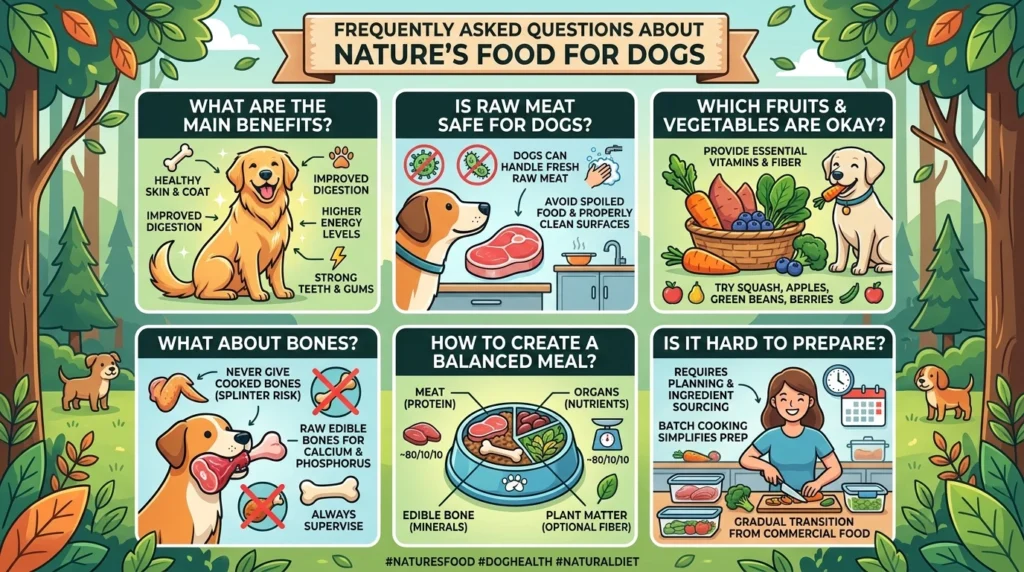
The most natural food for dogs closely mirrors what their wild canine ancestors ate: whole prey animals including muscle meat, organs, raw meaty bones, and small amounts of plant matter from prey stomach contents. In practical terms, this translates to raw feeding approaches like BARF (Biologically Appropriate Raw Food) or PMR (Prey Model Raw). These diets use real animal proteins, raw bones for calcium, organ meats for micronutrients, and sometimes vegetables and supplements for completeness. However, achieving true nutritional balance in a homemade raw diet requires research and often consultation with a veterinary nutritionist. Therefore, many owners start with commercially prepared complete raw foods before transitioning to home preparation.
2. Is raw feeding safe for dogs?
Raw feeding is safe when handled correctly but it does carry risks that require careful management. Raw meat naturally contains bacteria including salmonella and listeria. These bacteria can affect dogs (though healthy adult dogs tolerate them better than humans do) and can definitely affect human family members who handle the food or come into contact with the dog. Therefore, raw feeding requires strict food safety practices: refrigerate immediately, use dedicated preparation equipment, wash hands thoroughly, and keep raw food away from vulnerable family members. Also, consult your vet before starting raw feeding particularly for puppies, senior dogs, immunocompromised dogs, or households with young children or immunocompromised people.
3. What vegetables are part of nature’s food for dogs?
Dogs in nature consumed plant matter primarily through the stomach contents of prey animals meaning partially digested vegetation rather than whole raw vegetables. However, many vegetables provide genuine nutritional benefits for modern dogs when properly prepared. Good choices include:
- Carrots excellent for dental health and beta-carotene
- Blueberries rich in antioxidants
- Sweet potato good source of fiber and vitamins
- Spinach iron and vitamins (in moderation)
- Broccoli vitamins and fiber (small amounts only)
- Green beans low calorie, good fiber
Always avoid onions, garlic, grapes, raisins, avocado, and macadamia nuts; these are toxic to dogs. Also, cook or lightly steam vegetables to improve digestibility for most dogs.
4. How much does natural dog feeding cost?
Natural dog feeding costs vary significantly depending on your chosen approach. Premium commercial fresh food subscriptions (The Farmer’s Dog, Nom Nom) cost approximately $3–$10 per day depending on your dog’s size. Home-prepared raw diets using quality ingredients cost $2–$6 per day for a medium-sized dog when purchased efficiently. Freeze-dried raw food typically costs $4–$8 per day. Therefore, natural feeding generally costs more than budget commercial kibble but often less than many people assume, particularly with efficient buying from butchers, farmers markets, and bulk suppliers. Also, some owners report reduced veterinary costs over time though this correlation is anecdotal rather than scientifically proven.
5. Can puppies eat nature’s food diet?
Yes but puppy natural feeding requires extra care and precision. Because puppies have very specific nutritional needs during growth particularly for calcium, phosphorus, DHA, and protein an improperly balanced natural diet poses genuine developmental risks. Large breed puppies have especially precise calcium-to-phosphorus ratio requirements that affect skeletal development significantly. Therefore, always consult a veterinary nutritionist before starting a puppy on a raw or home-prepared natural diet. Also, consider commercially prepared complete raw or fresh food formulas specifically designed for puppies that provide appropriate nutritional balance without requiring you to formulate from scratch during this critical developmental period.
6. What foods should dogs never eat in a natural diet?
Even in nature-aligned feeding, certain foods are toxic or dangerous for dogs and must always be avoided:
- Onions and garlic cause red blood cell destruction
- Grapes and raisins cause kidney failure
- Chocolate contains theobromine, toxic to dogs
- Macadamia nuts cause neurological symptoms
- Avocado contains persin, toxic to dogs
- Xylitol artificial sweetener causing dangerous blood sugar drops
- Cooked bones splinter into dangerous sharp fragments
- Raw pork higher risk of parasites than other proteins
Also, always introduce new foods gradually and monitor your dog for reactions. When in doubt about any specific food, consult your veterinarian before offering it.
7. How do I know if nature’s food is working for my dog?
Several observable signs indicate that a natural diet is genuinely benefiting your dog. Look for these positive changes within 4–8 weeks of completing the dietary transition:
- Coat quality noticeably shinier, softer, and healthier coat with reduced shedding
- Stool quality smaller, firmer stools in appropriate frequency
- Energy levels increased vitality and enthusiasm for play and exercise
- Dental health reduced tartar buildup and improved breath
- Weight healthy body condition without excess fat
- Skin health reduced itching, flaking, or hot spots
Also, schedule a veterinary check-up and blood panel 6–8 weeks after completing the transition. As a result, objective health markers confirm whether the dietary change is delivering measurable internal health benefits.Natures food dog Natures food dog Natures food dog Natures food dog
Feed Your Dog the Way Nature Intended
Nature’s food dog represents a return to first principles feeding in alignment with what dogs evolved to eat, rather than what’s most convenient to manufacture and store. The results, when done correctly, speak for themselves in the form of healthier coats, better digestion, and more vibrant energy.
However, natural dog feeding done poorly creates real nutritional risks. Therefore, approach the transition thoughtfully consult your vet, research complete nutritional formulations, and prioritize food safety throughout. Start with commercially prepared complete natural food if home preparation feels overwhelming. Then expand your approach as your confidence and knowledge grow.
Your dog doesn’t need perfection. They need intentional, informed nutrition that honors their biology. That’s what nature’s food for dogs is really about.