
Introduction
Picture a large, majestic cat with a thick, flowing coat, tufted ears, and the calm confidence of an animal that’s spent centuries surviving Scandinavian winters. That’s the Norwegian Forest Cat, one of the most beautiful and historically fascinating breeds in the entire cat world.
Many pet owners don’t realize just how different this breed is from typical domestic cats. Norwegian Forest Cats are ancient. They appear in Norse mythology. Vikings likely kept them aboard ships as working cats. That rich history produced a breed with remarkable intelligence, quiet confidence, and a deeply independent spirit.
In my experience, Norwegian Forest Cats suit owners who genuinely appreciate a cat on the cat’s own terms. They’re affectionate but not needy. They’re playful but not hyperactive. they’re gorgeous but their coats demand real grooming commitment.
This guide covers everything you need to know about history, personality, care, health, costs, and the most common ownership mistakes. Let’s explore this extraordinary breed together.
Quick Answer
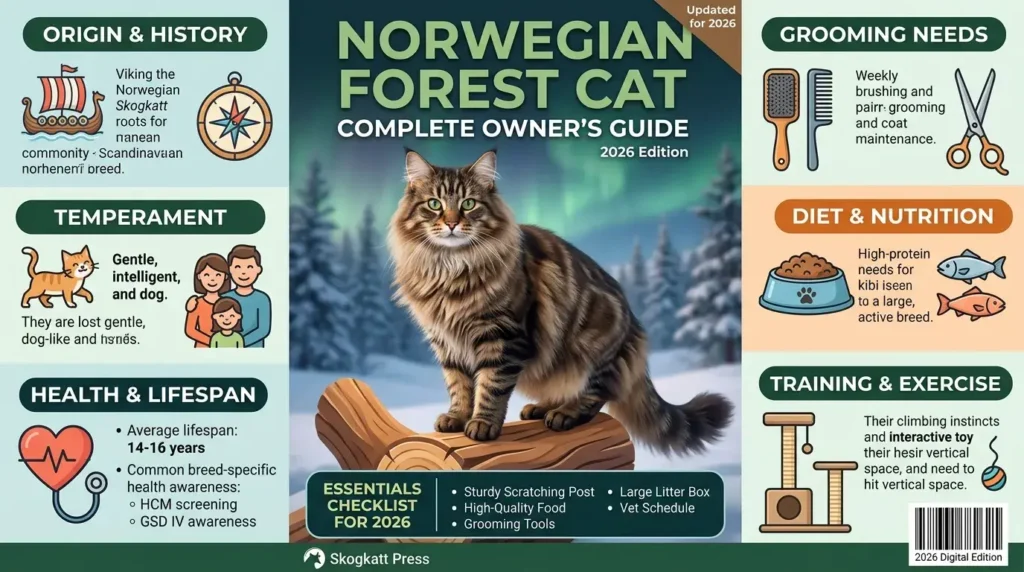
The Norwegian Forest Cat is a large, ancient Nordic breed with a thick double coat, tufted ears, and a long bushy tail. Known in Norway as the “Norsk Skogkatt,” these cats are gentle, intelligent, and semi-independent. They need regular grooming, enjoy climbing, and adapt well to family life including children and other pets.
Key Takeaways
- Norwegian Forest Cats are one of the oldest natural cat breeds in the world
- They carry a thick double coat water-resistant outer layer and dense insulating undercoat
- They’re gentle and family-friendly but value independence over constant lap time
- Their coat requires weekly brushing and more frequent grooming during spring shedding
- Norwegian Forest Cats are excellent climbers tall cat trees are essential
- They’re generally healthy and long-lived typically 14–16 years with good care
What Is the Norwegian Forest Cat? History and Origins
The Norwegian Forest Cat is a large, semi-longhaired domestic breed originating in Norway. It developed naturally over thousands of years, adapting to the harsh Scandinavian climate through a thick double coat and robust, muscular body.
Ancient Origins and Norse Mythology
The Norwegian Forest Cat’s history stretches back at least 1,000 years, possibly much longer. Norse mythology references large, fluffy cats associated with Freya, the goddess of love and fertility. Also, Viking sagas describe large cats used as working animals aboard ships and in farmhouses to control rodent populations.
These cats adapted naturally to Norway’s extreme climate over centuries. As a result, they developed their distinctive water-resistant coat, tufted ears for cold-weather protection, and large, heavily furred paws that function almost like natural snowshoes.
Modern Breed Recognition
Despite their ancient origins, Norwegian Forest Cats only received formal recognition relatively recently. The Norwegian Forest Cat Club established the breed standard in Norway during the 1930s. However, World War II interrupted breeding programs significantly.
The breed gained international recognition when the Fédération Cynologique Internationale (FCI) accepted them in 1977. The International Cat Association (TICA) and Cat Fanciers’ Association (CFA) followed with their own recognition shortly after. As a result, the Norwegian Forest Cat now enjoys popularity across Europe, North America, and Asia.
What Does a Norwegian Forest Cat Look and Act Like?
The Norwegian Forest Cat combines impressive physical presence with a surprisingly gentle, balanced personality. Both aspects deserve detailed understanding before you decide to bring one home.
Physical Characteristics
Norwegian Forest Cats are large, powerfully built cats with several distinctive physical features:
- Size: Males 12–16 pounds; females 9–12 pounds
- Body: Large, muscular, and long sometimes described as “rectangular”
- Coat: Double layer dense woolly undercoat plus water-resistant glossy outer coat
- Tail: Long and bushy should be as long as the body ideally
- Ears: Large, tufted at the tips, with ear furnishings (long hairs growing from inside the ear)
- Paws: Large, round, and heavily tufted between the toes
- Eyes: Large, almond-shaped any color accepted including odd-eyes
- Lifespan: 14–16 years with proper care
Norwegian Forest Cats come in almost every coat color and pattern combination. Therefore, you’ll find them in tabby, solid, tortoiseshell, bicolor, and many other variations.
Norwegian Forest Cat Personality
Have you ever wondered what it would be like to live with a truly calm, confident cat? The Norwegian Forest Cat gives you exactly that experience.
These cats typically:
- Value affection on their own terms they’re loving but not clingy or demanding
- Enjoy observing their environment from elevated positions they love height
- Bond strongly with their family while remaining comfortable with strangers
- Play actively but don’t require constant entertainment like higher-energy breeds
- Adapt well to both quiet and active households
- Get along comfortably with children, dogs, and other cats when properly introduced
- Communicate softly they’re not typically vocal or demanding
However, Norwegian Forest Cats maintain a degree of independence that some owners misread as aloofness. In reality, they simply choose when they want interaction and when they do choose you, the connection feels genuinely special.
Pro Tip: Norwegian Forest Cats love climbing more than almost any other breed. Before bringing one home, invest in the tallest cat tree you can find floor to ceiling if possible. As a result, your cat will spend hours happily perched at the highest point available, feeling secure and content.
How to Care for a Norwegian Forest Cat: Complete Step-by-Step Guide
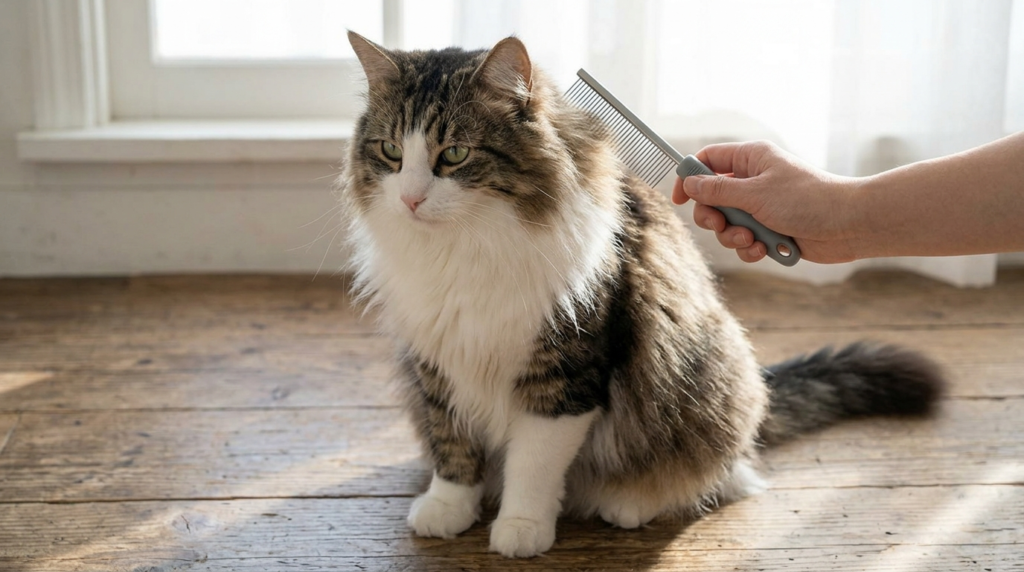
Norwegian Forest Cat care is rewarding but requires genuine commitment especially to their grooming needs. Here’s exactly what ownership involves day to day.
Step-by-Step Norwegian Forest Cat Care Guide
- Establish a weekly grooming routine. The Norwegian Forest Cat’s double coat needs thorough brushing at least twice weekly during normal periods. Also, during the spring heavy shed when they lose most of their dense winter undercoat daily brushing becomes necessary for several weeks. Use a wide-tooth comb and a slicker brush to work through both coat layers.
- Never shave the coat. Many owners consider shaving a longhaired cat to reduce grooming needs. However, shaving a Norwegian Forest Cat damages the coat’s natural structure and disrupts its weather-resistant properties. Also, it can cause permanent texture changes in some cats. Therefore, regular brushing is always the right answer, not shaving.
- Provide tall climbing structures. Norwegian Forest Cats climb with extraordinary skill. Therefore, tall cat trees, wall-mounted cat shelves, and secure climbing structures are essential, not optional. These cats feel most secure and content when they can survey their environment from above.
- Feed a high-protein diet appropriate for a large breed. Because Norwegian Forest Cats are significantly larger than average domestic cats, they have higher protein and caloric needs during growth periods. Also, males especially can trend toward obesity as they age. Therefore, measure meals carefully and consult your vet about appropriate portions throughout each life stage.
- Schedule regular veterinary check-ups. Norwegian Forest Cats carry a genetic predisposition to hypertrophic cardiomyopathy (HCM) and glycogen storage disease type IV (GSD IV) , a rare but serious metabolic condition. Therefore, annual vet visits and breed-appropriate health screenings are essential. Also, buy from breeders who test for GSD IV, as this condition can be life-threatening in affected kittens.
- Keep them mentally engaged. Despite their calm nature, Norwegian Forest Cats are intelligent cats who need mental stimulation. Puzzle feeders, interactive toys, and window perches with outdoor views keep their minds active. As a result, a stimulated Norwegian Forest Cat is calmer and less prone to destructive behavior.
- Provide outdoor access safely when possible. Norwegian Forest Cats have strong instincts for climbing and exploring. If you have a secure garden or can build a catio (outdoor cat enclosure), supervised outdoor time genuinely enriches their quality of life. However, unsupervised outdoor roaming poses safety risks so always prioritize controlled access.
Grooming Schedule at a Glance
| Grooming Task | Normal Season | Spring Shed |
| Full coat brushing | Twice weekly | Daily |
| Tail detangling | Weekly | Daily |
| Ear cleaning | Weekly | Weekly |
| Nail trimming | Every 2–3 weeks | Every 2–3 weeks |
| Teeth brushing | 2–3x weekly | 2–3x weekly |
Norwegian Forest Cat vs. Similar Large Breeds: Full Comparison
The Norwegian Forest Cat is frequently compared to the Maine Coon and the Siberian cat. Here’s an honest side-by-side breakdown:
| Feature | Norwegian Forest Cat | Maine Coon | Siberian Cat |
| Origin | Norway | USA | Russia |
| Size | Large (9–16 lbs) | Very Large (10–18 lbs) | Large (8–17 lbs) |
| Coat | Double, semi-long | Semi-long, shaggy | Triple layer, dense |
| Grooming Needs | Moderate-High | High | High |
| Personality | Independent, gentle | Sociable, dog-like | Playful, affectionate |
| Energy Level | Moderate | Moderate-High | Moderate-High |
| Good with Kids | Excellent | Excellent | Excellent |
| Good with Dogs | Yes | Yes | Yes |
| Hypoallergenic | No | No | Partially (lower Fel d1) |
| Price Range | $800–$1,500 | $800–$2,000 | $1,200–$2,000 |
| Lifespan | 14–16 years | 12–15 years | 12–15 years |
Pros and Cons of Owning a Norwegian Forest Cat
Pros:
- Gentle, balanced temperament suits most households
- Excellent with children, dogs, and other cats
- Long lifespan great long-term companion
- Majestic appearance with enormous visual appeal
- Adaptable to both active and quieter homes
- Strong, healthy breed overall
Cons:
- Heavy seasonal shedding requires significant grooming commitment
- Predisposition to HCM and GSD IV needs monitoring
- Large size means higher food costs than average
- Strong climbing instinct requires significant vertical space
- Not a lap cat in the traditional sense
- Spring shedding can be genuinely overwhelming in the home
Common Mistakes Norwegian Forest Cat Owners Make
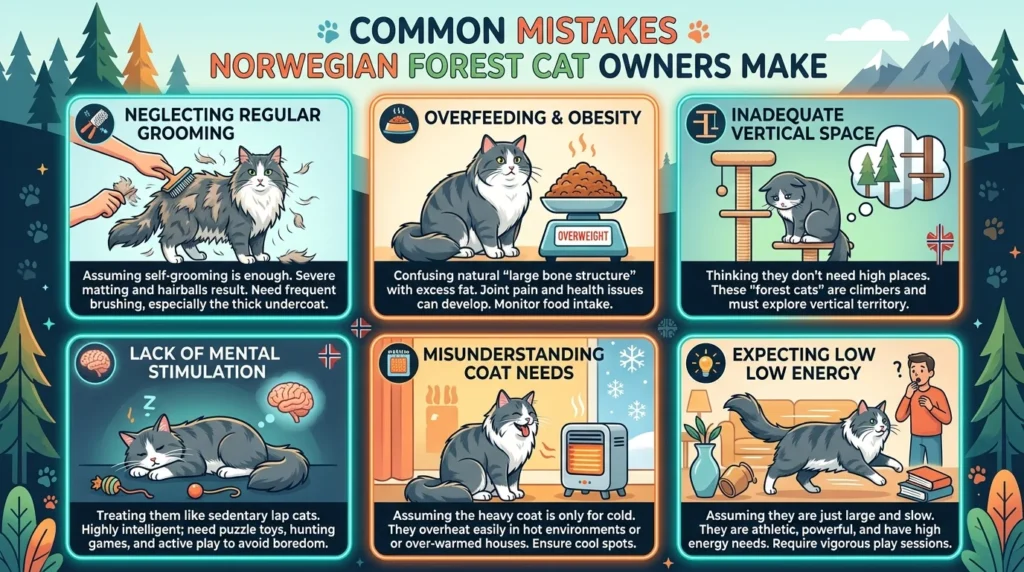
Mistake 1: Underestimating Spring Shedding
Many new Norwegian Forest Cat owners are completely unprepared for the spring shed. Because these cats carry a dense double coat evolved for Scandinavian winters, they lose enormous amounts of fur when temperatures rise. Therefore, invest in high-quality grooming tools before you bring your cat home and plan for daily brushing sessions lasting 15–20 minutes during peak shedding.
Mistake 2: Buying Without GSD IV Testing
Glycogen storage disease type IV is a serious inherited condition that affects Norwegian Forest Cat kittens. Affected kittens often die before reaching one year of age. However, responsible breeders test both parents for the GSD IV gene before breeding. Therefore, always ask specifically for GSD IV test results when choosing a kitten. Never skip this question regardless of how reputable a breeder seems.
Mistake 3: Providing Inadequate Vertical Space
Norwegian Forest Cats climb. It’s deeply instinctive and genuinely important to their wellbeing. A simple mistake I often see is owners providing small, low cat trees that don’t satisfy this need. As a result, the cats climb furniture, bookshelves, and kitchen cabinets instead. Therefore, invest in floor-to-ceiling cat trees or wall-mounted climbing systems before your cat arrives home.
Mistake 4: Overfeeding During Kittenhood
Norwegian Forest Cats grow slowly; they don’t reach full physical maturity until age 5. Because they’re still developing, owners sometimes overfeed to support growth, which leads to obesity. Therefore, consult your vet about appropriate portion sizes throughout each life stage. Also, avoid free-feeding adult cats, as Norwegian Forest Cats can overeat when food is always available.
Mistake 5: Skipping Dental Care
Norwegian Forest Cats can develop dental disease that progresses silently before becoming painful. However, many owners only notice dental problems when they become severe. Therefore, establish a dental care routine from kittenhood brush teeth 2–3 times weekly with cat-safe toothpaste and schedule professional dental cleanings as your vet recommends. Early prevention makes a genuine difference in long-term dental health.
Pro Tip: During spring shedding season, use a deshedding tool like a Furminator specifically designed for long-haired cats alongside your regular slicker brush. Also, consider adding an omega-3 fish oil supplement to your cat’s diet with your vet’s approval because healthy skin produces a healthier, less fragile coat that sheds more cleanly and mats less readily.
Frequently Asked Questions About the Norwegian Forest Cat
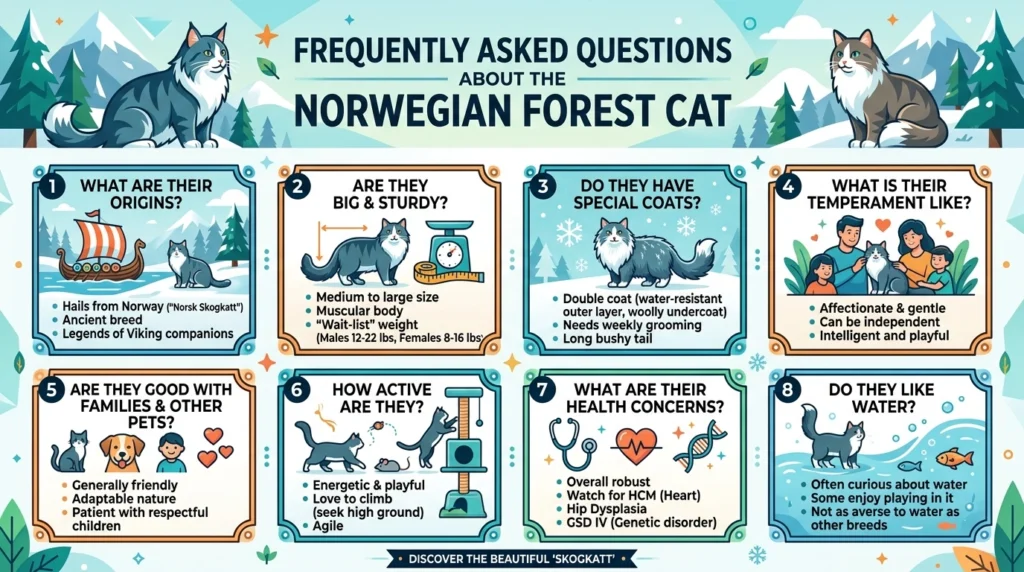
1. How big do Norwegian Forest Cats get?
Norwegian Forest Cats are large cats by any standard. Males typically reach 12–16 pounds at full maturity, while females usually weigh 9–12 pounds. However, some large males exceed 16 pounds with healthy muscle mass. Importantly, Norwegian Forest Cats are slow developers; they don’t reach full physical and emotional maturity until around age 4–5, which is significantly later than most domestic cat breeds. Therefore, don’t be surprised if your Norwegian Forest Cat kitten continues growing well into their third or fourth year. This slow maturation is entirely normal for the breed and not a cause for concern.
2. Are Norwegian Forest Cats good with children?
Yes, Norwegian Forest Cats are among the most family-friendly large cat breeds available. Their gentle, patient temperament means they tolerate children well, even enthusiastic young ones. Also, their confidence means they’re less likely to scratch defensively than more timid breeds. However, all cat-child interactions should involve adult supervision, especially with very young children. Teaching children to interact respectfully, no tail pulling, no waking sleeping cats protects both the child and the cat. Norwegian Forest Cats typically retreat to elevated spaces rather than striking when they need a break, which makes them particularly safe around children who understand basic boundaries.
3. Do Norwegian Forest Cats shed a lot?
Yes Norwegian Forest Cats shed considerably, particularly during spring when they lose their heavy winter undercoat. During this period, which typically lasts 4–8 weeks, daily brushing is necessary to prevent matting and manage the volume of loose fur in your home. During non-shedding seasons, twice-weekly brushing manages the coat effectively. Also, regular vacuuming and lint rollers become regular household necessities for Norwegian Forest Cat owners. However, many owners find that the grooming process itself becomes a pleasant bonding ritual with their cat. Norwegian Forest Cats often enjoy being groomed especially when the routine starts during kittenhood.
4. Are Norwegian Forest Cats hypoallergenic?
No Norwegian Forest Cats are not hypoallergenic. They produce the Fel d 1 protein that triggers cat allergies in sensitive people, and their heavy coat distributes this allergen widely through shedding. Therefore, people with cat allergies typically react to Norwegian Forest Cats similarly to other breeds. If you have cat allergies and are drawn to large, semi-longhaired breeds, the Siberian cat is worth researching instead Siberians produce measurably lower levels of Fel d 1 than most breeds. However, individual reactions vary significantly, so spending time with the specific breed before adopting remains the most reliable test.
5. What health problems do Norwegian Forest Cats have?
Norwegian Forest Cats are generally healthy, but they carry genetic predispositions to two important conditions. Hypertrophic cardiomyopathy (HCM) , a heart muscle disease, affects Norwegian Forest Cats as it does many cat breeds. Annual cardiac screening from age 2 onward is recommended. Also, glycogen storage disease type IV (GSD IV) is a metabolic disorder specific to this breed. Affected kittens typically don’t survive past 5 months of age. However, responsible breeders test both parents, eliminating affected offspring from breeding programs. Therefore, buying from a GSD IV-tested breeder is the single most important health decision you make when choosing a Norwegian Forest Cat kitten.
6. Are Norwegian Forest Cats indoor or outdoor cats?
Norwegian Forest Cats have strong outdoor instincts climbing, hunting, and exploring come naturally to them. However, the safety risks of unsupervised outdoor roaming traffic, predators, disease exposure apply equally to this breed. Therefore, most veterinary and breed experts recommend keeping Norwegian Forest Cats primarily indoors with supervised outdoor access. A secure garden, leash walks with a well-fitted harness, or a catio (enclosed outdoor space) provide safe, enriched outdoor experiences. Also, Norwegian Forest Cats adapt very well to indoor-only life when provided with sufficient vertical climbing space, window access, and mental stimulation. The key is enrichment not necessarily outdoor freedom.
7. How do Norwegian Forest Cats compare to Maine Coons?
Norwegian Forest Cats and Maine Coons are frequently confused because of their similar large size and semi-longhaired coats. However, they differ in several meaningful ways. Maine Coons are generally slightly larger and more dog-like in their social behavior following owners constantly and demanding interaction. Norwegian Forest Cats are more independent and self-contained. Also, Norwegian Forest Cats have a flatter facial profile compared to the Maine Coon’s more angular, prominent features. Their coats differ too; the Norwegian Forest Cat’s coat is specifically adapted for water-resistance, while the Maine Coon’s coat is shaggy and variable. Both breeds are gentle, family-friendly, and wonderful companions. Therefore, the right choice depends on whether you prefer a more independent cat or a more constantly interactive one.
The Norwegian Forest Cat Ancient, Majestic, and Genuinely Wonderful
The Norwegian Forest Cat offers something genuinely rare: ancient heritage, extraordinary beauty, and a balanced temperament that suits almost any household that commits to understanding its needs.
These cats give you dignity and independence alongside real warmth and affection. They’re not lap cats who demand constant attention. However, when a Norwegian Forest Cat chooses to settle beside you, that choice feels meaningful in a way that’s hard to describe until you’ve experienced it.
Therefore, if you’re considering this breed, invest in quality grooming tools, plan for vertical climbing space, find a GSD IV-tested breeder, and prepare for one of the most rewarding cat ownership experiences available anywhere in the world.