
Introduction
Imagine a miniature black panther curled up on your couch, watching you with brilliant copper eyes. That’s the Bombay cat, one of the most visually striking and genuinely affectionate cat breeds in the world.
Many pet owners don’t realize that the Bombay cat isn’t just beautiful. It’s also one of the most people-oriented cat breeds you can own. These cats crave human company. They follow you from room to room, greet you at the door, and settle happily onto any warm lap they can find.
In my experience, Bombay cats suit a wide range of households from singles and couples to families with children and other pets. However, they do have specific needs that every potential owner should understand before bringing one home.
This guide covers everything honestly from breed history and personality to care requirements, health concerns, and common ownership mistakes. By the end, you’ll know exactly whether a Bombay cat is the right companion for your life.
Quick Answer
The Bombay cat is a medium-sized domestic breed with a jet-black coat, muscular build, and striking copper or gold eyes. Developed in the 1950s by crossing Burmese and American Shorthair cats, Bombay cats are affectionate, playful, and highly social making them excellent companions for most households.
Key Takeaways
- Bombay cats have an all-black coat including black nose leather and paw pads
- Their eyes are copper to gold a defining breed characteristic
- They’re highly social and don’t do well when left alone for long periods
- Bombay cats are excellent with children and generally get along well with other pets
- They’re moderate maintenance short coat needs minimal grooming
- Health is generally good but they’re prone to certain conditions worth monitoring
What Is a Bombay Cat? Breed History and Origins
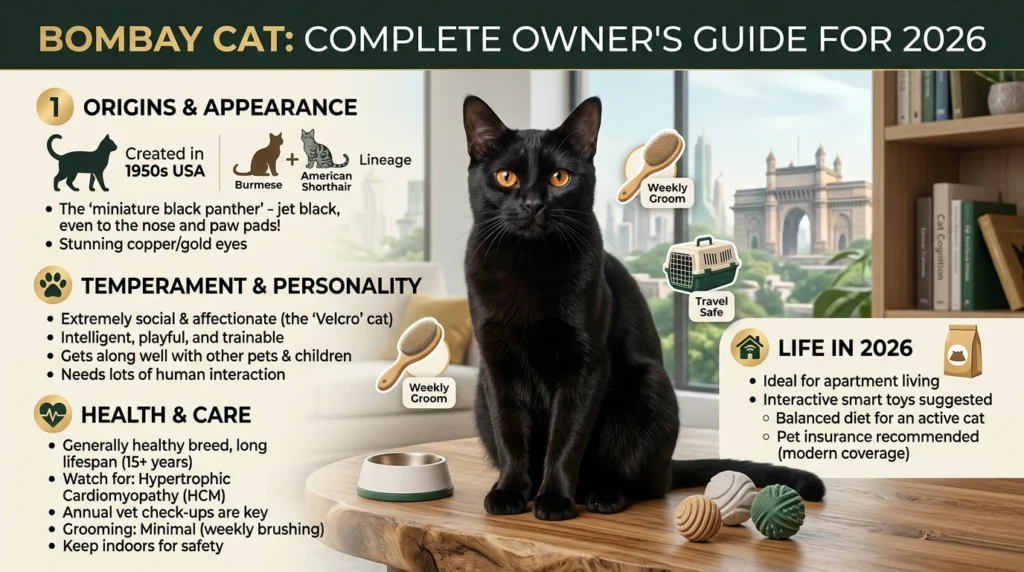
The Bombay cat is a medium-sized domestic breed with a distinctive all-black coat, copper eyes, and a warm, affectionate personality. Developed in the United States during the 1950s, the breed was created to resemble a miniature black panther in both appearance and movement.
How the Bombay Cat Was Created
The Bombay cat was developed by American breeder Nikki Horner of Louisville, Kentucky, beginning in 1958. Her goal was to create a domestic cat with the sleek black coat and muscular build of the Indian black leopard. Therefore, she crossed sable Burmese cats with black American Shorthair cats through selective breeding.
The breed took years of careful development. However, by 1976, the Cat Fanciers’ Association (CFA) officially recognized the Bombay cat as a distinct breed. Also, The International Cat Association (TICA) later granted full championship recognition. As a result, the Bombay became one of the few cat breeds created entirely through intentional, purposeful crossing rather than natural mutation.
Why the Name “Bombay”?
Nikki Horner named the breed after Bombay, India now called Mumbai because of the city’s association with the Indian black leopard. Therefore, the name reflects the aesthetic inspiration behind the breed rather than any geographical origin of the cats themselves.
What Does a Bombay Cat Look and Act Like?
The Bombay cat looks like a miniature panther and acts like a devoted companion. Every physical and personality trait makes this breed genuinely distinctive among domestic cats.
Physical Characteristics
Bombay cats have a very specific, breed-standard appearance:
- Coat: Jet-black, short, sleek, and tight to the body often described as patent leather
- Eyes: Deep copper to gold, rounded, and set wide apart the most distinctive feature
- Body: Medium-sized, muscular, and surprisingly heavy for their visual size
- Head: Rounded, full face with a short snout and prominent chin
- Nose leather: Black not pink, which would indicate mixed breeding
- Paw pads: Black another breed standard requirement
- Weight: Males 8–11 pounds; females 6–9 pounds
- Lifespan: 12–16 years with proper care
Bombay Cat Personality and Temperament
This is where Bombay cats truly shine. Their personality is one of the warmest of any cat breed.
Bombay cats typically:
- Seek constant companionship they want to be near their people at all times
- Greet visitors enthusiastically unlike many cats that hide from strangers
- Follow owners from room to room earning the nickname “Velcro cat”
- Enjoy being held and cuddled genuinely comfortable with prolonged human contact
- Adapt well to indoor life they’re content as fully indoor cats
- Learn their name and respond to it reliably
- Get along well with children, dogs, and other cats when socialized early
However, this sociability has a flip side. Bombay cats don’t handle being alone for long periods well. They can develop anxiety if left without company for extended hours regularly. Therefore, they suit households where someone is home frequently, or where they have a feline companion.
Pro Tip: If you work long hours away from home, consider getting two Bombay cats or at least one other sociable cat breed as a companion. Because of their deeply social nature, Bombay cats genuinely thrive with feline company when their human isn’t available.
How to Care for a Bombay Cat: Complete Step-by-Step Guide
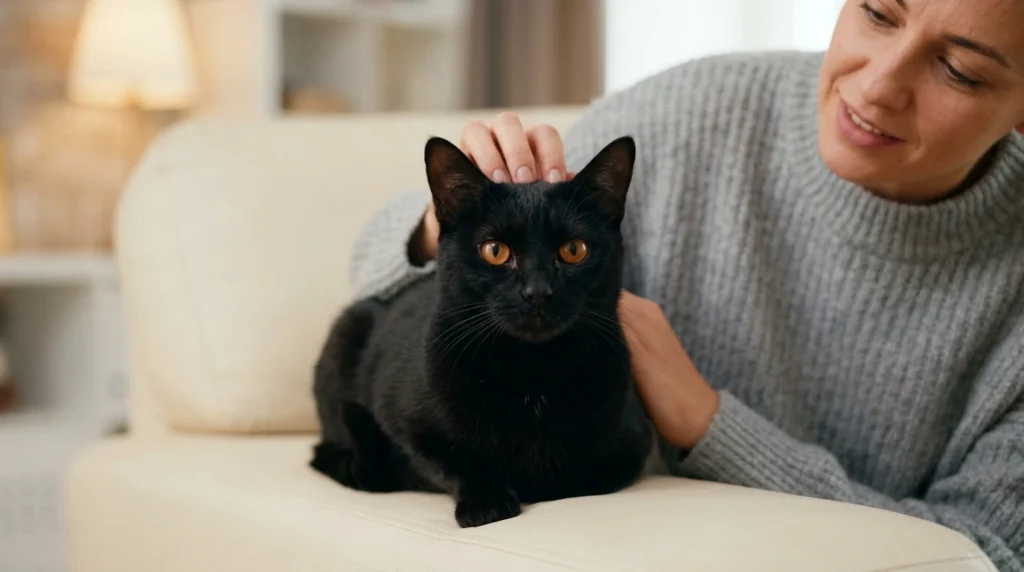
Caring for a Bombay cat is genuinely manageable. However, their social and emotional needs require consistent attention alongside standard physical care.
Step-by-Step Bombay Cat Care Guide
- Create a safe, enriched indoor environment. Bombay cats are best kept indoors. Therefore, provide cat trees, scratching posts, window perches, and puzzle feeders to keep their active minds engaged throughout the day.
- Feed a high-quality, protein-rich diet. Bombay cats are moderately prone to obesity. Therefore, feed measured meals rather than free-feeding. Choose a high-quality wet or dry food with a named protein source as the first ingredient. Also, always provide fresh water daily.
- Groom weekly not daily. The short, sleek coat needs only weekly brushing to remove loose hair and maintain its impressive shine. Also, wipe the coat occasionally with a warm damp cloth that enhances the natural glossy appearance significantly.
- Clean ears and trim nails regularly. Check ears weekly for debris and clean gently with a vet-approved cleaner. Trim nails every 2–3 weeks. As a result, you prevent scratching damage and keep your cat comfortable.
- Schedule annual veterinary check-ups. Bombay cats are generally healthy, but they carry some Burmese genetic traits. Therefore, monitor for hypertrophic cardiomyopathy (HCM), craniofacial defects in kittens, and eye conditions. Always consult your vet about breed-specific health screenings.
- Provide daily interactive play. Schedule at least two 15–20 minute play sessions daily. Wand toys, feather teasers, and laser pointers engage their natural hunting instincts. Also, Bombay cats often enjoy fetching an unusual but genuinely common behavior in this breed.
- Socialize from kittenhood. Introduce your Bombay kitten to different people, sounds, and environments early. As a result, they grow into confident, adaptable adults who handle new situations calmly.
Grooming Requirements at a Glance
| Grooming Task | Frequency | Difficulty |
| Coat brushing | Weekly | Easy |
| Coat wipe-down | Monthly | Easy |
| Ear cleaning | Weekly | Moderate |
| Nail trimming | Every 2–3 weeks | Moderate |
| Teeth brushing | 2–3 times weekly | Moderate |
| Eye cleaning | As needed | Easy |
Bombay Cat vs. Other Black Cat Breeds: Full Comparison
How does the Bombay cat compare to other popular black or dark-coated breeds? Here’s an honest comparison:
| Feature | Bombay Cat | Black Maine Coon | Black British Shorthair | Black Domestic Shorthair |
| Coat | Jet black only | Black (various) | Black (various) | Any |
| Eye Color | Copper/Gold only | Various | Copper/Orange | Various |
| Size | Medium | Very Large | Large | Varies |
| Personality | Very affectionate | Friendly, gentle | Calm, independent | Varies |
| Social Needs | Very high | Moderate | Moderate | Varies |
| Grooming | Low | High | Low | Low |
| Price Range | $500–$2,000 | $800–$2,500 | $800–$2,000 | $50–$200 |
| Good with Kids | Excellent | Excellent | Good | Varies |
| Energy Level | Moderate-High | Moderate | Low-Moderate | Varies |
Pros and Cons of Owning a Bombay Cat
Pros:
- Exceptionally affectionate and people-oriented
- Striking, low-maintenance coat
- Generally healthy with good longevity
- Excellent with children and other pets
- Adaptable to apartment and house living
- Responds well to training and learns quickly
Cons:
- Doesn’t tolerate being alone well
- Can be demanding of attention
- Prone to weight gain without portion control
- May develop anxiety in quiet, low-activity households
- Less independent than many other cat breeds
- Can be vocal when they want attention
Common Mistakes Bombay Cat Owners Make
Mistake 1: Leaving Them Alone Too Often
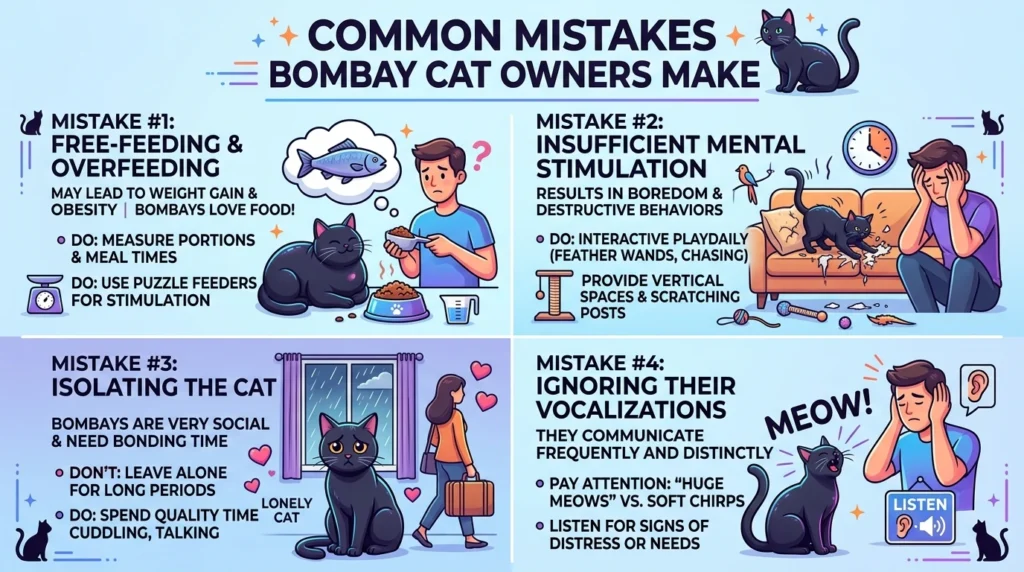
This is the most common mistake I see with Bombay cat owners. Because these cats are so social, extended periods of solitude cause genuine stress. As a result, anxious Bombay cats develop destructive behaviors, excessive vocalization, or depression-like symptoms. Therefore, plan your schedule carefully before adopting, and consider a companion pet if you’re away regularly.
Mistake 2: Free-Feeding Without Portion Control
Bombay cats love food and they’ll eat more than they need if given unlimited access. Because of their Burmese genetics, they’re genuinely prone to obesity. Therefore, measure every meal carefully and stick to a consistent feeding schedule. Also, choose a food with appropriate caloric content for your cat’s age and activity level. Consult your vet about ideal weight for your specific cat.
Mistake 3: Skipping Dental Care
Bombay cats like many breeds with Burmese ancestry can develop dental disease faster than average. However, most owners overlook dental care entirely until problems become visible. Therefore, start brushing your Bombay cat’s teeth from kittenhood using cat-safe toothpaste. Also, offer dental treats and schedule professional dental cleanings as your vet recommends.
Mistake 4: Assuming Black Coat Means Less Visible Hair
Here’s a surprise many Bombay owners discover too late black cat hair shows dramatically on light-colored furniture and clothing. Also, black hairs are actually harder to remove from fabric than lighter colors in many cases. Therefore, invest in good lint rollers and consider furniture covers if you have light-colored upholstery.
Mistake 5: Not Providing Enough Mental Stimulation
Bombay cats are intelligent and curious. Without adequate mental stimulation, they become bored and potentially destructive. Therefore, rotate toys regularly, use puzzle feeders at mealtimes, and provide window perches where they can watch outdoor activity. As a result, a mentally engaged Bombay cat is calmer, happier, and significantly less troublesome to live with.
Pro Tip: Bombay cats respond exceptionally well to clicker training. Because they’re highly food-motivated and people-oriented, they learn commands and tricks faster than most cat breeds. Teaching simple tricks like “sit,” “high five,” and “come” strengthens your bond while providing essential mental stimulation daily.
Frequently Asked Questions About the Bombay Cat
1. Is a Bombay cat rare?
Bombay cats are considered a relatively rare breed compared to popular breeds like Persians or Maine Coons. Because they require specific breeding, crossing Burmese and American Shorthair cats, finding reputable breeders takes more effort than sourcing common breeds. Also, not every black cat is a Bombay, the breed has very specific physical standards including copper eyes, black nose leather, and black paw pads. Therefore, expect to research breeders carefully and potentially join a waitlist. Prices typically range from $500 to $2,000 depending on breeder reputation, pedigree, and location. Rescue organizations occasionally have Bombay cats or Bombay mixes available at significantly lower costs.
2. Are Bombay cats hypoallergenic?
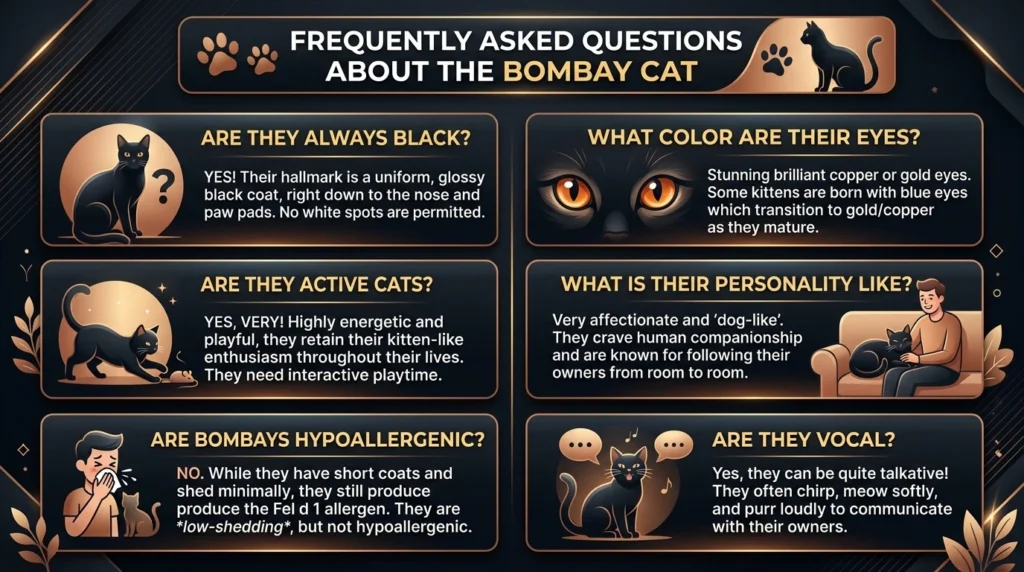
No Bombay cats are not hypoallergenic. However, their short, tight coat produces less loose hair than many long-haired breeds. Also, they groom themselves efficiently, which reduces dander distribution somewhat. As a result, some allergy sufferers report fewer reactions around Bombay cats compared to breeds with heavier shedding. However, cat allergies typically react to the Fel d 1 protein found in cat saliva and skin, not just fur. Therefore, if you have cat allergies, spend time with a Bombay cat before adopting one. Always consult your doctor or allergist about managing pet allergies effectively.
3. Do Bombay cats get along with dogs?
Yes, Bombay cats generally get along very well with friendly, cat-tolerant dogs. Because of their confident, social nature, Bombay cats don’t typically fear or hide from dogs the way more timid breeds might. In my experience, Bombay cats often approach dogs curiously and establish friendships surprisingly quickly with proper introduction. However, the dog’s temperament matters enormously. Introduce them slowly, keep them separated initially, exchange scents through bedding, then allow supervised visual contact before face-to-face meetings. Also, always ensure the cat has high escape routes where the dog cannot follow, so it maintains a sense of safety and control.
4. How much do Bombay cats cost?
Bombay cat prices vary based on breeder reputation, pedigree quality, and geographic location. From a reputable TICA or CFA registered breeder, expect to pay $500–$2,000 for a pet-quality kitten. Show-quality Bombay cats from champion bloodlines can cost significantly more. In addition to purchase price, budget for initial veterinary costs including vaccinations, microchipping, and spaying or neutering. Also factor in ongoing costs: quality food, cat furniture, annual vet visits, and grooming supplies. Therefore, the true first-year cost of owning a Bombay cat typically ranges from $1,500 to $3,000 when all expenses are included. Rescue adoption costs $50–$200 but finding a purebred Bombay through rescue requires patience.
5. Are Bombay cats vocal?
Yes Bombay cats are moderately vocal compared to the cat spectrum overall. They communicate their needs clearly and don’t hesitate to tell you when they want attention, food, or playtime. However, they’re not as persistently loud as Siamese or Oriental breeds. Their voice tends to be softer and more melodic than sharp or demanding. Also, Bombay cats often use a variety of sounds: chirps, trills, and soft meows rather than loud constant yowling. Therefore, their vocality reads more as engaging conversation than disruptive noise to most owners. If your Bombay suddenly becomes significantly more or less vocal, consult your vet as this can indicate health changes.
6. What health problems do Bombay cats have?
Bombay cats are generally healthy, but they carry some health predispositions from their Burmese ancestry. The most important conditions to monitor include hypertrophic cardiomyopathy (HCM) , a heart muscle disease that affects many cat breeds. Also, craniofacial defects can occur in kittens when two Burmese-dominant Bombays are bred together, a known genetic risk that reputable breeders actively work to avoid. Respiratory issues can occur in cats with flatter facial features. In addition, Bombay cats are prone to obesity-related health problems if their diet isn’t carefully managed. Therefore, schedule annual veterinary check-ups, ask your vet about cardiac screening, and maintain a healthy weight throughout your cat’s life.
7. Do Bombay cats shed a lot?
Bombay cats shed moderately less than long-haired breeds, but noticeable on furniture and clothing especially because black hairs stand out visually against lighter surfaces. Their short, tight coat loses hair throughout the year rather than in heavy seasonal shedding cycles. Therefore, weekly brushing with a rubber grooming glove or soft brush removes loose hair before it deposits on your furniture. Also, wiping the coat monthly with a warm damp cloth reduces loose hair and enhances the breed’s signature glossy appearance. As a result, regular grooming makes Bombay cat hair very manageable with minimal effort even for owners new to cat care.
Your Perfect Bombay Cat Companion Awaits
The Bombay cat offers something genuinely rare in the feline world: the dramatic beauty of a wild black panther combined with the warm, devoted temperament of a loyal companion animal. These cats give their whole hearts to their families.
However, they need owners who can match that commitment. Therefore, if you work from home, have an active household, or can provide a feline companion, a Bombay cat will reward you with years of genuine affection and entertainment.
If you decide a Bombay cat is right for you, start with a TICA or CFA registered breeder. Also, check local rescue organizations Bombay cats and Bombay mixes occasionally appear in shelters and deserve loving homes just as much as kittens from breeders.