Introduction
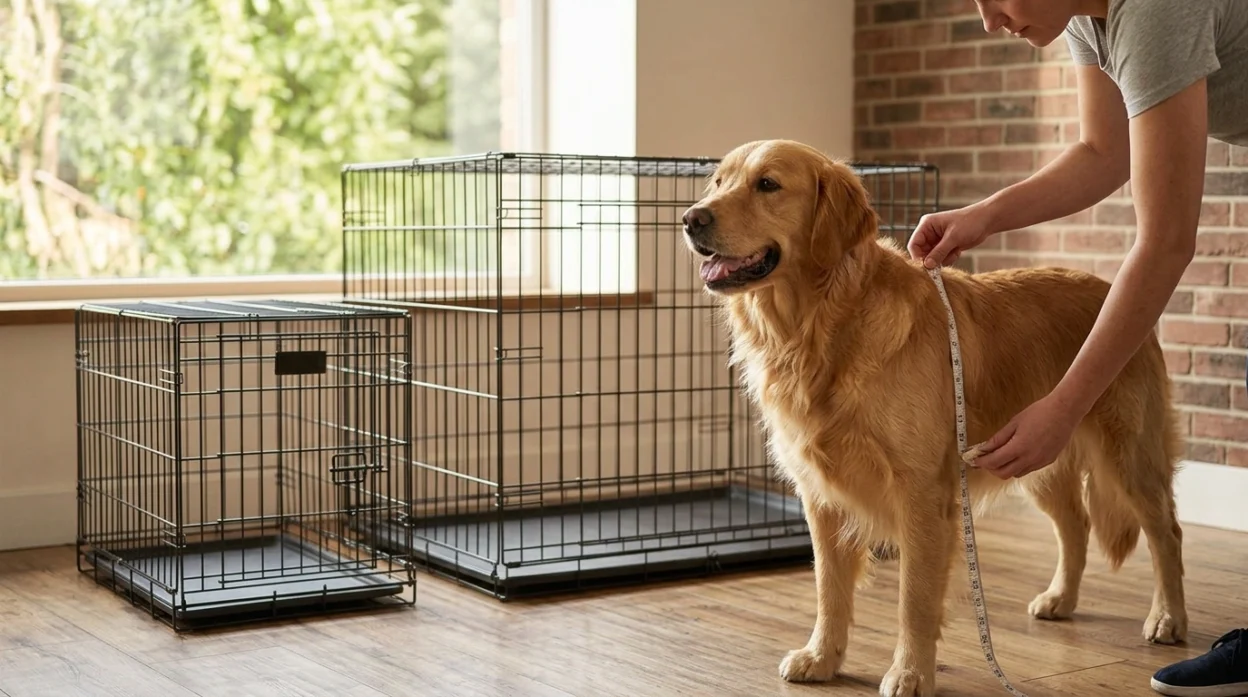
Every dog needs a safe space to call their own. Whether you’re leaving for work, traveling overnight, or simply want your dog to have a cozy retreat at home, a dog kennel solves that problem beautifully.
However, choosing the right kennel isn’t as simple as picking the prettiest one at the pet store. Size, material, location, and your dog’s specific temperament all play a role. Get it wrong and your dog will refuse to use it. Get it right and it becomes their favorite spot in the house.
In my experience, dogs that have a proper kennel feel more secure and settled overall. It gives them boundaries, comfort, and a personal space that’s entirely theirs. Also, a good kennel makes your life significantly easier especially during travel, vet visits, or home emergencies.
This guide covers everything you need to know. You’ll learn the different types of dog kennels, how to choose the right size, how to set one up properly, and the most common mistakes to avoid. Let’s get started.
What Is a Dog Kennel and Why Does Your Dog Need One?
The Real Purpose of a Dog Kennel
A dog kennel is a designated enclosure or shelter designed to give your dog a safe, comfortable space. However, many people confuse kennels with punishment and that’s a misconception worth clearing up immediately.
A kennel is not a cage. It’s not a prison. Instead, it’s a den and dogs are naturally den animals. Because dogs evolved from wolves, they instinctively seek small, enclosed spaces when they want to feel safe and relaxed. A kennel satisfies that natural instinct perfectly.
Here’s what a good dog kennel actually provides:
- Safety keeps your dog secure when unsupervised
- Security gives anxious dogs a calm retreat
- Training support essential for house training puppies
- Travel convenience makes car trips and flights safer
- Routine structure helps dogs feel settled and calm
- Emergency preparedness critical during vet visits or natural disasters
The Two Main Types of Dog Kennels
First, it helps to understand the two broad categories:
1. Indoor Kennels (Crates) These are typically wire, plastic, or fabric enclosures used inside the home. They’re portable, versatile, and ideal for house training, travel, and everyday use.
2. Outdoor Kennels (Dog Runs) These are larger, permanent or semi-permanent structures in your garden or yard. They give your dog outdoor space while keeping them safely contained. Also, they’re ideal for larger breeds who need more room to move.
Types of Dog Kennels: Which One Is Right for You?
Choosing the Right Kennel Type
Not all dog kennels serve the same purpose. Therefore, understanding your specific needs first saves you time, money, and frustration. Here’s a breakdown of every main type:
| Kennel Type | Best For | Material | Portability | Price Range |
| Wire Crate | Ventilation, visibility | Steel wire | Moderate | $30–$150 |
| Plastic Crate | Travel, den feel | Hard plastic | High | $25–$120 |
| Soft-Sided Crate | Calm dogs, travel | Fabric/mesh | Very High | $25–$100 |
| Wooden Indoor Kennel | Home décor, calm dogs | Wood | Low | $80–$300 |
| Outdoor Dog Run | Large breeds, outdoor time | Metal/chain link | Low | $150–$800 |
| Insulated Outdoor Kennel | Cold climates | Plastic/wood | Low | $100–$500 |
| Heavy-Duty Kennel | Escape artists, strong dogs | Reinforced steel | Low-Mod | $100–$400 |
Which Type Should You Choose?
First, consider how you’ll primarily use the kennel. Then match the type to that use case.
- For house training a puppy choose a wire crate with a divider panel
- For traveling by car or plane choose an airline-approved plastic crate
- For a calm adult dog at home a soft-sided or wooden kennel works beautifully
- For large, active breeds an outdoor dog run gives them space and security
- For escape-prone dogs invest in a heavy-duty reinforced steel kennel
Pro Tip: If you’re crate training a puppy, buy a crate with a divider panel. This lets you start with a smaller space and expand it as your puppy grows, saving you from buying multiple crates as they get bigger. It’s a genuinely smart investment that pays for itself quickly.
How to Choose the Right Dog Kennel: Step-by-Step Guide
Getting the Size Right
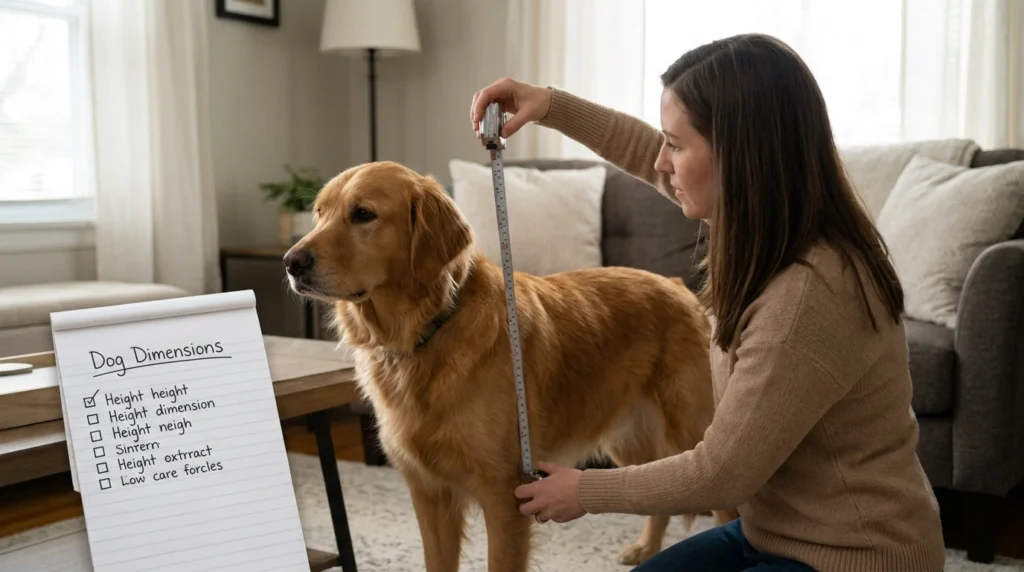
Kennel size is the most important decision you’ll make. Therefore, measure your dog carefully before buying anything.
Follow these steps:
- Measure your dog’s length from nose tip to tail base
- Measure your dog’s height from floor to top of head (or ears if they stand up)
- Add 4 inches to each measurement this gives your dog comfortable standing and turning room
- Check the kennel’s door opening your dog should walk through without ducking
The kennel should be large enough for your dog to:
- Stand up fully without hunching
- Turn around comfortably
- Lie down stretched out naturally
However, don’t go too large for puppies in training. A puppy with too much space will use one corner as a toilet. Therefore, use a divider to keep the space appropriately snug until they’re fully house trained.
Choosing the Right Material
Each material has genuine advantages depending on your situation:
Wire Kennels:
- Maximum ventilation great for warm climates
- Your dog can see everything around them
- Foldable for easy storage
- However, they’re heavier and less den-like
Plastic Kennels:
- More enclosed dogs feel safer and calmer
- Airline-approved options are widely available
- Also, they’re easier to clean
- However, ventilation is lower than wire
Soft-Sided Kennels:
- Lightweight and highly portable
- Great for calm, well-trained dogs
- However, they’re not suitable for chewers or escape artists
Wooden Kennels:
- Blend beautifully with home furniture
- Feel warmer and more aesthetically pleasing
- However, they’re harder to clean and not travel-friendly
How to Set Up a Dog Kennel Properly
Making the Kennel Comfortable and Inviting
Setting up a kennel correctly makes the difference between a dog who loves it and one who fears it. Therefore, follow these setup steps carefully:
- Choose the right location. Place the kennel in a social area of your home like the living room or bedroom. Dogs are social animals. Therefore, isolating the kennel in a garage or basement makes them feel anxious and rejected.
- Add comfortable bedding. Line the bottom with a soft blanket or a kennel-specific mat. Also, include something that smells like you. An old t-shirt works perfectly. Your scent genuinely comforts anxious dogs.
- Add a water attachment if possible. For longer stays, attach a clip-on water bowl inside the kennel door. However, avoid large water bowls that spill easily inside the enclosure.
- Include a safe toy or chew. A Kong filled with frozen peanut butter, a rubber chew toy, or a favourite stuffed animal makes the kennel feel positive and rewarding.
- Never lock a dog in immediately. First, let your dog explore the kennel freely with the door open. Then gradually encourage short stays with treats and praise. Finally, build up to longer periods over days not hours.
- Cover the kennel partially. Draping a light blanket over three sides of a wire crate creates a den-like atmosphere. Most dogs settle more quickly in a partially covered kennel. However, always leave the front open for ventilation.
- Keep the kennel consistently positive. Never use the kennel as punishment. Also, never drag a reluctant dog inside. As a result, your dog associates the kennel with comfort not fear.
Kennel Training Timeline
Introduce the kennel gradually over this timeline:
- Day 1–2: Leave the door open, toss treats inside, let your dog explore freely
- Day 3–4: Feed meals inside the kennel with the door open
- Day 5–6: Close the door briefly during meals, open immediately after
- Day 7–10: Gradually extend closed-door time with your dog inside
- Week 2+: Build up to 1–2 hour sessions while you’re home
- Week 3+: Introduce alone time with the kennel closed
Common Dog Kennel Mistakes to Avoid
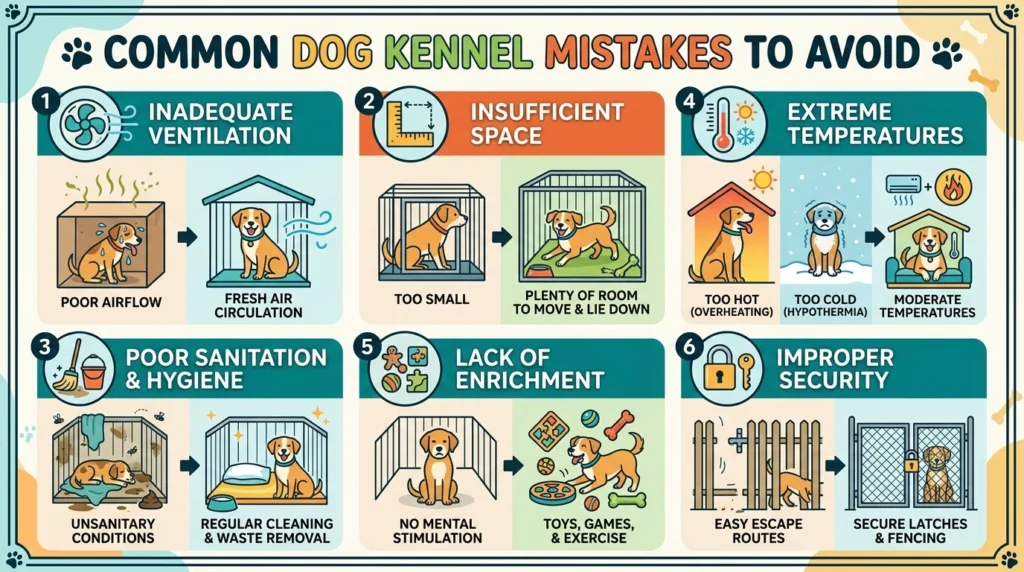
Mistake 1: Choosing the Wrong Size
Too small and your dog feels cramped and stressed. Too large and a puppy treats one corner as a bathroom. Therefore, measure accurately and use a divider for growing puppies. Size is the single most impactful decision you’ll make about any kennel purchase.
Mistake 2: Using the Kennel as Punishment
This is the fastest way to create kennel anxiety. If your dog associates the kennel with being in trouble, they’ll resist it every single time. Therefore, always keep the kennel a positive, calm, and rewarding space regardless of your frustration level.
Mistake 3: Leaving a Dog in the Kennel Too Long
Adult dogs shouldn’t stay kenneled for more than 4 to 6 hours at a time. Puppies under 6 months shouldn’t exceed 3 to 4 hours. Because dogs need bathroom breaks, mental stimulation, and social interaction regularly. Therefore, arrange midday walks or a dog sitter for longer work days.
Mistake 4: Placing the Kennel in an Isolated Spot
Dogs are pack animals. They feel most secure near their family. Therefore, avoid placing the kennel in a cold garage, a dark basement, or a rarely used spare room. Instead, keep it in your living space where your dog can see and hear household activity.
Mistake 5: Skipping the Introduction Process
Locking a dog in a kennel on day one creates panic and negative associations that take weeks to undo. However, a patient, gradual introduction creates a dog who voluntarily walks into their kennel and settles happily. Therefore, investing the time upfront pays off enormously.
Mistake 6: Buying a Soft Kennel for a Chewer
Soft-sided kennels are wonderful for calm, well-behaved adult dogs. However, for puppies, anxious dogs, or power chewers, they’re destroyed in minutes. Therefore, match the kennel material to your dog’s actual behavior, not your aesthetic preferences.
Pro Tip: Place a worn item of your clothing inside the kennel during the first week of introduction. Your scent is genuinely calming for most dogs and speeds up the comfort-building process significantly. In my experience, this simple trick cuts kennel anxiety time in half.
Frequently Asked Questions About Dog Kennels
1. Is it cruel to keep a dog in a kennel?
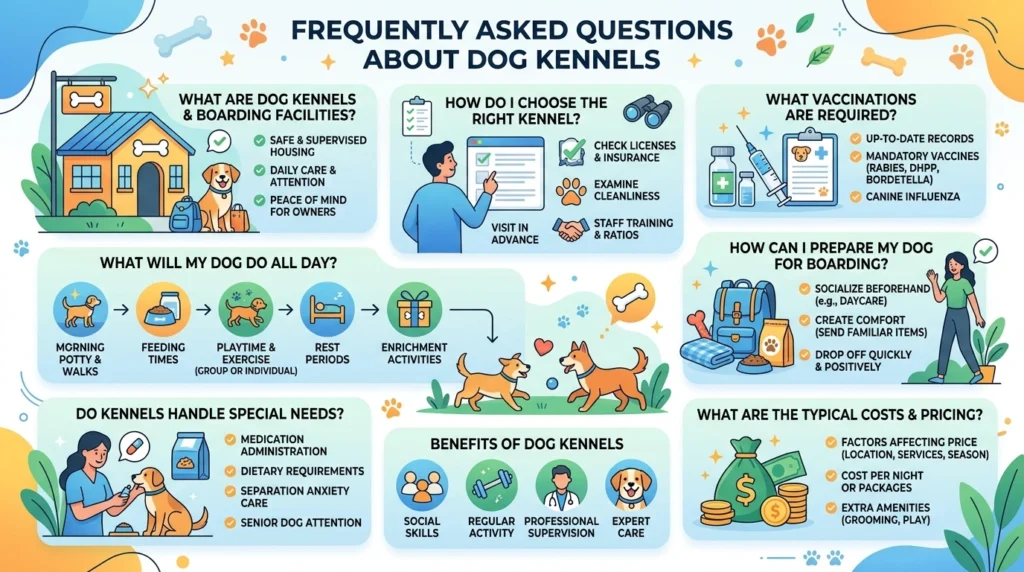
No, when used correctly, a dog kennel is not cruel. Dogs are naturally den animals and often seek small, enclosed spaces voluntarily. A kennel provides safety, security, and structure. However, it becomes problematic when a dog is kept inside for excessive periods, used as punishment, or introduced without proper gradual training. Used properly, most dogs genuinely love their kennel and choose to rest there even when the door is open.
2. How long can a dog stay in a kennel?
Adult dogs can comfortably stay in a kennel for 4 to 6 hours at a time. Puppies under 6 months shouldn’t stay kenneled for more than their age in months plus one hour so a 3-month-old puppy manages around 4 hours maximum. However, overnight kenneling is appropriate for most dogs once they’re fully kennel trained. Therefore, always ensure your dog gets exercise, social time, and bathroom breaks around kennel periods.
3. What size dog kennel do I need?
Measure your dog’s length from nose to tail base and height from floor to head. Then add 4 inches to each measurement. The kennel should allow your dog to stand up fully, turn around comfortably, and lie stretched out without touching the walls. Also, for puppies, use a kennel with a divider and expand the space as they grow. When in doubt, size up rather than down your dog will always prefer more room.
4. Should a dog kennel be indoors or outdoors?
This depends entirely on your dog, your climate, and your purpose. Indoor kennels are ideal for house training, nighttime security, and travel. Outdoor kennels suit larger breeds who need space and fresh air during the day. However, outdoor kennels must provide shade, shelter from rain, fresh water access, and appropriate insulation for cold climates. Also, dogs should never stay in outdoor kennels overnight in extreme weather conditions without proper protection.
5. How do I get my dog to like their kennel?
The key is gradual, positive introduction. First, leave the kennel open with treats inside. Then feed meals in the kennel with the door open. Next, close the door briefly during meals. Finally, build up to longer periods over 1 to 2 weeks. Also, never use the kennel as punishment, never force your dog inside, and always reward calm kennel behavior with praise or treats. Patience during this process creates a dog who voluntarily chooses their kennel as a favorite resting spot.
6. What should I put inside a dog kennel?
Line the bottom with a comfortable, washable mat or blanket. Add a safe chew toy or a stuffed Kong to keep your dog occupied. Also, include a clip-on water bowl for stays longer than a couple of hours. For puppies or anxious dogs, add a worn piece of your clothing for comfort. However, avoid loose collars, toys with small parts, or anything your dog could swallow while unsupervised.
7. Can I leave my dog in a kennel while at work?
For a full 8-hour workday not without help. Most adult dogs manage 4 to 6 hours comfortably. Therefore, arrange a midday dog walker, neighbor check-in, or doggy daycare for longer work days. Also, ensure your dog gets a good exercise session before kenneling a tired dog settles far more easily than one with pent-up energy. Puppies need even more frequent breaks and shouldn’t be left alone all day in any enclosure.
The Right Dog Kennel Makes Everything Easier
A good dog kennel isn’t just a purchase, it’s an investment in your dog’s safety, wellbeing, and your own peace of mind. Whether you choose a wire crate for a new puppy, a plastic travel kennel for road trips, or an outdoor dog run for a large active breed, the right kennel genuinely transforms your dog’s daily life.
Therefore, take your time choosing. Measure carefully. Introduce gradually. Keep the experience positive. Also, remember that every dog is different. What works brilliantly for one dog may need adjustment for another.
Your dog deserves a space that feels safe, comfortable, and completely their own. A quality kennel gives them exactly that and gives you the confidence of knowing they’re happy and secure.