
Introduction
Have you ever watched a Target commercial and found yourself more interested in the adorable dog than the actual products? You’re definitely not alone. The Target dog, that charming white Bull Terrier with the red bullseye painted around one eye, is one of the most recognized animal mascots in American advertising history.
But here’s what most people don’t know. Behind that famous painted eye is a genuinely wonderful dog breed with a fascinating history, a playful personality, and specific care needs that every potential owner should understand. Many people fall in love with the Target dog on screen and immediately wonder if this breed is right for my family.
In this guide, I’ll cover everything you need to know. You’ll learn about the breed behind the mascot, its real-life temperament, care requirements, training tips, and whether a Bull Terrier is actually the right dog for your home. Let’s get into it.
What Is the Target Dog? The Story Behind the Famous Mascot
Meet Bullseye America’s Most Famous Dog
The Target dog has an official name Bullseye. She’s a purebred English Bull Terrier, and she’s been representing the Target Corporation since 1999. However, Bullseye isn’t just one dog. Over the years, Target has worked with several trained Bull Terriers to portray the iconic mascot character.
The signature red bullseye painted around Bullseye’s eye is completely safe. Target uses pet-friendly, non-toxic face paint for all appearances. Also, the dogs who portray Bullseye undergo professional training to handle large crowds, bright lights, and busy event environments comfortably.
Why Did Target Choose a Bull Terrier?
Target chose the Bull Terrier for very specific reasons. First, the breed’s naturally egg-shaped head provides a perfect circular canvas for the bullseye logo. In addition, Bull Terriers are naturally expressive, energetic, and photogenic qualities that translate beautifully on camera.
Also, the breed’s white coat makes the red logo pop visually. As a result, Bullseye became an instantly recognizable icon that consumers connect emotionally with the Target brand. In my experience, few brand mascots generate the same level of genuine affection as this one.
The Real Target Dog Breed: English Bull Terrier Facts and Traits
Understanding the Bull Terrier Personality
The Bull Terrier is often misunderstood. Because of its muscular build and bold appearance, some people assume it’s aggressive or difficult. However, the reality is quite different. Bull Terriers are clownish, affectionate, and deeply devoted to their families.
Here are the key personality traits of the Bull Terrier:
- Playful and energetic they love games and activity
- Affectionate they bond deeply with their human family
- Stubborn they have a strong independent streak
- Curious they explore everything with enthusiasm
- Social they generally enjoy human company
- Mischievous they get bored quickly without stimulation
Therefore, the Bull Terrier suits active owners who enjoy an engaging, spirited dog with real personality. Also, they’re known for making their families laugh daily with their silly antics.
Bull Terrier Size, Appearance, and Lifespan
The English Bull Terrier has a distinctive look that’s unlike any other breed. Their unique egg-shaped head is the most recognizable feature combined with their muscular, compact body and triangular eyes.
| Feature | Details |
| Size | Medium 45 to 65 pounds |
| Height | 21 to 22 inches at shoulder |
| Coat | Short, flat, glossy |
| Colors | White, brindle, fawn, black, red, tricolor |
| Lifespan | 12 to 13 years |
| Energy Level | High |
| Trainability | Moderate needs patience |
In addition, a miniature version of the Miniature Bull Terrier exists for those who love the breed but prefer a smaller package. Miniatures weigh between 18 and 28 pounds and share the same bold personality as their full-sized cousins.
How to Care for a Target Dog Breed: Step-by-Step Guide

Everything Your Bull Terrier Needs to Thrive
Owning a Bull Terrier the same breed as the Target dog requires real commitment. However, the rewards are enormous. Here’s your complete care guide:
- Exercise daily at least 60 minutes. Bull Terriers have high energy levels. Therefore, they need vigorous daily exercise to prevent boredom-related destructive behavior. Walks, fetch, agility training, and interactive play all work well.
- Train consistently from puppyhood. Bull Terriers are intelligent but stubborn. As a result, early and consistent training using positive reinforcement methods produces the best outcomes. Short, fun training sessions work better than long repetitive ones.
- Socialize early and often. Introduce your Bull Terrier puppy to different people, animals, sounds, and environments from the earliest possible age. Because they can be reactive with unfamiliar dogs if unsocialized, early exposure is genuinely important.
- Feed a high-quality diet. Bull Terriers thrive on protein-rich, balanced dog food appropriate for medium-to-large active breeds. Also, they’re prone to skin conditions so omega-3 fatty acids in the diet support coat and skin health. Always consult your vet about the best feeding plan.
- Groom weekly. Their short, flat coat is low-maintenance. However, weekly brushing removes dead hair and keeps the coat glossy. Also, clean their ears weekly and trim nails monthly to maintain overall health.
- Provide mental stimulation daily. Bull Terriers get bored quickly. Therefore, puzzle toys, training challenges, and interactive games prevent the destructive behavior that bored Bull Terriers are famous for.
- Schedule regular vet check-ups. Bull Terriers are prone to specific health issues including heart conditions, deafness (particularly in white-coated dogs), and kidney problems. Therefore, annual veterinary check-ups catch concerns early. Always consult your vet about breed-specific health screening.
Pro Tip: White Bull Terriers like Bullseye, the Target dog have a higher incidence of congenital deafness than colored Bull Terriers. Therefore, always request a BAER (Brainstem Auditory Evoked Response) hearing test for white Bull Terrier puppies before purchase. Reputable breeders test all their puppies routinely.
Target Dog Breed Compared to Similar Breeds
How the Bull Terrier Stacks Up
Considering a Bull Terrier but unsure how it compares to similar breeds? Here’s a helpful side-by-side comparison:
| Feature | Bull Terrier | Staffordshire Bull Terrier | Boxer | Dalmatian |
| Size | Medium | Small-Med | Large | Medium-Large |
| Energy Level | High | High | High | Very High |
| Kid-Friendly | Good | Excellent | Excellent | Good |
| Trainability | Moderate | Good | Good | Moderate |
| Grooming | Low | Low | Low | Low |
| Lifespan | 12–13 yrs | 12–14 yrs | 10–12 yrs | 11–13 yrs |
| Apartment Suitable | With exercise | Yes | With exercise | No |
Which Breed Is Right for You?
The Bull Terrier the Target dog breed suits owners who want a deeply bonded, energetic, entertaining companion. However, if you prefer a slightly calmer or more naturally obedient dog, the Staffordshire Bull Terrier or Boxer might suit you better.
Also, if you have very young children, the Staffordshire Bull Terrier is often considered slightly more naturally gentle than the full-sized Bull Terrier. Therefore, consider your family’s specific circumstances carefully before choosing.
Common Mistakes New Bull Terrier Owners Make
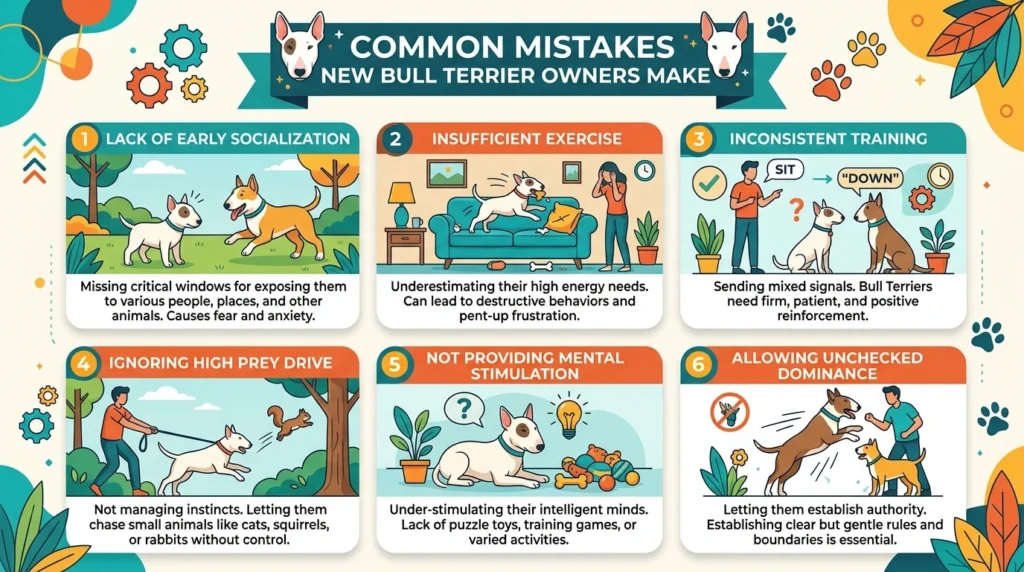
Mistake 1: Underestimating Their Energy
The Target dog looks cute and manageable on screen. However, in real life, Bull Terriers are genuinely high-energy dogs. First-time owners often underestimate how much daily exercise and stimulation they truly need. As a result, an under-exercised Bull Terrier becomes destructive, chewing furniture, digging, and finding creative ways to cause chaos.
Mistake 2: Being Inconsistent With Training
Bull Terriers are clever. They quickly learn that stubborn behavior sometimes works. Therefore, inconsistent training creates bad habits that become very difficult to break. Always follow through on commands and use positive reinforcement consistently from day one.
Because Bull Terriers can be reactive with unfamiliar dogs, skipping early socialization creates real problems in adulthood. Therefore, puppy classes and regular positive exposure to other dogs and people are genuinely essential, not optional extras.
Mistake 4: Leaving Them Alone Too Long
Bull Terriers are companion dogs. They bond deeply with their families and don’t handle long periods of solitude well. As a result, separation anxiety, destructive behavior, and excessive vocalization develop in dogs left alone for extended periods regularly. Therefore, this breed suits households where someone is home for significant portions of the day.
Mistake 5: Ignoring Health Screening
White-coated Bull Terriers like the famous Target dog have elevated risks of deafness and certain kidney conditions. Therefore, health testing before purchasing a puppy isn’t optional, it’s essential. Always ask breeders for documented health clearances, and schedule regular vet check-ups throughout your dog’s life.
Pro Tip: Bull Terriers are known for resource guarding if not trained early. Therefore, practicing handling your puppy’s food bowl, toys, and treats from a young age is always rewarding calm behavior. This simple habit prevents guarding issues from developing as the dog matures.
Frequently Asked Questions About the Target Dog
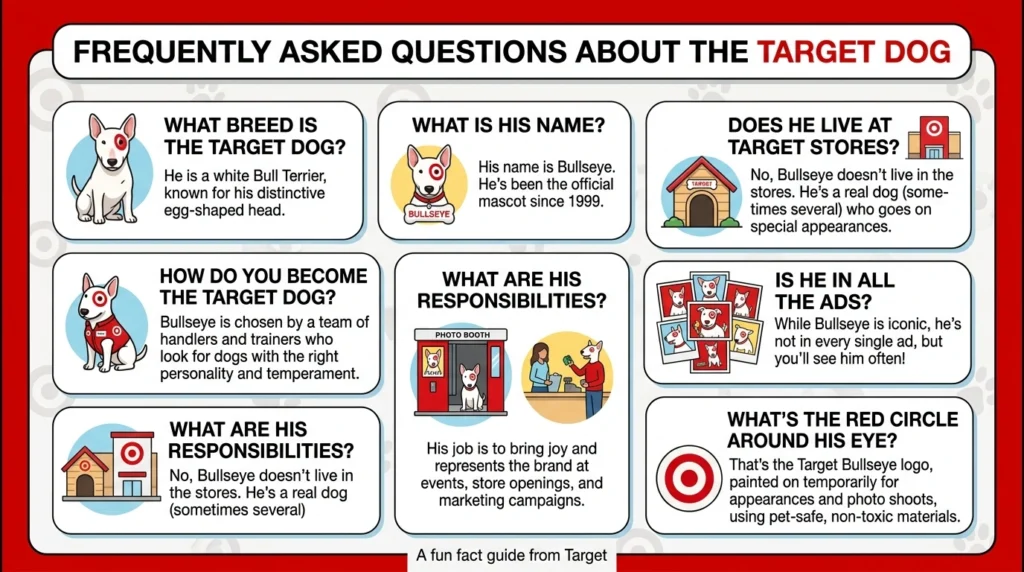
1. What breed is the Target dog?
The Target dog, officially named Bullseye, is a purebred English Bull Terrier. The breed was chosen because its naturally round, egg-shaped head provides the perfect canvas for the Target bullseye logo. Also, the breed’s white coat makes the red logo visually striking and instantly recognizable. Several Bull Terriers have portrayed Bullseye since the mascot first appeared in 1999, with each dog professionally trained for public appearances and commercial filming.
2. Is the paint on the Target dog safe?
Yes absolutely. Target uses pet-friendly, non-toxic face paint for all of Bullseye’s appearances. The paint is specifically chosen to be safe for dogs and is applied carefully by trained professionals before each appearance or filming session. Also, the dogs who portray Bullseye are professionally cared for and work under strict animal welfare guidelines. Their health and comfort always come first during any public appearance or commercial production.
3. Is the Bull Terrier a good family dog?
Bull Terriers can be excellent family dogs but they suit specific types of families best. They do well with active families who have older children and time to invest in consistent training and exercise. However, because of their high energy and stubborn nature, they’re not ideal for first-time dog owners or very sedentary households. Also, their size and boisterous energy can accidentally knock over very young toddlers during play. Therefore, always supervise interactions between Bull Terriers and young children carefully.
4. How much does a Bull Terrier cost?
A Bull Terrier puppy from a reputable breeder typically costs between $1,500 and $3,500 in the United States. However, price varies based on lineage, breeder reputation, location, and whether the puppy comes with full health testing documentation. Also, Bull Terrier rescue organizations offer adult dogs for adoption at significantly lower costs typically $200 to $500. In my experience, adopted adult Bull Terriers often make wonderful pets because their temperament is already fully established and visible.
5. Do Bull Terriers get along with other dogs?
Bull Terriers can get along with other dogs but socialization from puppyhood is absolutely essential. Because the breed was historically developed for dog fighting, some Bull Terriers retain a degree of dog-directed reactivity. However, well-socialized Bull Terriers who grow up with other dogs typically manage multi-dog households well. Therefore, if you have existing pets, introduce a Bull Terrier carefully and consult a professional trainer if any issues arise. Always supervise interactions with smaller dogs, as Bull Terriers play enthusiastically and can accidentally overwhelm smaller animals.
6. Are Bull Terriers easy to train?
Bull Terriers are moderately challenging to train. They’re intelligent enough to learn quickly but their independent, stubborn streak means they sometimes choose not to comply. Therefore, training sessions need to be short, fun, and heavily reward-based. Also, consistency is everything with this breed. In my experience, owners who treat training as a game get far better results than those who use repetitive, formal commands. Puppy classes are highly recommended as a starting point for all new Bull Terrier owners.
7. What health problems do Bull Terriers commonly face?
Bull Terriers face several breed-specific health concerns that every owner should know:
- Congenital deafness especially common in white-coated dogs
- Hereditary nephritis a serious kidney condition found in some lines
- Heart conditions including mitral valve disease
- Skin allergies fairly common, often managed with diet adjustments
- Patellar luxation knee joint issues in some individuals
- Lens luxation an eye condition requiring monitoring
Therefore, regular veterinary check-ups, appropriate health testing before purchase, and a quality diet all significantly reduce health risks. Always consult your vet about breed-specific health screening schedules for your Bull Terrier.
The Target Dog More Than Just a Mascot
The Target dog Bullseye captured hearts around the world and for good reason. Behind those painted eyes lives one of the most entertaining, loyal, and genuinely lovable dog breeds you’ll ever encounter.
However, the Bull Terrier isn’t the right dog for everyone. Therefore, go in with clear eyes, understand the exercise commitment, the training patience required, and the health screening that responsible ownership demands.
For the right family, though, a Bull Terrier delivers years of laughter, loyalty, and unforgettable companionship. Also, you’ll never have a dull moment with one in your home that is absolutely guaranteed.