Introduction
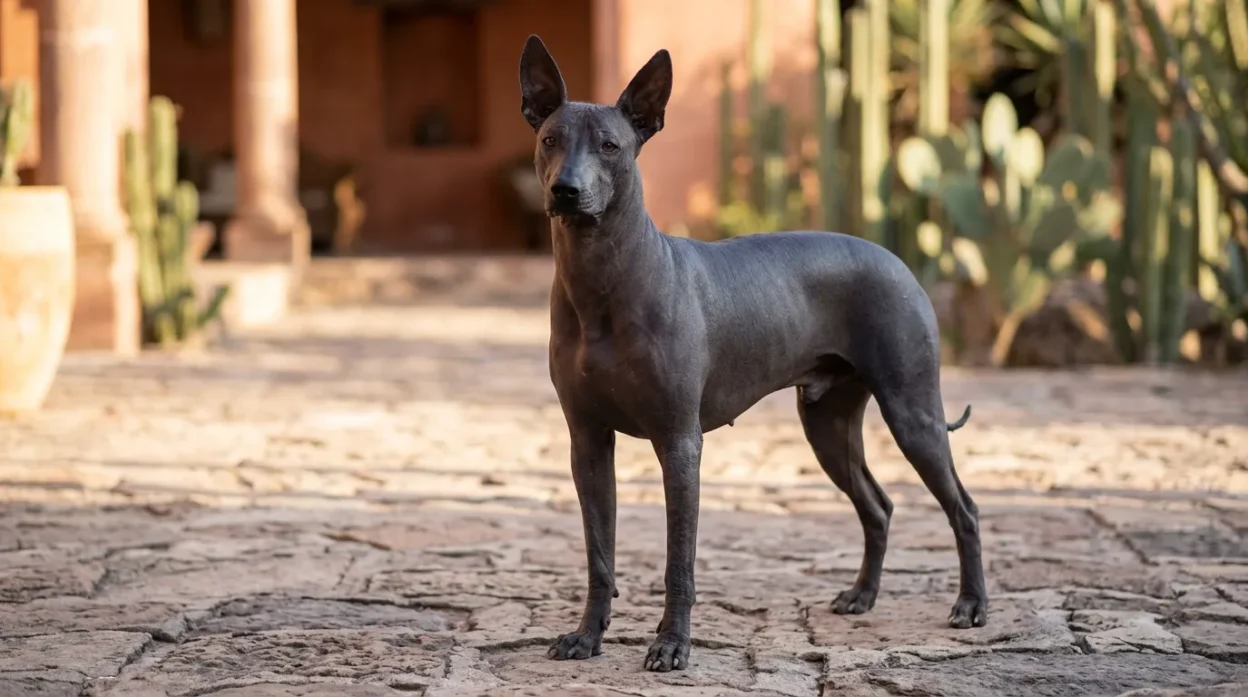
Have you ever seen a dog so unique that you simply had to stop and stare? That’s exactly the reaction most people have when they first encounter the Mexican hairless dog. No fur. Warm, smooth skin. Ancient history. And a personality that’s genuinely unlike any other breed on earth.
Known officially as the Xoloitzcuintli pronounced “show-low-eats-QUEENT-lee” this remarkable breed is one of the oldest and rarest dogs in the world. Many people find the name intimidating, so most owners simply call them “Xolo” for short.
However, despite their unusual appearance, Mexican hairless dogs are loving, loyal, and surprisingly versatile companions. They suit apartment living, bond deeply with their families, and carry thousands of years of fascinating cultural history on their hairless shoulders.
This guide covers everything you need to know from their ancient origins to daily care routines, health needs, and temperament. Whether you’re considering adopting one or simply fascinated by this extraordinary breed, let’s explore the wonderful world of the Mexican hairless dog together.
What Is the Mexican Hairless Dog? History and Origins
One of the World’s Oldest Breeds
The Mexican hairless dog holds a genuinely extraordinary place in canine history. Archaeological evidence suggests the Xolo has existed for over 3,000 years making it one of the oldest dog breeds on the planet. Ancient Aztec and Maya civilizations considered this dog sacred.
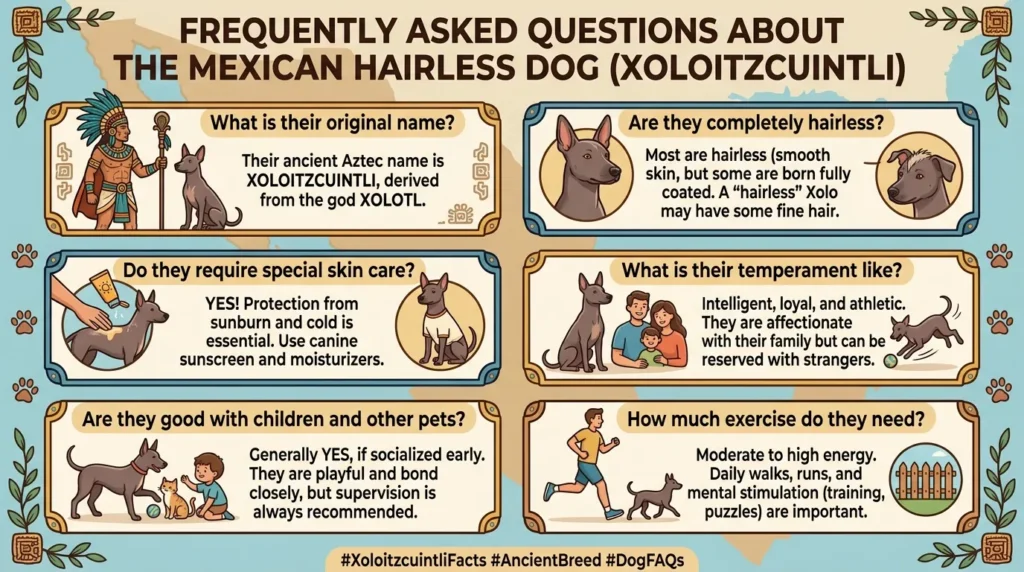
In fact, the name “Xoloitzcuintli” combines two Aztec words. “Xolotl” was the Aztec god of lightning and death. “Itzcuintli” simply means dog. Therefore, this breed literally translates to “dog of the god Xolotl.”
The ancient Aztecs believed Xolos guided the souls of the dead safely through the underworld. As a result, these dogs were treated with enormous respect and reverence throughout Mesoamerican culture.
From Sacred Dog to Family Companion
Today, the Mexican hairless dog has evolved from ancient spiritual companion to beloved family pet. The breed gained official AKC recognition in 2011 although kennel clubs in Mexico had recognized it much earlier.
The Xolo is also Mexico’s national dog. Therefore, this breed carries enormous cultural pride for Mexican families and dog lovers worldwide.
Mexican Hairless Dog: Size, Appearance, and Varieties
Three Size Varieties
One of the most interesting things about the Mexican hairless dog is that it comes in three distinct sizes. Therefore, whether you live in a studio apartment or a large house, there’s likely a Xolo size that suits your space perfectly.
| Size | Weight Range | Height | Best For |
| Toy | 10–15 lbs | 10–14 inches | Apartments, small spaces |
| Miniature | 15–30 lbs | 14–18 inches | Most family homes |
| Standard | 30–55 lbs | 18–23 inches | Active families, larger homes |
Hairless vs. Coated Variety
Here’s something that surprises many people. The Mexican hairless dog actually comes in two coat varieties: hairless and coated. However, the hairless variety is far more well-known and widely recognized.
The hairless variety has smooth, warm skin that feels surprisingly soft almost like touching a warm chamois cloth. Also, some individuals have small tufts of hair on the top of their head, feet, and tail tip.
The coated variety carries a short, flat coat across the entire body. Because both varieties can appear in the same litter, breeders often have both types available. However, the coated variety doesn’t appear in AKC show rings; only the hairless type competes officially.
Physical Characteristics
Here’s what makes the Xolo’s appearance so striking and distinctive:
- Skin: Smooth, tough, and warm to the touch
- Body: Lean, elegant, and athletic in build
- Head: Wedge-shaped with large, bat-like ears
- Eyes: Dark and almond-shaped expressive and alert
- Skin colors: Black, gray, bronze, liver, or spotted
- Temperament: Calm, loyal, and surprisingly gentle
How to Care for a Mexican Hairless Dog: Complete Guide

Step-by-Step Daily Care Routine
Caring for a Mexican hairless dog is different from caring for most breeds. However, it’s not necessarily harder, just different. Because they have no fur to protect them, their skin needs specific attention. Therefore, follow this practical care routine for a healthy, happy Xolo.
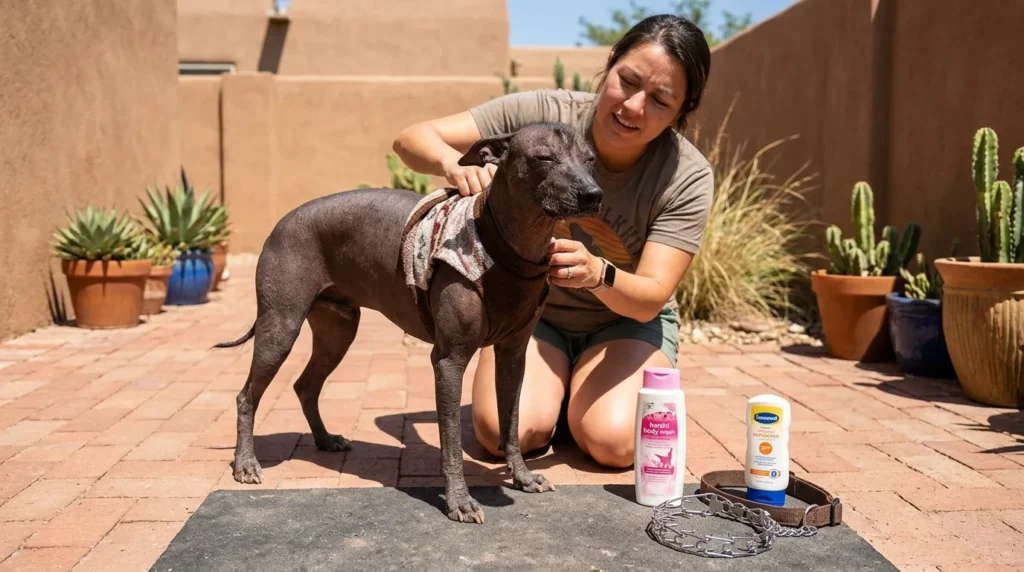
- Apply dog-safe sunscreen before outdoor time. The Mexican hairless dog has no fur to protect against UV rays. Therefore, use a vet-approved dog sunscreen on exposed skin especially during summer months. Never use human sunscreen, as many formulas contain zinc oxide, which is toxic to dogs.
- Bathe your Xolo once every two to four weeks. Because their skin produces natural oils, overbathing strips those protective oils and causes dryness. Use a gentle, fragrance-free dog shampoo. Also, dry them thoroughly after bathing especially in cooler weather.
- Moisturize the skin when needed. Some Mexican hairless dogs develop dry, flaky skin especially during winter. As a result, a light application of unscented coconut oil or a vet-recommended dog skin moisturizer helps keep their skin soft and healthy.
- Protect them from cold weather. Because they have no fur, Xolos feel temperature changes acutely. Therefore, invest in dog sweaters and coats for walks during cold weather. Indoor temperatures below 60°F can genuinely make them uncomfortable.
- Check skin for acne and blackheads regularly. Mexican hairless dogs are prone to skin breakouts similar to teenage acne in humans. Therefore, check their skin weekly and consult your vet if you notice consistent breakouts or skin irritation.
- Clean their ears weekly. Those beautiful large ears collect dust and debris easily. In addition, moisture can accumulate in ear canals, potentially leading to infections. Therefore, use a vet-recommended ear cleaning solution weekly.
- Brush their teeth daily. Xolos are prone to dental issues particularly the hairless variety, which can have fewer or differently shaped teeth than other breeds. Therefore, daily tooth brushing with dog-safe toothpaste is essential for long-term dental health.
Pro Tip: In cold weather, dress your Mexican hairless dog in a snug-fitting dog sweater before any outdoor activity. Because their body temperature drops quickly without fur insulation, keeping them warm isn’t just about comfort, it genuinely protects their health. Always consult your vet if your Xolo shows signs of shivering or reluctance to go outside in winter.
Mexican Hairless Dog Temperament: What to Really Expect
A Loyal and Deeply Bonded Companion
The Mexican hairless dog is one of the most loyal breeds you’ll ever encounter. However, that loyalty comes with a specific personality profile that’s worth understanding before you adopt. In my experience, Xolos are often misunderstood because of their unusual appearance but their personalities are genuinely warm and deeply endearing.
Here’s what to genuinely expect from a Xolo’s temperament:
- Deeply loyal bonds very strongly with one or two primary people
- Calm indoors surprisingly quiet and relaxed inside the home
- Alert and watchful makes an excellent watchdog despite their medium size
- Reserved with strangers needs proper socialization from puppyhood
- Intelligent learns quickly but can be independent-minded
- Sensitive picks up on your moods and emotions remarkably well
- Playful enjoys interactive games and puzzle toys
Are Mexican Hairless Dogs Good With Families?
Yes, with proper socialization, the Mexican hairless dog thrives in family environments. However, because they bond so deeply with their primary people, they can become anxious if left alone for long periods. Therefore, families who work from home or have flexible schedules suit this breed particularly well.
Also, Xolos generally do well with older children who treat them respectfully. Because of their sensitive nature, however, very rough handling from young children can make them anxious. Therefore, teaching children proper dog interaction is essential before bringing a Xolo home.
Mexican Hairless Dog Health: Key Issues to Know
Common Health Concerns
The Mexican hairless dog is generally a healthy, long-lived breed. Their lifespan ranges from 13 to 18 years impressively long, even for a smaller breed. However, like every breed, Xolos have specific health vulnerabilities worth monitoring.
Key health considerations include:
- Skin sensitivity prone to sunburn, acne, and dryness without proper skin care
- Dental issues the hairless gene sometimes affects tooth development
- Joint concerns standard-sized Xolos can develop hip and elbow issues with age
- Cold sensitivity without fur, they’re genuinely vulnerable to cold temperatures
- Skin infections without regular cleaning, skin folds and pores can become infected
Keeping Your Xolo Healthy
First, schedule regular veterinary check-ups at least annually for young adults and twice yearly for seniors. Also, keep vaccinations and parasite prevention fully up to date. Because their skin is exposed, Xolos are more vulnerable to certain insect bites and parasites than coated breeds.
In addition, feed a high-quality, balanced dog food appropriate for your Xolo’s size and age. Maintaining a healthy weight reduces joint stress significantly, particularly important for standard-sized individuals. Therefore, always consult your vet about the ideal diet and portion sizes for your specific dog.
Common Mistakes New Mexican Hairless Dog Owners Make
Mistake 1: Skipping Sunscreen
This is the most common and most damaging mistake new Xolo owners make. Because the Mexican hairless dog has no fur, UV exposure causes real sunburn damage to their skin. Therefore, apply dog-safe sunscreen to exposed areas every time you go outside for more than 15 minutes in direct sun.
Mistake 2: Overbathing
Some owners bathe their Xolo too frequently thinking that hairless means cleaner. However, the opposite is true. Overbathing strips natural oils and causes chronic skin dryness. Therefore, stick to bathing every two to four weeks unless your vet recommends otherwise.
Mexican hairless dogs are naturally reserved with strangers. However, without early and consistent socialization, that reserve can turn into fearfulness or anxiety. Therefore, expose your Xolo puppy to many different people, sounds, and environments from the earliest age possible.
Mistake 4: Leaving Them in the Cold
New owners sometimes underestimate just how sensitive Xolos are to cold. Because they have zero fur insulation, even mild cold causes them significant discomfort. Therefore, always dress your Mexican hairless dog appropriately for cold weather and never leave them outside in low temperatures without protection.
Mistake 5: Ignoring Dental Care
Because the hairless gene can affect tooth development, dental hygiene is more critical for Xolos than for most breeds. Also, dental disease progresses quickly in this breed without regular brushing. Therefore, establish a daily tooth-brushing routine from puppyhood and schedule professional dental cleanings as your vet recommends.
Pro Tip: Introduce your Mexican hairless dog puppy to tooth brushing, skin moisturizing, and ear cleaning from the very first week at home. Because Xolos are sensitive and routine-loving, early introduction to grooming makes these tasks easy and stress-free for life. Starting late makes the process much harder for both of you.
Frequently Asked Questions About the Mexican Hairless Dog
1. Is the Mexican hairless dog a good pet for first-time owners?
The Mexican hairless dog can suit first-time owners but only those who research the breed thoroughly beforehand. Xolos are intelligent and relatively calm indoors, which makes them manageable. However, their specific skin care needs, sensitivity to cold, and tendency toward aloofness with strangers require consistent attention and commitment. Therefore, first-time owners who invest time in understanding the breed’s unique needs tend to have wonderful experiences with this remarkable dog.
2. Do Mexican hairless dogs smell more than other breeds?
Actually, Mexican hairless dogs tend to smell less than most breeds. Because they have no fur, they don’t collect the dirt, dander, and moisture that typically causes “doggy odor” in coated breeds. However, their skin produces natural oils that need occasional cleaning. Therefore, a bath every two to four weeks and weekly skin checks keep your Xolo fresh and clean without any unpleasant odor issues.
3. Are Mexican hairless dogs truly hypoallergenic?
The Mexican hairless dog is often described as hypoallergenic and they’re certainly better for allergy sufferers than most breeds. Because they shed little to no hair, airborne dander is significantly reduced. However, no dog is 100% hypoallergenic, because dog allergies are typically triggered by proteins in saliva and skin oils, not just fur. Therefore, if allergies are a serious concern, spend time with a Xolo before committing, and consult your doctor about allergy management strategies.
4. How much exercise does a Mexican hairless dog need daily?
Despite their calm indoor manner, Mexican hairless dogs need moderate daily exercise. Typically, 30 to 45 minutes of daily activity suits most Xolos well. This can include brisk walks, indoor play sessions, and interactive training games. However, during hot sunny days, limit outdoor time and always apply sunscreen. Also, avoid vigorous exercise in cold weather without proper coat protection. Therefore, adapting exercise to seasonal conditions is an important part of responsible Xolo ownership.
5. Where can I adopt or buy a Mexican hairless dog?
Because the Xolo is a rare breed, finding one requires some research and patience. The AKC Marketplace at akc.org lists reputable breeders who health-test their dogs and breed ethically. Also, the Xoloitzcuintli Club of America maintains a breeder referral list. In addition, breed-specific rescue organizations occasionally have Xolos available for adoption which is worth exploring before purchasing from a breeder. Therefore, plan for a waiting period of several months to find a healthy, well-socialized puppy from a responsible source.
6. What do Mexican hairless dogs eat?
Mexican hairless dogs thrive on a high-quality, balanced commercial dog food appropriate for their size and life stage. Because they’re prone to dental issues, dry kibble can help with mechanical tooth cleaning though it’s not a substitute for brushing. Also, some Xolo owners feed a mix of dry and wet food for variety and hydration. Therefore, consult your vet about the best diet for your specific dog’s age, weight, and health status before making dietary decisions.
7. Are Mexican hairless dogs recognized by major kennel clubs?
The Mexican hairless dog received official AKC recognition in 2011 and competes in the Non-Sporting Group. The FCI (Fédération Cynologique Internationale) and the UK Kennel Club also recognize the breed. In addition, the breed has been recognized by the Mexican Kennel Club for many decades reflecting the deep cultural significance of the Xolo in its homeland. Therefore, this ancient breed now enjoys full recognition from all major international kennel organizations.
The Mexican Hairless Dog Deserves Your Attention
The Mexican hairless dog is truly one of the most extraordinary breeds in the world. Ancient, loyal, loving, and unlike anything else the Xolo brings a genuinely unique kind of companionship to the families lucky enough to share their lives with one.
However, this breed isn’t for everyone. Their specific skin care needs, sensitivity to temperature, and reserved nature with strangers require a committed, informed owner. Therefore, if you’re willing to invest the time and care this remarkable breed deserves, the bond you’ll build with a Xolo is unlike anything else.
Also, remember to consult your vet before bringing any new dog home, especially a breed with such specific health and care requirements. Your vet is your most valuable partner in keeping your Mexican hairless dog healthy and thriving for their full 13 to 18-year lifespan.