
Introduction
If you’ve ever seen a dog with enormous, butterfly-shaped ears and an expression of pure joy that’s a Papillon dog. And once you meet one, it’s almost impossible not to fall in love instantly.
The Papillon is one of the oldest and most beloved toy breeds in the world. Despite their delicate appearance, these little dogs are incredibly athletic, highly intelligent, and surprisingly bold. They don’t just sit on laps, they compete in agility courses, learn tricks quickly, and charm everyone they meet.
However, like every breed, Papillons come with specific needs. They thrive with mental stimulation. They need consistent training from an early age. Also, they bond deeply with their families and don’t enjoy being left alone for long periods.
In my experience, Papillons suit active individuals and families who want a small dog with a genuinely big personality. This complete guide covers everything from temperament and training to grooming, health, and feeding. Let’s get to know this remarkable little butterfly dog properly.
What Is the Papillon Dog? Breed Overview and History
The Butterfly Dog With a Royal History
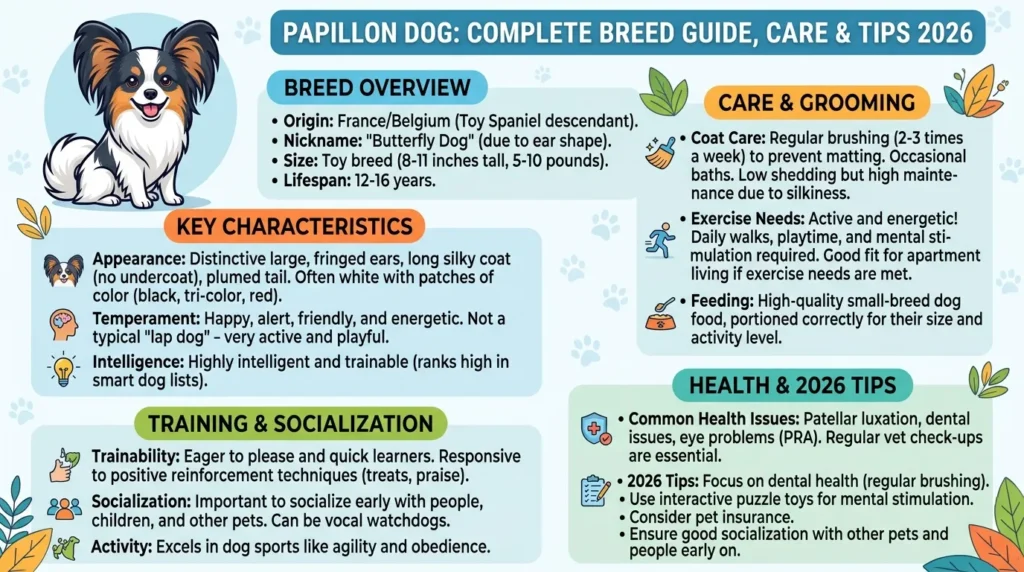
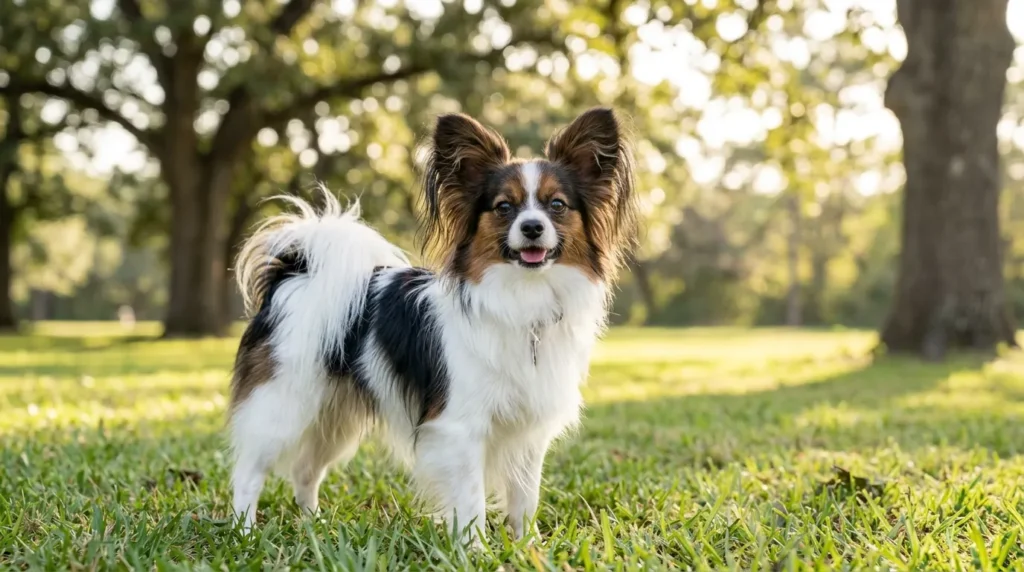
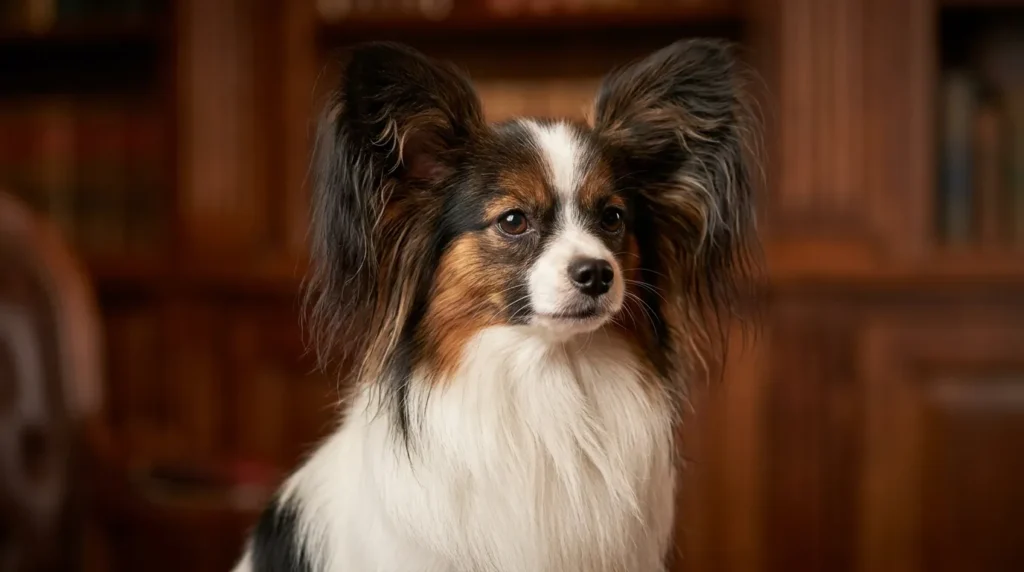
The name “Papillon” means butterfly in French and one look at those magnificent fringed ears tells you exactly why. These distinctive wing-like ears are the breed’s most recognizable feature. However, not all Papillons have erect ears. The drop-eared variety is called a Phalène meaning “moth” in French and both varieties appear in the same litter.
Papillons have an extraordinarily rich history. They appear in European paintings dating back to the 16th century portrayed in the laps of French and Spanish royalty. Marie Antoinette reportedly adored the breed. Also, Madame de Pompadour, the favorite of King Louis XV, was famously devoted to her Papillons.
Papillon Dog Key Facts at a Glance
Here’s a quick overview of the essential Papillon breed information:
| Feature | Details |
| Breed Group | Toy Group |
| Size | Small |
| Weight | 5–10 pounds |
| Height | 8–11 inches |
| Lifespan | 14–16 years |
| Coat | Long, silky, single-layered |
| Colors | White with patches of any color |
| Temperament | Alert, friendly, energetic, intelligent |
| Good With Kids | Yes with older children |
| Hypoallergenic | No |
| Exercise Needs | Moderate 30–45 minutes daily |
| Trainability | Very high |
Papillon Temperament: What to Really Expect
Papillons are not typical lap dogs. They’re curious, energetic, and always ready for action. Because they rank consistently among the top 10 most intelligent dog breeds, they learn new commands remarkably fast. However, that intelligence also means they get bored easily so mental stimulation is just as important as physical exercise.
These dogs are deeply loyal. They follow their favorite person from room to room and thrive on companionship. As a result, they don’t do well with long periods of isolation. Also, they’re alert little watchdogs; they’ll let you know when something is happening outside, sometimes quite enthusiastically.
Papillon Dog Care Guide: Everything You Need to Know
Daily Care Essentials
Caring for a Papillon is genuinely rewarding. However, their needs are specific enough that understanding them upfront saves you a lot of stress later. Here’s what daily Papillon care looks like:
Grooming Needs:
- Brushing: 2–3 times per week their single-layer silky coat doesn’t mat as severely as double-coated breeds
- Bathing: Every 3–4 weeks or as needed
- Ear cleaning: Weekly those beautiful big ears trap debris easily
- Nail trimming: Every 3–4 weeks
- Dental care: Daily brushing is strongly recommended small breeds are very prone to dental disease
Exercise Requirements:
- 30–45 minutes of activity daily
- Mental stimulation through puzzle toys and training games
- Agility training Papillons excel at this and genuinely love it
- Leash walks plus supervised free play in a secure area
Pro Tip: Papillons are surprisingly athletic despite their tiny size. Therefore, don’t underestimate their exercise capacity. In my experience, a Papillon that doesn’t get enough mental and physical stimulation becomes destructive and vocal. A quick daily training session, even just 10 minutes, makes a huge difference in their behavior and happiness.
Step-by-Step Training Guide for Papillon Dogs
Papillons are among the easiest small breeds to train but only if you start early and stay consistent. Here’s a proven step-by-step approach:
- Start training at 8 weeks old. The earlier you begin, the better the foundation. Papillons absorb information quickly at this age. Therefore, basic commands like sit, stay, and come should be your first focus.
- Use positive reinforcement exclusively. Papillons respond beautifully to praise, small treats, and play rewards. However, they’re sensitive dogs and harsh corrections damage their confidence and slow learning significantly.
- Keep sessions short and engaging. Train for 5–10 minutes at a time, 2–3 times daily. Because Papillons have sharp minds, they lose interest in repetitive drills. Variety keeps them engaged and motivated.
- Socialize early and often. Expose your Papillon to different people, environments, sounds, and animals from puppyhood. As a result, you’ll raise a confident, well-adjusted dog rather than an anxious, reactive one.
- Teach impulse control. Papillons are quick movers. Therefore, commands like “wait,” “leave it,” and “off” are essential safety skills especially near traffic or larger dogs.
- Progress to advanced training. Once basics are mastered, consider agility, trick training, or competitive obedience. Papillons consistently excel at all three and they absolutely love the challenge.
- Address barking early. Papillons can be vocal. Therefore, teaching a “quiet” command from puppyhood prevents excessive barking from becoming a deeply ingrained habit.
Papillon Dog Health: What Every Owner Must Know
Common Health Issues in Papillon Dogs
Papillons are generally a healthy breed with an impressive 14–16 year lifespan. However, like all breeds, they carry some specific health predispositions. Therefore, knowing these in advance helps you monitor your dog proactively.
Common Health Concerns:
| Health Issue | Description | Prevention/Management |
| Dental Disease | Very common in small breeds | Daily brushing, annual dental cleanings |
| Patellar Luxation | Kneecap slipping out of place | Vet monitoring, weight management |
| Progressive Retinal Atrophy | Gradual vision loss | Regular eye checks, genetic testing |
| Open Fontanel | Soft spot on skull in some puppies | Careful handling, vet monitoring |
| Hypoglycemia | Low blood sugar, especially in puppies | Frequent small meals, vet guidance |
| Seizures | Occasional in the breed | Vet assessment and management |
Nutrition and Feeding Guide
Papillons need high-quality nutrition despite their small size. In fact, because they’re so active and energetic, feeding them well directly impacts their coat, energy, and longevity.
Key feeding guidelines:
- Feed a high-quality small breed dry dog food with named protein as the first ingredient
- Split daily food into 2 meals per day this helps stabilize blood sugar levels
- Typical daily amount: ¼ to ½ cup of dry food depending on activity level and food brand
- Always provide fresh, clean water
- Avoid overfeeding Papillons are prone to weight gain if overfed, which stresses their small joints
- Consult your vet about the best food for your specific Papillon’s age and health status
Papillon Dog Grooming: Keeping That Beautiful Coat Perfect
Grooming Routine Made Simple
The Papillon’s coat looks high-maintenance but it’s actually one of the easier long-coated breeds to manage. Because they have a single-layer silky coat without a dense undercoat, mats form less frequently than in double-coated breeds.
Weekly grooming routine:
- Monday/Thursday: Brush thoroughly with a pin brush or soft slicker brush
- Daily: Check ears for debris and wax buildup
- Weekly: Wipe between toe pads and check nails
- Monthly: Full bath, blow-dry, and nail trim
Professional Grooming vs. Home Grooming
Many Papillon owners groom at home successfully. However, a professional groomer every 6–8 weeks helps maintain the coat’s shape and keeps the feathering on the ears and legs looking beautiful. Also, professional groomers can handle nail trimming and ear cleaning more thoroughly if you’re not confident doing it yourself.
Common Mistakes Papillon Dog Owners Make
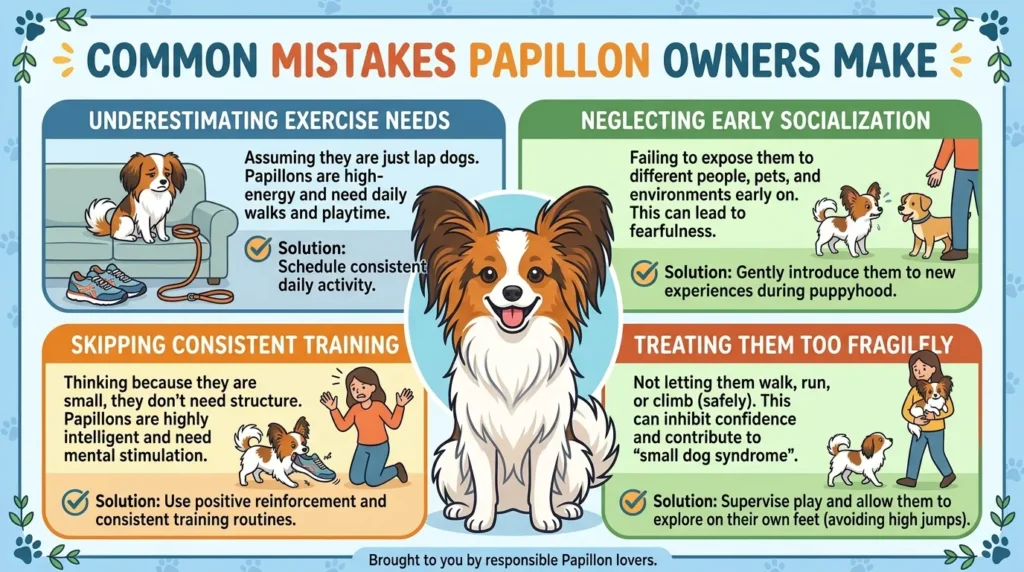
Mistake 1: Treating Them Like Fragile Accessories
Papillons look delicate but they’re genuinely athletic little dogs. Therefore, under-exercising them because they seem too small for “real” activity leads to behavioral problems. They need regular physical and mental challenges to stay balanced and happy.
Mistake 2: Skipping Dental Care
Small breeds suffer from dental disease at very high rates. Because Papillons are no exception, neglecting daily tooth brushing leads to painful dental disease, expensive extractions, and even systemic health issues. Therefore, start dental care from puppyhood and make it part of your daily routine from day one.
Mistake 3: Leaving Them Alone Too Long
Papillons form intense bonds with their families. As a result, leaving them alone for extended periods regularly leads to separation anxiety which shows up as destructive behavior, excessive barking, and visible distress. Therefore, if your lifestyle requires long working hours away from home, consider whether this breed truly suits your schedule.
Some Papillon owners skip socialization because their dog seems confident. However, without early and consistent exposure to different people, animals, and environments, Papillons can become anxious and reactive. Therefore, puppy classes and regular social outings are essential, not optional.
Mistake 5: Ignoring Weight Management
Papillons are small and even a few extra pounds creates significant joint stress. Therefore, measure food portions carefully, limit treat calories, and weigh your dog monthly. Also, consult your vet if you notice weight gain, because it can signal underlying health issues beyond simple overfeeding.
Pro Tip: Because Papillons are so treat-motivated during training, use their regular kibble as training rewards whenever possible. This way, you maintain portion control without accidentally overfeeding treats throughout the day. It’s a simple habit that genuinely protects their long-term health.
Frequently Asked Questions About the Papillon Dog
1. Is the Papillon dog a good family pet?
Yes, Papillons make wonderful family pets, especially in households with older children who understand how to handle small dogs gently. They’re affectionate, playful, and deeply loyal. However, they’re not always ideal for families with very young toddlers, because their small size makes them vulnerable to accidental rough handling. Therefore, always supervise interactions between Papillons and young children carefully. With proper socialization, they also get along well with other dogs and cats.
2. How smart is the Papillon dog?
The Papillon consistently ranks among the top 10 most intelligent dog breeds worldwide. Stanley Coren’s famous book “The Intelligence of Dogs” places the Papillon at number 8 out of over 130 breeds tested. Therefore, they learn new commands in fewer than 5 repetitions and obey first commands at least 95% of the time which puts them in the same intelligence tier as Border Collies and German Shepherds. This intelligence makes training genuinely enjoyable, but it also means they need consistent mental stimulation to prevent boredom.
3. Do Papillon dogs bark a lot?
Papillons are alert dogs and they do tend to bark at sounds, movement, and strangers. However, with consistent training from puppyhood, excessive barking is very manageable. Teaching the “quiet” command early and rewarding calm behavior redirects their natural alertness into appropriate watchdog behavior rather than non-stop noise. Also, ensuring they get adequate daily exercise and mental stimulation significantly reduces barking driven by boredom or pent-up energy.
4. Are Papillon dogs easy to train?
Papillons are among the easiest small breeds to train. Because they’re highly intelligent and deeply motivated by praise and treats, they pick up new skills remarkably quickly. Also, they genuinely enjoy the engagement that training provides; it gives their active minds something meaningful to focus on. Positive reinforcement methods work best. However, consistency is essential. Papillons are smart enough to find and exploit inconsistencies in your rules, which can lead to selective listening if you’re not careful.
5. How long do Papillon dogs live?
Papillons enjoy an impressive lifespan of 14–16 years significantly longer than most breeds of any size. Some Papillons live well beyond 16 years with excellent care, proper nutrition, regular veterinary check-ups, and appropriate exercise. Therefore, choosing a Papillon means committing to a potentially very long relationship which is honestly one of the most beautiful things about the breed. Their longevity makes the investment of training and socialization especially worthwhile.
6. Do Papillon dogs shed a lot?
Papillons shed moderately. Despite their long, silky coats, they don’t have the dense double undercoat that causes heavy seasonal shedding in many other breeds. Therefore, regular brushing 2–3 times per week manages loose hair effectively. However, they are not hypoallergenic. If allergies are a significant concern in your household, consider spending time with a Papillon before committing individual reactions that vary considerably from person to person.
7. What health problems do Papillon dogs commonly face?
The most common health issues in Papillons include dental disease, patellar luxation (slipping kneecap), progressive retinal atrophy, and occasionally seizures. Also, puppies can experience hypoglycemia (low blood sugar), so frequent small meals are important in the early weeks. Therefore, scheduling regular veterinary check-ups, maintaining good dental hygiene, and keeping your Papillon at a healthy weight are the three most impactful things you can do for their long-term health. Always consult your vet about breed-specific screening tests when you first bring your Papillon home.
The Papillon Dog Small Size, Massive Heart
The Papillon dog is genuinely one of the most extraordinary small breeds in the world. They combine beauty, intelligence, athleticism, and deep affection in a package that weighs under 10 pounds. That’s a remarkable combination by any measure.
However, they do need an owner who matches their energy and intelligence. They thrive with training, love agility, and need daily mental engagement to be their best selves. Also, their dental health and social needs require consistent attention throughout their long lives.
If you’re ready for an active, loving, brilliantly clever companion who’ll make you smile every single day, the Papillon might just be your perfect match.