
Introduction
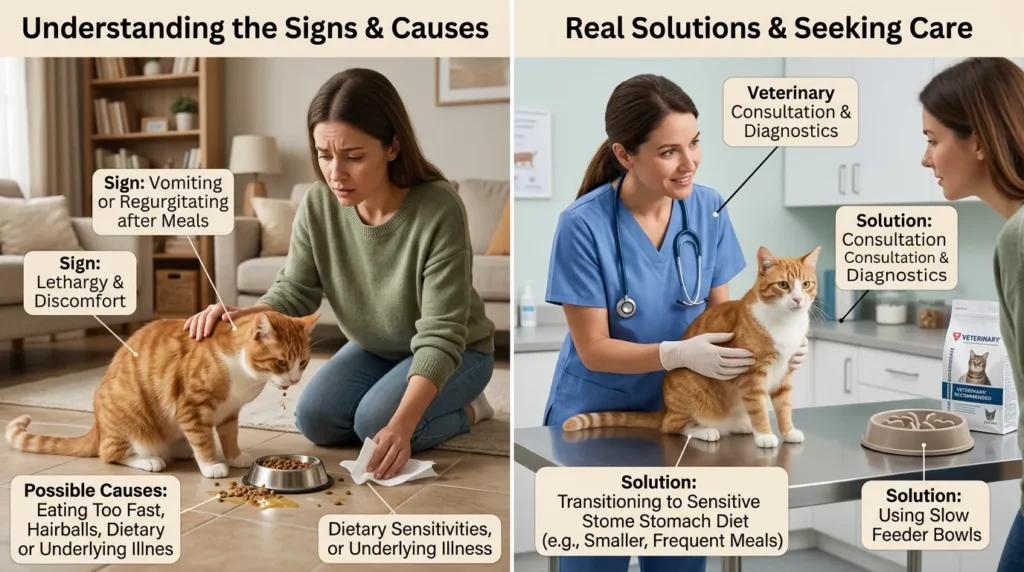
You’ve just stepped into the kitchen and discovered it again. Your cat throws up food right next to their bowl. It’s messy, worrying, and honestly a little heartbreaking to watch. Most cat owners deal with this at some point, and the first question is always the same: is this normal, or should I be worried?
The honest answer? It depends. Cats throwing up food can be completely harmless or it can signal something that genuinely needs veterinary attention. Knowing the difference is everything.
In my experience, most cases of cats vomiting food fall into a handful of common, very fixable categories. However, some situations do require prompt veterinary care. Therefore, understanding the causes, warning signs, and practical solutions puts you in the best possible position to help your cat.
This guide covers everything why it happens, what to watch for, what you can do at home, and when to call your vet. Let’s get your cat feeling better.
Why Is My Cat Throwing Up Food? The Real Causes
The Most Common Reasons Cats Vomit Food
Cat throwing up food is one of the most frequently reported concerns among cat owners. However, not all vomiting has the same cause or the same level of seriousness. Therefore, identifying the pattern helps you understand what’s actually happening.
Here are the most common reasons cats throw up food:
- Eating too fast the most common cause by far
- Overeating in one sitting especially in multi-cat households
- Hairballs undigested fur that triggers vomiting
- Sudden food changes switching food too quickly disrupts digestion
- Food intolerance or sensitivity reacting to a specific ingredient
- Eating grass or plants a natural feline behavior that triggers vomiting
- Stress or anxiety emotional changes affect digestion significantly
- Underlying medical conditions kidney disease, hyperthyroidism, IBD, and more
Vomiting vs. Regurgitation An Important Difference
Many cat owners use “vomiting” and “regurgitation” interchangeably. However, they’re actually different processes and the distinction matters.
Vomiting involves active abdominal effort. Your cat will heave, show distress, and produce partially digested food mixed with bile. Regurgitation, however, happens passively often within minutes of eating, with little warning. The food comes up undigested and tube-shaped, still resembling what your cat just ate.
Regurgitation usually points to eating too fast or esophageal issues. Vomiting points to stomach or systemic problems. As a result, noting which type your cat experiences helps your vet diagnose the cause much more accurately.
How to Stop Your Cat Throwing Up Food: Step-by-Step Solutions
Practical Steps You Can Take Right Now
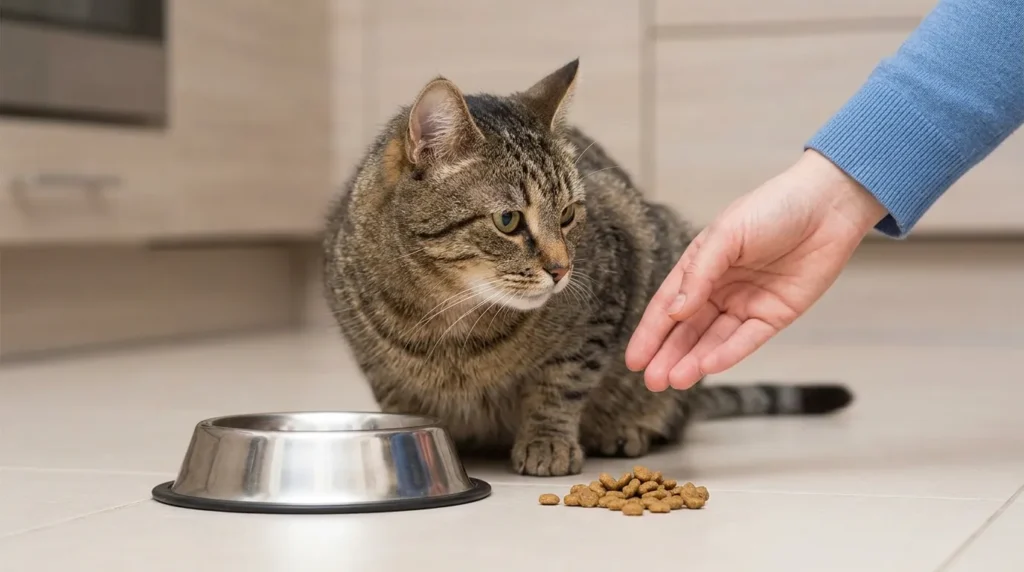
The good news is that many cases of cats throwing up food respond well to simple home management. Therefore, try these steps before assuming the worst:
- Slow down meal times. Fast eating is the number one trigger. Use a slow feeder bowl or puzzle feeder to make your cat work for their food. As a result, they eat more slowly and swallow less air, both of which significantly reduce vomiting.
- Feed smaller, more frequent meals. Instead of one or two large meals daily, try three to four smaller portions. This approach reduces stomach overload and helps digestion work more comfortably.
- Transition food changes gradually. If you recently switched your cat’s food, a sudden change often triggers vomiting. Therefore, transition over 7 to 10 days mixing 25% new food with 75% old food initially, then slowly shifting the ratio each day.
- Elevate the food bowl slightly. A raised bowl (about 2 to 4 inches off the ground) reduces the angle at which your cat swallows food. This helps prevent regurgitation in cats prone to eating too quickly.
- Separate cats during feeding. In multi-cat homes, competition at the food bowl causes stress-eating. Therefore, feed cats in separate rooms or at different times to eliminate the race-to-finish dynamic.
- Try a sensitive stomach formula. Some cats vomit because of specific ingredients particularly artificial additives, certain proteins, or excessive fat content. A limited-ingredient or sensitive stomach food often resolves the issue within two to three weeks.
- Reduce hairball triggers. Brush your cat regularly to reduce the amount of fur they ingest during grooming. Also, hairball control foods and vet-approved hairball remedies can help move fur through the digestive system more smoothly.
- Monitor for patterns. Keep a simple log note when vomiting happens, what your cat ate, how much, and what the vomit looks like. This information helps your vet identify patterns and causes much more quickly.
Pro Tip: Place a slow feeder bowl inside a slightly larger flat tray. This catches any vomit immediately and makes cleanup much faster, a genuinely life-changing tip for owners whose cats regularly vomit near their food area.
Types of Cat Vomiting: What Each One Means
Reading the Signs Your Cat Is Showing You
Understanding what your cat vomits tells you a lot about the underlying cause. Therefore, use this reference table to identify what you’re seeing:
| What You See | Likely Cause | Action Needed |
| Undigested food, tube-shaped | Eating too fast / regurgitation | Slow feeder, smaller meals |
| Partially digested food + bile | Vomiting on empty stomach | Feed smaller, more frequent meals |
| Yellow or green bile only | Empty stomach, hunger | Adjust feeding schedule |
| Grass or plant material | Natural behavior | Monitor, usually harmless |
| Hairball cylindrical, dark | Hairball accumulation | Brushing, hairball remedy |
| Blood red or dark brown | Serious internal bleeding | Vet visit immediately |
| Foam white or clear | Acid reflux or hairball | Monitor; vet if recurring |
| Undigested food + lethargy | Possible illness | Vet visit promptly |
When Cat Vomiting Is Definitely Normal
Occasional vomiting once or twice a month often falls within the normal range for cats. For example, bringing up a hairball periodically is a natural feline behavior. Also, eating grass outside and then vomiting is something cats do instinctively; it’s thought to help clear their digestive systems.
However, “occasional” is the key word here. Normal vomiting happens infrequently, resolves on its own, and doesn’t affect your cat’s energy, appetite, or behavior otherwise.
When Cat Vomiting Becomes a Serious Concern
Some vomiting patterns signal genuine medical issues that need veterinary attention. Therefore, watch for these warning signs:
- Vomiting more than once or twice a week consistently
- Blood in vomit any amount, any color
- Vomiting combined with lethargy or weakness
- Rapid weight loss alongside frequent vomiting
- Vomiting combined with diarrhea dehydration risk
- Straining or pain during or after vomiting
- Not eating for more than 24 hours after vomiting
- Young kittens or senior cats vomiting repeatedly higher vulnerability
If you see any of these signs, contact your vet promptly. Don’t wait to see if it resolves on its own early intervention genuinely makes a difference in outcomes.
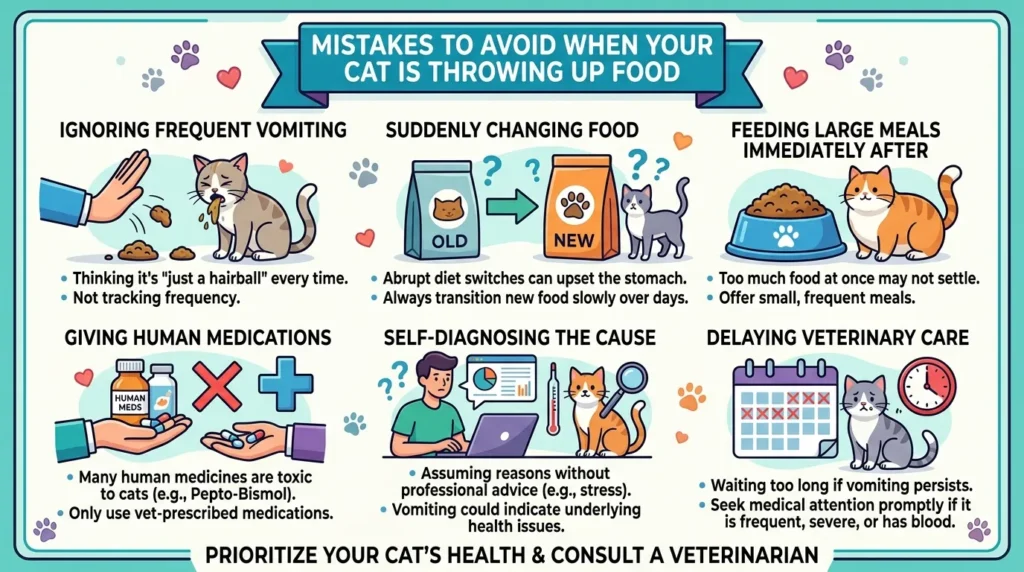
Mistakes to Avoid When Your Cat Is Throwing Up Food
Mistake 1: Assuming All Vomiting Is Normal
The single biggest mistake cat owners make is dismissing vomiting as “just what cats do.” While occasional vomiting is indeed normal, frequent or severe vomiting always deserves attention. Therefore, track frequency honestly weekly vomiting is not normal and should prompt a vet conversation.
Mistake 2: Switching Foods Too Quickly to “Fix” the Problem
When a cat starts vomiting, the natural instinct is to try a different food immediately. However, switching food too abruptly often makes the vomiting worse in the short term. As a result, any food change should happen gradually over 7 to 10 days even when the old food seems to be the problem.
Mistake 3: Giving Human Medications
Never give your cat human anti-nausea or stomach medications without direct veterinary guidance. Many human medications including common ones like ibuprofen or Pepto-Bismol are genuinely toxic to cats. Therefore, always call your vet before administering anything that isn’t specifically formulated for cats.
Mistake 4: Ignoring Dehydration Risk
Cats that vomit repeatedly lose fluids quickly. Dehydration in cats becomes dangerous faster than most owners realize. Therefore, always ensure your cat has access to fresh water after vomiting. Also, watch for signs of dehydration, dry gums, skin that doesn’t spring back when gently pinched, and reduced urination. If you notice these signs, contact your vet the same day.
Mistake 5: Waiting Too Long to See the Vet
In my experience, cat owners often wait much longer than they should before seeking veterinary help. Because cats hide illness naturally, vomiting that seems manageable at home can mask a more serious underlying condition. Therefore, if your cat has been throwing up food more than once or twice a week for two weeks or more that’s the vet visit threshold, regardless of how otherwise normal your cat seems.
Pro Tip: Take a short video of your cat vomiting on your phone if you can do so safely. Your vet will find this incredibly helpful seeing whether it’s regurgitation or true vomiting, and what the material looks like, helps them diagnose the cause much more accurately than a verbal description alone.
Frequently Asked Questions About Cat Throwing Up Food
1. Is it normal for cats to throw up food regularly?
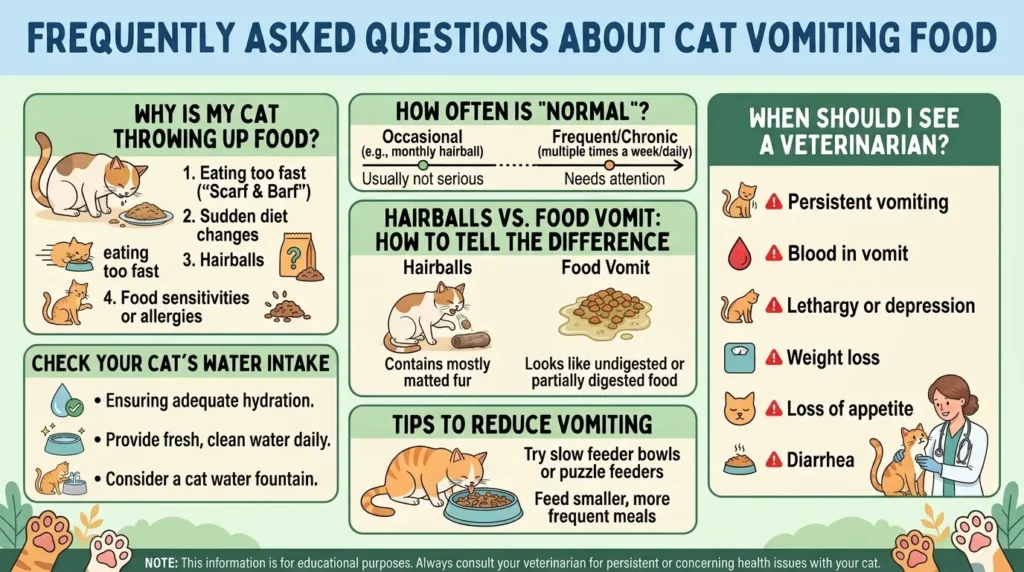
Occasional vomiting once or twice a month can fall within the normal range for some cats. However, vomiting once a week or more frequently is not considered normal and warrants veterinary attention. Also, the content and appearance of vomit matters: blood, persistent bile, or vomiting alongside lethargy or weight loss always needs a vet visit promptly. Therefore, track your cat’s vomiting frequency honestly and consult your vet if it happens more than twice a month consistently.
2. Why does my cat throw up food immediately after eating?
When a cat vomits immediately after eating within 30 minutes the most common cause is eating too fast. As a result, the stomach can’t handle the volume or speed of intake. The food comes back up relatively undigested and often tube-shaped. Slow feeder bowls, smaller portions, and raised food bowls typically solve this problem within a week or two. However, if the problem persists despite these changes, esophageal issues or food sensitivities may be the underlying cause worth discussing with your vet.
3. What should I feed my cat after they’ve been vomiting?
After a vomiting episode, give your cat’s stomach a short rest two to four hours without food. Then offer a small amount of bland, easily digestible food. Plain boiled chicken (no seasoning, no bones) or a veterinary-recommended bland diet works well. Also, ensure your cat drinks water or offers low-sodium chicken broth to support hydration. Return to the regular diet gradually over the next 24 hours. However, if vomiting resumes or your cat won’t eat after 24 hours, contact your vet for guidance.
4. Could my cat’s food be causing them to throw up?
Yes, food is one of the most common triggers for cat vomiting. Specific protein sources, artificial additives, high fat content, or ingredients your cat is sensitive to can all trigger a vomiting response. Therefore, if your cat vomits consistently with a particular food, a switch to a limited-ingredient or sensitive stomach formula often resolves the issue within two to three weeks. Also, always transition to new food gradually. A sudden switch frequently makes vomiting temporarily worse rather than better.
5. When should I take my cat to the vet for vomiting?
Take your cat to the vet if you observe any of these situations: vomiting more than once or twice a week for two or more consecutive weeks, blood in the vomit, vomiting combined with lethargy or significant behavior changes, rapid or unexplained weight loss, vomiting alongside diarrhea, refusal to eat for more than 24 hours, or signs of dehydration. Also, young kittens and senior cats particularly those over 10 years old should see a vet sooner rather than later, because vomiting in these age groups carries higher risk. Always err on the side of caution when it comes to your cat’s health.
6. Can stress cause my cat to throw up food?
Yes, stress is a genuine and frequently overlooked cause of cat vomiting. Moving house, introducing a new pet, changes in routine, loud noises, or even rearranging furniture can trigger digestive upset in sensitive cats. Because cats are creatures of habit, disruptions to their environment often manifest as physical symptoms including vomiting. Therefore, if you’ve recently made changes to your household and your cat started vomiting around the same time, stress may be the primary cause. Feliway diffusers, quiet safe spaces, and maintaining consistent routines all help reduce stress-related vomiting significantly.
7. Are hairballs a normal cause of cat vomiting?
Yes, hairballs are a normal and expected part of cat life, particularly in long-haired breeds. However, hairballs shouldn’t happen more than once or twice a month. More frequent hairball vomiting suggests your cat needs more help managing fur intake. Regular brushing reduces the amount of fur your cat swallows during grooming. Also, hairball control cat foods contain added fiber that helps move fur through the digestive tract rather than accumulating in the stomach. Vet-approved hairball remedies usually a gel formula also work well for cats prone to frequent hairball vomiting.
Help Your Cat Feel Better Starting Today
Cat throwing up food is genuinely common but that doesn’t mean you should simply accept it as inevitable. Most cases respond well to practical home solutions like slow feeders, smaller meals, and gradual food transitions. However, some cases do signal underlying health issues that need professional attention.
Therefore, track your cat’s vomiting frequency, note the type and appearance of vomit, and use the warning signs in this guide to decide when home management is sufficient and when your vet needs to be involved.
Your cat depends on you to notice when something isn’t right. With the right knowledge and a little proactive care, most vomiting issues resolve quickly leaving you both happier and healthier.