
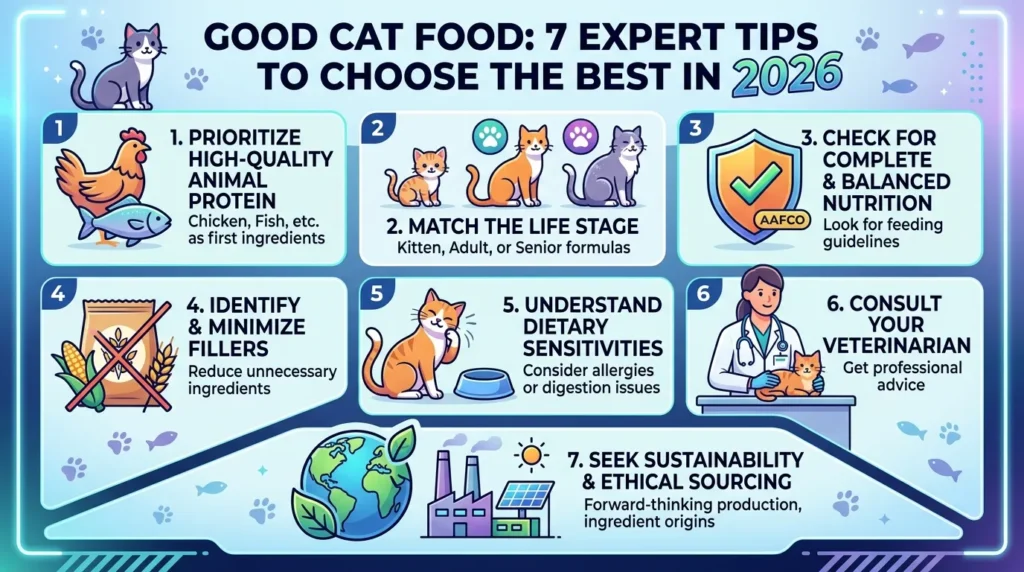
Introduction
Have you ever stood in the pet food aisle, staring at dozens of cans and bags, wondering which one is actually good for your cat? You’re not alone. Finding good cat food feels surprisingly complicated, even though your cat just wants something tasty and healthy.
Here’s the truth: not all cat food is created equal. Some brands pack in real nutrition. Others rely on fillers and flashy marketing. Therefore, knowing what to look for makes all the difference for your cat’s long-term health.
In my experience, the right food transforms a cat’s energy, coat, and overall happiness. A cat eating quality food tends to have brighter eyes, a shinier coat, and steady energy throughout the day. However, getting there requires understanding a few key basics first.
This guide breaks down exactly what makes cat food genuinely good, how to choose the right one, and which mistakes to avoid. Let’s help your cat thrive.
What Makes Good Cat Food Actually Good?
Understanding Your Cat’s Nutritional Needs
Cats are obligate carnivores. This means they need animal protein to survive and thrive. Unlike dogs, cats can’t get all their nutrients from plant sources alone. Therefore, good cat food always starts with real, named meat as the first ingredient.
Also, cats need specific nutrients that only come from animal sources. Taurine, an essential amino acid, supports heart and eye health. Arachidonic acid supports skin and coat condition. Without these nutrients, cats can develop serious health problems over time.
Key Signs of Good Cat Food
Here’s what to look for on any cat food label:
- Named meat protein first chicken, turkey, salmon, or beef listed clearly
- No corn, wheat, or soy as primary fillers cats don’t need large amounts of grain
- Taurine included essential for heart and vision health
- AAFCO statement present confirms the food meets nutritional standards
- Limited artificial colors and flavors fewer additives means cleaner nutrition
- Appropriate moisture content wet food typically supports hydration better
Why Protein Quality Matters So Much
Not all protein sources are equal. Therefore, understanding the difference matters. “Chicken meal” is a concentrated protein source with water removed. “Chicken by-product” includes organs and other parts, which can still be nutritious but less specific. As a result, reading beyond the marketing claims helps you choose truly good cat food for your feline friend.
How to Choose Good Cat Food: A Step-by-Step Guide
Follow These Steps for the Best Results
Choosing the right food doesn’t have to feel overwhelming. Follow this simple process to find genuinely good cat food for your specific cat.
- Check your cat’s life stage first. Kittens need more calories and protein than adult cats. Senior cats often need fewer calories but more joint support. Therefore, always match the food to your cat’s current age and needs.
- Read the ingredient list carefully. Look for named meat protein in the first two or three ingredients. Avoid foods listing corn or wheat as the very first ingredient, since these offer minimal nutritional value for cats.
- Consider wet versus dry food. Wet food provides more moisture, which supports urinary health. However, dry food offers convenience and can support dental health through chewing action. Many vets recommend a combination of both.
- Check for the AAFCO statement. This confirms the food meets minimum nutritional standards for cats. Look specifically for “complete and balanced” wording on the label.
- Factor in any health conditions. Cats with kidney issues, diabetes, or allergies need specific formulas. Therefore, always consult your vet before switching foods if your cat has a diagnosed health condition.
- Transition gradually. Sudden food changes upset a cat’s digestive system. Mix the new food with the old food over seven to ten days for the smoothest transition.
- Monitor your cat’s response. Watch for improved energy, a shinier coat, and consistent litter box habits. These signs confirm you’ve found genuinely good cat food for your pet.
Pro Tip: Introduce new cat food slowly by mixing a small amount with their current food. Increase the new food gradually each day. This simple approach prevents stomach upset and helps picky cats accept the change more easily.
Top Good Cat Food Brands Compared
Side-by-Side Brand Comparison
Choosing among hundreds of brands can feel impossible. Therefore, this table compares some widely trusted options to simplify your decision.
| Brand | Protein Source | Grain-Free Option | Best For | Price Range |
| Royal Canin | Chicken meal | Some formulas | Specific breeds & ages | $$$ |
| Hill’s Science Diet | Chicken | Yes | Health conditions | $$$ |
| Purina Pro Plan | Real chicken/salmon | Some formulas | Everyday nutrition | $$$ |
| Blue Buffalo | Deboned chicken | Yes | Natural ingredients | $$ |
| Wellness Complete | Deboned chicken | Yes | Holistic nutrition | $$$ |
| Iams | Chicken | No | Budget-friendly quality | $$ |
What This Comparison Tells You
First, notice how most reputable brands lead with named protein sources. Also, several offer grain-free options for cats with sensitivities. However, price doesn’t always indicate quality. Therefore, focus on ingredients and your cat’s specific needs rather than price alone.
Wet Food Versus Dry Food: Which Is Better?
Both options have genuine benefits. Wet food typically contains more moisture, which helps prevent urinary tract issues. In addition, many cats find wet food more appealing due to its texture and aroma.
Dry food, however, offers convenience and longer shelf life. It can also support dental health through the chewing motion. As a result, many veterinarians recommend feeding a combination of both for balanced benefits.
Common Mistakes to Avoid When Choosing Cat Food
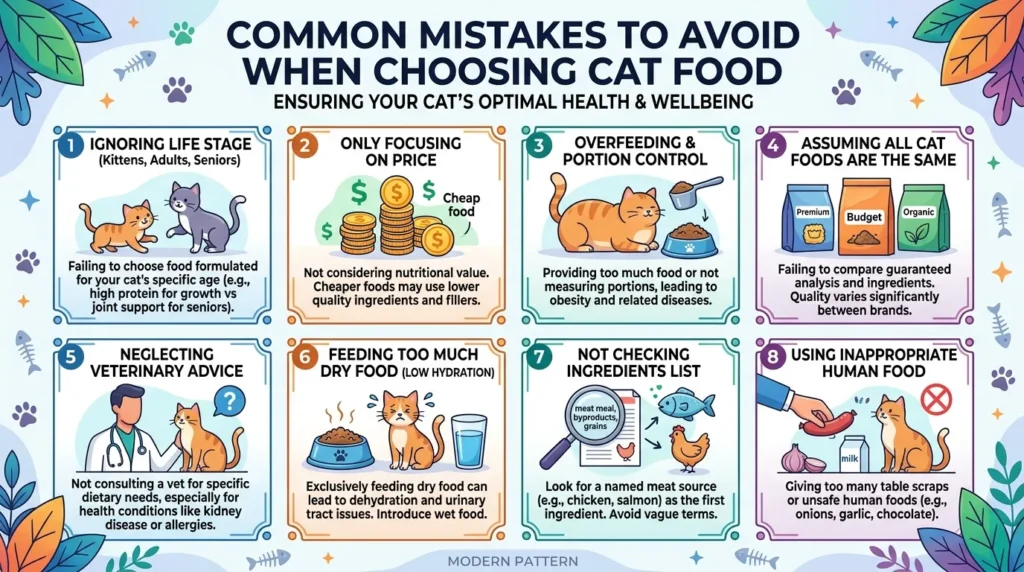
Mistake 1: Choosing Based on Price Alone
Cheaper food often contains more fillers and fewer quality proteins. However, expensive doesn’t always mean better either. Therefore, focus on ingredient quality rather than price tags when searching for good cat food.
Mistake 2: Ignoring Your Cat’s Age
Feeding kitten food to an adult cat, or vice versa, creates nutritional imbalances. Kittens need significantly more protein and calories for growth. Therefore, always choose age-appropriate formulas for your cat’s current life stage.
Mistake 3: Switching Foods Too Quickly
Cats have sensitive digestive systems. Abrupt food changes often cause vomiting, diarrhea, or food refusal. As a result, always transition gradually over a week or more to avoid digestive upset.
Mistake 4: Overlooking Water Intake
Cats naturally have a low thirst drive. Therefore, if you feed primarily dry food, ensure fresh water is always available. Also, consider adding wet food to boost overall hydration, especially for cats prone to urinary issues.
Mistake 5: Not Consulting Your Vet for Health Issues
Some cats need specialized diets for kidney disease, diabetes, or food allergies. Choosing the wrong food without professional guidance can worsen these conditions. Therefore, always consult your vet before making significant dietary changes for cats with known health issues.
Pro Tip: Schedule a vet checkup before switching your cat’s food, especially if your cat is over seven years old. Senior cats often have hidden health conditions that affect which foods are truly good for them.
Frequently Asked Questions About Good Cat Food
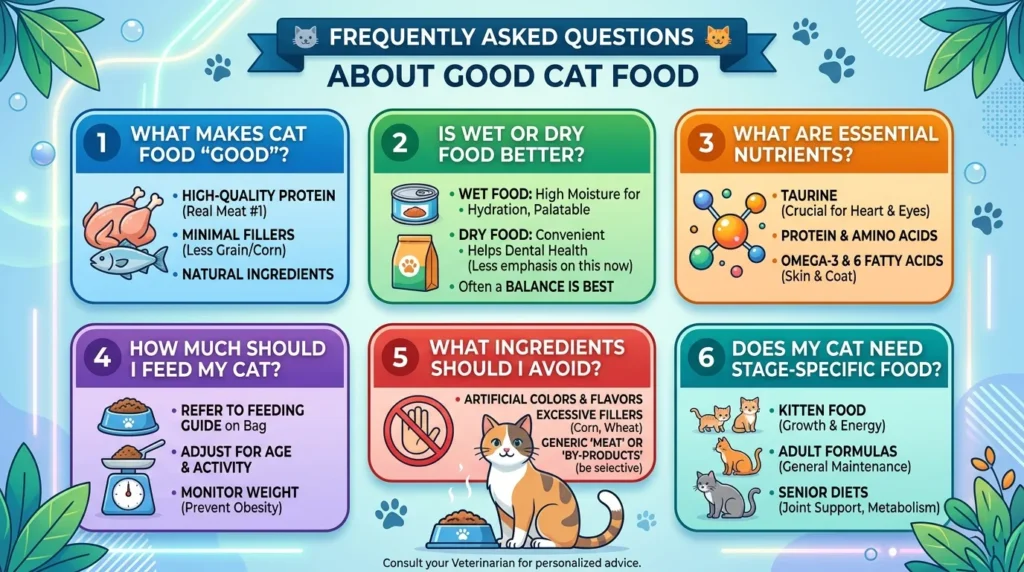
1. What ingredients make cat food genuinely good?
Good cat food starts with named meat protein as the first ingredient, such as chicken, turkey, or salmon. It also includes taurine, an essential amino acid for heart and eye health. Additionally, good cat food avoids excessive fillers like corn or wheat and includes an AAFCO statement confirming complete nutrition. Always check the label carefully before purchasing any cat food.
2. Is wet or dry food better for cats?
Both have genuine benefits, and many vets recommend a combination. Wet food provides more moisture, which supports urinary tract health and hydration. Dry food offers convenience and can support dental health through chewing. Therefore, the best choice often depends on your cat’s specific health needs and preferences. Consult your vet for personalized recommendations.
3. How much should I feed my cat each day?
Feeding amounts depend on your cat’s weight, age, and activity level. Most cat food packages include feeding guidelines based on weight. However, these are general estimates. Therefore, monitor your cat’s body condition and adjust portions accordingly. If your cat seems overweight or underweight, consult your vet for a personalized feeding plan.
4. Can I feed my cat the same food every day?
Yes, most cats do well eating the same quality food consistently. However, some owners rotate between two or three trusted brands to provide variety and reduce the risk of developing food sensitivities. If your cat does well on their current food, with good energy and healthy stools, there’s no need to change. Always transition slowly if you decide to switch.
5. What foods should I avoid giving my cat?
Avoid feeding cats chocolate, onions, garlic, grapes, and raw dough, as these are toxic to cats. Also, avoid foods high in fillers like corn syrup or excessive artificial colors. Therefore, always check ingredient labels carefully and consult your vet if you’re unsure whether a specific food or treat is safe for your cat.
6. How do I know if my cat’s food is causing problems?
Watch for signs like vomiting, diarrhea, excessive scratching, or a dull coat. These symptoms can indicate food sensitivities or poor-quality ingredients. Also, frequent hairballs or weight changes may signal an issue. Therefore, if you notice any persistent symptoms, consult your vet to determine whether a food change is necessary.
7. Is grain-free cat food better for cats?
Not necessarily. Cats can digest small amounts of grain without issues. Grain-free formulas aren’t automatically healthier unless your cat has a diagnosed grain allergy. Therefore, focus on overall ingredient quality rather than grain-free claims alone. Always consult your vet if you suspect your cat has a specific food sensitivity requiring a grain-free diet.
Final Thoughts on Choosing Good Cat Food
Finding good cat food doesn’t have to feel complicated once you know what to look for. Focus on named protein sources, essential nutrients like taurine, and an AAFCO statement confirming complete nutrition. Also, always match the food to your cat’s specific life stage and health needs.
Therefore, take time to read labels carefully, transition foods gradually, and watch how your cat responds. A shiny coat, steady energy, and healthy digestion are the clearest signs you’ve made the right choice.
Your cat deserves nutrition that helps them thrive every single day. Start applying these tips today, and don’t hesitate to consult your vet whenever you’re unsure about the best path forward.