
Introduction
Your dog deserves the best meal every single day. However, walking into a pet store and finding the right food can feel overwhelming. So many options line the shelves and Pedigree is always right there, front and center.
Best dog food Pedigree options have fed millions of dogs worldwide for decades. But is Pedigree actually good for your dog? Which formula works best? And how do you pick the right one for your specific pup?
In my experience helping dog owners choose the right food, Pedigree comes up constantly. It’s affordable, widely available, and trusted by families globally. However, not every Pedigree product suits every dog equally well.
This guide breaks everything down for you. You’ll learn exactly what Pedigree offers, which products stand out, and how to feed your dog the right way. Let’s get started.
What Is Pedigree Dog Food and Why Is It So Popular?
A Brand With Decades of Trust
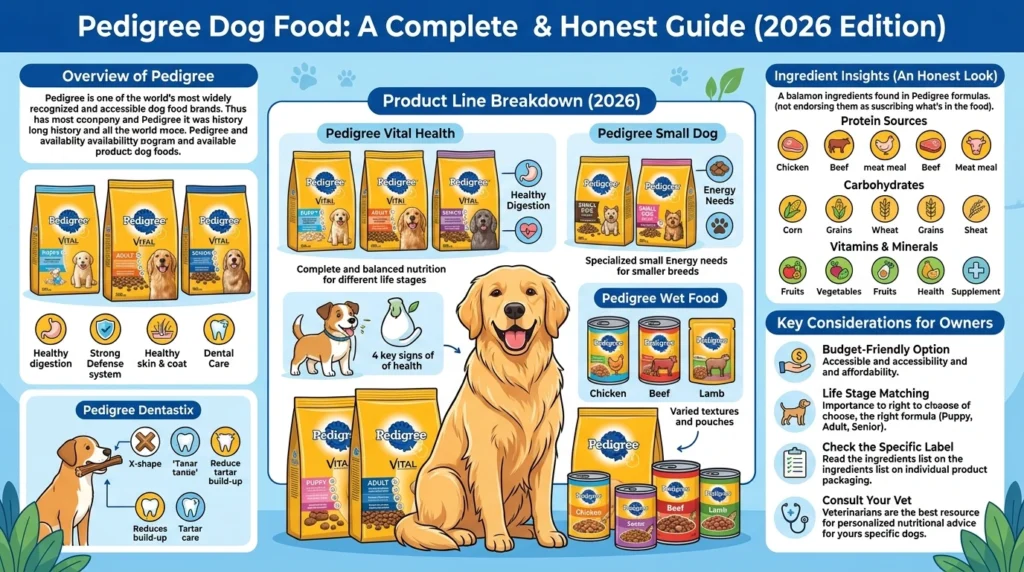
Pedigree has been around since 1957. Therefore, it carries real history and genuine brand recognition. Mars Petcare owns the brand, one of the largest pet food companies in the world.
Because of its massive distribution network, you’ll find Pedigree in almost every grocery store, pet shop, and online retailer. That accessibility is a huge reason families choose it first.
What Makes Pedigree Stand Out
Pedigree offers several formats to suit different dogs and different budgets. Here’s a quick overview:
- Dry kibble the most popular and affordable format
- Wet food pouches and cans great for picky eaters
- Puppy formulas designed for younger dogs
- Senior formulas adjusted for older dogs’ needs
- Dentastix treats clinically proven to reduce plaque
In addition, all Pedigree products meet AAFCO nutritional standards which means they provide complete and balanced nutrition for healthy dogs.
Pro Tip: Always check whether the Pedigree product you’re buying says “complete and balanced” on the label. Some products are labeled “complementary” meaning they work as toppers, not full meals.
Best Dog Food Pedigree Options: Top Picks Ranked
How to Choose the Right Formula
Not every Pedigree formula suits every dog. However, a few products consistently earn high marks from owners and nutrition reviewers alike. First, consider your dog’s age. Then, think about size, health, and any dietary sensitivities.
Here’s a comparison table to make your decision easier:
| Product | Best For | Key Feature | Price Range |
| Pedigree Adult Complete Nutrition | Healthy adult dogs | Balanced daily nutrition | $ |
| Pedigree Puppy Complete Nutrition | Puppies under 1 year | DHA for brain development | $ |
| Pedigree Senior Dog Food 7+ | Dogs aged 7 and above | Glucosamine for joints | $ |
| Pedigree Small Dog Adult | Small breeds under 20 lbs | Smaller kibble size | $ |
| Pedigree Wet Food Pouches | Picky eaters, seniors | High moisture, soft texture | $ |
| Pedigree Dentastix Daily | All ages as treat | Reduces plaque by 80% | $ |
My Top 3 Pedigree Picks
1. Pedigree Adult Complete Nutrition (Dry) This is the classic go-to formula. It contains whole grain corn, meat and bone meal, and essential vitamins. Also, it’s one of the most affordable options per pound. For healthy adult dogs without specific dietary issues, it does the job reliably.
2. Pedigree Puppy Complete Nutrition Puppies need more protein, more DHA, and more calories for healthy growth. This formula delivers all three. As a result, it supports brain development and strong bones during those critical early months.
3. Pedigree Senior 7+ Formula Older dogs have different needs. Therefore, this formula includes glucosamine for joint support and adjusted calorie levels to prevent weight gain. In my experience, senior dogs often do better on this than staying on the adult formula past age seven.
Step-by-Step Guide: How to Feed Pedigree Dog Food the Right Way
Getting the Most From Every Bowl
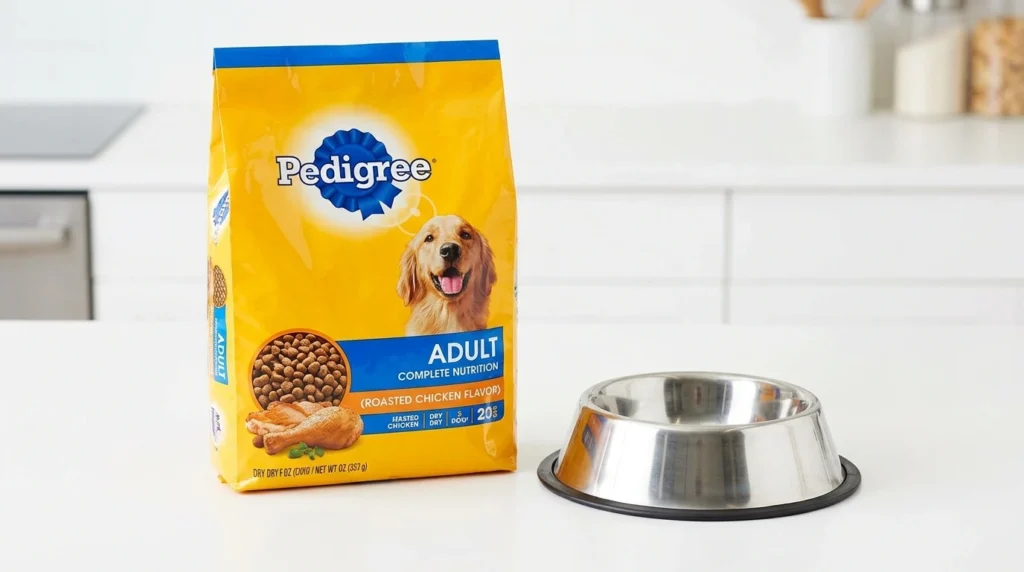
Feeding your dog correctly is just as important as choosing the right food. However, many owners make simple mistakes that affect their dog’s health over time. Follow these steps to feed Pedigree the smart way.
Step 1: Match the formula to your dog’s life stage. Always use puppy food for dogs under one year old. Then switch to an adult formula between 12 and 18 months. Finally, transition to the senior formula around age seven. Each stage has specific nutritional needs.
Step 2 : Follow the feeding guidelines on the bag. Pedigree provides weight-based feeding charts on every package. However, adjust based on your dog’s activity level. An active dog may need slightly more. A less active dog may need slightly less.
Step 3: Measure every meal accurately. Don’t guess with scoops. Therefore, use a proper measuring cup or kitchen scale. Even small overfeeding adds up over weeks and months, leading to weight gain.
Step 4: Transition slowly when switching foods. If you’re switching from another brand to Pedigree, don’t swap overnight. Instead, mix 25% Pedigree with 75% old food for three days. Then go 50/50 for three more days. Finally, move to 100% Pedigree by day ten.
Step 5 : Always provide fresh water. Dry kibble has very low moisture content around 10%. Therefore, your dog needs constant access to clean, fresh water alongside every dry food meal.
Step 6 : Check expiration dates before buying. Pedigree bags have best-by dates stamped on the bottom. Always check before purchasing, especially larger bags that take longer to use up.
Step 7 : Store food properly after opening. Clip the bag tightly shut and store it inside an airtight container. Also, keep it in a cool, dry place away from sunlight. Properly stored dry food stays fresh for six weeks after opening.
Pro Tip: If your dog is a slow eater with Pedigree dry food, try adding a small splash of warm water to the bowl. It enhances the aroma and makes the kibble softer which many dogs find more appealing.
Pedigree Dog Food Ingredients: What’s Actually Inside?
The Honest Ingredient Breakdown
This is where many owners want real answers. Let’s look at what Pedigree Adult Complete Nutrition actually contains, so you can make an informed decision.
Positive ingredients:
- Whole grain corn provides energy and fiber
- Meat and bone meal a protein source, though not a named fresh meat
- Soybean meal additional plant-based protein
- Added vitamins and minerals meets AAFCO requirements
- Omega-6 fatty acids supports coat and skin health
Ingredients worth noting:
- Meat and bone meal the protein source is real but unspecified. Premium brands name the exact animal (e.g., “chicken meal”). Pedigree keeps it general.
- Corn as a primary ingredient not harmful for most dogs, but less ideal for grain-sensitive dogs
- Artificial colors some Pedigree formulas include dyes that serve no nutritional purpose
Is Pedigree Nutritionally Complete?
Yes for most healthy adult dogs. Pedigree meets AAFCO minimum nutritional standards, which means it qualifies as complete and balanced nutrition. However, it uses more filler ingredients than premium brands. As a result, your dog may eat slightly larger portions to meet their energy needs.
For dogs with allergies, sensitivities, or specific health conditions, always consult your vet before choosing Pedigree as a long-term diet.
[Pedigree Wet Dog Food: Complete Guide & Honest Review 2026]
Common Mistakes to Avoid With Pedigree Dog Food
Don’t Let These Simple Errors Hurt Your Dog
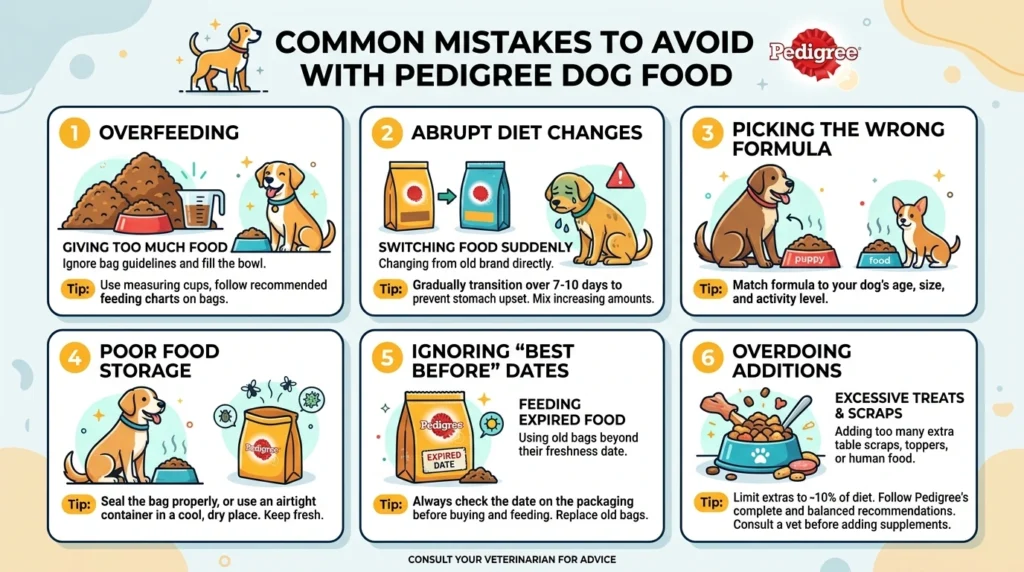
Even with a trusted brand like Pedigree, owners make mistakes that affect their dog’s health. Here are the most common ones and how to avoid them.
Mistake 1 Feeding the Wrong Life Stage Formula
Adult Pedigree doesn’t provide enough DHA or calcium for puppies. Similarly, puppy food is too calorie-dense for senior dogs. Always match the formula to your dog’s actual life stage, not just what’s most convenient or cheapest.
Mistake 2 Overfeeding Because the Dog Seems Hungry
Dogs are enthusiastic eaters. However, a dog finishing their bowl quickly doesn’t mean they need more. Follow the weight-based feeding chart and resist those pleading eyes. Overfeeding leads to obesity, joint strain, and heart issues over time.
Mistake 3 Mixing Complementary Products as Full Meals
Some Pedigree wet food products are labeled “complementary” meaning they aren’t nutritionally complete on their own. Therefore, always read the label carefully. Using a complementary product as your dog’s only food creates nutritional gaps over time.
Mistake 4 Skipping the Transition Period
Switching foods overnight even to a better brand causes digestive upset. As a result, you’ll likely see loose stools, gas, and reduced appetite for several days. Always transition over 7–10 days to protect your dog’s gut microbiome.
Mistake 5 Ignoring Your Dog’s Response to the Food
Watch your dog closely after any food change. Positive signs include firm stools, shiny coats, good energy, and steady weight. Negative signs include chronic loose stools, dull coat, excessive gas, or itchy skin. If you notice persistent problems, consult your vet before continuing.
Frequently Asked Questions About Best Dog Food Pedigree
1. Is Pedigree dog food actually good for dogs?
Yes, pedigree is safe and nutritionally adequate for most healthy adult dogs. It meets AAFCO standards for complete and balanced nutrition. However, it uses lower-quality protein sources compared to premium brands. Therefore, dogs with allergies, sensitivities, or specific health conditions may do better on a higher-quality formula. For a healthy dog on a budget, Pedigree is a reliable, widely available choice. Always consult your vet if you have specific concerns about your dog’s diet.
2. Which Pedigree formula is best for puppies?
Pedigree Puppy Complete Nutrition is the right choice for growing dogs under one year old. It contains DHA from omega-rich fish oil to support brain and vision development. Also, it provides higher caloric density and protein levels that young dogs need for healthy growth. For large breed puppies specifically, consult your vet they may recommend a large-breed puppy formula with controlled calcium levels to prevent developmental bone issues.
Pedigree is more affordable and widely accessible. However, premium brands like Purina Pro Plan use named protein sources (like real chicken or salmon), have more research backing, and carry feeding-trial-validated AAFCO compliance. As a result, premium brands typically offer better digestibility and more targeted nutrition. For a healthy adult dog without specific needs, Pedigree provides acceptable nutrition. For dogs with sensitivities or health conditions, a premium brand is usually the better long-term investment.
4. Can I mix Pedigree wet food with dry kibble?
Yes and many vets actually support this approach. Mixing wet food into dry kibble improves palatability, adds moisture to the diet, and can encourage picky eaters. However, always adjust total portions so you’re not overfeeding. If you add a full wet food pouch, reduce the dry food amount by the caloric equivalent. Also, check that the wet product you’re adding is labeled “complete and balanced” not just “complementary.”
5. Is Pedigree dog food safe? Has it been recalled?
Pedigree has had a small number of recalls over the years most notably a 2014 dry food recall related to potential metal contamination. However, the brand’s overall safety record is reasonable relative to its production volume. To stay current, always check the FDA’s pet food recall database before buying any brand. Signing up for FDA recall email alerts takes two minutes and gives you direct notification of any future issues.
6. Is Pedigree good for senior dogs?
Yes Pedigree makes a dedicated Senior 7+ formula designed for aging dogs. It includes glucosamine for joint support, adjusted calories to prevent weight gain, and antioxidants for immune health. However, senior dogs with specific health conditions like kidney disease, arthritis, or diabetes may need a prescription or therapeutic diet. Therefore, always discuss your senior dog’s nutritional needs with your vet at annual check-ups.
7. What is the best way to store Pedigree dog food?
Store open Pedigree dry food in its original bag, clipped shut tightly, inside an airtight hard container. Keep it in a cool, dry location away from direct sunlight and heat. Never pour food loose into a plastic bin without the bag fat residue builds up and turns rancid faster. Once opened, use the bag within six weeks for optimal freshness and nutritional quality. For wet food pouches or cans, refrigerate any uneaten portions immediately and use within 24–48 hours.
Wrapping Up: Is Pedigree the Best Dog Food for Your Dog?
Pedigree dog food has earned its place on millions of pet owners’ shopping lists for good reason. It’s affordable, accessible, and meets basic nutritional standards for most healthy adult dogs. However, it’s not the most ingredient-transparent or research-backed brand on the market.
For budget-conscious owners with healthy dogs and no specific dietary concerns, Pedigree is a solid, reliable option. For dogs with sensitivities, allergies, or health conditions, a premium vet-recommended brand may serve them better.
The most important thing you can do is stay informed, watch how your dog responds to their food, and check in with your vet regularly. Your dog eats every single day making that meal count is one of the most consistent ways to show them how much you care.