
Introduction
Small dogs have enormous personalities and surprisingly specific nutritional needs that a lot of owners don’t fully realize until they’ve been feeding the wrong food for years. If you’ve got a Chihuahua, Shih Tzu, Dachshund, Pomeranian, or any other little breed, finding the best dry dog food for small breeds genuinely matters more than you might think.
Here’s something that surprises a lot of people: small breed dogs have faster metabolisms than large dogs. Pound for pound, they burn more calories, need more nutrient-dense food, and have much smaller mouths which means kibble size and texture actually matter enormously for their daily eating experience and dental health.
I’ve spent years helping small dog owners navigate the pet food aisle, and the confusion is real. Standard adult formulas aren’t designed for tiny dogs. Small breed formulas vary dramatically in quality. And the marketing on small breed bags is just as misleading as everywhere else in the pet food world.
This guide cuts straight through the noise. You’ll get my honest top picks, a clear breakdown of what small breeds specifically need, and everything required to choose with total confidence. Your little dog deserves food that actually fits their body. Let’s find it.
Why Small Breed Dogs Need Specialized Dry Dog Food
Small breeds aren’t just miniature versions of larger dogs; their physiology, metabolism, and health vulnerabilities are genuinely different in ways that affect every aspect of their nutrition.
Faster Metabolism Means Higher Caloric Density Needs
Small dogs have a higher metabolic rate per pound of body weight than large breeds. A five-pound Chihuahua burns significantly more calories relative to their size than a 70-pound Labrador. This means small breed formulas need to be more calorie-dense delivering more energy per cup so your tiny dog gets adequate nutrition without needing to eat impractical volumes of food.
A standard adult formula fed in appropriately small portions often doesn’t deliver enough calories or nutrients for a small breed’s daily needs. That’s why small breed specific formulas exist and why they’re worth using.
Kibble Size Is a Real Health Factor
Have you ever watched a small dog try to eat a large breed of kibble? It’s awkward at best, a choking hazard at worst. Small breed formulas use smaller, appropriately sized kibble that fits comfortably in a tiny mouth, promotes proper chewing, and reduces the risk of swallowing large pieces whole.
Proper chewing also matters for dental health which brings us to the next point.
Small Breeds and Dental Disease
Small breed dogs are disproportionately prone to dental disease compared to larger breeds. Their teeth are crowded into smaller jaws, creating more opportunity for plaque and tartar buildup. The mechanical action of crunching appropriately sized kibble provides some dental cleaning benefit which is one reason dry food is often recommended over wet food as the dietary staple for small breeds.
The best dry dog food for small breeds often features kibble shapes and textures specifically designed to maximize this dental cleaning effect.
Blood Sugar Stability Matters More
Small dogs, particularly toy breeds like Chihuahuas and Yorkshire Terriers, are more susceptible to hypoglycemia (low blood sugar) than larger breeds. Their tiny bodies have less glycogen reserve, making consistent, frequent feeding and stable blood sugar management important. Small breed formulas are designed with nutrient profiles that support stable energy levels throughout the day.
Longer Lifespan, Different Long-Term Needs
Small breeds live significantly longer than large breeds often 14–18 years compared to 8–12 for large breeds. That extended lifespan means their food choices compound over more time, making long-term nutritional quality genuinely more impactful. It also means the transition to senior nutrition happens later than you might expect most small breed dogs aren’t truly “senior” until age 10–12.
How to Choose the Best Dry Dog Food for Small Breeds: Step-by-Step

Here’s exactly how to evaluate any small breed dry dog food whether you’re choosing for the first time or reassessing your current choice:
- Look for “small breed” or “toy breed” designation on the formula. This tells you the food was specifically formulated with small breed physiology in mind higher caloric density, smaller kibble size, and adjusted nutrient ratios. Don’t assume a standard adult formula works equally well just because the portions are smaller.
- Check that protein comes first from a named source. Scan the ingredient list immediately to the first item. It should be a specific animal protein: chicken, turkey, salmon, lamb, or beef. Not “poultry.” Not “meat meal.” A named, traceable protein source that tells you exactly what’s in the bag.
- Evaluate caloric density relative to your dog’s size. Small breed formulas typically deliver 350–450+ calories per cup higher than standard adult formulas because small dogs need concentrated nutrition in small volumes. Check the kcal/cup on the label and calculate daily needs based on your dog’s actual weight. Your vet can help you with target caloric intake if you’re unsure.
- Look for dental health support. Some small breed dry foods specifically mention dental health features kibble texture, shape, or the addition of ingredients like sodium hexametaphosphate that help reduce tartar. For small breeds especially, this is a valuable bonus worth looking for.
- Check for omega fatty acids especially DHA and EPA. Small dogs with their longer lifespans benefit significantly from ongoing anti-inflammatory omega-3 support. Look for fish oil or fish meal in the ingredient list as a source of DHA and EPA.
- Verify the AAFCO nutritional adequacy statement. Find it on the back of the bag and it should confirm the food is “complete and balanced” for your dog’s life stage. Ideally, look for “based on feeding trials” rather than just “formulated to meet” ; the former means real dogs ate this food and were evaluated for health outcomes.
- Research the brand’s recall history. The FDA’s pet food recall database is your best resource. Small dogs are more vulnerable to contamination issues because they consume smaller quantities but toxin concentrations can still be dangerous in tiny bodies.
- Consult your vet for personalized guidance. If your small breed dog has any specific health issues, dental disease, hypoglycemia tendencies, weight problems, or skin sensitivities your vet’s input on the specific formula is invaluable. Small dogs with health conditions need targeted nutrition, not just any “small breed” label.
Pro Tip: Small breed dogs are notorious picky eaters partly because their sense of smell is proportionally more sensitive, and they’re more discerning about aroma and palatability. If your little one turns their nose up at a new kibble, try warming it slightly with a splash of warm water or a tiny amount of low-sodium bone broth. The enhanced aroma often turns reluctant small dogs into enthusiastic eaters immediately.
[How to Choose the Best Bag of Dog Food for Your Dog]
Best Dry Dog Food for Small Breeds in 2026: Honest Comparisons
Here’s how the most well-regarded small breed dry dog food options compare across key criteria:
| Brand & Formula | Price Range | First Ingredient | Kibble Size | Dental Support | Best For |
| Purina Pro Plan Small & Toy Breed | $$$ | Chicken | Small | Good | Overall best small breed nutrition |
| Hill’s Science Diet Small Paws | $$$ | Chicken meal | Small | Good | Vet-recommended daily feeding |
| Royal Canin Small Adult | $$$ | Chicken by-product | Breed-specific | Excellent | Precise small breed nutrition |
| Purina ONE Small Dog | $$ | Chicken | Small | Moderate | Best mid-range value |
| Blue Buffalo Life Protection Small Breed | $$$ | Deboned chicken | Small | Good | Natural ingredient focus |
| Wellness Complete Small Breed | $$$ | Deboned chicken | Small | Good | Holistic whole-body health |
| Merrick Lil’ Plates Small Breed | $$$ | Deboned chicken/beef | Small | Good | High protein, active small dogs |
| Iams Small & Toy Breed | $$ | Chicken | Small | Moderate | Budget-friendly solid option |
| Nutro Ultra Small Breed | $$ | Chicken | Small | Good | Natural trio protein blend |
| Rachel Ray Nutrish Small Breed | $$ | Chicken | Small | Moderate | Natural budget option |
My Honest Top Picks for Small Breed Dogs

🏆 Best Overall: Purina Pro Plan Small & Toy Breed Adult (Chicken & Rice)
Real chicken leads the formula. The kibble is specifically sized for small mouths. The formula includes DHA from fish oil for cognitive health, prebiotic fiber for digestive support, and antioxidants for immune function. It’s backed by Purina’s extensive nutritional research and is consistently recommended by veterinarians for small breed dogs. The caloric density is appropriate for small breed metabolism, and the formula comes in specialized versions for sensitive skin and stomach which is genuinely useful since small breeds can be prone to food sensitivities.
💰 Best Value: Purina ONE Small Dog
For small breed owners who want real-meat-first nutrition without the premium price tag, Purina ONE Small Dog is outstanding. Chicken is the first ingredient, the kibble is appropriately sized, and the formula delivers solid protein and fat percentages for a small dog’s metabolic needs. The daily cost for a 10–15 pound dog on this formula is genuinely accessible making quality small breed nutrition achievable at almost any budget.
🔬 Best Vet-Recommended: Hill’s Science Diet Small Paws
Hill’s brings the same clinical rigor to their small breed formula that makes their products vet favorites across the board. Natural sources of omega-6 and vitamin E support skin and coat health something small breeds genuinely benefit from. The feeding trial validation behind this formula is robust. For small breed owners who prioritize clinical evidence above all else, Hill’s Small Paws is the most defensible choice.
🎯 Best for Precision Nutrition: Royal Canin Small Adult
Royal Canin’s small breed formula takes precision seriously. The kibble is specifically designed for small breed jaw structure and bite pattern. It’s not just “small kibble,” it’s a kibble engineered for how small dogs actually eat. The formula also features an exclusive antioxidant complex and highly digestible proteins for the sensitive small breed digestive system. For picky small breed eaters especially, Royal Canin’s palatability track record is exceptional.
🌿 Best Natural Option: Wellness Complete Health Small Breed
Wellness uses deboned chicken first, salmon oil for omega-3s, and a thoughtful blend of antioxidant-rich fruits and vegetables. No meat by-products, no artificial preservatives, no fillers. The small breed formula is appropriately calorie-dense and features a smaller kibble. For owners who prioritize a more natural, whole-food ingredient profile, Wellness genuinely earns that descriptor rather than just wearing it as a label.
Critical Mistakes Small Breed Owners Make With Dry Dog Food
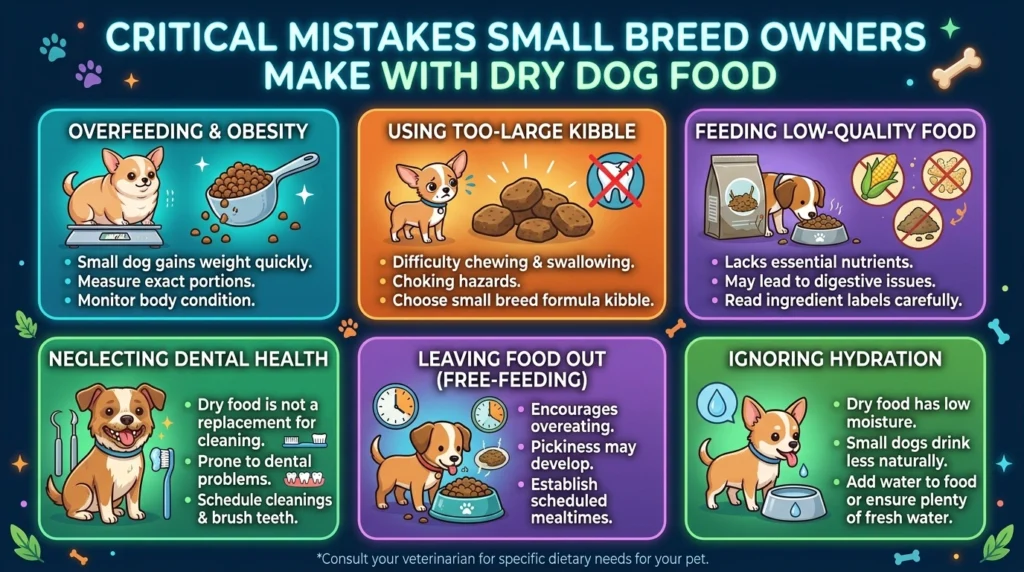
These errors come up constantly and they’re very worth knowing about before you buy:
Feeding Standard Adult Formula in Smaller Portions
This is the most common mistake I see. Many owners assume that feeding less of a regular adult formula is equivalent to a small breed formula. It’s not. Standard adult formulas don’t have the caloric density small breeds need, don’t account for small breed dental health considerations, and use larger kibble that can challenge tiny mouths. Always use a formula specifically designed for small or toy breeds.
Overfeeding Because Small Dogs Are Hard to Say No To
Have you ever tried to ignore a Dachshund begging for more food? It’s nearly impossible. But small dogs gain weight proportionally faster than large breeds and the health consequences of obesity hit them harder. A slightly overweight 12-pound dog is carrying a much higher percentage of excess body fat than the numbers suggest. Measure every meal precisely. Use a kitchen scale if possible. And resist those heartbreaking eyes at the food bowl.
Ignoring Dental Health Until It’s a Problem
By age three, 70–80% of dogs show signs of dental disease and small breeds are disproportionately affected. The right dry food helps, but it’s not sufficient alone. Regular dental brushing (even a few times per week), dental treats, and annual professional dental cleanings are all part of a complete small breed oral health plan. Don’t wait until your small dog needs a tooth extraction to start thinking about dental care prevention is so much easier.
Switching Foods Too Frequently Because of Pickiness
Small breed dogs are famous for their selective appetites. And owners often respond to food refusal by switching brands which teaches the dog that refusing food leads to something better appearing. Before switching foods, rule out health reasons for appetite changes with your vet. If the food is nutritionally appropriate and your dog is otherwise healthy, a little tough love at mealtime is often more appropriate than an immediate food switch.
Not Adjusting Food When Life Stage Changes
Small breed dogs live long lives but their nutritional needs do shift at key points. Puppyhood (use small breed puppy formula), adulthood (transition to small breed adult), and late senior years (consider a senior formula around age 10–12) each call for different nutritional profiles. Many small breed owners stay on the same food for the dog’s entire life without reassessing which means missing targeted nutrition during important life phases.
Pro Tip: Small breed dogs benefit enormously from two to three small meals per day rather than one large feeding. Their tiny stomachs handle smaller volumes better, their blood sugar stays more stable throughout the day, and they’re generally more enthusiastic about food that arrives in reasonable portions. Split your dog’s daily portion into two or three servings and watch the difference in their energy and digestion.
Frequently Asked Questions About the Best Dry Dog Food for Small Breeds
1. What weight defines a “small breed” dog for food purposes?
Small breed dogs are generally defined as those expected to reach 20 pounds or less at adult weight. Toy breeds are typically even smaller under 10 pounds. Some brands further distinguish between “small” and “toy” breed formulas to account for the even higher caloric density and tinier kibble needs of the smallest dogs. If your dog falls in a gray area (18–25 pounds), consult your vet about whether a small breed or standard adult formula better suits their needs and metabolism.
2. How much dry food does a small breed dog need per day?
This varies by your dog’s exact weight, age, activity level, and the specific food’s caloric density. As a general baseline, most small breed dogs (10–20 pounds) need roughly ½ to 1½ cups per day but always verify with your specific food’s feeding guidelines and calculate based on kcal/cup for accuracy. Small breed formulas are calorie-dense, so portions are intentionally small. Your vet can give you a personalized daily caloric target based on your dog’s body condition score, which is more useful than weight alone.
3. Is grain-free dry food better for small breeds?
For most small breed dogs no. Grain-free formulas have been associated with potential cardiac concerns (DCM) in ongoing FDA research, and grains are not harmful to most dogs. Small breeds don’t have inherently higher rates of grain sensitivity than large breeds. Unless your vet has specifically recommended grain-free for a diagnosed grain allergy or sensitivity, grain-inclusive small breed formulas are the safer, more clinically supported default choice. Don’t choose grain-free based on marketing choice based on your dog’s actual needs.
4. My small dog is incredibly picky. What’s the best approach?
First, rule out any health issues causing appetite changes with a vet visit. If your dog is healthy but picky, try these approaches: warm the kibble slightly with warm water to enhance aroma, add a small amount of low-sodium bone broth as a topper, try a different protein flavor within the same quality brand rather than switching brands entirely, and establish consistent meal times rather than free feeding. Avoid the habit of switching foods every time your dog shows disinterest it can reinforce picky behavior. Palatability varies by brand, so Royal Canin and Purina Pro Plan are both known for high palatability with small breed dogs specifically.
5. When should I transition my small breed dog to a senior formula?
Small breed dogs age more slowly than large breeds and typically don’t need a senior formula until around age 10–12 later than many owners expect. Signs that a senior formula might be appropriate include reduced activity, weight gain, visible stiffness, or changes in coat quality. Some small breed senior formulas feature reduced calories, added joint support, and cognitive health ingredients. Discuss the timing with your vet at annual check-ups they can assess your individual dog’s health status and recommend the right time to transition.
6. Can small breed dogs eat regular adult dry dog food if I just feed less?
Technically a small amount of a standard adult formula won’t harm a small breed dog. But it’s not optimal nutrition for several reasons: standard formulas have lower caloric density than small breed formulas require, use larger kibble not designed for small mouths, and don’t address small breed-specific concerns like dental health and blood sugar stability. The small additional cost of a small breed specific formula is genuinely worth it for the nutritional precision it delivers. Think of it like wearing shoes that fit versus shoes that are slightly too big technically functional, but not ideal.
7. What’s the best dry dog food for a small breed with a sensitive stomach?
Purina Pro Plan Small & Toy Breed Sensitive Skin & Stomach is specifically formulated for small breed dogs with digestive sensitivity salmon as the primary protein, rice as a gentle carbohydrate base, and prebiotic fiber for gut health in an appropriately calorie-dense small breed formula. Hill’s Science Diet Small Paws Sensitive Stomach is another strong clinical option. For persistent digestive issues in small breeds, always work with your vet to rule out underlying causes. Small breeds can be prone to pancreatitis and other conditions that masquerade as simple food sensitivity.
Small Dog, Big Nutrition Every Bowl Matters
Finding the best dry dog food for small breeds is one of the most meaningful investments you can make in your little dog’s health and longevity. Small breeds live long lives and what goes in their bowl compounds over every one of those years.
The formula matters: small kibble for small mouths, higher caloric density for faster metabolisms, quality protein for muscle maintenance, and targeted dental support for small breed oral health vulnerabilities. Brands like Purina Pro Plan Small & Toy Breed, Hill’s Science Diet Small Paws, and Royal Canin Small Adult consistently deliver on all of these priorities across different price points.
Feed two to three small meals daily. Measure portions precisely. Monitor dental health actively. And check in with your vet at annual visits about whether the current formula still suits your dog’s evolving needs.