
Introduction
Kibble. It’s the cornerstone of most dogs’ diets around the world and for good reason. Dry dog food is convenient, affordable, nutritionally complete, and shelf-stable enough to buy in bulk without worry. But here’s something that surprises a lot of dog owners: not all kibble is created equal. Not even close.
Walk into any pet store and you’re immediately hit with dozens of bags, each one shouting about “real chicken,” “grain-free goodness,” or “veterinarian recommended” formulas. How on earth do you know which one is actually good for your dog and which ones are mostly marketing dressed up in pretty packaging?
That’s exactly what this guide is here to solve. Whether you’re a first-time dog owner trying to figure out where to even start, or a seasoned pet parent wondering if your dog’s current food is really the best choice, you’re in the right place.
I’ll walk you through everything what dry dog food actually is, how to read a label like a pro, which brands consistently deliver on quality, and the most common mistakes people make when buying kibble. Let’s get your dog eating better starting today.
What Is Dry Dog Food and Why Is It So Popular?
Dry dog food commonly called kibble is the most widely fed type of commercial dog food in the world. It’s made by combining ingredients like meat, grains or legumes, vegetables, fats, and vitamin-mineral supplements into a dough, then pushing that mixture through an industrial process called extrusion. The result is those familiar small, hard nuggets your dog crunches through every day.
The extrusion process uses heat and pressure to cook and shape the food, which also makes it shelf-stable for months without refrigeration. That’s one of the biggest practical advantages of dry food over fresh or wet alternatives.
Why So Many Dog Owners Choose Kibble
There’s a reason dry dog food has dominated the pet food market for decades:
- Convenience Buy a bag, scoop, serve. No prep, no refrigeration required after opening (as long as it’s stored correctly)
- Cost-effectiveness Dry food is generally the most affordable way to feed a dog a complete, balanced diet
- Dental benefits The crunching action of chewing kibble provides some mechanical cleaning of the teeth, which can help reduce plaque buildup
- Long shelf life An unopened bag of quality kibble can last 12–18 months; once opened, it stays fresh for about 6 weeks
- Nutritional completeness Nearly all commercial dry dog foods are formulated to meet AAFCO (Association of American Feed Control Officials) minimum nutritional standards
That said, quality varies enormously between brands and price points. Knowing what separates a genuinely good kibble from a mediocre one is the skill that changes everything.
How to Choose the Best Dry Dog Food: A Step-by-Step Guide
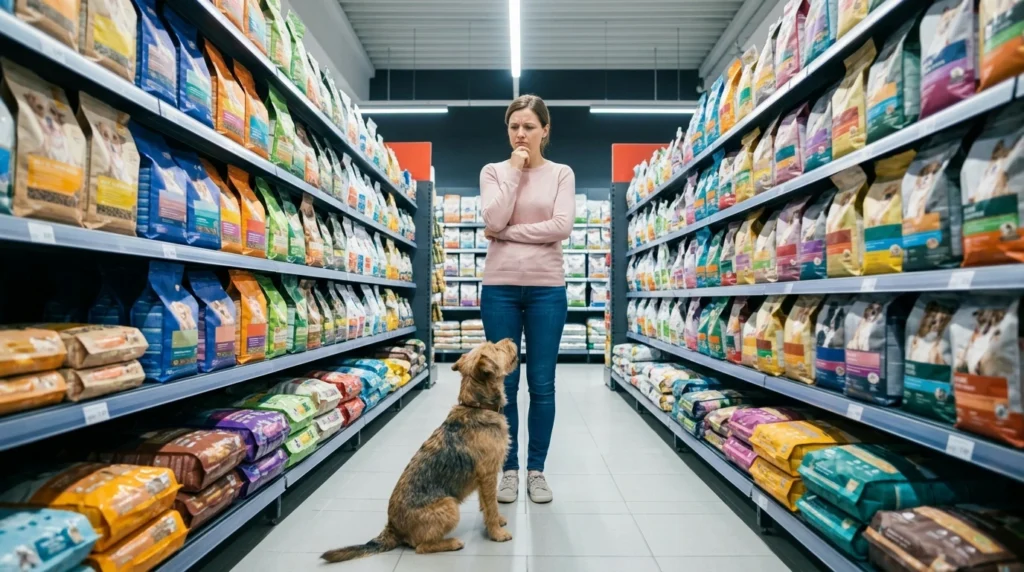
Picking the right dry dog food isn’t about grabbing the most expensive bag or the one with the prettiest label. It’s about knowing what to look for and what to ignore. Here’s exactly how I’d approach it:
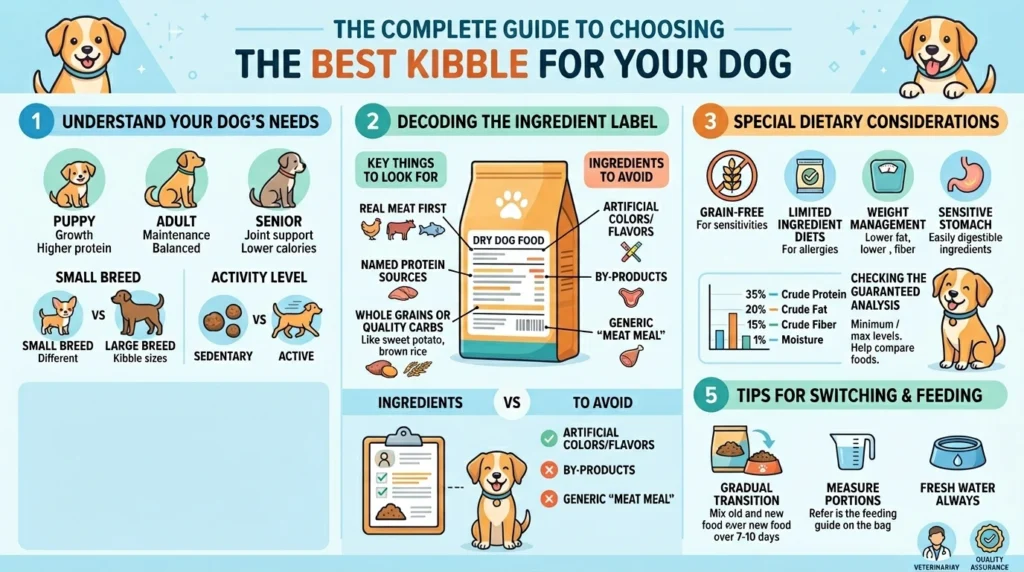
- Lead with life stage. This is non-negotiable. Dry dog food is formulated differently for puppies, adults, and senior dogs. Puppy kibble has higher protein content and DHA for brain development. Senior formulas tend to have lower calories and added joint support. Always match the food to your dog’s actual life stage not what’s convenient or on sale.
- Read the first three ingredients carefully. The ingredient list is ordered by weight before processing so whatever’s listed first is present in the largest amount. You want to see a named animal protein at the top: “chicken,” “beef,” “salmon,” “lamb.” If the first ingredient is corn, wheat, or a vague term like “meat meal,” that’s a signal to look elsewhere.
- Find the AAFCO nutritional adequacy statement. This small line usually near the bottom of the back panel confirms the food meets minimum nutritional standards. Even better, look for foods that say “complete and balanced based on feeding trials” rather than just “formulated to meet” standards. Feeding trial substantiation is a stronger validation.
- Check protein and fat percentages. On the guaranteed analysis panel, most healthy adult dogs do well with dry food containing at least 18–25% protein and 8–15% fat. Active dogs or working breeds may need higher protein. Puppies generally need 22–32% protein. Senior dogs often benefit from moderate protein levels but ask your vet, as this varies.
- Watch for red flag ingredients. Steer clear of foods that feature artificial preservatives (BHA, BHT, ethoxyquin), artificial colors (Red 40, Yellow 5), or unspecified animal sources (generic “meat by-product meal” rather than “chicken by-product meal”). These signal lower manufacturing standards.
- Consider your dog’s specific needs. Does your dog have a sensitive stomach? Skin allergies? Weight issues? Joint problems? Dry dog food brands like Purina Pro Plan and Hill’s Science Diet offer targeted formulas for each of these. If your dog has a diagnosed health condition, always consult your vet before selecting a formula.
- Calculate cost per day, not cost per bag. A larger, pricier bag often works out cheaper per day than a small budget bag especially if the higher-quality food requires smaller portions because of better digestibility. Do the math before you decide.
Pro Tip: Store your dry dog food properly to preserve freshness. Keep it in the original bag (which has a protective inner lining), clipped tightly shut inside an airtight container. Store in a cool, dry place away from sunlight. Never pour kibble directly into a plastic bin fat residue builds up on the sides and goes rancid faster than you’d expect.
[True Dog Food: Types, Features and Best Choices – Complete Review]
Best Dry Dog Food Brands in 2026: Honest Comparisons
Now let’s talk specifics. Here’s how the most popular and well-regarded dry dog food brands actually stack up:
– $
| Brand | Price Range | First Ingredient | Grain-Free Option | Best For |
| Purina Pro Plan | $$$ | Real chicken/salmon/beef | Some formulas | Research-backed everyday nutrition |
| Hill’s Science Diet | $$$ | Chicken/chicken meal | Some formulas | Vet-recommended health support |
| Royal Canin | $$$ | Chicken by-product meal | No | Breed & condition-specific needs |
| Blue Buffalo Life Protection | Deboned chicken/fish | Yes | Natural ingredient focus | |
| Purina ONE | $$ | Real chicken/beef | No | Mid-range quality, budget-friendly |
| Iams Adult | $$ | Chicken | No | Active healthy adult dogs |
| Rachel Ray Nutrish | $$ | Chicken/beef | Yes | Natural diet on a budget |
| Purina Dog Chow | $ | Whole grain corn | No | Budget-conscious healthy adults |
| Orijen | $$$$ | Free-run chicken/turkey | Yes | Premium biologically appropriate |
| Merrick Grain Free | $$$ | Deboned beef/chicken | Yes | High-protein sensitive dogs |
My Honest Top Picks by Category
Best Overall Dry Dog Food: Purina Pro Plan It’s hard to argue with the research behind Pro Plan. Named protein first, no unnecessary fillers, developed with veterinary input, and available in formulas for every life stage and health condition. It’s what I’d feed my own dog and what countless vets recommend to their clients.
Best Budget Dry Dog Food: Purina ONE Real meat as the first ingredient, no corn or wheat, solid protein percentages, and a price point that’s genuinely accessible. It’s the best balance of quality and affordability in the mainstream market.
Best for Sensitive Stomachs: Purina Pro Plan Sensitive Skin & Stomach (Salmon & Rice) Salmon as the primary protein, prebiotic fiber for gut health, and a formula specifically developed for digestive sensitivity. Dogs that’ve struggled for years on other foods often do remarkably well on this one.
Best Premium Pick: Orijen Original If budget isn’t a constraint, Orijen delivers exceptional ingredient quality 85% quality animal ingredients, free-run poultry, wild-caught fish, and cage-free eggs. It’s genuinely premium nutrition, though it comes at a genuinely premium price.
Best for Large Breeds: Royal Canin Large Breed Adult Royal Canin’s breed and size-specific formulas are impressively precise. Their large breed formula accounts for joint health, appropriate calcium-to-phosphorus ratios, and the unique digestive needs of bigger dogs.
Common Dry Dog Food Mistakes That Are Easy to Avoid
Even experienced dog owners make these errors. Here’s what to watch for:
Choosing Grain-Free Without a Medical Reason
Grain-free dry dog food has been heavily marketed as “healthier” but the science doesn’t support that assumption for most dogs. Since 2018, the FDA has been investigating a potential link between grain-free diets (particularly those high in peas, lentils, and legumes) and dilated cardiomyopathy (DCM) a serious heart condition in dogs.
Unless your vet has specifically recommended grain-free for a diagnosed grain sensitivity or allergy, there’s no proven benefit to avoiding grains. Most dogs digest grains perfectly well.
Buying the Same Bag on Autopilot
Has your dog been eating the same food for three, four, five years without a second thought? That’s not necessarily bad but it’s worth pausing to reassess. Your dog’s nutritional needs change with age. The formula that was perfect at age two may not be optimal at age nine. Check in with your vet at annual appointments about whether a food adjustment makes sense.
Feeding by Volume Instead of Weight
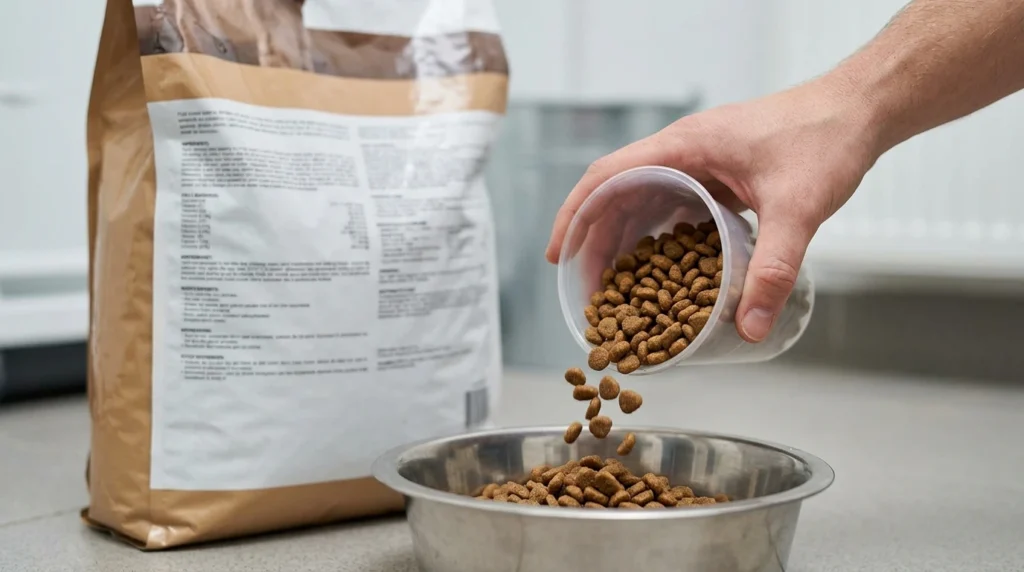
Most feeding guides on kibble bags say something like “feed 2 cups for a 40-pound dog.” But cup sizes vary, kibble density varies, and “cups” aren’t a precise measurement for nutrition. Ideally, use a kitchen scale to measure your dog’s food by weight (grams) rather than volume. It’s more accurate and helps prevent gradual overfeeding.
Ignoring the Expiration Date
Dry dog food goes stale and more importantly, the fat in kibble can go rancid after the bag is opened. Rancid fat doesn’t just taste bad; it can cause digestive issues and vitamin degradation. Always check the best-by date before buying, and finish an opened bag within 6 weeks.
Switching Brands Too Frequently
Every time you switch dry dog food even between quality brands your dog’s gut needs time to adjust. Frequent switching leads to chronic digestive upset, making it hard to tell if a food is actually a good fit. Pick a quality food, give it 8–12 weeks consistently, and then evaluate based on your dog’s coat, energy, stool quality, and weight.
Pro Tip: If your dog turns their nose up at dry kibble, try adding a small splash of warm water or a spoonful of plain, unseasoned bone broth to the bowl. It enhances the aroma dramatically without changing the nutritional profile and most dogs go from uninterested to enthusiastic instantly.
Frequently Asked Questions About Dry Dog Food
1. Is dry dog food better than wet food?
Neither is universally better they each have advantages. Dry dog food wins on convenience, cost, shelf life, and dental benefits from chewing. Wet food has higher moisture content (great for hydration and senior dogs) and is often more palatable for picky eaters. Many owners do very well mixing both a base of dry kibble with a small amount of wet food as a topper. For most healthy dogs, a high-quality dry food is a perfectly complete and balanced diet on its own. Ask your vet what combination suits your dog’s specific needs.
2. How much dry dog food should I feed my dog per day?
This depends on your dog’s weight, age, activity level, and the specific food’s caloric density. Start with the feeding guidelines on the bag as a baseline they’re calculated for the average dog at that weight. Then adjust based on your dog’s body condition: you should be able to feel your dog’s ribs without pressing hard, but not see them prominently. If your dog is gaining or losing weight unexpectedly, adjust portions by 10% and reassess over 2–3 weeks. Your vet can give you a precise recommendation based on your dog’s individual profile.
3. How should I store dry dog food to keep it fresh?
The best approach is to keep kibble in its original bag the inner lining is specifically designed to preserve freshness clipped tightly shut, inside an airtight container. Store it somewhere cool, dry, and away from direct sunlight. Avoid garages or outdoor areas where temperature swings occur. Once opened, aim to finish the bag within 6 weeks. Never mix old and new food in the same container without cleaning it first, as residual fat from old food can contaminate the fresh batch.
4. Can I mix dry dog food with fresh or homemade food?
Yes, and many vets support a hybrid approach. Adding fresh food toppers cooked chicken, sweet potato, plain scrambled eggs, or a commercial fresh food product to dry kibble can improve palatability and add natural nutrients. Just make sure to adjust total portion sizes so you’re not overfeeding. If you’re adding significant amounts of homemade food, consult a veterinary nutritionist to ensure the overall diet remains balanced. The dry food should still make up the majority of the diet unless you’ve formulated a complete homemade diet with professional guidance.
5. What’s the difference between “chicken meal” and “chicken” in dry dog food?
This is a great question and one that confuses a lot of people. Fresh “chicken” listed as the first ingredient contains a lot of water weight after processing, there’s actually less chicken in the final product than it initially appears. “Chicken meal,” on the other hand, is chicken that’s already been rendered and has most of the water removed, making it a more concentrated protein source by weight in the final product. Both can be quality ingredients what matters more is the overall ingredient list and nutritional profile, not just whether it says “chicken” or “chicken meal” at the top.
6. Is grain-free dry dog food safer for dogs with allergies?
Not automatically. True grain allergies in dogs are actually less common than most people think the more frequent food allergens for dogs are specific proteins like beef, dairy, chicken, and wheat (in that order), according to veterinary research. If your dog has a diagnosed food allergy, the elimination process to identify the trigger should be done under veterinary guidance. A grain-free diet may be appropriate if grains are confirmed as the issue, but switching to grain-free “just in case” without medical guidance isn’t recommended especially given the FDA’s ongoing DCM investigation.
7. How do I transition my dog to a new dry dog food?
Always go slow. A standard transition schedule looks like this: Days 1–3, feed 75% old food and 25% new food. Days 4–6, go 50/50. Days 7–9, feed 25% old and 75% new. By day 10, you can feed 100% new food. Watch for loose stools, excessive gas, or vomiting during the transition mild digestive changes are normal, but significant symptoms warrant slowing the transition further or checking in with your vet. Some sensitive dogs need a full two-week transition; don’t rush it.
Conclusion : Making Kibble Work Hard for Your Dog
Dry dog food done right is genuinely one of the most practical, nutritionally sound ways to feed your dog. The key as with so much in pet care is making informed choices rather than defaulting to habit or flashy marketing.
Start with your dog’s life stage. Read that ingredient label. Choose a named protein, look for the AAFCO statement, and pick a brand with a track record you can trust. Brands like Purina Pro Plan, Hill’s Science Diet, and Purina ONE consistently deliver quality at different price points and your vet can help you narrow it down further based on your dog’s individual needs.
Store it properly, transition slowly when switching, and reassess periodically as your dog ages. Those simple habits make a bigger difference than most people realize.