Introduction:
A dog’s skin is not only the largest organ of its body, but also a reflection of its overall health. When your dog is happy and healthy, its skin looks shiny and soft. But when dog skin care is neglected, problems such as dryness, itching, hair loss and infections can develop. Two out of every five dogs that come to veterinary hospitals come with skin problems. In this article, we will learn in detail how to care for a dog’s skin, what symptoms to recognize and when to consult a doctor. Understanding dog skin care is the first responsibility of every dog owner.
Structure and Functions of Dog Skin
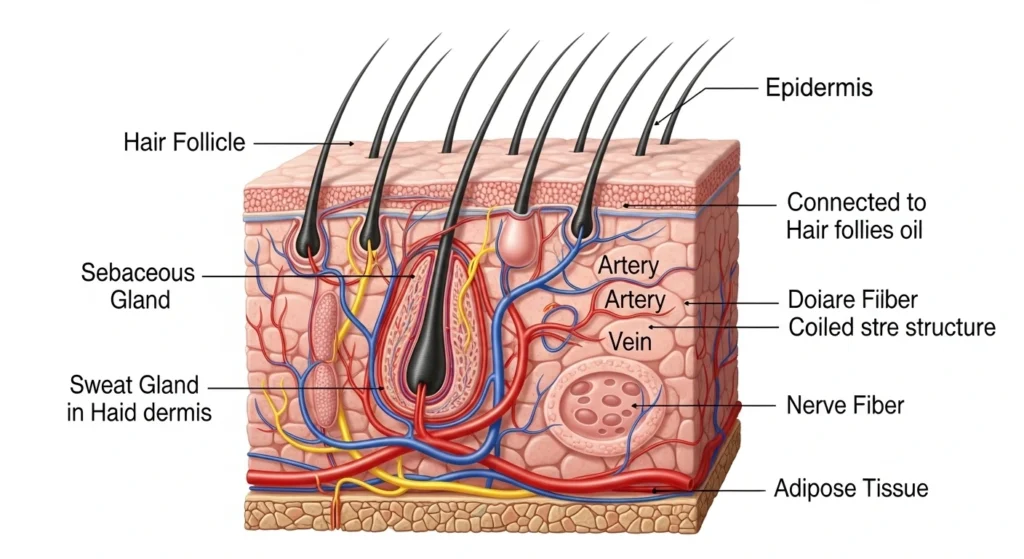
A dog’s skin is very different from human skin. The top layer of human skin is twelve to fifteen cells thick, while dog skin consists of only three to five cells. This is why dog skin is so delicate and easily damaged. Understanding this difference is essential for dog skin care.
A dog’s skin is made up of three layers:
The outer layer (epidermis): This is the part that is visible from the outside. This layer protects it from germs and dirt.
The middle layer (dermis): It contains hair follicles and oil-producing glands. This oil (sebum) keeps the skin soft and makes the hair shiny.
The inner layer (subcutis): It contains fat that keeps the body warm and reduces the impact of any injury.
Common Skin Problems and How to Recognize Them
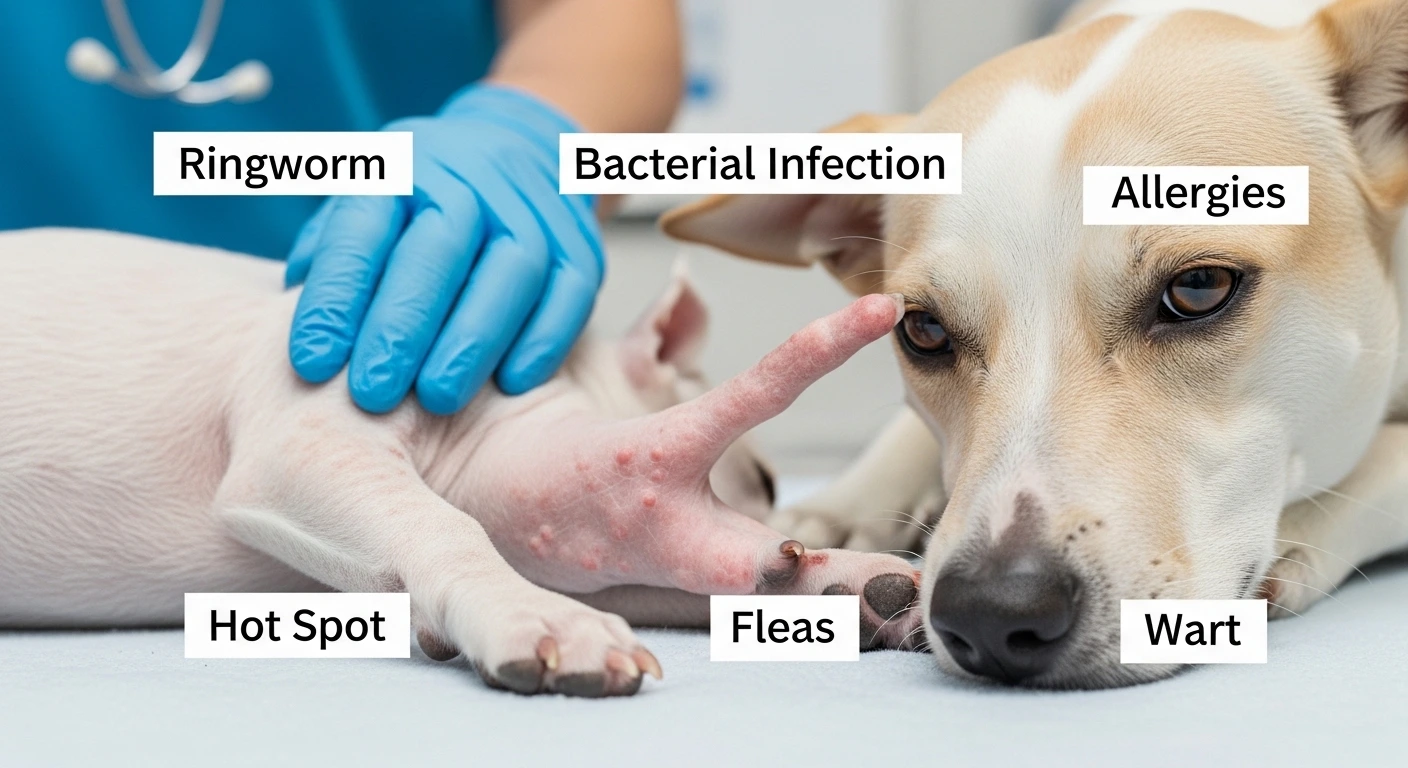
Dog skin care is not complete until you recognize common skin problems.
Allergies:
Allergies are the leading cause of skin problems in dogs. Three types of allergies are most common.
First: Environmental allergies. This includes grass, tree pollen, dust mites, and mold.
Second: Flea allergy. A severe allergic reaction occurs to flea saliva.
Third: Food allergy. Usually, allergies are caused by beef, chicken, milk, or wheat.
Allergy symptoms: The dog licks the body repeatedly, red spots appear, the ears become infected, and the paws swell. Recognizing allergies is very important in caring for a dog’s skin.
Fleas and ticks:
These are small insects that suck blood from the dog’s skin. Flea saliva itself is an allergen. Ticks are even more dangerous, causing the skin to swell and spreading diseases.
Their symptoms: The dog constantly scratches itself, grabs and pulls the hair with its teeth, red marks form on the body, and hair begins to fall out.
Bacterial infection:
When there is a cut or scratch on the skin, bacteria enter. This infection is called pyoderma.
Symptoms: Red bumps on the skin, pus-filled, foul-smelling, and itchy.
Yeast Infection:
This infection occurs especially in the ears, paws, and skin folds. Heat and humidity make it worse.
Symptoms: Sweet or sour odor from the skin, thickening and darkening of the skin, foul odor from the ear, and earwaxing.
Hot Spots:
These are moist, red sores that spread over a few hours. They are more common in Golden Retrievers and Labradors.
Symptoms: A red, wet spot that appears suddenly, the dog keeps licking it, pain, and itching.
Hormonal Diseases:
Thyroid deficiency and Cushing’s disease can severely affect the skin. It is also important to take care of these diseases in dog skin care.
Symptoms: Balanced hair loss on both sides, darkening of the skin, weight gain or loss.
Part Three: Dry Skin and Its Causes
Dry skin is the biggest problem in winter. When the weather is cold, we run heaters in our homes. This dries out the air in the house and the dog’s skin also starts to dry out. Treating dry skin is very important in dog skin care.
Five causes of dry skin:
First: Change in weather. Especially when autumn ends and winter begins.
Second: Frequent bathing. Some people bathe their dogs every week, while their skin’s natural oils are depleted.
Third: Chemical shampoos. Cheap shampoos in the market contain harsh chemicals that burn the skin.
Fourth: Lack of water. A dog that drinks less water gets dry skin.
Fifth: Aging. The skin of dogs over seven years old naturally gets dry.
Symptoms of dry skin:
White flakes of dandruff on the dog’s body, rough and lifeless coat, hard skin on the elbows, and mild itching.
Easy Ways to Protect Your Skin
A few simple habits are enough to take care of your dog’s skin.
Daily brushing:
Brushing your dog daily removes dead hair. Brushing improves blood circulation in the skin and spreads natural oils throughout the body. Long-haired dogs should be brushed daily. Short-haired dogs should be brushed twice a week.
Bathing rules:
A healthy dog should be bathed every four to six weeks. Dogs with dry skin can be bathed every two weeks, but only on the advice of a doctor.
Use lukewarm water. Hot water removes moisture from the skin. Rinse the shampoo thoroughly. If shampoo remains on the skin, itching will begin.
Cleaning considerations:
Wash the dog’s bed every ten days. Wash the water and food bowls daily. Wipe the ears and eyes with a clean cloth daily. Wash the paws immediately after coming outside.
Home atmosphere:
If the heater is running in the house, install a humidifier. This will prevent the skin from drying out. Keep fresh water available to the dog at all times. Add a little water to dry food.
Natural recipes for the skin
Natural recipes are very effective in caring for the dog’s skin.
Coconut oil:
Coconut oil is excellent for the skin. The fatty acids present in it moisturize the skin from within. Take a little oil on your hand and massage the dog’s skin with light hands. There is no harm in licking it. Coconut oil can also be given in food.
Oatmeal shampoo:
Oatmeal reduces itching and cools the skin. Oatmeal shampoos are available in the market. You can also make it at home. Grind a cup of oatmeal and mix it with water. Bathe the dog with this water.
Aloe vera:
Aloe vera reduces skin irritation. Keep an aloe vera plant at home. Break the leaf and extract its pulp and apply it to the dog’s skin. Wash it off after 15 minutes.
Apple cider vinegar:
Apple cider vinegar kills germs. Mix one part vinegar and one part water and fill it in a spray bottle. Spray on the itchy area. Do not apply vinegar if there is a wound.
Tea tree oil:
This oil kills both germs and fungi. Use very small amounts. Four to five drops in a cup of water is enough. Large amounts can cause damage.
The relationship between food and skin
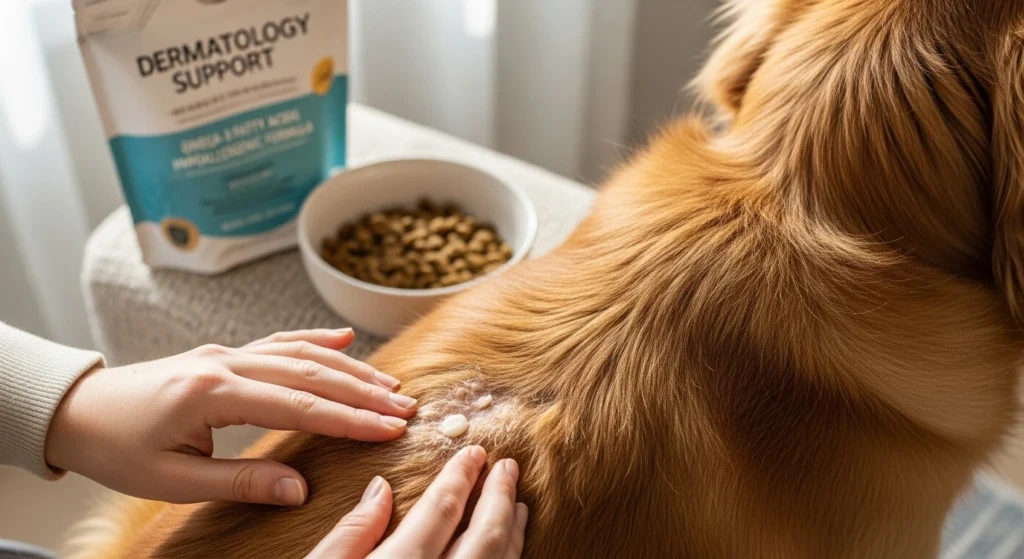
A dog is what it eats. Food plays a fundamental role in the care of a dog’s skin.
Fish oil:
Fish oil contains omega-3. It maintains skin moisture and reduces allergies. Salmon oil is best. Mix it with food. One tablespoon is enough daily.
Vitamin E:
It is an antioxidant. It repairs the skin. Vitamin E tablets are available in the market. Consult a doctor.
Biotin:
Biotin strengthens hair and keeps skin soft. Biotin is found in egg yolk. Boil the egg.
Zinc:
Zinc deficiency causes skin to become flaky. Pumpkin seeds and pulses contain zinc.
Water:
Water maintains skin moisture. Give your dog clean water daily. Make sure your dog has easy access to water. If your dog drinks little water, add water to dry food.
Skin care in different seasons
Dog skin care should change according to the season.
In winter:
The air becomes dry in winter. Install a humidifier in the house. Bathe your dog once a week. Dry it thoroughly with a towel immediately after bathing. Keep the hair long to retain heat. Apply oil to the paws before going out. Ice and salt burn the paws.
In summer:
Fleas are more common in summer. Treat fleas regularly. Don’t stay in the sun too long. White-skinned dogs get sunburned. Keep in a shady place. Keep fresh water available at all times.
In the rain:
Humidity increases in the rain. There is a risk of yeast infections. Protect the dog from getting wet. If it gets wet, dry it immediately. Clean the ears. Keep it dry between the toes.
When is it necessary to go to the doctor?
It is not necessary to run to the doctor for every itch and dryness. Some symptoms can be cured at home. But in caring for a dog’s skin, it is important to know when to consult a doctor.
Dangerous symptoms:
First: Pus oozing from the wound.
Second: Strong odor from the skin.
Third: Hair falling out in large pieces.
Fourth: The dog becomes lethargic and stops eating.
Fifth: Lumps or tumors form on the skin.
Sixth: Itching is so severe that the dog cannot sleep at night.
Seventh: Home remedies do not make any difference in a week.
What will the doctor do?
The doctor will first examine the dog. They will take a skin scraping and look at it under a microscope. They will check for ringworm or yeast. They will do blood tests if needed. In some cases, they will remove a small piece of skin and send it to a lab for testing.
Prevention of Fleas and Ticks
Fleas and ticks not only damage the skin but also spread deadly diseases. Eliminating fleas and ticks is very important in dog skin care.
Identification of fleas:
Small black insects are seen running on the Dog skin care. Black scales on the dog’s bed. Insects stick to the comb while combing.
Prevention methods:
Apply flea drops every month. They are applied to the neck and provide protection for thirty days. Use a flea collar. Spray the house and bed regularly with disinfectant.
Identification of ticks:
A tick is large. The size of a pea. It sticks to the skin and sucks blood. It is brown or gray in color. It is more common behind the ears, on the neck and on the toes.
Prevention methods:
Do not lie on the grass in the ticked area. Check the entire body when coming from outside. If a tick is attached, never scratch it with bare hands. Grab it with tweezers and pull it out by twisting it. Clean the area after removing it.
Mistakes in dog skin care

In our love for dogs, we make some mistakes. It is important to avoid these mistakes in dog skin care.
Mistake number one: Using human shampoo
Human shampoo is too acidic for Dog skin care. This dries out the skin. Always use shampoo made for dogs.
Mistake number two: Bathing too often
Bathing every week removes the dog skin care natural oils. The Dog skin care starts producing more oil to protect itself. This makes the Dog skin care greasy and smelly.
Mistake number three: Not drying the hair completely
If the hair is left wet after bathing, fungus grows. Especially behind the ears and between the toes. Dry it well with a towel.
Mistake number four: Ignoring wounds
A small cut or scratch can become a major infection. Treat it early.
Mistake number five: Giving medicines without a doctor’s advice
Human medicines and ointments are poisonous to dogs. Do not give paracetamol at all.
Special care for young puppies
Puppies under three months of age have very delicate Dog skin care. Special care should be taken in caring for the skin of young puppies.
Do not bathe them frequently. Once a month is enough. Dry them thoroughly with a towel immediately after bathing. Do not let the room air out.
Use flea drops. Puppies can suffer from anemia due to fleas.
Add fish oil to the diet. This keeps both the Dog skin care and the brain healthy.
Dog skin care for older dogs
A dog over seven years old is considered old. The Dog skin care of older dogs becomes thin and dry. Special care should be taken in caring for older dogs’ skin.
Provide a soft bed. Do not let them lie on hard floors for too long. Put pads on the elbows and joints.
Add glucosamine and chondroitin to the diet. This keeps the Dog skin care healthy along with the joints.
Be sure to give vitamin E. It is an antioxidant and protects the skin.
Different breeds and their problems
Each breed of dog has specific skin problems. It is important to understand the problems according to the breed in caring for the skin of the dog.
Golden Retriever and Labrador:
They have more hot spots. These sores form due to heat and humidity. Always keep these breeds dry. Wipe them thoroughly immediately after swimming.
German Shepherd:
Their skin is sensitive. Flea allergies are high. Treat fleas regularly.
Poodle and Bichon Frise:
Their hair is long and thick. The hair tangles and does not allow the skin to breathe. Brush daily. Trim the hair every two months.
Siberian Husky:
They have a problem with zinc deficiency. Skin flakes form. Consult a doctor and give zinc.
Chinese Crested:
They have no hair. They get sunburned. Apply sunscreen. Wear a sweater in winter.
Shih Tzu and Pug:
They have folds of skin on their faces. Dirt accumulates in these folds and causes infection. Clean the folds daily with a damp cloth.
Products Useful for the Dog Skin
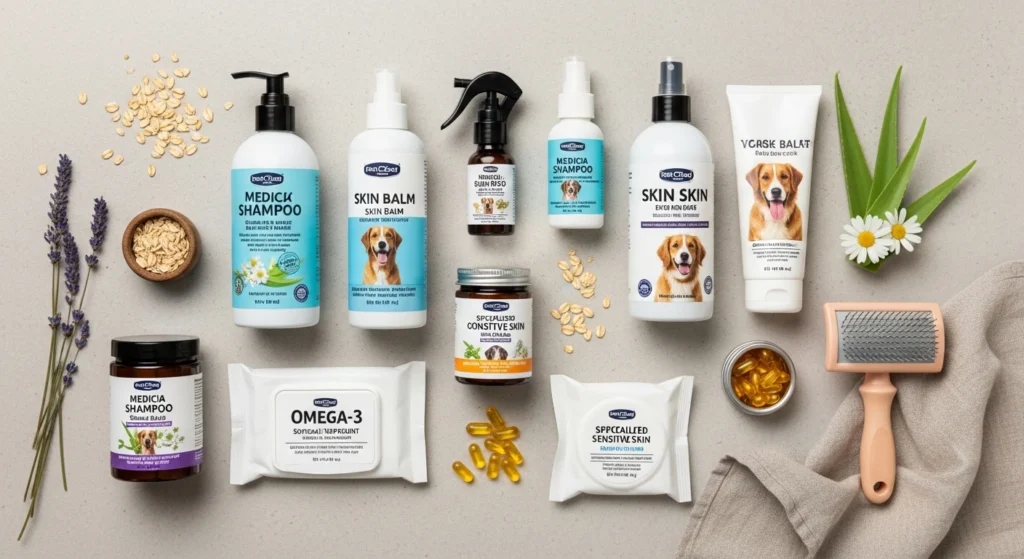
There are many products for dog skin in the market. Choosing the right products is essential for dog skin care.
Shampoo:
Oatmeal shampoo is for dry skin. Chlorhexidine shampoo is for bacteria. Miconazole shampoo is for yeast.
Conditioner:
Applying conditioner after bathing helps the skin absorb moisture. Leave in leave-in conditioner and dry.
Paw cream:
Paws crack in winter. Apply the cream at night and wear socks. They will be soft by morning.
Supplements:
Fish oil capsules, vitamin E, biotin, and zinc are great for the skin.
Spray:
You can spray a cooling solution on the itchy area. You can also make your own apple cider vinegar spray.
Conclusion
Dog skin care is not a difficult task. With a little attention and effort, you can keep your dog’s skin healthy.
Remember that dogs cannot talk to you. They tell you in their own language that they are in pain. When they repeatedly lick their bodies, shake their heads, lick their paws, or can’t sleep at night, you can understand that there is a problem with their skin. Caring for your dog’s skin means recognizing these symptoms and treating them in time.
Five golden rules of skin care:
First: Brush daily.
Second: Don’t bathe too much.
Third: Use only dog products.
Fourth: Add fish oil to the diet.
Fifth: Consult a doctor as soon as you notice symptoms.
These small habits will keep your dog’s skin healthy. When your dog comes to you wagging his tail with a shiny coat and soft skin, you will feel the satisfaction that you have fulfilled your responsibility of caring for your dog’s skin.
Finally, I must say this: give your dog time. Sit with him, touch him, feel his skin. This will give you an idea of whether his skin is soft or dry, warm or cold. This touch and feel will tell you how important it is to take care of your dog’s skin.
Because in the end, you are the one who will reward your dog’s loyalty. His health is in your hands. Do not neglect your dog’s skin care.