
Introduction
You’re cooking dinner and your dog is giving you those irresistible puppy eyes. A small piece of garlic bread drops on the floor and before you can react, it’s gone. Sound familiar? Now you’re wondering, can dogs eat garlic, or should you be worried?
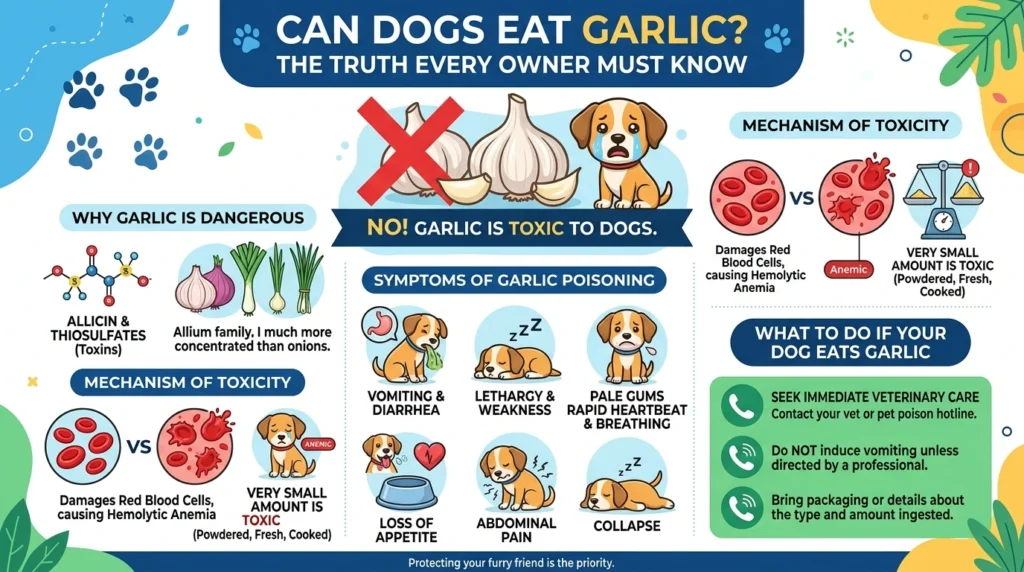
Here’s the short answer: no, dogs cannot safely eat garlic. Garlic is actually toxic to dogs even in small amounts. However, many owners don’t realize this until it’s too late. That’s because garlic toxicity doesn’t always show up immediately, which makes it especially dangerous.
In my experience, garlic poisoning in dogs is far more common than most people realize. It hides in table scraps, sauces, seasonings, and even some commercial pet foods. Therefore, every dog owner needs to understand exactly why garlic is harmful, what symptoms to watch for, and what to do if your dog eats it.
This guide gives you everything you need clearly, honestly, and without unnecessary panic. Let’s get into it.
Can Dogs Eat Garlic? Why It’s Dangerous for Dogs
The Science Behind Garlic Toxicity
Garlic belongs to the Allium family, the same plant family as onions, leeks, chives, and shallots. All of these plants contain compounds called organosulfides. When dogs consume garlic, these compounds break down into oxidative agents inside their bloodstream.
These oxidative agents damage red blood cells in dogs. As a result, the damaged cells can’t carry oxygen effectively. Over time, this leads to a condition called hemolytic anemia, a serious, potentially life-threatening situation where the body destroys its own red blood cells faster than it can replace them.
Dogs cannot process these compounds the way humans can. Therefore, what seems harmless in small amounts to us causes real damage to your dog’s body.
How Much Garlic Is Toxic to Dogs?
This is the question most owners ask first. The answer is less than you’d think.
Research suggests that garlic becomes toxic to dogs at approximately 0.5% of their body weight. Here’s what that means in practical terms:
| Dog’s Weight | Approximate Toxic Garlic Amount |
| 10 lbs (small dog) | As little as 0.8 oz (about 2–3 cloves) |
| 20 lbs (medium dog) | About 1.6 oz (4–6 cloves) |
| 50 lbs (large dog) | About 4 oz (10–12 cloves) |
| 80 lbs (large breed) | About 6.4 oz (16–18 cloves) |
However, these are estimates not safe thresholds. In addition, repeated small exposures build up over time and cause cumulative damage. Therefore, even if your dog eats a small amount of garlic regularly, toxicity can develop gradually without obvious immediate symptoms.
Is Garlic Powder More Dangerous Than Fresh Garlic?
Yes, significantly more dangerous. Garlic powder is highly concentrated. Therefore, it takes far less powder to reach toxic levels compared to fresh garlic cloves. Just a small pinch of garlic powder added regularly to your dog’s food can cause serious harm over time.
Also, garlic in any form carries the same risk:
- Fresh garlic cloves toxic
- Garlic powder highly toxic (more concentrated)
- Garlic salt toxic plus the added sodium concern
- Cooked garlic still toxic (cooking doesn’t remove the harmful compounds)
- Garlic oil toxic
- Garlic supplements never give these to dogs without vet guidance
What Happens When Dogs Eat Garlic: Symptoms to Watch For
Early Warning Signs
Garlic toxicity symptoms don’t always appear immediately. Sometimes they take several days to develop. Therefore, knowing what to watch for even days after exposure is critically important.
Early symptoms of garlic poisoning in dogs include:
- Vomiting often the first sign
- Diarrhea may contain blood in severe cases
- Drooling excessively more than normal
- Abdominal pain your dog may seem uncomfortable or guard their belly
- Loss of appetite sudden disinterest in food
- Lethargy unusual tiredness or weakness
Later Symptoms of Hemolytic Anemia
As the damage to red blood cells progresses, more serious symptoms appear. These typically develop 2–4 days after ingestion:
- Pale or yellowish gums a key warning sign of anemia
- Rapid breathing the body compensates for low oxygen levels
- Rapid or irregular heartbeat
- Weakness or collapse especially after mild exercise
- Dark or reddish-brown urine indicates red blood cell destruction
- Fainting episodes
Pro Tip: Check your dog’s gum color regularly; it’s one of the fastest health indicators you have at home. Healthy gums should be bubble-gum pink and moist. Pale, white, yellow, or bluish gums always warrant an immediate vet visit regardless of the suspected cause.
When to Call Your Vet Immediately
Call your vet right away if:
- Your dog ate any amount of garlic in the last 24–48 hours
- You notice pale gums, rapid breathing, or extreme weakness
- Your dog seems lethargic and won’t eat after possible garlic exposure
- You’re unsure how much garlic your dog consumed
Do not wait for symptoms to worsen. Early treatment dramatically improves outcomes. Therefore, acting fast is always the right decision when garlic exposure is suspected.
What to Do If Your Dog Eats Garlic: Step-by-Step Guide
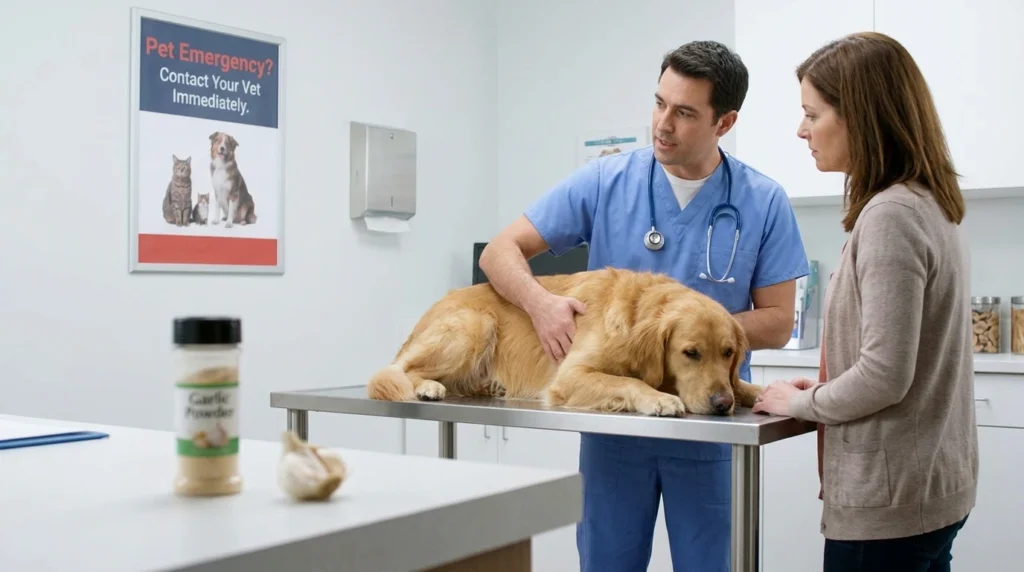
Act Quickly Here’s Exactly What to Do
Staying calm and acting fast gives your dog the best chance of a full recovery. Therefore, follow these steps immediately:
- Remove your dog from the source. Take away any remaining garlic or garlic-containing food right away. Also, check the surrounding area for additional pieces your dog might find.
- Estimate how much garlic your dog ate. Try to determine the approximate amount and form fresh cloves, garlic powder, and cooked food containing garlic. This information helps your vet assess the risk level accurately.
- Note the time of ingestion. Write down when you think your dog ate the garlic. This is critical information for your vet, because treatment options differ depending on how recently the ingestion occurred.
- Call your vet or animal poison control immediately. Don’t wait to see if symptoms develop. Contact your vet, a local emergency animal clinic, or the ASPCA Animal Poison Control Center (888-426-4435). They provide guidance 24 hours a day.
- Do not induce vomiting without vet guidance. You might think making your dog vomit is the obvious first step. However, inducing vomiting incorrectly can cause additional harm. Therefore, only do this if your vet specifically instructs you to.
- Bring the food packaging to the vet. If your dog ate a commercial product containing garlic, bring the packaging. This helps the vet identify other potential toxins in the product quickly.
- Follow your vet’s treatment plan completely. Treatment may include induced vomiting, activated charcoal, IV fluids, or blood transfusions in severe cases. Therefore, follow every instruction your vet gives without skipping steps.
What Treatment Looks Like at the Vet
Your vet’s approach depends on how much garlic your dog ate and how recently. Common treatments include:
- Inducing vomiting most effective within 2 hours of ingestion
- Activated charcoal absorbs remaining toxins in the digestive system
- IV fluid support maintains hydration and organ function
- Blood tests monitors red blood cell count and anemia development
- Blood transfusion required in severe hemolytic anemia cases
- Oxygen therapy supports breathing if anemia is significant
Garlic Hides in More Places Than You Think
Many owners know fresh garlic is dangerous. However, garlic hides in dozens of everyday foods and products that seem completely harmless. Therefore, always check labels carefully before sharing any human food with your dog.
Common hidden sources of garlic:
- Baby food some vegetable flavors contain garlic powder
- Broths and stock cubes many contain garlic as a flavoring
- Pasta sauces and marinara almost always contain garlic
- Pizza and bread products garlic bread, pizza dough
- Seasoning mixes and spice blends garlic powder is extremely common
- Processed meats sausages, deli meats often contain garlic seasoning
- Restaurant leftovers chefs use garlic in almost everything
- Some commercial dog treats always check the ingredient list
- Herbal supplements some contain concentrated garlic extract
The Restaurant Leftovers Problem
This is one I see very commonly. A family enjoys a meal at a restaurant, brings home leftovers, and shares them with the dog as a treat. However, restaurant food almost always contains garlic often in significant amounts. Therefore, never share restaurant leftovers with your dog, no matter how simple or plain the dish appears.
Dangerous Myths About Garlic and Dogs
Myth 1: “Small Amounts Are Fine”
This is probably the most dangerous myth about garlic and dogs. Many people believe that a tiny amount like the garlic in a bite of pasta won’t cause harm. However, regular small exposures accumulate over time. As a result, cumulative toxicity develops without obvious immediate symptoms, making it easy to miss until the damage is already significant.
Myth 2: “Cooked Garlic Is Safe”
Cooking garlic doesn’t eliminate the toxic compounds. The organosulfides that harm your dog’s red blood cells survive the cooking process. Therefore, garlic bread, garlic chicken, and garlic-containing soups are just as dangerous as raw garlic cloves.
Myth 3: “Garlic Repels Fleas Naturally”
Some holistic pet websites recommend feeding dogs small amounts of garlic to repel fleas naturally. However, veterinary organizations including the ASPCA and the American Kennel Club firmly advise against this practice. The toxicity risk far outweighs any potential flea-repelling benefit. Therefore, use vet-approved flea prevention products instead. Always consult your vet before giving your dog any supplement or alternative remedy.
Myth 4: “My Dog Ate Garlic Before and Was Fine”
Previous exposure without visible symptoms doesn’t mean garlic is safe for your dog. Because garlic toxicity develops gradually with repeated exposure, your dog may already have subclinical damage to their red blood cells. Therefore, past tolerance is not a reliable safety indicator; each exposure adds to cumulative risk.
Frequently Asked Questions About Can Dogs Eat Garlic
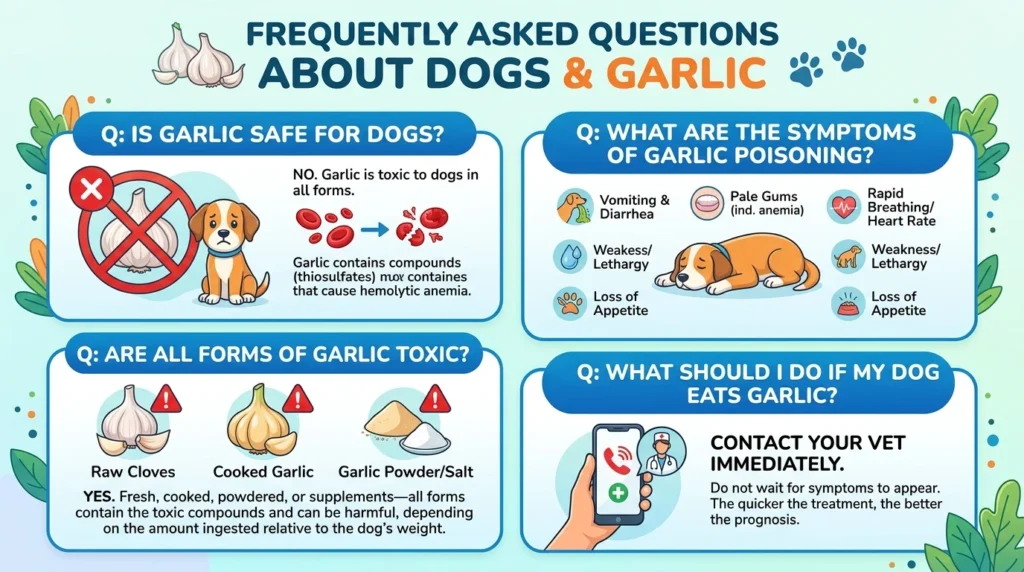
1. Can dogs eat garlic in any amount safely?
No, there is no safe amount of garlic for dogs. Even small quantities cause oxidative damage to red blood cells. Repeated small exposures cause cumulative harm over time. Therefore, garlic in any form fresh, cooked, powdered, or as an oil should be kept completely away from your dog. If your dog accidentally eats garlic, contact your vet immediately rather than waiting to see if symptoms develop.
2. My dog ate garlic bread. What should I do?
Call your vet right away. Garlic bread contains both garlic and butter, which adds fat-related concerns. Note the approximate amount your dog ate and when it happened. Your vet will assess the risk based on your dog’s weight and the estimated garlic content. Don’t wait for symptoms to appear; early intervention always produces better outcomes than reactive treatment after symptoms develop.
3. Is garlic more toxic to certain dog breeds?
Yes, Japanese breeds like Akitas and Shiba Inus appear more sensitive to garlic toxicity than other breeds. Their red blood cells have a different composition that makes them more vulnerable to oxidative damage from Allium plants. However, garlic is dangerous for all dog breeds. Therefore, no breed is “safe” when it comes to garlic consumption. Avoid it entirely regardless of your dog’s breed.
4. How long does garlic toxicity take to show symptoms in dogs?
Symptoms of garlic toxicity can appear anywhere from several hours to several days after ingestion. Early symptoms like vomiting and diarrhea may appear within hours. However, the more serious signs of hemolytic anemia pale gums, rapid breathing, and weakness typically develop 2 to 4 days after ingestion. Therefore, don’t assume your dog is fine because they seem normal immediately after eating garlic.
5. Can dogs eat garlic-flavored food if actual garlic isn’t listed?
No this is not safe either. “Garlic flavor” in processed foods often comes from real garlic or garlic derivatives. Also, “natural flavors” in ingredient lists sometimes include garlic without specifically naming it. Therefore, avoid giving your dog any food that mentions garlic flavor, garlic seasoning, or garlic extract in its ingredient list. When in doubt, don’t share it.
6. What foods are safe alternatives to garlic for flavoring dog food?
If you want to add flavor to your dog’s food, several safe options exist. Plain cooked chicken or beef broth (without garlic or onion) adds great palatability. Also, small amounts of plain cooked sweet potato, pumpkin puree, or cooked carrots make excellent food toppers. However, always introduce new foods gradually and consult your vet before making significant changes to your dog’s diet.
7. Is garlic in commercial dog food dangerous?
Some older commercial dog foods used trace amounts of garlic as a flavoring. Most reputable brands have removed it due to veterinary guidance. However, always check ingredient labels on commercial dog food, treats, and supplements. If you see garlic, garlic powder, or garlic extract listed, choose a different product. Also, report any concerns about commercial pet food ingredients to your vet.
Keep Your Dog Safe Act Fast, Always
So can dogs eat garlic ? Absolutely not. Garlic is genuinely toxic to dogs in all forms, at all amounts, prepared in any way. The damage it causes to red blood cells is real, cumulative, and potentially life-threatening without prompt treatment.
However, the good news is that most dogs recover fully when treated quickly. Therefore, knowing the signs of garlic toxicity and acting immediately makes all the difference. Remove garlic from your dog’s reach, check ingredient labels carefully, and never share restaurant food or heavily seasoned meals with your dog.
Your dog trusts you completely with their health and safety. Also, keeping that trust means knowing which everyday foods cause real harm and garlic is firmly on that list.