
Introduction
You just watched your dog do something absolutely baffling and honestly, a little gross. They walked right up to their own poop and ate it. You’re not alone in this moment of pure horror. Millions of dog owners experience exactly this.
So why do dogs eat poop ? Is it a health problem? A behavioral issue? Or just something dogs do that we humans find completely disgusting?
The good news is this behavior has real, explainable causes. Also, in many cases, it’s completely fixable. Whether your dog eats their own waste, another dog’s poop, or even cat feces from the litter box, there’s always a reason behind it.
In this guide, I’ll walk you through every cause from nutritional deficiencies to anxiety to plain old habits. Then I’ll give you proven, practical steps to stop it. By the end, you’ll understand your dog’s behavior far better, and you’ll know exactly what to do next. Let’s get into it.
Why Do Dogs Eat Poop? The Real Reasons Explained
It Has a Scientific Name
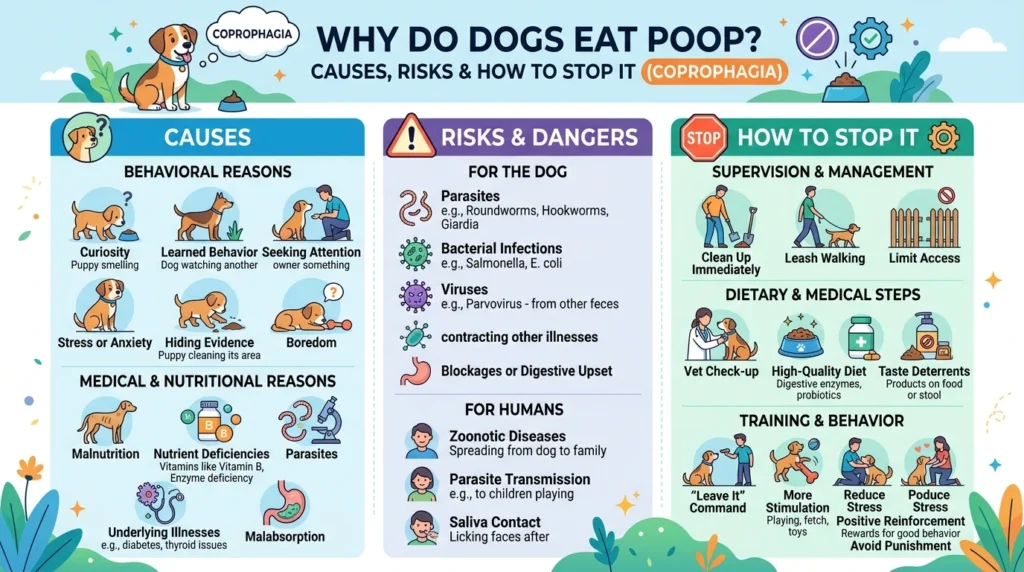
First, let’s get the technical term out of the way. The behavior of eating feces is called coprophagia. It sounds alarming but it’s actually one of the most commonly reported dog behavior issues that veterinarians discuss with pet owners.
Coprophagia happens in dogs of all ages, breeds, and sizes. However, puppies tend to do it more frequently than adult dogs. Also, female dogs are statistically more likely to engage in this behavior than males, according to research published in veterinary behavioral studies.
Understanding why dogs eat poop starts with recognizing that dogs don’t see the world the way we do. Their sense of smell is 10,000 to 100,000 times stronger than ours. Therefore, feces carries a wealth of information for them about diet, health, and other animals.
Medical Reasons Dogs Eat Poop
Sometimes the behavior signals a genuine health issue. Therefore, ruling out medical causes first is always the right approach. Here are the main medical reasons:
Nutritional Deficiency
- Dogs lacking key nutrients sometimes seek them in unconventional sources
- A zinc or B-vitamin deficiency can trigger poop-eating behavior
- Poor-quality dog food that lacks digestibility may leave nutrients unabsorbed and therefore present in feces
Enzyme Deficiency
- Dogs need digestive enzymes to properly break down food
- When enzymes are insufficient, undigested food passes into feces
- As a result, the stool smells and “tastes” like food to the dog
Parasites
- Intestinal parasites steal nutrients from your dog’s digestive system
- A nutrient-starved dog may turn to poop eating to compensate
- Therefore, regular deworming and fecal exams matter enormously
Malabsorption Conditions
- Conditions like exocrine pancreatic insufficiency (EPI) prevent proper nutrient absorption
- Dogs with EPI often eat poop because their bodies don’t absorb enough nutrition from regular food
- Always consult your vet if poop eating starts suddenly in an adult dog
Diabetes, Thyroid Issues, or Cushing’s Disease
- These conditions increase appetite dramatically
- As a result, affected dogs may eat anything available including feces
- A sudden onset of poop eating in an older dog always warrants a vet check
Behavioral Reasons Why Dogs Eat Poop
It’s Not Always a Health Problem
Medical causes explain some cases but behavioral reasons account for many others. Therefore, understanding the psychology behind this habit helps you address it more effectively.
The Main Behavioral Triggers
1. Learned Behavior From Puppyhood Mother dogs clean up after their puppies by eating their waste. This is completely normal maternal behavior. However, some puppies observe this and copy it. As a result, the habit can persist into adulthood if not addressed early.
2. Attention-Seeking Behavior Have you ever reacted loudly and dramatically when your dog ate poop? Many owners do it’s a natural response. However, dogs interpret any attention as reinforcement. Therefore, a dramatic reaction actually rewards the behavior and makes it more likely to happen again.
3. Anxiety and Stress Dogs under stress sometimes develop compulsive behaviors and poop eating is one of them. Also, dogs left alone for long periods may eat feces out of boredom or separation anxiety. Therefore, addressing underlying anxiety often resolves the behavior.
4. Confinement and Cleanliness Dogs kept in small spaces where they can’t avoid their waste sometimes eat it to keep their area clean. This behavior is especially common in dogs rescued from neglectful or hoarding situations. However, with proper space, routine, and training, it typically resolves over time.
5. Curiosity Especially in Puppies Puppies explore the world with their mouths. Therefore, poop eating in young puppies often comes from simple curiosity rather than any health or behavioral issue. Most puppies naturally grow out of it usually by six months of age.
6. Eating Cat Poop Specifically This deserves its own mention. Many dogs are obsessed with cat feces from litter boxes. Cat food is higher in protein than dog food. As a result, cat poop smells and tastes appealing to dogs in a way that their own waste might not. Therefore, keeping the litter box inaccessible is often the simplest solution to this specific problem.
Pro Tip: If your dog eats cat poop from the litter box, try a “top-entry” litter box that cats can access easily but dogs can’t. Also, placing the litter box in a room with a baby gate works well. Cats can jump over it, but most dogs can’t follow.
How to Stop Your Dog From Eating Poop: Step-by-Step
Proven Methods That Actually Work
Stopping this behavior requires patience and consistency. However, with the right approach, most dogs improve significantly within a few weeks. Follow these steps in order:
- Visit your vet first. Rule out all medical causes before trying behavioral solutions. A fecal exam, bloodwork, and nutritional assessment give you a clear picture of your dog’s health. Therefore, this step comes first always.
- Upgrade your dog’s diet. Switch to a high-quality dog food with named protein as the first ingredient. Also, ensure the food is age-appropriate and nutritionally complete. Better nutrition reduces the nutritional deficiency trigger significantly.
- Add digestive enzyme supplements. Enzyme supplements help dogs fully break down their food. As a result, the nutrients get absorbed properly and the feces becomes less nutritionally appealing. Ask your vet about appropriate enzyme products for your dog.
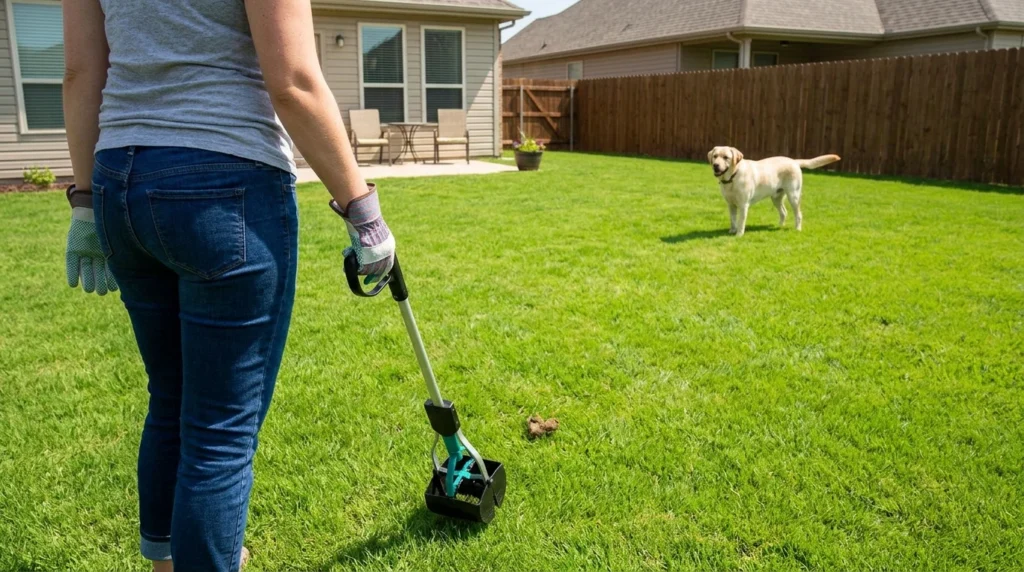
- Clean up immediately after every bathroom break. The simplest prevention is removing the temptation instantly. Therefore, take your dog outside on a leash, wait for them to go, and clean it up immediately before they can investigate it.
- Teach a strong “leave it” command. “Leave it” is one of the most valuable commands you can teach your dog. Practice it consistently in low-distraction environments first, then gradually apply it outdoors. Reward heavily with high-value treats when your dog responds correctly.
- Never punish the behavior dramatically. Punishing or reacting dramatically actually reinforces poop eating through negative attention. Therefore, stay calm, redirect with a treat or toy, and clean up without making a big scene.
- Address anxiety and boredom. Increase mental stimulation through puzzle feeders, interactive toys, and training sessions. Also, ensure your dog gets adequate daily exercise. A tired, mentally engaged dog is far less likely to engage in compulsive behaviors.
- Try taste-deterrent products. Products like For-Bid or CoproBan make feces taste unpleasant to dogs. However, results vary; they work well for some dogs and not at all for others. Therefore, use them as part of a broader strategy rather than as a standalone solution.
Comparing Common Solutions for Dogs That Eat Poop
Which Approach Works Best?
| Solution | Best For | Effectiveness | Time to See Results |
| Vet check + diet upgrade | Medical causes | Very High | 2–4 weeks |
| Enzyme supplements | Digestive deficiency | High | 2–3 weeks |
| Immediate cleanup routine | All dogs | Very High | Immediate |
| “Leave it” training | Behavioral habit | Very High | 2–6 weeks |
| Taste deterrents | Mild habit | Moderate | 1–2 weeks |
| Anxiety treatment | Stress-related | High | 4–8 weeks |
| Increased exercise | Boredom-related | High | 1–2 weeks |
| Baby gate/litter box access | Cat poop specifically | Very High | Immediate |
The Most Important Thing to Remember
No single solution works for every dog. Therefore, combining multiple approaches gives you the best chance of success. In my experience, the most effective combination is: vet check + diet upgrade + immediate cleanup + consistent “leave it” training. Together, these four steps resolve the majority of poop-eating cases within four to six weeks.
Warnings and Mistakes to Avoid
Mistake 1: Punishing Your Dog Harshly
Yelling, rubbing your dog’s nose in feces, or physically punishing them for eating poop doesn’t work. In fact, it makes the problem worse. Because dogs connect punishment to the immediate moment, not the earlier behavior they often just learn to eat poop more quickly or secretly. Therefore, positive redirection always outperforms punishment.
Mistake 2: Ignoring It and Hoping It Stops
Poop eating rarely resolves on its own in adult dogs. Therefore, ignoring the problem allows it to become a deeply ingrained habit that’s harder to break over time. Also, there are genuine health risks involved so addressing it promptly is important.
Health Risks of Coprophagia
This is important. Dogs that eat feces especially from other animals expose themselves to real health risks:
- Intestinal parasites worms and protozoa spread easily through feces
- Bacterial infections salmonella and E. coli can be present in feces
- Viral transmission parvovirus can survive in feces and infect unvaccinated dogs
- Toxin exposure feces from animals that received certain medications can be harmful
Therefore, keeping your dog’s vaccinations and parasite prevention up to date is especially critical if poop eating is an issue. Also, always consult your vet if you notice any changes in your dog’s health alongside this behavior.
Mistake 3: Using Deterrents Without Fixing the Root Cause
Taste deterrents can help but they don’t fix underlying nutritional deficiencies, anxiety, or boredom. Therefore, always identify and address the root cause first. Deterrents work best as short-term tools while you implement longer-term behavioral and dietary solutions.
Pro Tip: Keep a simple log for two weeks note when your dog eats poop, what they ate that day, their exercise level, and their general stress level. As a result, you’ll often spot a clear pattern that points directly to the underlying cause. This makes the solution much easier to target.
Frequently Asked Questions About Why Dogs Eat Poop
1. Why do dogs eat poop and is it normal?
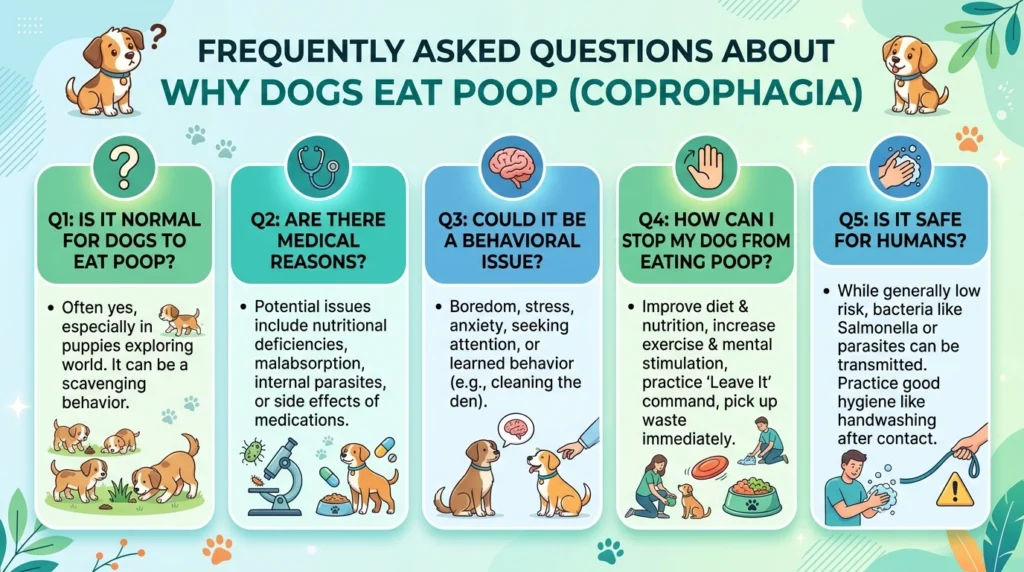
Yes, poop eating (coprophagia) is surprisingly common in dogs. Studies suggest that approximately 16% of dogs eat feces frequently, and up to 24% have done it at least once. Therefore, while it’s understandably gross to us, it’s a well-documented behavior in the canine world. However, “common” doesn’t mean you should ignore it. Because it carries health risks and often signals an underlying issue, it’s always worth investigating and addressing with your vet’s guidance.
2. Why do puppies eat poop more than adult dogs?
Puppies explore everything with their mouths including feces. Also, they often observe their mother cleaning up waste and simply mimic the behavior. In addition, young puppies haven’t yet developed the same “disgust” responses that adult dogs eventually learn. Therefore, puppy poop eating is usually temporary and resolves naturally by around six months of age especially with consistent cleanup routines and gentle redirection.
3. Is it dangerous for my dog to eat their own poop?
Eating their own fresh feces carries relatively low health risk compared to eating other animals’ waste. However, it’s still not without risk especially if your dog has an undetected parasitic infection, because they can re-infect themselves continuously through poop eating. Also, if your dog eats feces from other animals, they expose themselves to parasites, bacteria, and viruses that can cause serious illness. Therefore, always keep vaccinations and parasite prevention current, and consult your vet about any sudden behavior changes.
4. Does eating poop mean my dog is hungry?
Not necessarily but it can be a signal that something is nutritionally off. Dogs eating poor-quality food that lacks proper digestibility often pass nutrients unabsorbed in their feces. As a result, the stool still smells like food to them. Also, dogs with certain medical conditions like diabetes or EPI experience dramatically increased hunger and may eat feces as a result. Therefore, if your dog seems genuinely hungry all the time alongside poop eating, a vet visit and diet review are the right next steps.
5. How do I stop my dog from eating cat poop from the litter box?
This is one of the most common specific poop-eating issues. The most effective solutions include: moving the litter box to a room your dog can’t access, using a top-entry litter box, installing a baby gate that cats can jump over but dogs can’t, or using a covered litter box with an entry that cats fit through but dogs don’t. In addition, reinforcing a strong “leave it” command helps in situations where your dog gets access. Also, some owners find that keeping the litter box exceptionally clean, scooping multiple times daily reduces the appeal significantly.
6. Can vitamins or supplements really stop dogs from eating poop?
For some dogs, yes. When poop eating stems from a nutritional deficiency or enzyme insufficiency, supplements can make a meaningful difference. Digestive enzyme supplements help dogs absorb more nutrition from their food, making feces less appealing. Vitamin B supplementation addresses specific deficiency-related triggers. However, supplements work best alongside a high-quality diet not as a replacement for one. Therefore, consult your vet before adding supplements to confirm the right type and dosage for your dog’s specific needs.
7. When should I see a vet about my dog eating poop?
You should consult your vet if: the behavior starts suddenly in an adult dog with no prior history, your dog also shows signs of weight loss, increased thirst, vomiting, or diarrhea, the behavior continues despite consistent behavioral intervention for more than four to six weeks, or your dog eats feces from unknown animals regularly. Also, schedule a vet visit if your dog seems genuinely hungry all the time or loses weight despite eating normally. These signs can indicate a medical condition that needs prompt diagnosis and treatment.
You Can Solve This With the Right Approach
Why do dogs eat poop ? The honest answer is there are many reasons. Medical issues, behavioral habits, nutritional gaps, stress, and simple curiosity all play a role depending on the individual dog.
However, the important thing to remember is that this behavior is almost always addressable. Therefore, start with a vet visit to rule out medical causes. Then upgrade your dog’s nutrition, implement an immediate cleanup routine, and train a consistent “leave it” response.
Most dogs improve significantly within four to six weeks of consistent effort. Also, understanding why your dog does this makes the solution feel far less overwhelming. Your dog isn’t broken, they just need the right support.