
Introduction
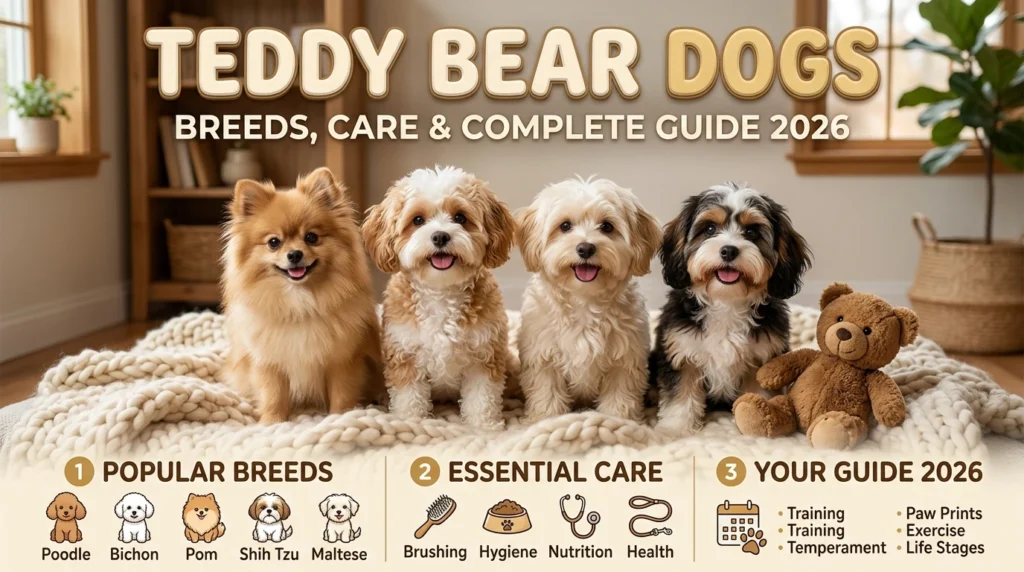
Some dogs don’t just look cute, they look like living stuffed animals. That’s exactly what a teddy bear dog is. Round face, button nose, fluffy soft coat, and big warm eyes that melt your heart instantly. No wonder these little dogs have become one of the most searched and most loved pets in the world.
However, “teddy bear dog” isn’t actually an official breed name. It’s a popular term used to describe several small, fluffy dogs that share that irresistible stuffed-animal appearance. Therefore, if you’re searching for a teddy bear dog, you have more options than you might realize.
In my experience, most people fall in love with the look first then quickly discover these dogs have equally wonderful personalities. They’re gentle, affectionate, and surprisingly easy to live with.
This guide covers everything you need to know. You’ll learn which breeds earn the teddy bear label, how to care for them, what to watch out for, and how to choose the right one for your home. Let’s get started.
What Exactly Is a Teddy Bear Dog?
The Origin of the Name
The term “teddy bear dog” became popular in the early 2000s. First, it described the Zuchon as a cross between a Shih Tzu and a Bichon Frise. However, the name quickly spread to describe any small, fluffy dog with round features and a soft, plush coat.
Today, several breeds and designer mixes carry this adorable label. Therefore, when someone says “teddy bear dog,” they could mean several different breeds depending on who you ask.
What Makes a Dog Look Like a Teddy Bear?
Here are the key physical traits that give these dogs their irresistible stuffed-animal appearance:
- Round, flat face wide set eyes and a short muzzle
- Large, dark eyes expressive and warm
- Soft, fluffy coat often wavy, curly, or silky
- Compact body small and proportionate
- Small rounded ears often hidden in fluffy fur
- Plush texture coat that feels like you’re hugging a real toy
In addition, many teddy bear dogs stay small their entire lives. As a result, they keep that puppy-like appearance well into adulthood which is a huge part of their appeal.
Most Popular Teddy Bear Dog Breeds
The Top Breeds That Earn This Adorable Title
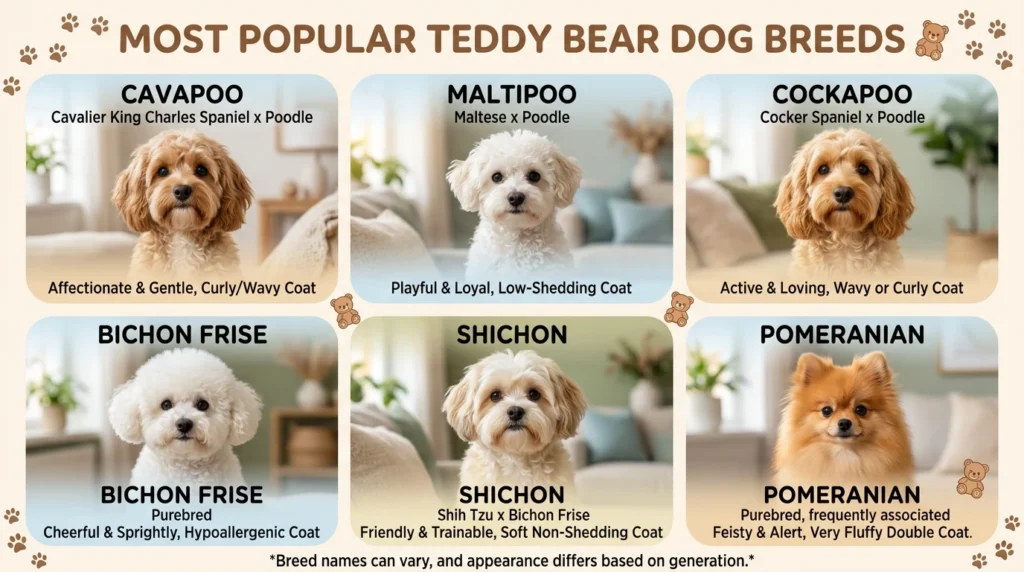
Not every fluffy small dog qualifies. However, these breeds consistently earn the teddy bear comparison and for very good reason.
1. Zuchon (Shih Tzu x Bichon Frise)
The Zuchon is widely considered the original teddy bear dog. This crossbreed combines the gentle Shih Tzu with the fluffy Bichon Frise. As a result, you get a soft, round, hypoallergenic little dog with a wonderfully calm temperament.
- Size: 8–25 pounds
- Coat: Soft, wavy, low-shedding
- Temperament: Gentle, loving, great with kids
- Lifespan: 12–15 years
2. Pomchi (Pomeranian x Chihuahua)
The Pomchi brings together the fluffy Pomeranian coat with the bold Chihuahua personality. Therefore, you get a tiny dog with a big attitude and an undeniably cuddly appearance.
- Size: 5–12 pounds
- Coat: Fluffy, thick double coat
- Temperament: Bold, loyal, spirited
- Lifespan: 12–15 years
3. Maltipoo (Maltese x Poodle)
Maltipoos are one of the most popular designer breeds in the world. Because they inherit the Poodle’s low-shedding coat, they’re an excellent choice for allergy sufferers. Also, their round, fluffy faces perfectly match the teddy bear description.
- Size: 5–20 pounds
- Coat: Soft, curly or wavy, low-shedding
- Temperament: Playful, affectionate, gentle
- Lifespan: 12–16 years
4. Shih Tzu
The purebred Shih Tzu is one of the original teddy bear dogs with no mixing required. Their flat face, large round eyes, and luxuriously soft coat make them one of the most visually striking small breeds anywhere.
- Size: 9–16 pounds
- Coat: Long, silky, low-shedding
- Temperament: Outgoing, affectionate, playful
- Lifespan: 10–16 years
5. Bichon Frise
The Bichon Frise looks like a fluffy white cloud with legs. Their powder-puff coat and cheerful round face make them a classic teddy bear dog. In addition, they’re hypoallergenic which makes them popular with allergy-prone families.
- Size: 12–18 pounds
- Coat: Curly, dense, hypoallergenic
- Temperament: Cheerful, gentle, sociable
- Lifespan: 12–15 years
6. Cavapoo (Cavalier King Charles Spaniel x Poodle)
Cavapoos combine the gentle Cavalier with the intelligent Poodle. Therefore, you get a wonderfully sweet dog with a soft, wavy coat and irresistibly round features. Also, they adapt easily to different living environments from apartments to family homes.
- Size: 9–25 pounds
- Coat: Wavy or curly, low-shedding
- Temperament: Sweet, gentle, eager to please
- Lifespan: 12–15 years
Teddy Bear Dog Breed Comparison Table
Side-by-Side Overview
| Breed | Size | Hypoallergenic | Energy Level | Kid-Friendly | Grooming Need |
| Zuchon | 8–25 lbs | Yes | Low-Mod | ⭐⭐⭐⭐⭐ | High |
| Pomchi | 5–12 lbs | No | Moderate | ⭐⭐⭐ | Medium |
| Maltipoo | 5–20 lbs | Yes | Moderate | ⭐⭐⭐⭐⭐ | High |
| Shih Tzu | 9–16 lbs | Partial | Low-Mod | ⭐⭐⭐⭐ | Very High |
| Bichon Frise | 12–18 lbs | Yes | Moderate | ⭐⭐⭐⭐⭐ | High |
| Cavapoo | 9–25 lbs | Yes | Moderate | ⭐⭐⭐⭐⭐ | Medium-High |
Which Teddy Bear Dog Is Right for You?
First, consider your lifestyle and living space. Then think about grooming commitment because all teddy bear dogs require regular grooming. For example, a Shih Tzu with a full coat needs daily brushing. However, a Maltipoo with a shorter trim needs far less daily maintenance.
Also, if allergies are a concern in your household, focus on the hypoallergenic options. The Maltipoo, Bichon Frise, and Cavapoo are your safest choices in that case.
How to Care for a Teddy Bear Dog: Step-by-Step Guide
Daily and Weekly Care Requirements
Caring for a teddy bear dog is genuinely rewarding. However, these fluffy little dogs do have specific needs that require consistent attention. Here’s exactly what you need to do:
- Brush their coat daily or every other day. Teddy bear dogs have soft, fluffy coats that tangle easily. Therefore, regular brushing prevents painful matting and keeps that plush appearance intact. Use a soft slicker brush and a metal comb for best results.
- Schedule professional grooming every 6–8 weeks. Because their coats grow continuously, professional trimming keeps them looking their best. Also, a groomer handles ear cleaning, nail trimming, and sanitary trimming all of which these dogs need regularly.
- Clean their eyes daily. Many teddy bear dogs have flat faces with prominent eyes. As a result, they’re prone to tear staining and eye discharge. Gently wipe the eye area with a damp cotton pad each morning to prevent staining and infection.
- Brush their teeth at least three times per week. Small breeds are especially prone to dental disease. Therefore, regular toothbrushing significantly reduces the risk of gum disease and tooth loss. Use dog-specific toothpaste, never human toothpaste.
- Exercise them for 20–30 minutes daily. Despite their small size, teddy bear dogs need daily activity. Short walks and indoor play sessions keep them mentally and physically healthy. However, avoid over-exercising flat-faced breeds like Shih Tzus in hot weather.
- Feed high-quality small breed dog food. Small dogs have fast metabolisms. Therefore, they need calorie-dense, nutrient-rich food formulated specifically for small breeds. Consult your vet about the best diet for your specific teddy bear dog’s age and health.
- Schedule vet check-ups twice yearly. Regular veterinary visits catch health issues early. Also, your vet can monitor breed-specific concerns like dental health, eye conditions, and joint issues that are common in small fluffy breeds.
Pro Tip: Ask your groomer to teach you the basic brushing technique for your specific teddy bear dog’s coat type. Thirty minutes of learning saves you hours of detangling later and your dog will genuinely enjoy the bonding time if you make brushing a calm, positive routine from puppyhood.
Common Mistakes New Teddy Bear Dog Owners Make
Mistake 1: Skipping Daily Grooming
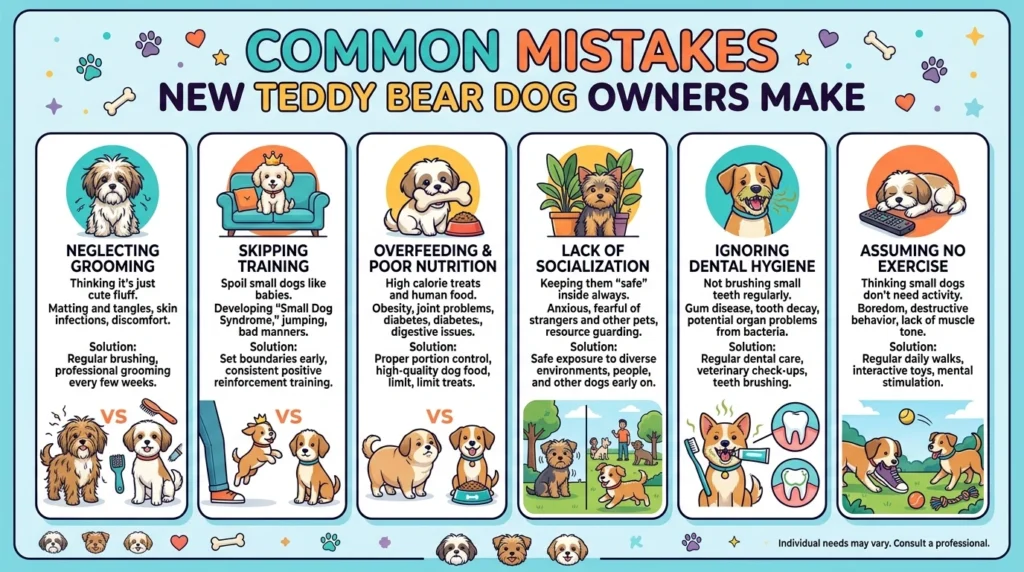
That gorgeous fluffy coat doesn’t maintain itself. Many new owners underestimate the grooming commitment. However, skipping even a few days of brushing creates painful mats especially behind the ears and under the legs. Therefore, build brushing into your daily routine from day one.
Mistake 2: Over-Protecting Them
Teddy bear dogs are small and adorable which makes owners want to carry them everywhere. However, this creates an anxious, over-dependent dog that struggles with separation and new experiences. Therefore, let your dog walk on their own, meet new people, and experience the world confidently from a young age.
Mistake 3: Skipping Training Because They’re Small
Small dogs need training just as much as large ones. In fact, under-trained small dogs often develop “small dog syndrome” snapping, barking, and demanding behavior. Therefore, start positive reinforcement training from puppyhood and stay consistent. A well-trained teddy bear dog is an absolute joy to live with.
Mistake 4: Ignoring Dental Health
Small breeds have crowded teeth in tiny jaws which creates serious dental disease risk. As a result, many small dogs lose teeth early and develop painful gum infections. Therefore, start brushing your dog’s teeth as a puppy and maintain that routine consistently. Also, ask your vet about professional dental cleanings as part of your annual care plan.
Mistake 5: Choosing Based on Looks Alone
These dogs are undeniably beautiful. However, their personality, energy level, and care needs vary significantly by breed. For example, a Pomchi has a bolder, more stubborn temperament than a gentle Cavapoo. Therefore, research the specific breed’s personality thoroughly before falling completely for the adorable face.
Pro Tip: Before buying a teddy bear dog from a breeder, visit the puppy with its mother present. A well-socialized puppy raised in a clean, loving environment will always have a better temperament foundation than one raised in isolation. Also, check that the breeder health-tests parent dogs especially for eye and heart conditions common in small breeds.
Frequently Asked Questions About Teddy Bear Dogs
1. What exactly is a teddy bear dog?
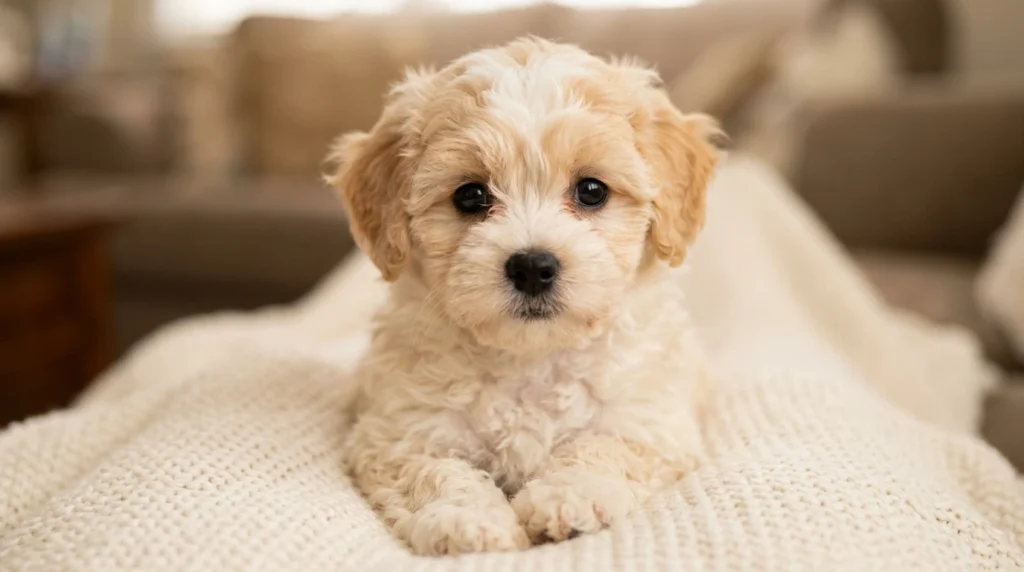
A teddy bear dog is not a single official breed. Instead, it’s a popular nickname for several small, fluffy dogs that share an irresistibly cute, stuffed-animal appearance. The term most commonly refers to the Zuchon (Shih Tzu x Bichon Frise), but it also describes Maltipoos, Cavapoos, Shih Tzus, Bichon Frises, and other small fluffy breeds. Therefore, when you search for a teddy bear dog, you’ll encounter several different breed options each with slightly different personalities and care needs.
2. How much does a teddy bear dog cost?
Teddy bear dogs vary significantly in price depending on the breed, breeder reputation, and location. Generally, expect to pay between $500 and $3,000 from a reputable breeder. Designer mixes like Maltipoos and Cavapoos often cost $1,500 to $3,000. However, adoption from a rescue organization is always worth exploring first because teddy bear type dogs do appear in shelters and rescues, often at a fraction of the purchase price.
3. Are teddy bear dogs good for families with children?
Yes, most teddy bear dogs are excellent family pets. Breeds like the Zuchon, Maltipoo, Bichon Frise, and Cavapoo are all known for their gentle, patient temperaments with children. However, because of their small size, always supervise interactions between teddy bear dogs and very young children. Accidental rough handling can injure a small dog and even the gentlest dog may nip if it feels frightened or hurt.
4. Do teddy bear dogs shed a lot?
Most teddy bear dogs are low-shedding and several are considered hypoallergenic. The Maltipoo, Bichon Frise, Cavapoo, and Zuchon all shed minimally because of their Poodle or Bichon heritage. However, no dog is completely allergen-free. Therefore, if allergies are a serious concern, spend time with the specific breed before committing. Also, consult your doctor about allergy management strategies alongside choosing a low-shedding breed.
5. How long do teddy bear dogs live?
Teddy bear dogs enjoy relatively long lifespans compared to larger breeds. Most live between 12 and 16 years with good care. The Maltese and Bichon Frise regularly reach 14 to 16 years. Shih Tzus typically live 10 to 16 years. Therefore, choosing a teddy bear dog means committing to over a decade of companionship which is a beautiful, long-term relationship worth planning and preparing for thoroughly.
6. How often do teddy bear dogs need grooming?
Teddy bear dogs need professional grooming every 6 to 8 weeks without exception. In addition, daily or every-other-day brushing at home prevents matting between grooming appointments. Their coats grow continuously, so skipping professional grooming causes the coat to become uncomfortably long and heavily matted. Also, regular grooming appointments include nail trimming, ear cleaning, and eye area maintenance all of which are essential for small fluffy breeds.
7. Are teddy bear dogs easy to train?
Most teddy bear dogs are moderately easy to train because they’re people-pleasers by nature. However, some like the Shih Tzu and Pomchi have a stubborn streak that requires extra patience. Therefore, use positive reinforcement consistently and keep training sessions short and fun. Also, start socialization and basic commands as early as eight weeks old. In my experience, teddy bear dogs that receive consistent early training become wonderfully well-mannered companions that are an absolute pleasure to take anywhere.
Your Perfect Fluffy Companion Awaits
The teddy bear dog combines extraordinary cuteness with a genuinely warm, loving personality. Whether you choose a Zuchon, a Maltipoo, a Cavapoo, or a classic Shih Tzu, you’re bringing home a dog that will turn heads everywhere you go and melt your heart every single day.
However, remember that the adorable appearance comes with real grooming commitment, consistent training, and devoted daily care. Therefore, go in fully prepared and you’ll have one of the most rewarding dog ownership experiences imaginable.
Research your preferred breed thoroughly, find a reputable breeder or rescue, consult your vet early, and enjoy every fluffy, snuggly, heart-warming moment with your new teddy bear dog.