
Introduction
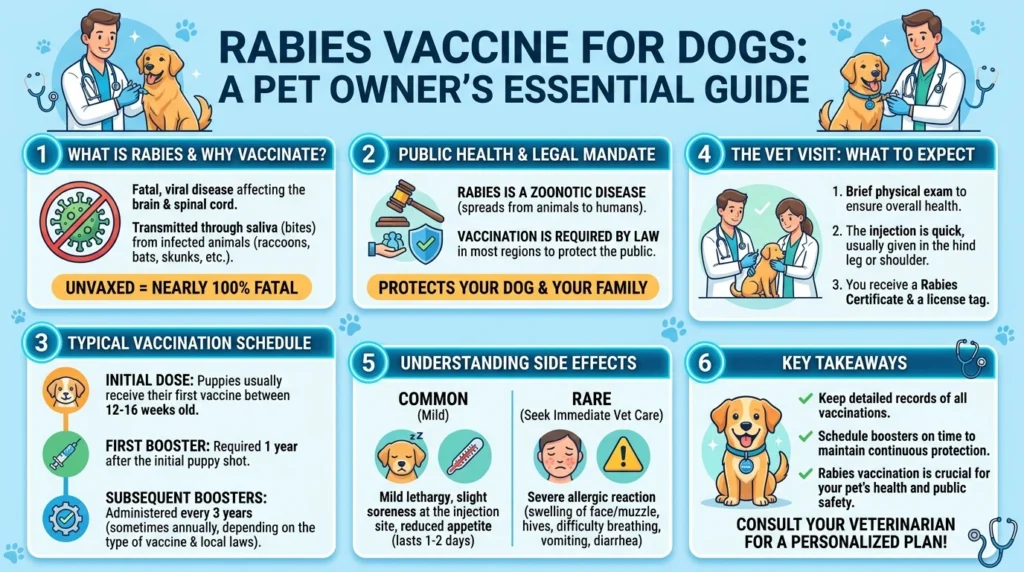
The rabies vaccine for dogs is one of the most important health decisions you’ll ever make for your pet. Rabies is a deadly viral disease. It affects the brain and nervous system and it has no cure once symptoms appear. That’s a frightening fact every dog owner needs to understand clearly.
Here’s the reassuring part, though. The rabies vaccine for dogs is highly effective, widely available, and required by law in most states across the US. One simple injection protects your dog and your entire family from a disease that’s 100% fatal once it takes hold.
In my experience, many dog owners feel anxious about vaccines in general. They worry about side effects, timing, and cost. Those are all valid concerns and this guide addresses every single one of them honestly.
By the end, you’ll know exactly when to vaccinate, what to expect afterward, how much it costs, and what warning signs to watch for. Let’s make sure your dog stays fully protected.
What Is the Rabies Vaccine for Dogs and Why Does It Matter?
Understanding Rabies in Dogs
Rabies is a viral disease caused by the Lyssavirus. It spreads through the saliva of an infected animal most commonly through a bite wound. Once the virus enters the body, it travels along nerve pathways toward the brain. As a result, it causes severe neurological damage and is fatal in virtually all cases once clinical signs appear.
Dogs can contract rabies from infected wildlife including raccoons, bats, foxes, and skunks. Therefore, even dogs that spend most of their time indoors carry some level of risk. A bat entering through an open window is all it takes.
Why the Rabies Vaccine Is Non-Negotiable
The rabies vaccine for dogs isn’t just a health recommendation. It’s a legal requirement in most US states, many countries worldwide, and virtually every jurisdiction where dogs are kept as pets. Here’s why this matters so much:
- Rabies is a zoonotic disease it spreads from animals to humans
- Unvaccinated dogs that bite a person trigger expensive quarantine protocols
- Vaccinated dogs that bite someone face much simpler, less stressful protocols
- Traveling with dogs across state or international borders requires current rabies vaccination proof
- Boarding facilities and groomers typically require proof of rabies vaccination
Also, beyond legal requirements, protecting your dog means protecting your family. Children are particularly vulnerable to animal bites. Therefore, keeping your dog vaccinated is one of the most responsible things you can do as a pet owner.
Rabies Vaccine Schedule for Dogs: When and How Often
The Standard Vaccination Timeline
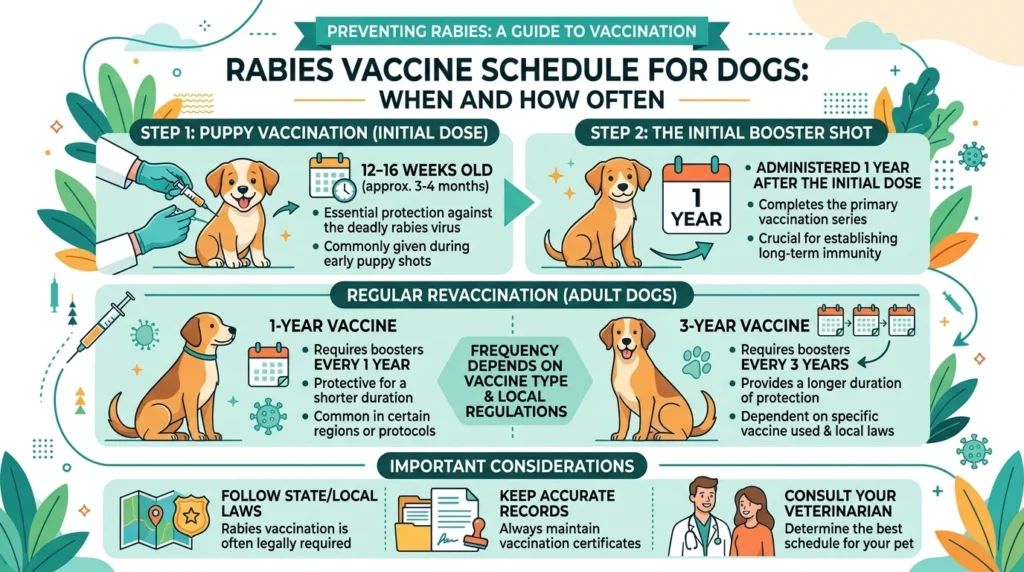
Understanding the rabies vaccine schedule helps you stay organized and compliant. Here’s the standard timeline most vets follow:
- First vaccine: Given at 12–16 weeks of age (puppy’s first rabies shot)
- Booster shot: Given 1 year after the initial vaccine
- Ongoing boosters: Either every 1 year or every 3 years depending on the vaccine type used and local legal requirements
1-Year vs. 3-Year Rabies Vaccine
Ever wondered about the difference between a 1-year and 3-year rabies vaccine? Here’s the simple breakdown:
| Feature | 1-Year Vaccine | 3-Year Vaccine |
| Frequency | Annual | Every 3 years |
| Cost per shot | Lower | Slightly higher |
| Legal status | Accepted everywhere | Accepted in most areas |
| Immunity level | Equally effective | Equally effective |
| Best for | Puppies (first booster) | Adult dogs ongoing |
Both vaccine types provide equally strong protection. However, the 3-year vaccine offers the convenience of less frequent vet visits and often lower overall cost over time. In addition, most adult dogs transition to the 3-year vaccine after completing their initial series.
Puppy Vaccination Timeline at a Glance
Here’s a complete first-year vaccination overview for puppies:
- 6–8 weeks Distemper, parvovirus (not rabies yet)
- 10–12 weeks DHPP combination vaccine booster
- 12–16 weeks First rabies vaccine given here
- 14–16 weeks Final DHPP booster
- 12–16 months Rabies booster (1 year after first shot)
- Every 1–3 years Ongoing rabies boosters throughout life
Pro Tip: Keep a dedicated health record book for your dog. Record every vaccine date, lot number, and the next due date. This simple habit saves enormous stress when boarding facilities, groomers, or border crossings request vaccination records on short notice.
Side Effects of the Rabies Vaccine for Dogs: What to Expect
Normal Side Effects (Nothing to Worry About)
Most dogs experience mild, short-lived reactions after the rabies vaccine. These reactions show your dog’s immune system is responding correctly. Therefore, don’t panic if you notice any of these normal signs:
- Mild soreness at the injection site lasts 1–2 days
- Slight lethargy your dog may seem tired for 24–48 hours
- Reduced appetite a day of lower interest in food is normal
- Low-grade fever mild temperature increase for 24 hours
- Small lump at injection site usually resolves within a few weeks
These reactions are all normal and temporary. However, always monitor your dog for 30–60 minutes after vaccination at the vet clinic. Most serious reactions if they occur appear within this window.
Rare but Serious Reactions to Watch For
A small number of dogs experience more significant reactions. These are rare but knowing what to watch for is important. Contact your vet immediately if you notice:
- Facial swelling or hives allergic reaction signs
- Vomiting or diarrhea within hours of vaccination
- Difficulty breathing seek emergency vet care immediately
- Collapse or extreme weakness emergency situation
- Persistent swelling at the injection site lasting more than 3 weeks
In addition, a very rare condition called Vaccine-Associated Sarcoma (VAS) can develop at injection sites in some animals. Therefore, always report any persistent lumps at vaccine sites to your vet even weeks after vaccination.
What to Do After the Rabies Vaccine
After your dog receives the rabies vaccine, follow these simple steps:
- Rest your dog for the remainder of the day
- Skip vigorous exercise for 24 hours
- Monitor the injection site for the first 48 hours
- Offer fresh water and a light meal if appetite is reduced
- Call your vet if you have any concerns no question is too small
How Much Does the Rabies Vaccine for Dogs Cost?
Typical Cost Breakdown
Cost is one of the most common questions dog owners ask. Here’s what you can typically expect to pay in the US:
| Setting | Approximate Cost |
| Private veterinary clinic | $15 – $35 per vaccine |
| Low-cost vaccine clinic | $5 – $15 per vaccine |
| Animal shelter vaccination event | Free – $10 |
| Mobile vet clinic | $10 – $25 |
| Combined vet visit with exam | $50 – $100 total |
How to Save Money Without Cutting Corners
Budget matters but your dog’s protection doesn’t have to be expensive. Here are smart ways to manage costs:
- Low-cost clinics many pet supply stores like PetSmart and Petco host regular low-cost vaccine events
- Humane societies many offer affordable vaccination services to the public
- Vaccine packages ask your vet about bundled vaccine packages that reduce per-vaccine cost
- Pet insurance some plans cover routine vaccinations as part of wellness coverage
However, never skip the rabies vaccine to save money. The legal consequences of an unvaccinated dog incident including quarantine fees and liability far exceed the cost of the vaccine itself.
Common Mistakes to Avoid With the Rabies Vaccine for Dogs
Mistake 1: Missing the Booster Shot
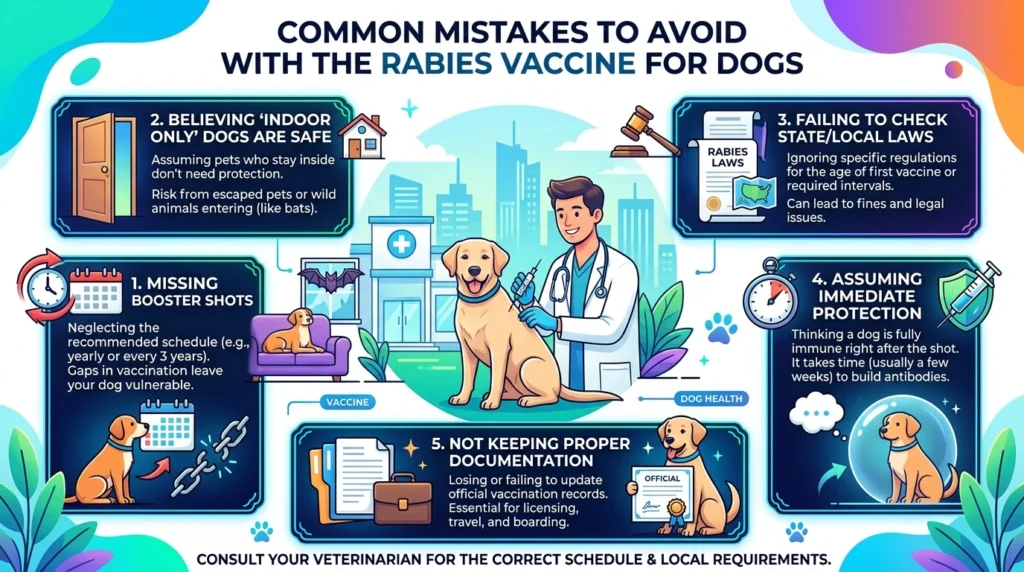
The first rabies vaccine starts protection. However, the booster given one year later solidifies long-term immunity. Missing this booster resets your dog’s legal vaccination status even if only a few weeks late. Therefore, set reminders well in advance and schedule the appointment early.
Mistake 2: Assuming Indoor Dogs Don’t Need It
Many owners of strictly indoor dogs skip the rabies vaccine. However, this is a serious mistake. Wildlife can enter homes unexpectedly. A bat, mouse, or escaped neighborhood animal can expose an indoor dog just as easily as an outdoor one. Also, most states legally require the vaccine regardless of your dog’s indoor or outdoor status.
Mistake 3: Vaccinating a Sick Dog
Never vaccinate a dog that’s currently ill or on immunosuppressive medication. The immune system needs to be healthy to respond correctly to the vaccine. Therefore, always inform your vet about any current health issues or medications before vaccination day. Your vet will advise the safest timing.
Mistake 4: Losing the Vaccination Certificate
Your dog’s rabies certificate is a legal document. Losing it creates real problems especially during travel, boarding, or if your dog bites someone. Therefore, keep digital copies of all vaccination records and store the originals in a secure, easily accessible location.
Mistake 5: Skipping the Vet Exam Before Vaccination
Some low-cost clinics vaccinate without a prior health exam. However, a quick health check before vaccination confirms your dog is well enough to receive the vaccine safely. Therefore, whenever possible, combine vaccination with a full wellness exam especially for puppies and senior dogs.
Pro Tip: Ask your vet to microchip your dog at the same time as the rabies vaccine. Both procedures happen on the same visit, reducing stress for your dog. Also, microchipping ensures your dog can always be identified and that their vaccine records can be linked to them permanently.
Frequently Asked Questions About the Rabies Vaccine for Dogs
1. At what age should puppies get the rabies vaccine for dogs?
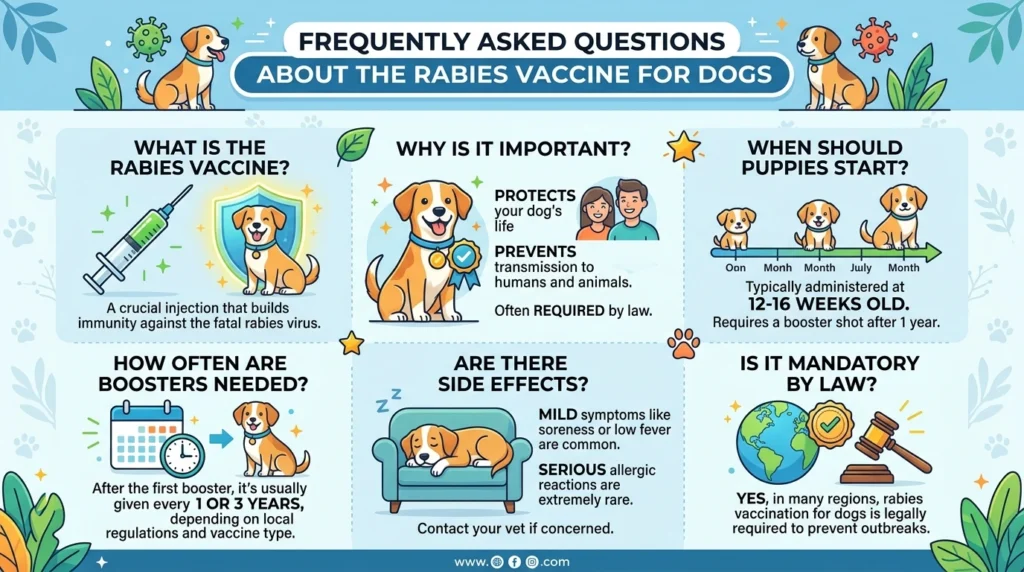
Puppies should receive their first rabies vaccine between 12 and 16 weeks of age. Most veterinarians give it at the 16-week visit after the core puppy vaccine series is complete. Then, a booster follows exactly one year later. After that, your dog moves to either an annual or 3-year booster schedule, depending on local laws and the vaccine type your vet uses. Always follow your vet’s specific recommendation for your puppy’s individual needs.
2. Is the rabies vaccine required by law for dogs?
Yes, in the vast majority of US states and many countries worldwide, the rabies vaccine for dogs is legally required. The specific requirements vary by state and county including which vaccine type, how often boosters are needed, and what documentation you must carry. Therefore, check your local regulations and always keep your dog’s vaccine certificate current. An unvaccinated dog that bites a person can trigger quarantine requirements, significant fines, and serious legal liability.
3. Can the rabies vaccine make my dog sick?
Mild reactions like tiredness, reduced appetite, and slight soreness at the injection site are common and temporary. However, serious reactions are rare affecting a very small percentage of vaccinated dogs. Signs of a serious reaction include facial swelling, difficulty breathing, vomiting, or collapse. Therefore, always stay near your vet clinic for 30–60 minutes after vaccination and monitor your dog closely for the first 24 hours. Contact your vet immediately if you notice any concerning symptoms.
4. How long does the rabies vaccine protect my dog?
The duration of protection depends on the vaccine type used. A 1-year rabies vaccine provides immunity that legally requires renewal annually. A 3-year rabies vaccine provides immunity recognized for three years in most jurisdictions. However, the actual biological immunity may last longer than the legal requirement. Therefore, follow your vet’s schedule and local legal requirements, not just the vaccine label to ensure your dog stays both protected and legally compliant.
5. What happens if my dog’s rabies vaccine expires?
If your dog’s rabies vaccine lapses, they’re technically considered unvaccinated from a legal standpoint even if only a few days overdue. As a result, if your dog bites someone or is bitten by a potentially rabid animal, the response from animal control authorities becomes significantly more complicated and expensive. Therefore, schedule boosters well before the expiration date ideally 2–4 weeks early to avoid any lapse in protection or legal coverage.
6. Can older or senior dogs still receive the rabies vaccine?
Yes senior dogs can and should continue receiving the rabies vaccine unless a veterinarian identifies a specific medical reason to exempt them. Some states allow medical exemptions for dogs with documented health conditions that make vaccination risky. However, these exemptions require formal veterinary documentation and must be approved by local animal control authorities. Always consult your vet about the safest vaccination approach for your senior dog’s specific health situation.
7. Does the rabies vaccine protect humans too?
The rabies vaccine for dogs doesn’t directly protect humans but it absolutely protects humans indirectly. When your dog is vaccinated, they can’t contract or spread rabies. Therefore, your family, neighbors, and community are all safer. This is why rabies vaccination for dogs is considered a major public health measure worldwide, not just a personal pet health decision. Vaccinating your dog is one of the most community-minded health choices you can make as a pet owner.
Protect Your Dog and Your Family Starting Today
The rabies vaccine for dogs is simple, affordable, and genuinely life-saving. It protects your dog from a disease with no cure. It protects your family from one of the most dangerous zoonotic viruses in the world. Also, it keeps you legally compliant and gives you complete peace of mind.
Therefore, if your dog’s rabies vaccination is overdue or if you have a new puppy approaching 12 weeks of age, schedule that vet appointment today. Don’t wait. The vaccine takes minutes. The protection lasts years.
Your dog trusts you completely with their health. Keeping the rabies vaccine current is one of the simplest and most important ways to honor that trust every single year.