
Introduction
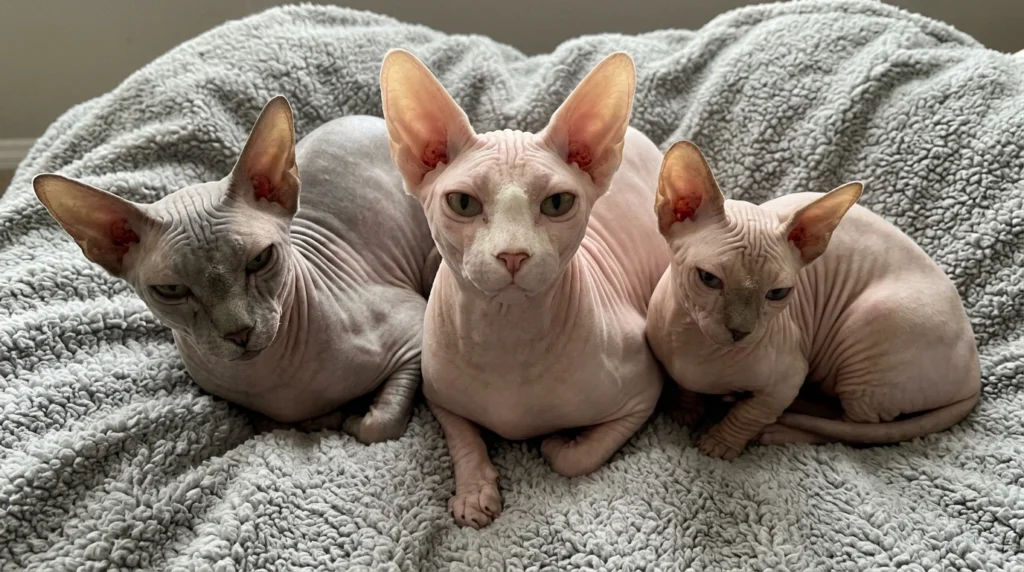
Have you ever seen a hairless cat for the first time and felt genuinely fascinated, maybe even a little unsure what to think? You’re not alone. These remarkable cats spark strong reactions everywhere they go. Some people find them alien and unusual. Others fall completely in love at first sight.
The hairless cat is one of the most unique and misunderstood companions in the cat world. Many pet owners don’t realize that hairless cats aren’t actually completely bald. They’re also not cold, unfriendly, or fragile despite what their appearance might suggest.
In my experience, hairless cat owners are among the most devoted cat people you’ll ever meet. Once you understand this breed, it’s easy to see why. These cats are warm literally and emotionally. They bond deeply, crave human contact, and bring extraordinary personality to every household they join.
This guide covers everything honestly: breeds, care, health, costs, and common mistakes. Let’s explore the fascinating world of hairless cats together.
Quick Answer
A hairless cat is a domestic cat with little to no fur due to a natural genetic mutation. The most well-known hairless breed is the Sphynx. Despite their unusual appearance, hairless cats are warm, affectionate, and highly social. They require regular bathing, skin care, and protection from temperature extremes.
Key Takeaways
- Hairless cats are not truly bald most have fine downy fuzz that’s nearly invisible
- The Sphynx is the most popular hairless cat breed worldwide
- Hairless cats feel warm and suede-like to the touch not cold or clammy
- They need weekly bathing because skin oils build up without fur to absorb them
- Hairless cats are highly social and don’t tolerate being alone well
- They’re not hypoallergenic they still produce the Fel d 1 protein that triggers allergies
What Is a Hairless Cat? Breeds and Origins
A hairless cat is any domestic cat that carries a genetic mutation reducing or eliminating normal fur growth. Several distinct hairless breeds exist, each with unique origins and characteristics. The Sphynx is the most recognized, but it’s far from the only option.
The Main Hairless Cat Breeds
Here’s a complete overview of the most recognized hairless cat breeds:
| Breed | Origin | Coat Level | Body Type | Temperament |
| Sphynx | Canada, 1966 | Nearly hairless | Medium, muscular | Very social, playful |
| Peterbald | Russia, 1994 | Varies (hairless to velour) | Slim, elegant | Active, affectionate |
| Donskoy | Russia, 1987 | Varies (rubber to velour) | Medium, muscular | Curious, friendly |
| Bambino | USA, 2005 | Nearly hairless | Small, short legs | Playful, gentle |
| Elf Cat | USA, 2004 | Nearly hairless | Medium, curled ears | Bold, loving |
| Ukrainian Levkoy | Ukraine, 2004 | Nearly hairless | Slim, folded ears | Calm, social |
How Did Hairless Cats Come to Exist?
The Sphynx breed began with a single hairless kitten named Prune, born to a domestic cat in Toronto, Canada in 1966. This happened because of a natural, spontaneous genetic mutation not human manipulation. Therefore, breeders recognized the unique opportunity and began selectively breeding hairless cats to establish a consistent breed.
Similarly, the Donskoy and Peterbald breeds emerged from separate natural mutations in Russia during the 1980s and 1990s. As a result, each hairless breed carries slightly different genetic backgrounds and physical characteristics despite their shared lack of fur.
What Is It Like to Own a Hairless Cat?
Owning a hairless cat is a genuinely unique experience. Their personality, physical feel, and daily care requirements differ significantly from any other cat breed you might have owned before.
Hairless Cat Personality and Temperament
Hairless cats, especially Sphynx cats, are famous for their extraordinary social personalities. They consistently rank among the most people-oriented cat breeds in the world.
Hairless cats typically:
- Seek body warmth constantly they love sleeping under blankets and pressing against humans
- Follow their owners everywhere earning the Sphynx the nickname “dog-cat”
- Greet visitors enthusiastically they rarely hide from strangers
- Demand attention actively they’ll tap your hand, headbutt you, and vocalize clearly
- Play energetically they remain kitten-like in their playfulness well into adulthood
- Bond deeply with all family members including children
However, this sociability creates a real need for the company. Hairless cats develop stress and anxiety when left alone for extended periods. Therefore, households where someone is home regularly or where a companion pet provides company suit hairless cats far better than single-person, full-time-working households.
What Does a Hairless Cat Feel Like?
This question comes up constantly and the answer surprises most people. Hairless cats feel warm, soft, and slightly suede-like to the touch. Because they lack fur to insulate their skin, their body temperature feels noticeably warm against your hands.
Also, their skin has a slightly textured quality from fine, nearly invisible peach fuzz that most hairless breeds carry. Therefore, running your hand over a Sphynx feels more like touching warm chamois leather than bare human skin.
Pro Tip: If you’re considering a hairless cat, visit a breeder or rescue organization and physically handle one before deciding. Because their feel and energy are so different from furred cats, the in-person experience tells you far more than any photograph or description ever could.
How to Care for a Hairless Cat: Complete Step-by-Step Guide
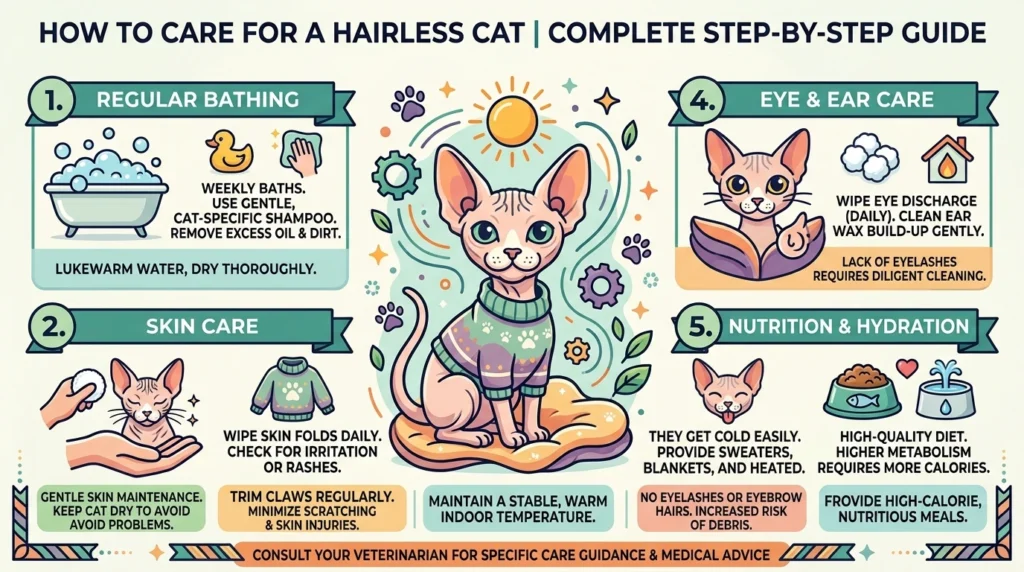
Hairless cat care differs significantly from caring for a typical domestic cat. Their skin requires regular attention, and their sensitivity to temperature demands specific environmental management.
Step-by-Step Hairless Cat Care Guide
- Bathe your cat weekly. This is the most important and most surprising care requirement. Because hairless cats lack fur to absorb natural skin oils, those oils build up on the skin and create a sticky, dirty residue. Therefore, weekly baths with a gentle, cat-safe shampoo are essential, not optional.
- Clean the ears weekly. Hairless cats produce more ear wax than furred cats. Also, their large, open ears accumulate debris faster without protective fur at the ear opening. Clean ears weekly with a vet-approved ear cleanser and soft cotton balls.
- Protect from sun exposure. Hairless cats can genuinely sunburn. Therefore, keep them away from direct sunlight for extended periods. If your cat loves window spots, consider UV-filtering window film. Also, ask your vet about pet-safe sunscreen for cats with significant sun exposure.
- Maintain a warm indoor temperature. Hairless cats need ambient temperatures between 68–80°F (20–27°C) to stay comfortable. Because they can’t regulate body heat through fur, they get cold quickly. Provide heated cat beds, blankets, and warm sleeping spots throughout your home.
- Feed a high-quality, calorie-appropriate diet. Hairless cats have slightly higher metabolisms than average because their bodies work harder to maintain core temperature. Therefore, they often need slightly more food than a similarly sized furred cat. Consult your vet about appropriate caloric intake for your specific cat.
- Schedule regular veterinary check-ups. Sphynx cats in particular carry a genetic predisposition to hypertrophic cardiomyopathy (HCM) , a serious heart condition. Therefore, annual cardiac screening is essential. Also, ask your vet about regular dental care, as hairless breeds can develop dental disease.
- Wipe skin folds and nail beds regularly. Hairless cats with significant skin folds collect dirt and oil in those creases. Also, their nail beds accumulate a dark waxy substance that needs gentle cleaning every 1–2 weeks.
Weekly Hairless Cat Care Checklist
| Task | Frequency | Difficulty |
| Full body bath | Weekly | Moderate |
| Ear cleaning | Weekly | Moderate |
| Nail bed cleaning | Weekly | Easy |
| Nail trimming | Every 2–3 weeks | Moderate |
| Skin fold wiping | Every 2–3 days | Easy |
| Teeth brushing | 2–3 times weekly | Moderate |
Hairless Cat Health: What Every Owner Needs to Know
Hairless cats are generally healthy and active but they carry specific health vulnerabilities that every owner should understand before adopting.
Key Health Concerns for Hairless Cats
Hypertrophic Cardiomyopathy (HCM)
HCM is the most serious health concern in the Sphynx breed specifically. It causes thickening of the heart muscle and can lead to heart failure if undetected. Therefore, annual echocardiograms are strongly recommended for Sphynx cats especially from age 2 onward. Always ask breeders for HCM screening results for both parents before purchasing a kitten.
Skin Conditions
Without fur protection, hairless cat skin is more vulnerable to:
- Sunburn from UV exposure
- Skin infections in deep folds or wrinkles
- Acne around the chin and mouth
- Urticaria pigmentosa a rare skin condition causing crusty lesions
Temperature Sensitivity
Hairless cats cannot regulate body temperature as effectively as furred cats. Therefore, extreme cold or heat poses genuine risks. Keep indoor temperatures consistent, and never leave a hairless cat in a cold car or unheated space.
Dental Disease
Many hairless breeds show higher rates of dental disease than average. Therefore, establish a dental care routine early and schedule professional dental cleanings as your vet recommends.
Common Mistakes Hairless Cat Owners Make
Mistake 1: Skipping Weekly Baths
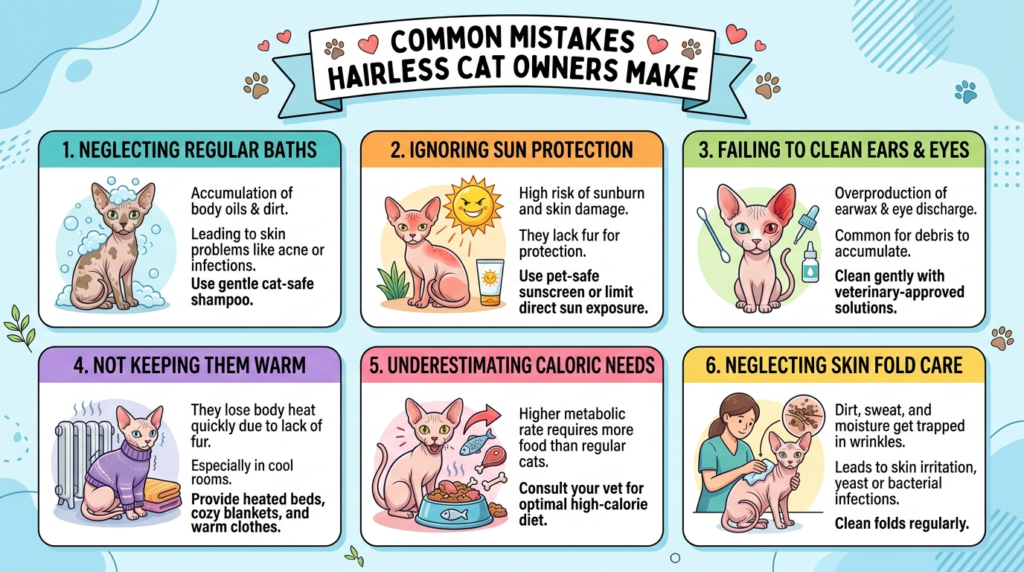
A simple mistake I often see is owners who bathe their hairless cat once a month or less. Because skin oils build up rapidly without fur, infrequent bathing causes skin problems, odor, and discomfort. Therefore, weekly bathing is genuinely non-negotiable for hairless cat health and comfort.
Mistake 2: Assuming They’re Hypoallergenic
This is one of the most widespread myths about hairless cats. Many people adopt them specifically because they believe hairless means allergy-free. However, cat allergies primarily react to the Fel d 1 protein found in cat saliva and skin secretions, not fur itself. Therefore, hairless cats still trigger allergies in most cat-sensitive people. If allergies are your concern, spend time with a hairless cat before adopting and consult your doctor or allergist first.
Mistake 3: Allowing Too Much Sun Exposure
Because their skin is completely unprotected, hairless cats can sunburn in as little as 20–30 minutes of direct sunlight. As a result, windows that your cat loves lounging in can become a genuine health hazard. Therefore, use UV-blocking window film on sunny windows, or limit your cat’s access to direct sun exposure during peak hours.
Hairless cats are deeply social animals. Therefore, leaving them alone for 8–10 hours regularly causes real stress and behavioral problems. A simple mistake I often see is owners adopting a single hairless cat without realizing how much company these cats genuinely need. Consider adopting in pairs, or ensure a family member is home during the day.
Mistake 5: Buying From Unregistered Breeders
Because hairless cats are unusual and in demand, unscrupulous breeders exploit that interest. As a result, buyers sometimes purchase kittens without proper health screenings particularly for HCM. Therefore, always buy from a TICA or CFA registered breeder who provides cardiac screening results for both parents. Also, rescue organizations sometimes have hairless cats available at significantly lower costs.
Pro Tip: When bathing your hairless cat, use lukewarm not hot water, and a gentle, fragrance-free shampoo formulated for cats or sensitive human skin. Also, have a warm towel ready immediately after the bath. Because hairless cats lose body heat rapidly when wet, quick drying and immediate warmth prevent post-bath chilling.
Frequently Asked Questions About the Hairless Cat
1. Are hairless cats really hairless?
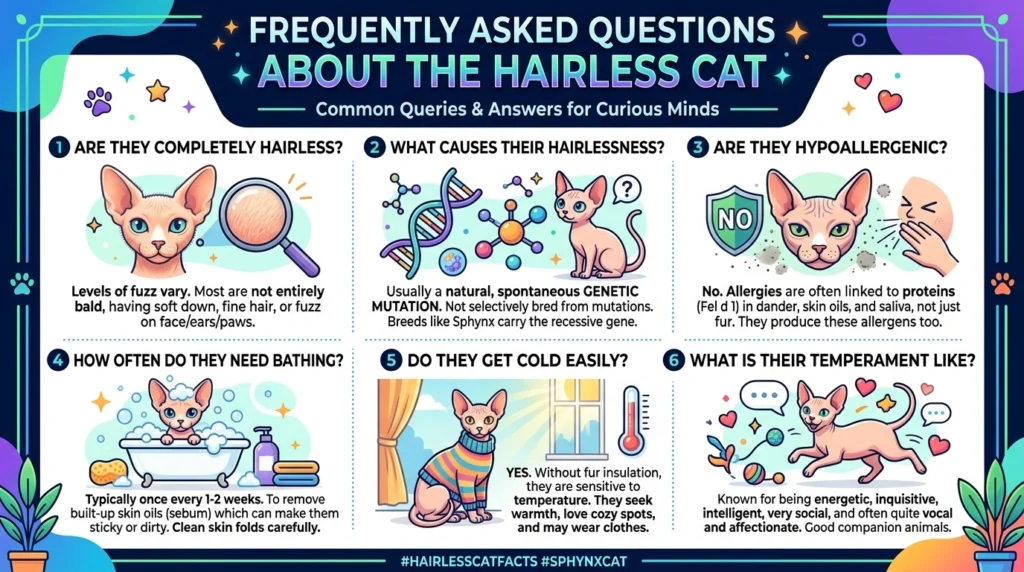
Not completely, most hairless cats have a very fine layer of peach fuzz covering their body that’s nearly invisible to the eye but detectable by touch. The Sphynx, for example, feels like warm suede rather than completely bare skin. However, some hairless cats, particularly certain Donskoy variations, are completely smooth with no detectable fuzz at all. The degree of hairlessness varies by breed, individual genetics, and sometimes by season, as some cats grow slightly more fuzz during colder months. Therefore, “hairless” is technically a simplification but it accurately describes the visual appearance of these breeds compared to standard domestic cats.
2. Do hairless cats get cold easily?
Yes, hairless cats are significantly more sensitive to cold than furred breeds. Because they lack the insulating layer of fur that other cats use to maintain body temperature, they rely heavily on ambient warmth and body contact. Most hairless cats prefer indoor temperatures between 68–80°F (20–27°C). They actively seek warm spots, heated beds, sunny patches, human laps, and blankets to stay comfortable. Therefore, maintaining a consistently warm home environment is a genuine requirement of hairless cat ownership, not just a preference. In cold climates, consider cat sweaters designed for hairless breeds; many cats accept them willingly when introduced from kittenhood.
3. Are hairless cats good for people with allergies?
Unfortunately, no.This is one of the most persistent myths about hairless cats, and it causes genuine disappointment for allergy sufferers who adopt them expecting relief. Cat allergies primarily react to the Fel d 1 protein, which cats produce in their saliva, skin glands, and other secretions not in their fur. Because hairless cats still produce Fel d 1 normally, they trigger allergic reactions in most cat-sensitive people just as much as furred breeds do. However, some allergy sufferers report slightly milder reactions around hairless cats possibly because less airborne fur distributes the allergen less widely. Therefore, spend time with a hairless cat before adopting if allergies are a concern, and always consult your doctor or allergist for personalized advice.
4. How much does a hairless cat cost?
Hairless cat prices vary significantly by breed, breeder reputation, pedigree, and location. Sphynx kittens from reputable breeders typically cost $1,500–$3,000. Peterbald and Donskoy cats range similarly. Elf cats and Bambino cats being newer, rarer breeds can cost $2,000–$4,000 or more. In addition to purchase price, budget carefully for ongoing care costs. Weekly bathing supplies, special skin care products, heated bedding, and more frequent veterinary visits all add to the annual cost of hairless cat ownership. Therefore, the true annual cost of owning a hairless cat often runs higher than owning a standard domestic breed. Rescue organizations occasionally have hairless cats available at $100–$400, though finding one requires patience and research.
5. Do hairless cats smell?
Hairless cats can develop an odor if their skin care routine slips. Because their bodies continuously produce natural oils without fur to absorb them, those oils accumulate on the skin and create a musky smell if not cleaned regularly. Also, their ear wax production is higher than average, which contributes to odor if ears are not cleaned weekly. However, a properly bathed and groomed hairless cat has no more noticeable odor than any other clean, healthy cat. Therefore, consistent weekly bathing and ear cleaning are the most important factors in preventing odor. Most owners who bathe their cats regularly report no significant smell issues.
6. How long do hairless cats live?
Hairless cats generally have lifespans comparable to other domestic cats approximately 12–15 years with good care. However, lifespan varies by breed and individual health. Sphynx cats with HCM if undetected and unmanaged can have significantly shorter lives. Therefore, annual cardiac screening is one of the most important investments you can make in your Sphynx cat’s longevity. Also, maintaining a healthy weight, feeding a nutritious diet, and scheduling regular veterinary check-ups all contribute meaningfully to a long, healthy life. Some hairless cats have reportedly lived beyond 15 years with exceptional care and genetic good fortune. Always discuss your individual cat’s health needs with an experienced exotic or feline specialist vet.
7. Can hairless cats go outside?
Hairless cats can go outside safely with appropriate precautions but unsupervised outdoor access isn’t recommended. Because they lack fur protection, they’re vulnerable to sunburn, abrasions, temperature extremes, and physical harm from other animals or environmental hazards. If you want your hairless cat to enjoy outdoor time, supervised leash walks using a well-fitted harness are the safest option. Also, outdoor enclosures (sometimes called “catios”) provide safe, enriched outdoor access without the risks of free roaming. Therefore, most veterinary professionals and experienced hairless cat owners recommend keeping these cats primarily indoors with supervised outdoor access rather than allowing independent outdoor roaming.
The Hairless Cat Unusual, Extraordinary, and Completely Worth It
The hairless cat is genuinely unlike any other pet you’ll ever own. Warm, social, demanding, and endlessly entertaining these cats reward the effort of their unique care requirements with a level of devotion that most cat owners simply don’t expect.
However, they need owners who go in fully prepared. Weekly baths, warm environments, regular vet care, and plenty of daily companionship are non-negotiable requirements, not optional extras. Therefore, do your research thoroughly, visit cats in person, and consult a vet before bringing one home.
If you decide a hairless cat is right for you, start with a TICA or CFA registered breeder who provides HCM screening documentation. Also, check rescue organizations, hairless cats occasionally appear in shelters and deserve loving homes just as much as any breeder kitten.